

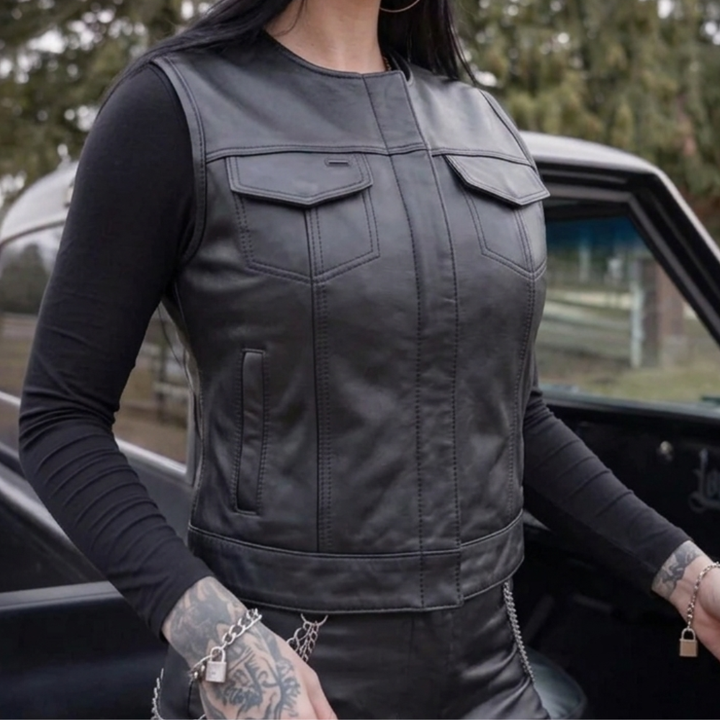


The way to break in a horsehide jacket is to wear it, a lot, and ride in it. Front quarter horsehide is dense and stiff when new, and it softens only through body heat, movement and time in the riding position. There is no safe shortcut: soaking, heating or heavy oiling can damage the hide or ruin the shape you are paying for.
Horsehide takes longer to break in than cowhide, and that is the point of it. The same density that makes it feel like a board on day one is why it holds its shape for decades. Here is how we tell new BECK owners to wear one in.
Why a New Horsehide Jacket Feels So Stiff

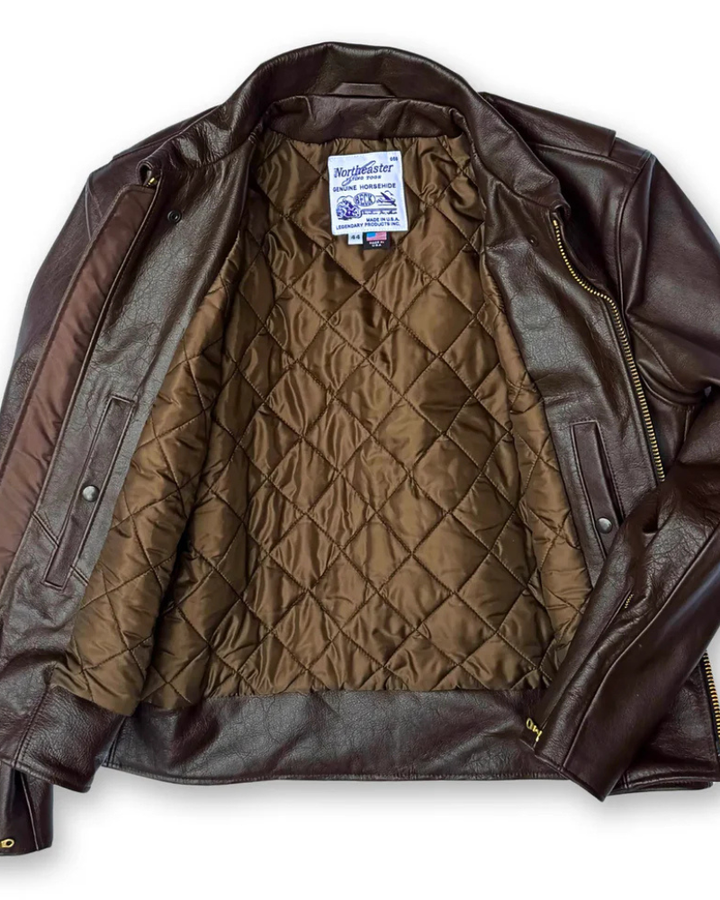
A new horsehide jacket feels stiff because front quarter horsehide is the densest, most tightly grained part of the hide. Our BECK 777 Northeaster Flying Togs black horsehide jacket and the BECK 732 are both cut from 1.3mm front quarter horsehide, made in the USA and stitched with Perma Core thread by American and Efird. That leather is more wind resistant than cowhide at the same thickness, and it does not give in a weekend.
Stiffness at the elbows, shoulders and collar is normal. It is unbroken leather, not a bad fit. A jacket that is tight across the chest when you reach for the bars is a sizing problem, and breaking it in will not fix that.
Horsehide vs cowhide break-in
Cowhide softens faster and also loses its structure faster. Horsehide resists creasing at first, then sets into creases that stay put, so the jacket ends up shaped to the rider and keeps that shape. If you want a jacket that feels broken in on day three, cowhide is the easier road. If you want one that still looks right in twenty years, horsehide is worth the wait. Our horsehide vs cowhide jacket comparison covers the rest of the tradeoff.
Step 1: Wear It Off the Bike Every Day
Start by wearing the jacket for ordinary errands, around the house and in the truck. Body heat softens the leather, and everyday movement starts the creases at the elbows and the inside of the arms. A few hours a day for the first couple of weeks does more than any product.
Zip it up and move. Reach forward, cross your arms, sit down in it. The goal is to work the leather at the places a riding jacket bends.
Step 2: Ride in It and Use the Fit Features
The riding position finishes the break-in. Reaching for the bars stretches the back and shoulders in a way walking never will, and the BECK Northeaster cut is built for that posture, with a bi-swing back and vented underarm gussets that let the shoulders move before the leather has softened.
- Use the side buckle tabs. The 732 and 777 both have side buckle tabs for chest fit. Let them out for a hoodie underneath on cold days, and snug them for a closer riding fit.
- Ride short trips first. A stiff jacket on a 300 mile day is tiring. A month of commutes and short rides breaks it in without wearing you out.
- Work the collar. Snap and unsnap the collar and fold it the way you wear it. Collars are often the last part to give.
Step 3: Condition Lightly, and Only When It Needs It
Condition a new horsehide jacket sparingly. The leather comes finished, and heavy oiling to speed up the break-in can darken the hide and leave it limp in spots where the oil soaked in unevenly. Clean off road grime with a damp cloth, let it dry at room temperature, and apply a thin coat of conditioner only when the leather looks dry.
Before you put the jacket away for winter storage, follow our guide to conditioning leather motorcycle gear before winter.
Break-In Shortcuts That Damage Horsehide
The internet is full of fast break-in tricks, and most of them trade a few weeks of stiffness for permanent damage.
- Soaking the jacket or wearing it wet to dry. Water pulls oils out of the leather and can leave it hard, cracked or shrunk unevenly as it dries.
- Heat. Hair dryers, heaters and hot car dashboards dry the leather out and can stiffen it further.
- Beating or tumbling it. Throwing a jacket in a dryer with tennis balls stresses seams and hardware.
- Saturating it with oil. Too much oil softens unevenly and can stain the lining.
If you bought the jacket as a gift, tell the rider to expect the stiffness. The BECK 732 black horsehide jacket and the rest of our men's Made in USA motorcycle jackets all start firm and get better with miles. The BECK jackets are heritage horsehide jackets, not armored riding jackets, so they carry no CE armor. For model differences, see our BECK Northeaster horsehide buying guide.
Wear it every day, ride it often, and leave the shortcuts alone. A horsehide jacket broken in by its owner fits like nothing else, and it keeps that fit for a very long time.
Before the first long ride in a new jacket, the Motorcycle Safety Foundation publishes rider training and gear guidance that covers what to check before you head out.
Frequently Asked Questions
- How long does it take to break in a horsehide jacket?
- Longer than cowhide. Most of the stiffness fades over weeks to months of regular wear, depending on how often you wear and ride in it. Wearing the jacket daily off the bike and then riding short trips speeds it up more than anything else. The collar, elbows and shoulders are usually the last areas to soften fully.
- Should I wet my leather jacket to break it in?
- No. Soaking a horsehide jacket or wearing it wet until it dries pulls oils out of the leather and can leave it hard, cracked or unevenly shrunk. If the jacket gets caught in rain, blot it, let it dry slowly at room temperature away from heat, and condition it lightly once it is fully dry.
- Does horsehide get softer over time?
- Yes. Front quarter horsehide softens with body heat, movement and riding, but it keeps more structure than cowhide. Instead of going limp, it sets into creases that match the way the rider moves. That is why a well-worn horsehide jacket looks shaped to its owner and still holds its form after many years.
- Should I size up a horsehide jacket because it is stiff?
- No. Size for the riding position and the layers you plan to wear, not for the stiffness. Horsehide gives a little with wear but does not stretch enough to fix a jacket that is too small. The BECK 732 and 777 have side buckle tabs that let out the chest for a hoodie, which covers most layering needs.
- Do I need to condition a new horsehide jacket?
- Not right away. New horsehide comes finished, and heavy conditioning to speed up the break-in can darken the leather and soften it unevenly. Clean off dirt with a damp cloth and apply a thin coat of leather conditioner only when the hide starts to look dry, typically before winter storage or after a wet season.