

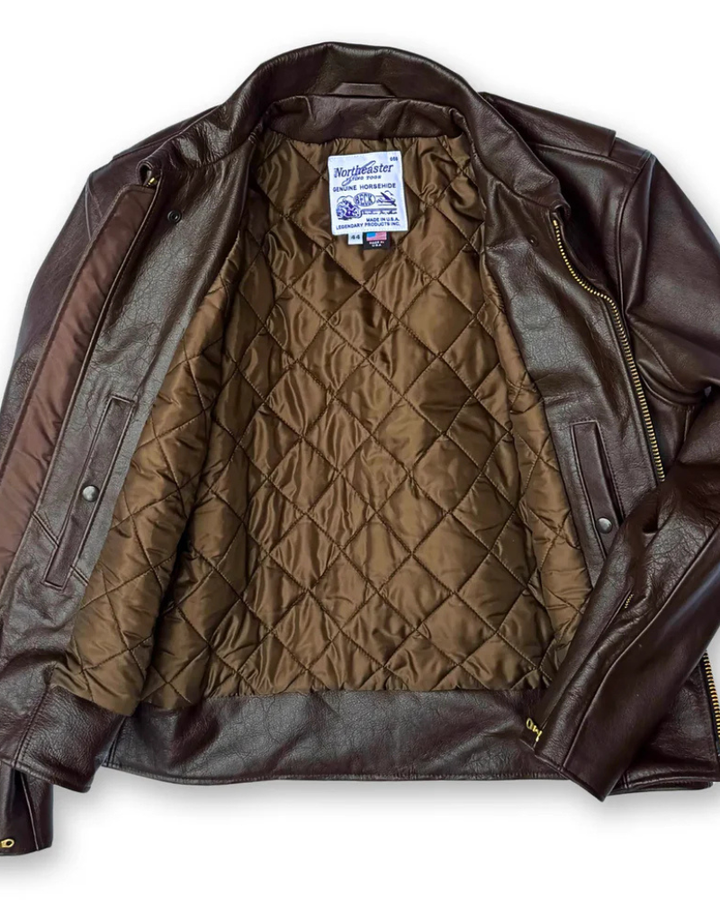
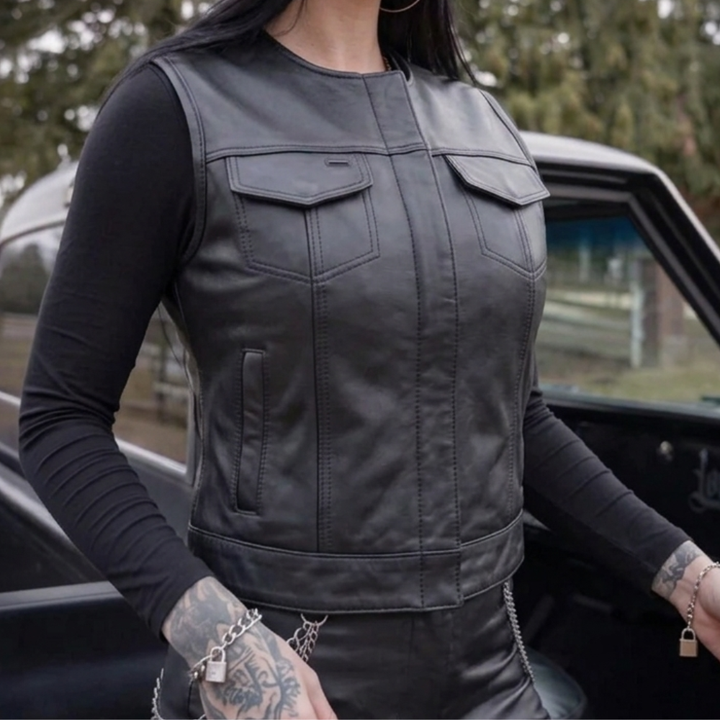


Caring for leather motorcycle gear during a rally comes down to a five-minute nightly routine: dry brush the dust, stuff wet gloves with paper and let them air dry at room temperature, swap to your second pair, and hang everything rather than stuffing it in a bag. Condition once mid-week if the leather looks dry, and save the full clean-and-condition for when you get home.
Rally week is harder on leather than a month of weekend riding. Heat, sweat, dust, and afternoon thunderstorms hit the same gloves and vest on repeat for seven straight days. Here is what matters and what does not.
The five-minute nightly routine

Do this at the end of each riding day, before you head out for the evening.
- Dry brush first. Knock the road dust off gloves and vest with a soft dry brush or clean cloth, working with the grain of the leather.
- Stuff and set out. Put newspaper or paper towels inside the gloves you rode in. Set them somewhere with moving air, away from any heat source.
- Hang the vest. Hang it, do not fold it. Folded leather that dries in a fold keeps the crease.
- Set out tomorrow's pair. Pull the pair you rested yesterday so it is ready in the morning.
That is it. Everything below is the reasoning.
Drying wet gloves without wrecking them
Heat is the enemy of wet leather. When leather dries too fast the fibers shrink and stiffen, and that does not fully reverse. The hotel hair dryer, the heater vent, the campfire, and the sunny parking lot all do the same damage.
The correct method is slow and boring. Blot the outside with a towel. Stuff the gloves with newspaper or paper towels — this holds the shape while drawing moisture out from the inside, which is where gloves stay wet longest. Change the paper once when it is saturated, and set them somewhere with air movement at room temperature. A ceiling fan on low is ideal; a heat vent is not.
Fully soaked gloves usually need an overnight plus most of the next day, which is exactly why two pairs matters on a rally trip. Our full guide to drying wet leather motorcycle gloves covers the edge cases.
Sweat and salt: the problem nobody plans for
In rally heat, most glove damage comes from the inside, not the outside. Sweat carries salt, salt dries into the lining, and salt buildup is what makes a glove lining go stiff and scratchy by day five. Riders blame the leather when the lining is the actual problem.
The fix is airflow and rotation, not product. Alternate pairs daily so each gets roughly 36 hours to dry. If a lining feels crusty, wipe it lightly with a cloth barely dampened in clean water, then dry it slowly with paper inside. Do not soak or machine wash them, and skip household cleaners and alcohol wipes — they strip oils out of the hide and do nothing for the salt.
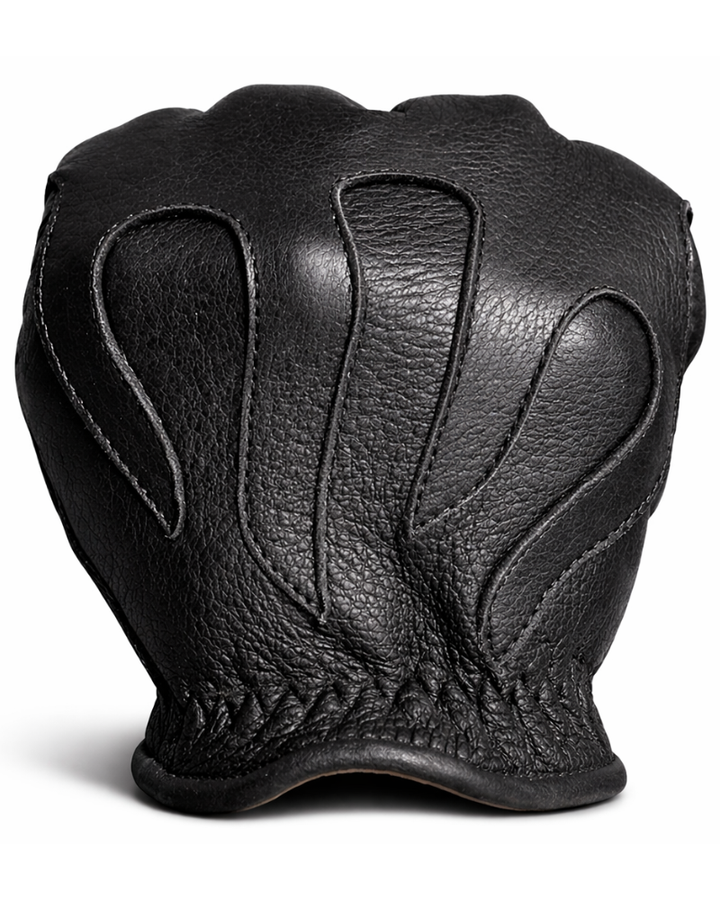
Perforated gloves have a real advantage here. The ILL Dozer perforated short-wrist deerskin gloves move air through the hide itself, so they run drier through a hot afternoon than solid leather does. Compare that to a solid unlined pair, which blocks more wind on a cool morning but holds heat and moisture at noon — a genuine tradeoff, not a ranking.
Road dust and the mistake most riders make
Brush before you wipe. That is the whole trick. A dusty rally road coats leather in fine grit, and wiping that grit with a damp cloth grinds it into the finish and leaves the leather dull and scuffed. Thirty seconds with a soft dry brush first, then a damp wipe if it needs it.
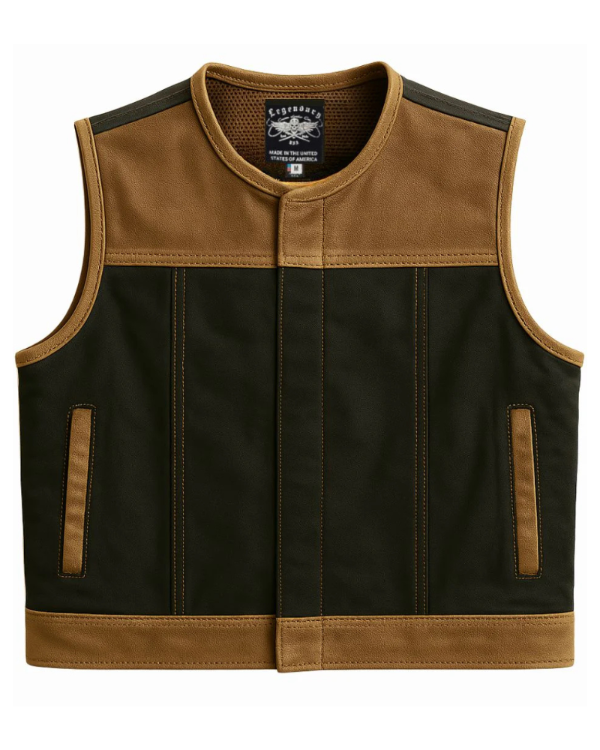
Denim and canvas vests are more forgiving about dust than leather, which is part of why they show up so often at summer rallies. A denim motorcycle vest takes a beating and you can wash it at home. Leather asks for more care and pays it back over a longer life. Both are legitimate — see the full range of USA-made motorcycle vests.
Conditioning: less than you think
Do not condition every night. Over-conditioned leather feels greasy, picks up more road dust, and can stretch out of shape at stress points. Conditioner is a mid-week correction, not a daily habit.
Condition mid-week only if the leather looks dull and dry, or if it got soaked and has since dried completely. Use a thin coat and let it absorb. Critically, never condition leather that is still damp — you seal the moisture inside the hide, and that is how mildew and permanent stiffness start.
The real conditioning happens when you get home. Legendary USA has been putting American-made gear on riders since 2001, and the gloves that last longest belong to people who do very little on the road and do it properly afterward.
Storage overnight and on the bike
Bring gear inside overnight. Dew soaks a vest left on a bike, and a closed saddlebag in August sun runs far hotter than the air temperature — hot enough to dry leather out and set creases in gloves packed folded. If gear has to stay on the bike, pack it flat rather than crushed and park in shade. Gloves balled up in a hot bag come out stiff and misshapen; gloves laid flat come out fine.
What to do when you get home
Rally week care is triage. Real care happens after. Clean the gear, let it dry fully, then condition with a thin, even coat and let it sit overnight before storing. Check the stitching at the thumb crotch and fingertips — those seams show wear first, and catching a loose stitch early is the difference between a repair and a replacement.
Frequently asked questions
- How do I dry wet leather motorcycle gloves at a rally?
- Blot the outside with a towel, stuff the gloves with newspaper or paper towels to hold their shape and pull moisture from the inside, and set them somewhere with moving air at room temperature. Change the paper once when it gets saturated. Never use a hotel hair dryer, a heater vent, a campfire, or direct sun. Heat drives moisture out of leather too fast, which shrinks and stiffens the hide and can crack it permanently.
- Should I condition leather gloves in the middle of a rally week?
- Condition mid-week only if the leather looks dull and dry or has been soaked and dried. A thin coat on a rest day is enough. Do not condition leather that is still damp, because you will seal moisture inside the hide. Do not condition every night either. Over-conditioned leather feels greasy, attracts road grit, and can stretch out of shape. Once mid-week and once when you get home is the right rhythm for most rally trips.
- How do I get sweat and salt out of leather motorcycle gloves?
- Wipe the inside lightly with a cloth barely dampened with clean water, then let the gloves air dry fully with paper stuffed inside. Salt from sweat is what stiffens glove linings over a hot rally week, and it builds up faster than most riders expect. Do not soak the gloves, do not machine wash them, and do not use household cleaners or alcohol wipes. Rotating between two pairs so each dries fully overnight prevents most salt buildup in the first place.
- What is the best way to clean road dust off a leather vest?
- Brush the loose dust off first with a soft dry brush or a clean cloth, working with the grain. Only then wipe the vest down with a barely damp cloth. Wiping dusty leather while it is still gritty grinds the dust into the finish and dulls it. Let the vest hang and dry before you fold it or pack it. On a dusty rally week, a thirty-second dry brush each night does more for a vest than any product you can buy.
- How often should I swap gloves during a rally week?
- Swap every day if you brought two pairs. Leather gloves need a full night at room temperature to dry out from sweat alone, and in rally heat they will be damp inside by afternoon. Alternating pairs means each one gets roughly 36 hours to dry, which keeps the lining from stiffening and keeps the leather from breaking down. It is the single most effective thing you can do for glove life during a long rally.
The bottom line
Rally leather care is a few small things every night rather than one big thing at the end of the week. Brush the dust, dry the gloves slowly, rotate pairs, hang the vest, keep the conditioner in reserve. Gear that gets five minutes a night comes home ready to ride. Gear stuffed damp into a saddlebag for seven days comes home stiff, and no conditioner fixes that afterward.