




A horsehide leather riding shirt needs less care than most riders give it. Wipe it down after dirty rides, clean it a few times a season, condition it lightly once or twice a year, and keep it away from heat and out of the washing machine. Horsehide is dense and holds its finish for decades, but it absorbs product slowly, so over-conditioning does more harm than neglect.
Know What You Are Caring For

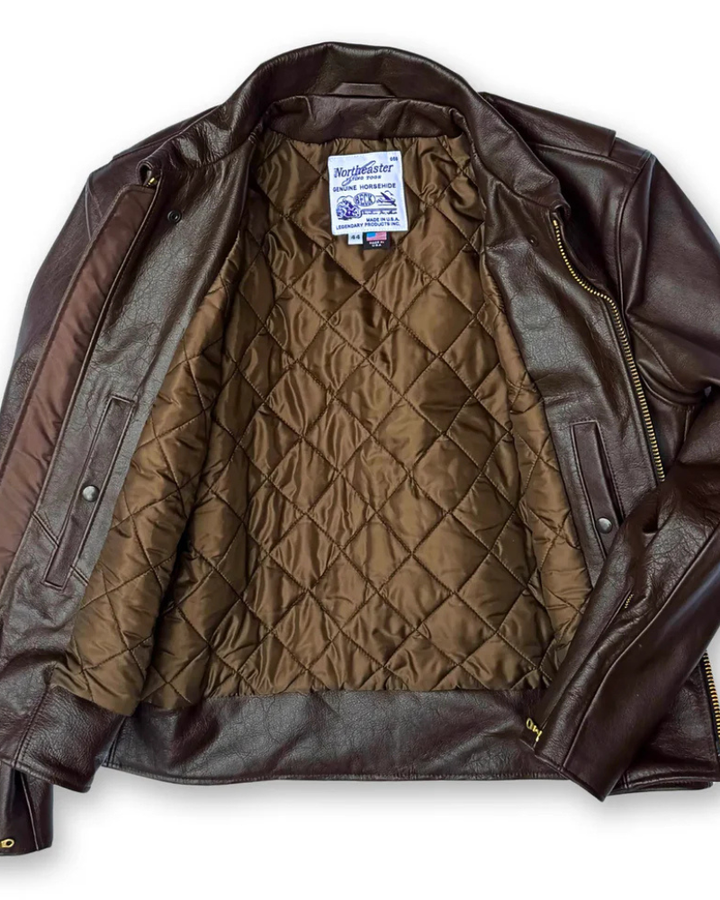
The BECK 302 genuine horsehide riding shirt is cut from 1.4mm front quarter horsehide, heavier than the 1.3mm hide in our BECK jacket line. It has a buffalo plaid flannel lining, a hidden snap front, covered snap cuffs, a snap-down collar, two zippered chest pockets and two interior concealed carry pockets. That mix matters for care, because the leather outside, the flannel inside and the hardware each need something different.
Horsehide is tighter-grained and denser than cowhide. Cowhide soaks up conditioner faster and can need it more often, while horsehide sheds light dirt well and takes product in slowly. The practical rule for horsehide is a light hand and patience. Our BECK Northeaster line has built horsehide riding gear in the USA since 1928, and that same rule applies to every piece of it.
Everyday Care After a Ride
Most of the care a horsehide shirt needs happens in the minute after you get off the bike. These habits prevent the problems that cleaning and conditioning have to fix later.
- Hang it on a wide, shaped hanger. Horsehide holds the shape you give it, and a wire hanger leaves dents in the shoulders.
- Wipe off bugs and road grime with a soft, damp cloth. Do it while the dirt is fresh, before it dries into the grain.
- Empty the pockets. A heavy load left in the interior carry pockets pulls on the panel while the shirt hangs.
- Open the snaps and let it air out. The flannel lining holds sweat after a long ride, and air is the cheapest fix.
How to Clean a Horsehide Riding Shirt
Clean the shirt a few times a riding season, or whenever grime builds up at the cuffs, collar and front panel. Use a gentle leather cleaner, never dish soap, saddle soap in heavy amounts or household spray cleaners.
- Brush or wipe off loose dirt dry. Grit rubbed in with a wet cloth scratches the finish.
- Test your cleaner on a hidden spot, such as under the collar or inside the front placket, and let it dry.
- Clean in small sections. We stock Obenauf's Cleanit natural leather cleaner, a non-detergent soap made from saponified linseed oil. Spray it on a soft cloth rather than the leather, and work one panel at a time without soaking the hide.
- Wipe away residue with a clean, lightly damp cloth.
- Let it dry at room temperature on its hanger before you condition it.
Conditioning: Less Is More on Horsehide
Condition a horsehide riding shirt once or twice a year, or when the leather looks dry and dull at the creases. More often than that is too often. The conditioner we stock is Obenauf's Heavy Duty LP, which holds natural oils in a beeswax and propolis base, and Obenauf's lists motorcycle leathers among its recommended uses.
Warm a small amount on your fingertips and work it in thin, paying attention to the elbows, shoulders, cuffs and seams where the leather flexes. Let it sit overnight, then buff off anything left on the surface with a soft cloth. On black horsehide the color change is slight, but test first on a hidden spot anyway.
Too much conditioner softens horsehide past the point you want, darkens it and leaves a tacky surface that collects dust. A wax-based product adds water resistance, but a treated horsehide shirt is water resistant, not waterproof. If you are still in the stiff early weeks, our guide on how to break in a horsehide jacket covers why wearing it beats soaking it in oil.
Drying It After Rain
A wet horsehide shirt dries best slowly. Blot the surface with a towel, open every snap and zipper, and hang it on a wide hanger at room temperature away from heaters, vents, fireplaces and direct sun. Never use a hair dryer or a clothes dryer. Heat pulls the natural oils out of the leather, and fast-dried horsehide comes out stiff and can crack at the creases.
Once it is fully dry, which can take a day or more with a flannel lining, flex the elbows and shoulders by hand. If the leather feels dry rather than just stiff, give it a light coat of conditioner.
Caring for the Lining, Snaps and Zippers
Do not machine wash a leather riding shirt, and do not send it to a regular dry cleaner. If the flannel lining needs attention, spot clean it with a damp cloth and a little mild soap, then let the shirt dry open on its hanger. For a deep clean, take it to a leather specialist.
Keep conditioner off the snap hardware, and wipe the snaps dry after a wet ride. If the chest pocket zippers start to drag, rub a little beeswax or paraffin along the teeth.
Storing It Off-Season
Store the shirt clean, dry and on a wide hanger in a cool closet. Use a breathable cotton garment bag, not plastic, which traps moisture and invites mildew. Avoid attics, damp basements and garages that swing between hot and cold. Our guide to prepping leather motorcycle gear for winter storage covers the full routine, and you can see the rest of our riding shirts in the leather riding shirts collection.
Care for a horsehide leather riding shirt comes down to a few habits: hang it right, keep it clean, condition it sparingly and keep heat away from it. Do that and a 302 will give you decades of riding.
For why leather is worth the upkeep in the first place, the National Highway Traffic Safety Administration publishes motorcycle safety guidance that recommends covering arms and legs when riding, ideally with leather or heavy denim.
Frequently Asked Questions
- How often should I condition a horsehide riding shirt?
- Once or twice a year is enough for most riders, or whenever the leather looks dry and dull at the creases. Horsehide is dense and takes conditioner in slowly, so more frequent conditioning tends to leave the leather over-softened, darker and tacky. Riders who ride in a lot of rain or sun may need it toward the twice-a-year end. Always apply a thin coat and buff off the excess.
- Can you wash a leather riding shirt in a washing machine?
- No. A washing machine soaks the leather, strips its natural oils and can shrink, stiffen or crack the hide, and the agitation strains the seams and snaps. Clean the outside with a gentle leather cleaner on a soft cloth, spot clean the lining with a damp cloth and mild soap, and let the shirt dry on a hanger. For a deep clean, use a leather specialist.
- What conditioner should I use on horsehide leather?
- Use a wax and oil conditioner applied sparingly. We stock Obenauf's Heavy Duty LP, which holds natural oils in a beeswax and propolis base and is recommended by its maker for motorcycle leathers. Avoid heavy pure oils applied in quantity, which over-soften horsehide, and avoid household sprays. Test any product on a hidden spot first, let it sit overnight and buff off what remains.
- How do I dry a horsehide shirt after it gets wet?
- Blot the surface with a towel, open the snaps and zippers, and hang the shirt on a wide hanger at room temperature. Keep it away from heaters, vents, fireplaces and direct sun, and never use a hair dryer or clothes dryer. Heat pulls oils out of the leather and can leave it stiff and cracked. Once fully dry, flex it by hand and condition lightly if it feels dry.
- Does a horsehide riding shirt get softer over time?
- Yes, but slowly. Horsehide starts stiffer than cowhide and softens with wear at the elbows, shoulders and front panel, taking on the shape of the rider over weeks and months of riding. It does not stretch the way cowhide can, so the fit stays largely fixed once it breaks in. Wearing it often does more for break-in than extra conditioner does.