



Cold alone is a solvable problem. Rain alone is manageable. Cold rain at fifty miles an hour is the combination that ends rides early, because wet leather stops insulating and windchill does the rest. Here is what actually works, including the part most gear pages leave out.
Why Wet Changes the Math

Dry leather traps a thin layer of still air against your skin, and that trapped air is most of the warmth. Water displaces it. A soaked glove conducts heat away from your hand roughly twenty times faster than a dry one, which is why hands that were fine at 45 degrees go numb within ten minutes of a downpour starting.
Wind makes it worse in a way that is easy to underestimate. At highway speed, evaporation off a wet glove pulls heat continuously, so the temperature your hands experience keeps dropping even after the rain stops. Staying warm in these conditions is mostly about staying dry, and only secondarily about insulation.
The Honest Answer on Leather and Rain
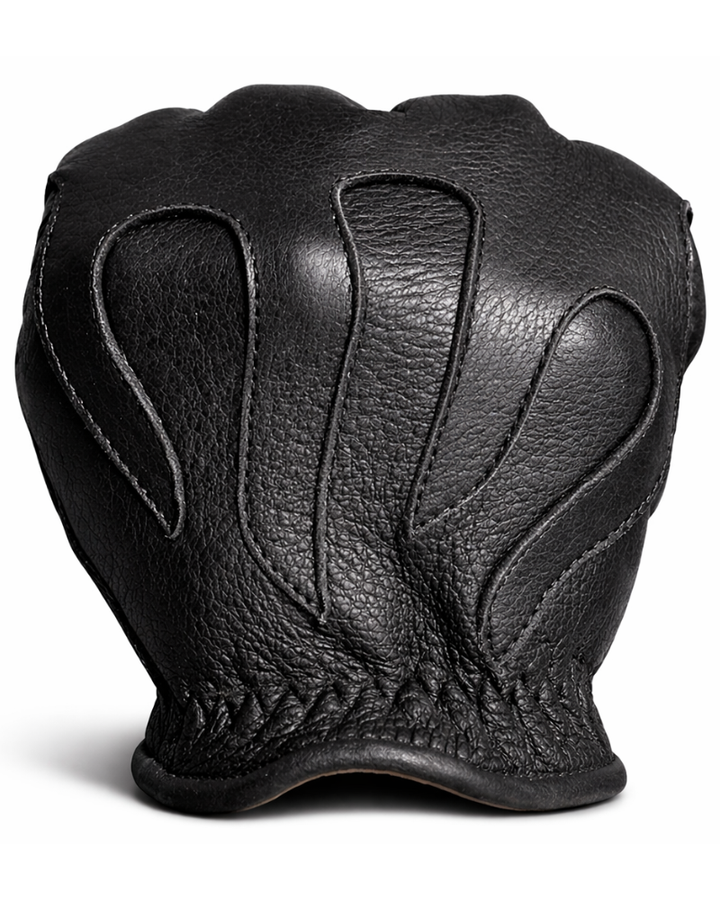
Deerskin is not waterproof. Neither is goatskin or cowhide, and no conditioner changes that. A well-maintained leather glove sheds a light shower and dries out afterward, but a sustained soaking gets through, and any brand telling you otherwise about untreated leather is selling you something.
That is not an argument against leather gloves in the cold. It is an argument for the right system: a warm leather glove as the base, an insulating liner underneath, and a waterproof shell over the top when the sky opens. Riders who plan for all three stay out; riders who count on one pair to do everything end up under an overpass.
Layering Under Your Regular Gloves
Yes, you can layer, and it is the most underrated cold-weather move there is. A thin knit liner adds real warmth without the bulk of a dedicated winter glove, and it keeps your feel at the levers because the insulation sits against your skin rather than in the glove shell.
The Gators Skin Glove Liners ($30) are cut thin enough to fit inside a standard riding glove. Two conditions make layering work: the outer glove has to have room, so this fails if you sized tight, and the liner has to be thin. A thick liner compresses in the glove, squeezes off circulation, and makes your hands colder than no liner at all.
What Insulation Actually Works
For riding, the ranking is straightforward. Synthetic insulation such as 3M Thinsulate gives the most warmth per millimeter of thickness, which matters because every millimeter costs you feel at the controls. Fleece is warm, cheap, comfortable, and bulkier for the same warmth. Down is the warmest by weight and useless here, because it collapses when wet and takes hours to recover.
Our Fleece-Lined Deerskin Gloves ($115) cover the mild end, roughly the 40 to 60 degree range for most riders. Below that, the Deerskin Insulated Mittens ($120) use 100 gram 3M Thinsulate and share the heat of all four fingers in one chamber, which is the single biggest warmth gain available short of heated gear.
What Makes a Glove Wind-Resistant
Three things, none of them the leather itself. First, coverage: the gap between glove and jacket cuff is where cold air enters, and a gauntlet closes it. The Classic Deerskin Gauntlets ($140) extend well past the wrist and over a jacket sleeve.
Second, seam construction: outseam and welted seams have fewer paths for air to work through than a plain inseam. Third, closure: a wrist strap or elasticated cuff that actually seals stops air from being forced up the sleeve at speed. A tight, sealed, full-coverage glove in moderate leather beats a loose, gappy glove in thick leather every time.
Building the System
Start with a lined leather glove sized with a little room. Add thin liners for the cold days. Carry a packable waterproof overglove for the rain, and accept that it will cost you some feel while it is on. Swap to mittens when the temperature drops below what gloves can handle.
And dry your gloves correctly afterward, because heat is what kills them. Never put wet leather on a radiator, in a dryer, or in front of a heat gun. Our guide on drying wet leather motorcycle gloves covers the method. Compare lined and gauntlet options across the Made in USA motorcycle glove collection, and orders over $150 ship free.
Frequently Asked Questions
What are the best motorcycle gloves for riding in rain and cold at the same time?
No single leather glove solves both. The working setup is a lined leather glove as the base, a thin knit liner underneath for warmth, and a packable waterproof overglove on top when it actually rains. Leather is not waterproof, so the shell is what keeps you dry and the leather and liner keep you warm. Below roughly 40 degrees, insulated mittens beat any glove.
Can I layer under regular motorcycle gloves instead of buying winter gloves?
Yes, and it works well if two things are true: your outer gloves have room to spare, and the liner is genuinely thin. A thin knit liner adds warmth while keeping your feel at the levers, since the insulation sits against your skin instead of in the glove shell. A thick liner compresses inside a snug glove, restricts circulation, and leaves your hands colder than they would be with no liner.
What insulation works best inside winter motorcycle gloves?
Synthetic insulation such as 3M Thinsulate gives the most warmth for the least thickness, which matters because bulk costs you control feel. Fleece is warm and comfortable but bulkier for equivalent warmth, and works well in the 40 to 60 degree range. Down is the warmest by weight but collapses when wet and is a poor choice for riding, where moisture is a matter of when rather than if.
What makes a motorcycle glove truly wind-resistant?
Coverage, seam construction, and closure, rather than the leather itself. A gauntlet cuff closes the gap between glove and jacket sleeve where cold air enters. Outseam and welted seams give air fewer paths through the glove than a plain inseam. A wrist strap or elasticated cuff that seals properly stops air being forced up your sleeve at speed. A sealed, full-coverage glove beats a loose thick one every time.
How cold can I ride in fleece-lined leather gloves?
For most riders, fleece-lined deerskin is comfortable down to roughly 40 degrees at highway speed, and into the 30s for shorter rides or with a thin liner added. Tolerance varies a lot between individuals and drops fast in wind or rain. Once you are consistently reaching for a second layer inside the glove, you have reached the honest limit and mittens or heated gear is the next step.
Do mittens really keep hands warmer than gloves?
Yes, noticeably. Fingers in a shared chamber warm each other instead of each losing heat separately, and there is less surface area for heat to escape through. The tradeoff is dexterity: you give up independent finger movement, which affects clutch and brake feel. For long rides in genuinely cold conditions, most riders find the warmth worth the adjustment, especially with an insulated deerskin mitten.
Treat cold rain as a system problem rather than a glove problem. Base layer of lined leather, thin liner for warmth, waterproof shell for the wet, mittens when it gets serious. Then dry everything slowly and it will all still be here next winter.