

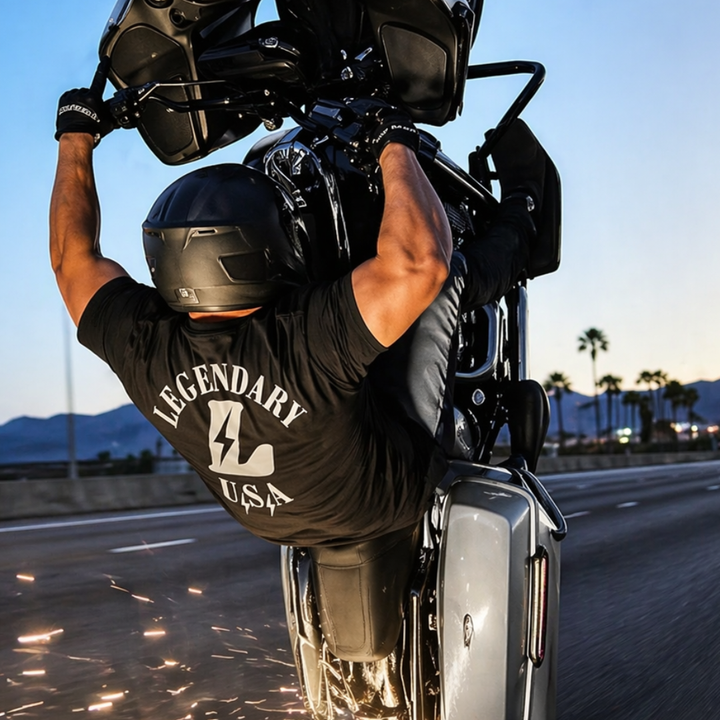
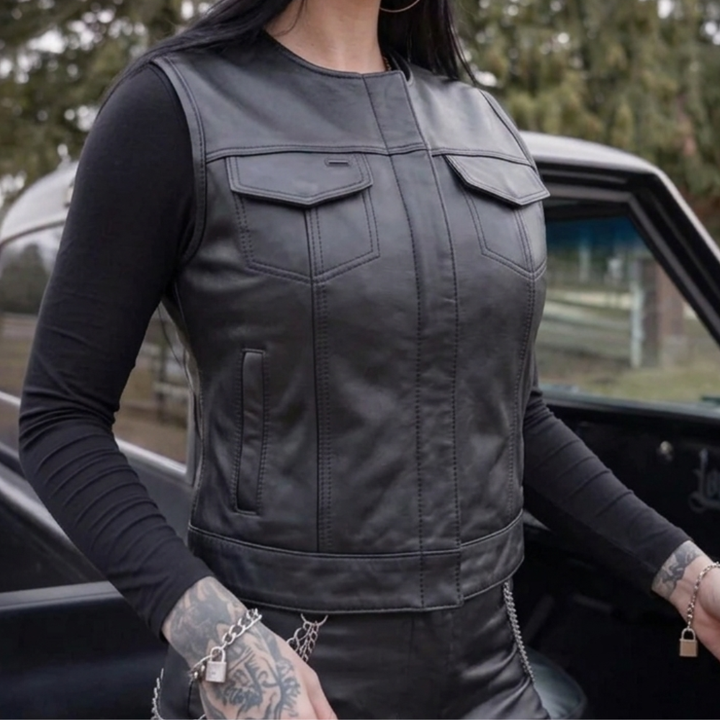


Cold weather gear for Harley riders comes down to three jobs: keep the wind off your hands, keep it off your chest, and close the gaps at the wrists and neck. A Harley has little or no fairing, so you are riding in the airstream, and every mile per hour adds to the chill. Start with insulated deerskin gloves, add a leather vest as a wind block, and layer underneath. That order gets you the most warmth for the money.
Start With Your Hands

Your hands take the worst of the wind, and they are doing precise work: throttle, clutch, brake, turn signal. Cold, stiff fingers slow your reaction time and wear you out on a long ride. If you only upgrade one piece of cold weather gear, make it gloves.
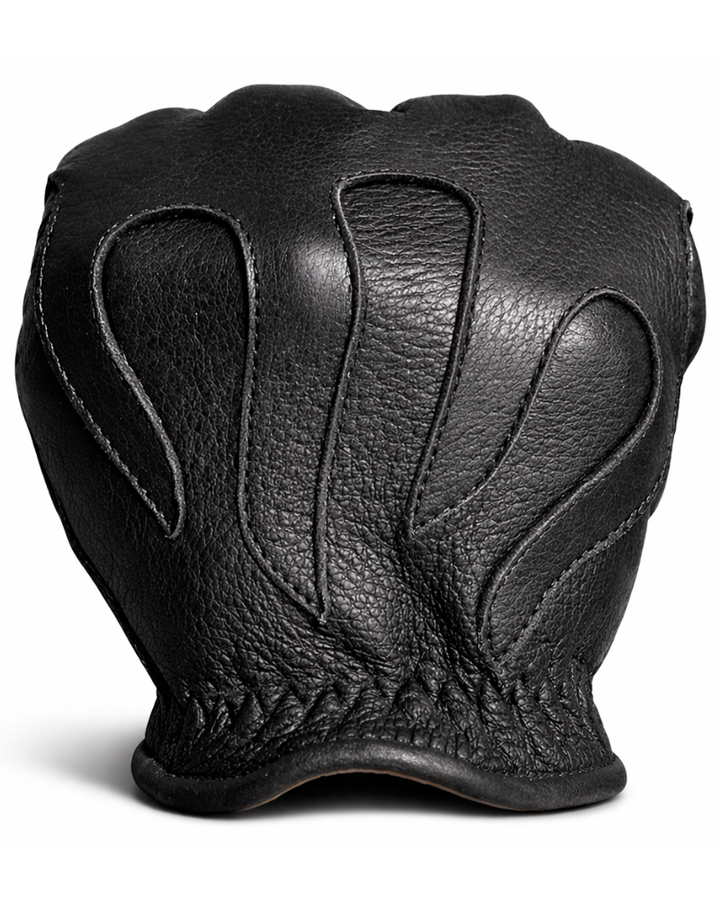
Deerskin is a good place to start. It is soft, flexible and has good feel at the grips, and it breaks in quickly with regular riding. It is also not hard armor, and unlined deerskin will not keep you warm in the cold by itself. That is where lining comes in.
Fleece-lined short wrist gloves
The Fleece-Lined Deerskin Gloves add a fleece lining inside a deerskin shell. They suit cool to cold fall riding, commuting, and any rider who wants warmth without the bulk of a snow glove. Fleece-lined gloves fit snugger than unlined pairs, so try the next size up if you are between sizes. We covered the fit in detail in our fleece-lined motorcycle gloves buying guide.
Gauntlet gloves
The Classic Deerskin Gauntlets have a longer cuff that goes over your jacket sleeve. That matters on a Harley, because wind at the wrist is how cold gets into your sleeves. The tradeoff is bulk. A gauntlet cuff takes a second to pull on and off, and some riders find it clumsy at the fuel pump.
Gauntlet vs. Short Wrist for Cold Rides
Gauntlet gloves block more wind at the wrist, and short wrist gloves are easier to wear and move in. If your jacket sleeve cuff is snug and can sit over a short wrist glove, short wrist works well and costs you nothing in comfort. If your sleeve runs loose or you ride at highway speed in cold air, the gauntlet cuff earns its length.
The same logic applies to the glove-over-sleeve or sleeve-over-glove question. Sleeve over glove keeps rain and wind from running down into the glove. Glove over sleeve keeps wind out of the sleeve. Pick based on which direction the air hits you.
Add a Leather Vest for Wind Protection
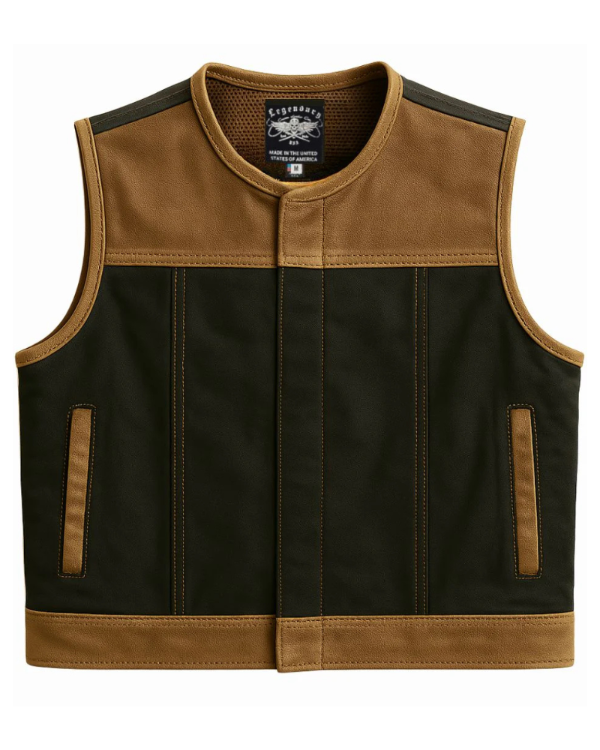
A leather vest is one of the oldest wind blocks in American riding. It covers your chest and back, where the airstream hits hardest, without the bulk of a full jacket. It is not insulated on its own and it leaves your arms open, so it works as a layer, not a coat.
Layer a long sleeve shirt or flannel underneath, and the vest holds the warm air in. Our guide to layering under a motorcycle vest walks through the order, and the winter motorcycle vest guide covers sizing a vest to fit over thicker layers. Browse the full range in our Made in USA motorcycle vests.
Layer the Rest, and Know the Limits
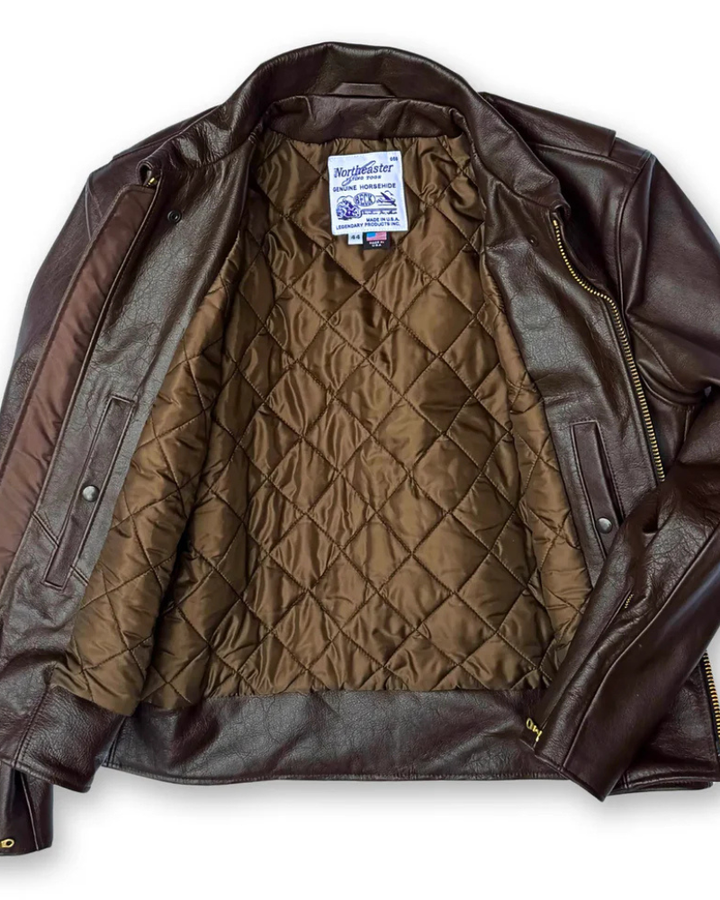
Under your gloves and vest, keep it simple. A base layer that does not hold sweat, a mid layer for insulation, and something windproof on the outside. Cotton holds moisture and feels cold once you stop moving, so skip it against the skin when the temperature drops.
Know what leather gear does and does not do. Legendary USA gloves and vests are leather gear built to block wind and break in with use. They are not waterproof, and they are not armored riding gear. If the forecast shows freezing temperatures or rain, plan for gear built for those conditions, or pick another day.
Common Mistakes With Cold Weather Riding Gear
Buying gloves that are too tight is the most common one. Insulation needs air, and a glove that squeezes your hand pushes the air out and cuts circulation. Riding with a gap between glove and sleeve is the second. A strip of bare wrist feels minor in the driveway and miserable at 65 mph.
The third is judging the day by the thermometer alone. Moving air pulls heat off exposed skin faster than still air, which is why a 45 degree ride feels colder than a 45 degree walk. Dress for the wind, not the number.
Which Setup Fits Which Rider
For the daily commuter on a Harley, fleece-lined short wrist gloves plus a leather vest over a long sleeve shirt covers most fall mornings. For the weekend tourer riding highway miles, gauntlet gloves and a layered torso make more sense. For the rider who wants one glove for three seasons, an unlined deerskin glove and a thin liner you can add or remove gives you range. Our roundup of the best gloves for riding a Harley compares styles by riding habit, and the full Made in USA motorcycle gloves collection lets you filter by lining and cuff.
Cold weather gear works when each piece does one job. Gloves manage your hands, a vest blocks wind on your chest, and a gauntlet or snug sleeve closes the wrist. Get those three right and a 45 degree morning is a ride instead of a chore.
For the wind chill math behind cold-air riding, the National Weather Service publishes a cold wind chill chart.
Frequently Asked Questions
- What is the most important cold weather gear for a Harley rider?
- Gloves matter most, because your hands sit directly in the airstream on a Harley with no fairing and they control the throttle, clutch and brake. After gloves, wind protection for your chest and neck makes the biggest difference. A leather vest over a long sleeve layer blocks wind on the torso, and a gauntlet cuff closes the gap at the wrist where cold air likes to enter.
- Are fleece-lined deerskin gloves warm enough for cold Harley rides?
- Fleece-lined deerskin gloves are a good fit for cool to cold fall riding, since the lining adds insulation and the deerskin shell blocks wind. They are not a substitute for heated gloves in deep winter cold, and they are not waterproof. Wind speed matters as much as air temperature, so a ride at highway speed feels colder than the thermometer suggests.
- Should I wear gauntlet gloves or short wrist gloves in the cold?
- Gauntlet gloves are the better cold weather choice for most riders because the longer cuff goes over your jacket sleeve and keeps wind from running up the arm. Short wrist gloves work when your sleeve cuff fits snugly over the glove. Legendary USA makes both styles, so the choice comes down to your jacket and how much wind you feel at the wrist.
- Does a leather vest keep you warm on a motorcycle?
- A leather vest blocks wind across your chest and back, which is where cold air steals the most heat at speed. It does not cover your arms and it is not insulated by itself, so it works best layered over a long sleeve shirt or a thin mid layer. Think of it as a wind shield for your torso, not a winter coat.
- Do I need to size up for fleece-lined motorcycle gloves?
- Fleece-lined gloves can feel snugger than unlined gloves because the lining takes up room inside the glove. If you are between sizes, try the larger one and check that you can still close your fist without the fingertips bunching. Gloves that are too tight squeeze out the air that insulates your hand, so a snug fit is good and a tight fit is not.