

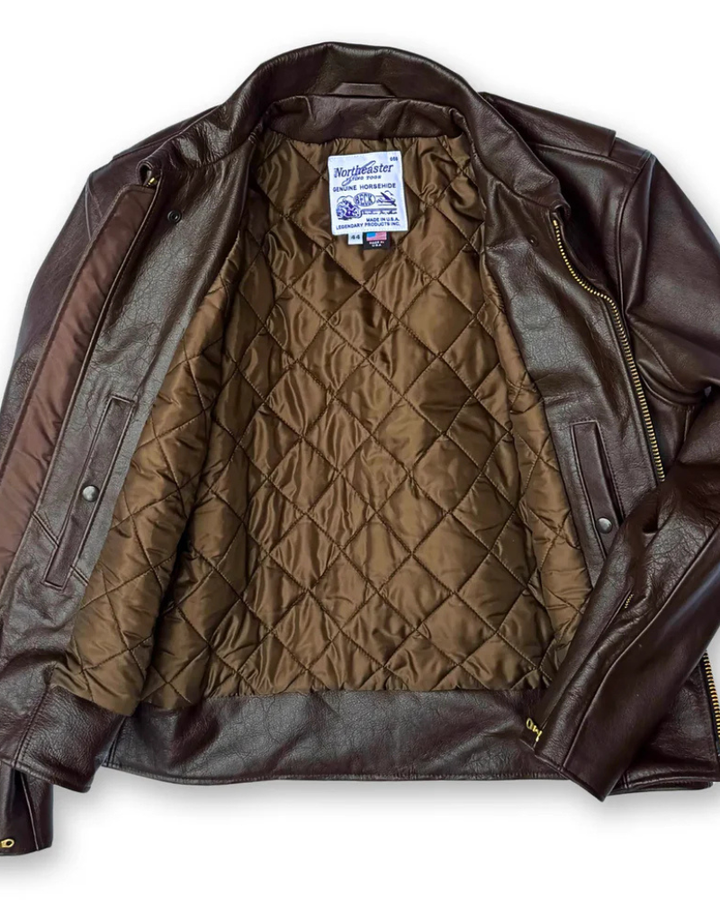
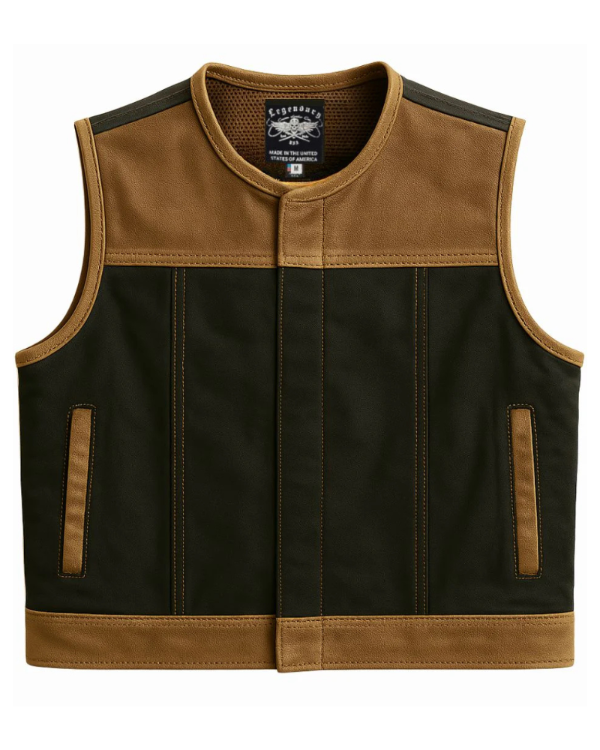

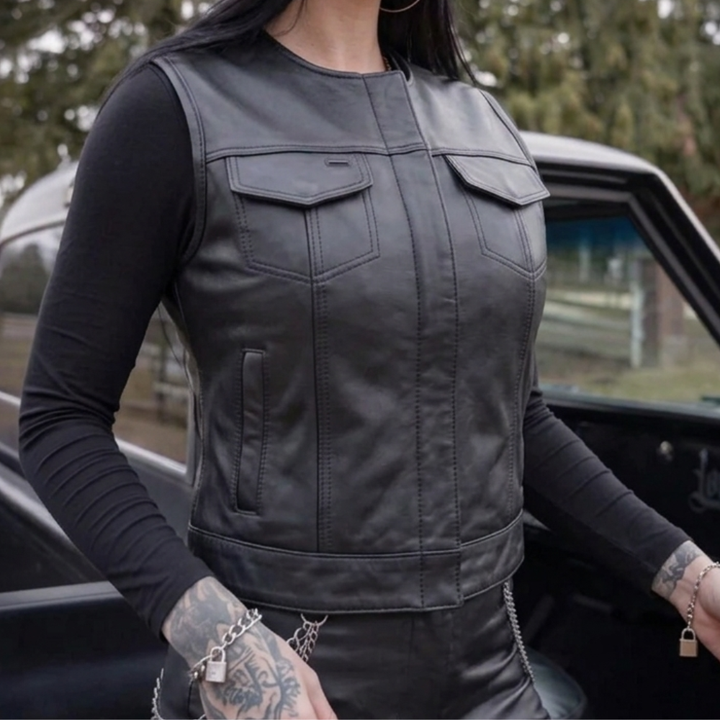


A cropped club vest is a leather motorcycle vest cut shorter in the body, ending at or just above the belt line so the hem clears the seat when you ride. The shorter cut is the defining trait of club-style vests: it keeps leather from bunching at your waist in the saddle and leaves a flat, uninterrupted back panel for patches. This guide covers why the cropped cut exists, how it compares to a standard-length vest, and exactly what to check before you buy one.
Top Picks, Shop Direct
| Product | What it is | From |
|---|---|---|
| Legendary Reaper Men's Leather Club Vest | Legendary USA. Rated 4.89 from 93 customer reviews. | $215.00 |
| Legendary Revolution Men's Black Denim Vest | Legendary USA. Rated 4.95 from 79 customer reviews. | $65.00 |
| Legendary 'Nightshift' Black Denim Vest | Legendary USA. Rated 4.95 from 79 customer reviews. | $145.00 |
| Legendary Outlaw Men's Leather Motorcycle Vest | Legendary USA. Rated 4.98 from 53 customer reviews. | $325.00 |
Prices shown are current at time of writing. Orders over $150 ship free.
Why Club Vests Are Cut Short

The cropped cut is not a fashion choice. It comes from the riding position. On a cruiser, your hips fold and your torso shortens. A vest cut like ordinary streetwear — hem below the belt — hits the seat the moment you sit down. The seat pushes the hem up, the leather stacks at your waist, and the shoulders lift off your frame. Every stoplight becomes a tug-the-vest-back-down ritual.
A club vest solves that by removing the length that was never going to stay put anyway. Cut the hem at the belt line and the vest has nothing to catch on. It stays planted through a full day of riding, and the back panel — the part every club rider actually cares about — stays flat and readable at speed.
Cropped vs Standard-Length Vests: The Real Differences
The cropped club vest and the standard leather vest are different tools. Here is how they actually compare:
Length. A cropped club vest ends at or just above the belt. A standard vest runs one to three inches below it. Standing at a bar, the longer vest covers more of your waistline. Seated on a bike, the longer vest bunches and the cropped vest doesn't.
Collar. Club vests are usually collarless, with a simple banded neckline. That is deliberate: a collarless vest layers under or over a jacket without two collars fighting each other. Standard vests often carry lapels or a shirt-style collar, which looks right off the bike and gets in the way on it.
Hardware. Club-style vests favor hidden snaps or low-profile closures that keep the front clean for patches. Standard vests more often use exposed snaps, zippers, or buckles.
Purpose. The standard vest is general-purpose leather. The cropped club vest is purpose-built riding gear in the American club tradition — patch real estate first, seated fit first, everything else second.
If you ride a cruiser regularly and plan to run patches, the cropped cut is the right call. If you mostly wear the vest off the bike, a longer cut may serve you better. Our motorcycle vest buying guide by rider type breaks that decision down further.
Construction Details Worth Paying For
Cropped vests live hard lives — sun, sweat, patch stitching, decades of wear. These are the construction details that separate a vest that lasts from one that doesn't.
One-piece back panel. A back cut from a single hide, with no center seam, gives the patch sewer a clean field and removes the one seam most likely to distort under a large back patch. It costs more because it wastes more hide, and it is worth it. We covered the history of this detail in the one-piece back panel in club vest heritage.
Full-grain leather. Full-grain cowhide keeps the strongest layer of the hide intact. It breaks in instead of breaking down, and it carries the weight of a full patch set without sagging. Thin, corrected-grain leather looks fine on day one and quits early.
Side lacing. Leather lacing at the sides lets you widen or tighten the vest as seasons, layers, and waistlines change. On a cropped vest, which fits closer than a long vest by design, that adjustability matters more, not less. The Legendary Men's Leather Club Motorcycle Vest is built exactly this way — cropped club cut, side lacing, made in the USA.
Interior pockets. Club vests carry what jackets normally would: phone, wallet, and for many riders a firearm. Vests like the Legendary Reaper Men's Leather Club Vest include dedicated interior gun pockets so carry doesn't depend on your belt line.
Snap quality. Snaps get worked thousands of times. Solid, well-set snaps on reinforced leather outlive the glued-and-stapled hardware on budget vests.
Getting the Fit Right
Fit a cropped club vest in the riding position, not standing in front of a mirror. Sit down, reach forward to imaginary bars, and check three things: the hem should stay off the seat, the shoulders should stay seated on yours, and the front should close without straining. Standing, the hem should land at or just above your belt.
Buy for the layers you actually ride in. If you run a flannel or hoodie under the vest from October to April, fit the vest over that, then use the side lacing to snug it up for summer. A vest that only fits over a t-shirt is a summer-only vest. For measurements and sizing specifics, see our motorcycle vest sizing guide.
Where to Start
Legendary USA builds its leather club vests in the USA from full-grain hides, with the details this guide covers — cropped cuts, one-piece backs, side lacing, and interior carry pockets on select models. Browse the full line of men's USA-made motorcycle vests to compare styles side by side.
Frequently Asked Questions
- What is a cropped club vest?
- A cropped club vest is a leather motorcycle vest cut shorter in the body than a standard vest, ending at or just above the belt line instead of below it. The shorter cut keeps the hem from bunching against the seat or stacking on your belt when you sit on a motorcycle. Riders in the club-style tradition favor it because it sits clean in the riding position and leaves a flat back panel for patches.
- Why do club vests run shorter than regular vests?
- Club vests run shorter because they are cut for the seated riding position, not for standing around. When you sit on a cruiser, a long vest hem hits the seat and pushes the whole vest upward, bunching leather at your waist and pulling the shoulders out of place. A cropped cut clears the seat, so the vest stays put and the back panel stays flat for patches.
- How should a cropped club vest fit?
- A cropped club vest should fit close through the chest and shoulders with the hem landing at or just above your belt when standing. Sit in the riding position when you try it on — that is the fit that matters. You want enough room to layer a flannel or hoodie underneath in cool weather without the vest hanging loose over a t-shirt in summer. Side lacing helps you adjust between the two.
- Are cropped club vests good for patches?
- Yes. Most cropped club vests are built with patches in mind. Look for a one-piece back panel with no center seam, which gives a sewer a clean, uninterrupted field for a large back patch or a full patch set. A liner that opens or is sewn loose at the bottom also matters, because it lets the stitcher work between the leather and the lining without cutting the vest apart.
- What's the difference between a cropped club vest and a standard motorcycle vest?
- The main differences are length, collar, and hardware. A cropped club vest ends at or above the belt, usually has a collarless (banded) neckline so it doesn't fight a jacket collar, and typically closes with hidden or low-profile snaps. A standard vest runs longer, often has lapels or a collar, and reads more casual than club-style. On the bike, the cropped cut moves less and bunches less.
- Can I conceal carry in a cropped club vest?
- Many club-style vests include interior concealed carry pockets, but not all of them, so check the specific vest before you buy. Legendary USA builds several leather club vests with dedicated interior gun pockets. Because a cropped vest is shorter, the pocket sits higher on your torso than it would on a long vest, which most riders find faster to reach from the saddle. Always follow your state's carry laws.
The Bottom Line
A cropped club vest earns its cut in the saddle: the hem clears the seat, the leather stays put, and the back panel stays flat for the patches that tell your story. Buy full-grain leather, insist on a one-piece back if patches are in your future, fit it seated over your real riding layers, and let side lacing handle the rest. Do that, and the vest you buy this summer will still be on your back — softer, darker, and covered in miles — twenty riding seasons from now.