



To dry wet leather motorcycle gloves without ruining them, blot the outside, open the cuffs, stuff the fingers loosely with dry paper, and leave them at room temperature with air moving around them until they are dry to the touch inside and out. Never put leather gloves on a heater, a radiator, a dash vent, a hair dryer or a wood stove; fast heat pulls the natural oils out of the hide and leaves it stiff, cracked or shrunk. Legendary USA has been drying out rain-soaked deerskin, goatskin and cowhide gloves for riders since 2001, and the method below is the one that brings a glove back soft every time.
Why heat ruins wet leather

Leather is skin, and skin that dries too fast dries wrong. When water leaves a hide quickly under direct heat, it carries the tanning oils with it and the collagen fibers lock together as they shrink. The glove comes off the radiator smaller, harder and prone to cracking at the knuckles and thumb saddle the next time you flex it. Slow drying lets the water leave while the fibers stay relaxed, so the glove returns to the shape your hand gave it.
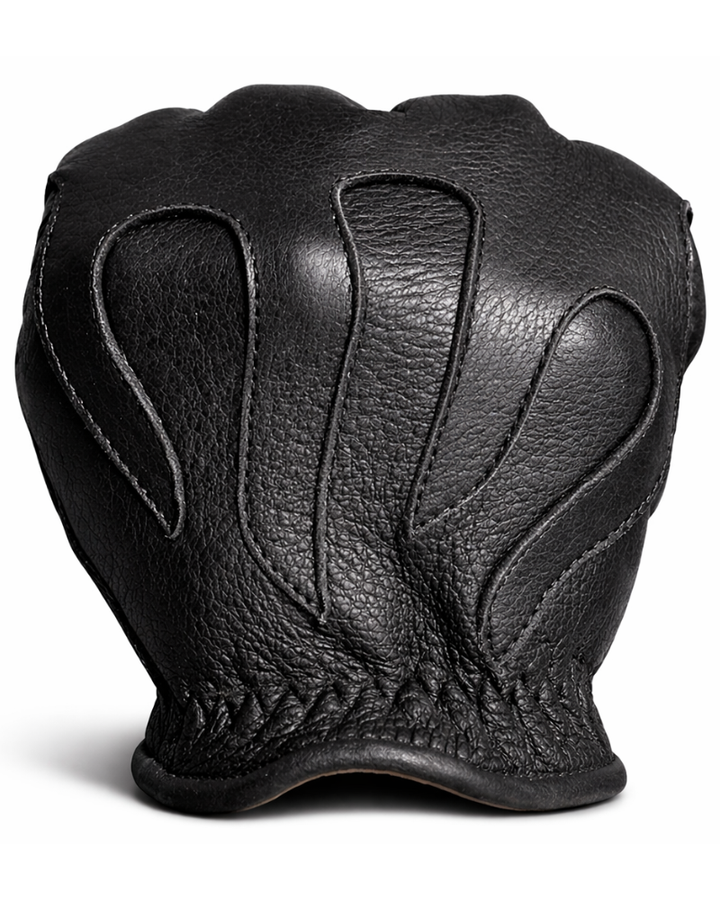
The hide matters here. American Whitetail deerskin, which Legendary USA uses for most of its glove line, stays pliable when wet and dries back soft without conditioning, which is one of the reasons it has been the working hide for cold, wet riding for so long. Goatskin and cowhide dry stiffer and usually want a light conditioning after they are fully dry. None of them survive a hair dryer.
Step 1: get the water off the surface
As soon as you are off the bike, blot the gloves with a dry towel. Press, do not rub, so you lift water without grinding road grit into the grain. Squeeze gently from the cuff toward the fingertips to push out what has pooled in the fingers. If the gloves are muddy or salted from a wet road, wipe the outside with a damp cloth now, because dried road salt leaves white lines in the grain that are harder to remove later.
Open the cuff as wide as it goes. On an elasticized short-wrist glove, fold the cuff back on itself; on a gauntlet, spread the cuff flat. Air has to reach the inside, and a closed cuff turns the glove into a damp pocket that takes days instead of hours.
Step 2: stuff the fingers loosely
Pack each finger and the palm with crumpled paper towel or plain newsprint. The paper wicks water out of the lining and holds the glove in a hand shape so it does not dry flat and creased. Keep the packing loose; the goal is contact with the lining, not stretching the leather. Replace the paper once it is damp, which is usually within the first hour for a thoroughly soaked glove.
Do not use printed newspaper on light-colored gloves such as a white ventilated deerskin; the ink can transfer. Plain paper towel is safe on every color. Skip rice and silica packets; they do not reach into the fingers and they shed dust into the lining.
Step 3: dry at room temperature with moving air
Set the gloves on a towel in a room that sits between roughly 60 and 75 degrees, fingers up if you can stand them against something, and put a fan on low across them if you have one. Moving room-temperature air is the single biggest accelerator that does not damage leather. An unlined deerskin glove will usually be dry to the touch in a few hours this way; a fleece-lined or insulated glove can take a full day because the lining holds water the shell does not.
Do not leave them in direct sun, in a closed car, or on top of a running appliance. Do not put them in a clothes dryer, even on air-only, because the tumbling creases the leather and the heat is rarely truly off. Do not use a boot dryer unless it runs unheated. The 30 to 50 degree days when gloves get soaked are also the days a rider is most tempted to park them on a heat register, and that is where most ruined gloves come from.
Step 4: flex and check the inside
When the outside feels dry, put the gloves on and make a fist a few times. If the lining feels cool or clammy, the inside is still wet; take them off and give them more time. Flexing while the leather is still slightly damp does two useful things: it keeps the hide from setting in a flat shape, and it reminds the glove where your knuckles and thumb are. A glove that is left stiff and unflexed through the whole dry will feel like new leather again, which is not a compliment after two seasons of break-in.
Check the stitching and the keystone thumb seam while you are at it. Water does not harm the industrial thread Legendary USA stitches with, but it does reveal grit that has worked into the seam, and a soft brush along the stitching now saves wear later.
Step 5: condition, but only if the hide needs it
Deerskin usually does not. The Fleece-Lined Deerskin Gloves and the Classic Deerskin Gauntlets both dry back to their broken-in softness without any product, and over-conditioning deerskin makes it slick on the grips. If a deerskin glove feels dry and papery after several soakings in one season, a very light wipe of a leather conditioner on the back of the hand only, worked in with your fingers and buffed off, is enough.
Goatskin and cowhide are a different story. Both tend to dry a shade stiffer than they went in, and a small amount of conditioner after they are completely dry brings the hand back. Keep conditioner off the palm on any hide; a conditioned palm is a slippery palm on a wet throttle. Legendary USA's complete leather motorcycle gear care guide covers which products suit each hide, and the guide to water-resisting leather motorcycle gear covers how to treat a glove before the next storm.
What to carry so this happens less often
The fastest way to dry a wet glove is to have a dry one. Riders who commute through fall and spring keep a second pair in the saddlebag, and on a long wet day they swap at a fuel stop and let the first pair start drying in the bag with the cuff open. A pair of thin waterproof overmitts packs flat and keeps a deerskin glove from soaking through in the first place. The Made in USA motorcycle gloves at Legendary USA are all built to survive getting wet, but surviving it is not the same as enjoying it.
For broader guidance on riding in rain and on choosing gear for the conditions you ride in, the Motorcycle Safety Foundation publishes rider training and gear guidance.
Frequently asked questions
- How do I dry leather motorcycle gloves fast without damaging them?
- Blot them with a towel, open the cuffs, stuff the fingers loosely with paper towel, and set them in front of a fan on low at room temperature. Moving air at normal room temperature is the fastest method that does not damage the hide. An unlined deerskin glove is usually dry to the touch in a few hours; a lined glove can take a full day. Replace the paper once it is damp. Never use a hair dryer, heater, dash vent or clothes dryer.
- Can I put leather motorcycle gloves on a radiator or heater to dry?
- No. Direct heat pulls the tanning oils out of the leather as the water leaves, so the fibers shrink and lock together. The glove comes off the heater smaller, harder and ready to crack at the knuckles and thumb seam. This is the most common way riders ruin an otherwise good pair of gloves. Room-temperature air, with a fan if you have one, dries the glove more slowly but leaves it soft and the same size it was.
- Will deerskin motorcycle gloves be ruined if they get wet?
- No. American Whitetail deerskin stays pliable when wet and dries back soft without conditioning, which is one of the reasons Legendary USA uses it for most of its glove line. The risk is not the water; it is the drying method. Dry deerskin gloves slowly at room temperature, flex them as they finish, and they return to their broken-in feel. Deerskin is not waterproof, so a soaked glove is still a cold glove until it dries.
- Should I condition leather gloves after they get wet?
- Only after they are completely dry, and only if the hide needs it. Deerskin usually does not; it dries soft on its own, and too much conditioner makes it slick on the grips. Goatskin and cowhide often dry a little stiffer and benefit from a light conditioning on the back of the hand. Keep conditioner off the palm on any hide. Conditioning a glove that is still damp traps water in the leather and can leave the surface tacky.
- How long do leather motorcycle gloves take to dry?
- At room temperature with air moving, an unlined deerskin or goatskin glove is typically dry to the touch in two to six hours and fully dry inside overnight. A fleece-lined or Thinsulate-lined glove holds far more water in the lining and usually needs a full day, sometimes two. Stuffing the fingers with paper towel and changing the paper once it is damp shortens both. A glove in a closed, still room with the cuff closed can take three or four days.
- Can I wash leather motorcycle gloves in water?
- You can wipe them with a damp cloth to remove road grime and salt, and a glove that has been soaked by rain is not harmed by the water itself. Do not submerge them, do not use detergent, and do not machine wash. If a glove needs a real cleaning, use a cleaner made for leather, work it in with a soft cloth, wipe the residue away and dry the glove the same slow, room-temperature way you would dry it after rain.
Drying wet leather motorcycle gloves is mostly a matter of patience: blot, open the cuffs, stuff with paper, and give the gloves room-temperature air and time. The heater is always faster and it is always the wrong call. Treat the hide the way it wants to be treated and a Legendary USA deerskin glove will come through an October downpour and go right back to being the glove it was before the rain.