



A horsehide motorcycle jacket is the cold-weather choice for riders who want a leather shell that blocks wind without the bulk of heavy cowhide. Legendary USA builds its BECK Northeaster Flying Togs jackets in the United States from 1.3mm front quarter horsehide, the densest and most tightly grained section of the hide, and that density is why horsehide is more wind-resistant than cowhide at the same thickness. This guide explains which BECK jacket to choose for rides between 30 and 55 degrees, what the lining and collar details do in the cold, and where a horsehide jacket stops and a heated or armored layer takes over.
Why horsehide works in cold weather

Cold on a motorcycle is mostly wind. At 55 miles per hour, 40 degree air feels like air in the mid 20s on bare skin, and the leather on your chest is the first thing standing in its way. Front quarter horsehide has a tighter fiber structure than cowhide, which means fewer gaps for moving air to push through and more resistance to abrasion if the jacket ever meets pavement. Legendary USA cuts BECK jackets from that front quarter section specifically because it is the densest part of the hide.
The tradeoff is break-in. Horsehide starts stiffer than deerskin or soft cowhide and takes longer to mold to the rider, and a new BECK jacket feels like a shell for the first few weeks of fall riding. That stiffness is the same density that blocks wind, so the rider who wants a jacket that feels broken in on day one is choosing a jacket that will let more cold through. Natural scarring and grain variation are normal on authentic horsehide, and no two BECK jackets look identical.
Horsehide also holds its shape for decades. The BECK label has built horsehide riding gear in the USA since 1928, and shape retention over decades is one reason the hide earned that history. For a rider shopping for a cold-weather jacket that will outlast several bikes, that longevity matters as much as the first winter.
The BECK 732 and 777: the Northeaster silhouette for cold rides
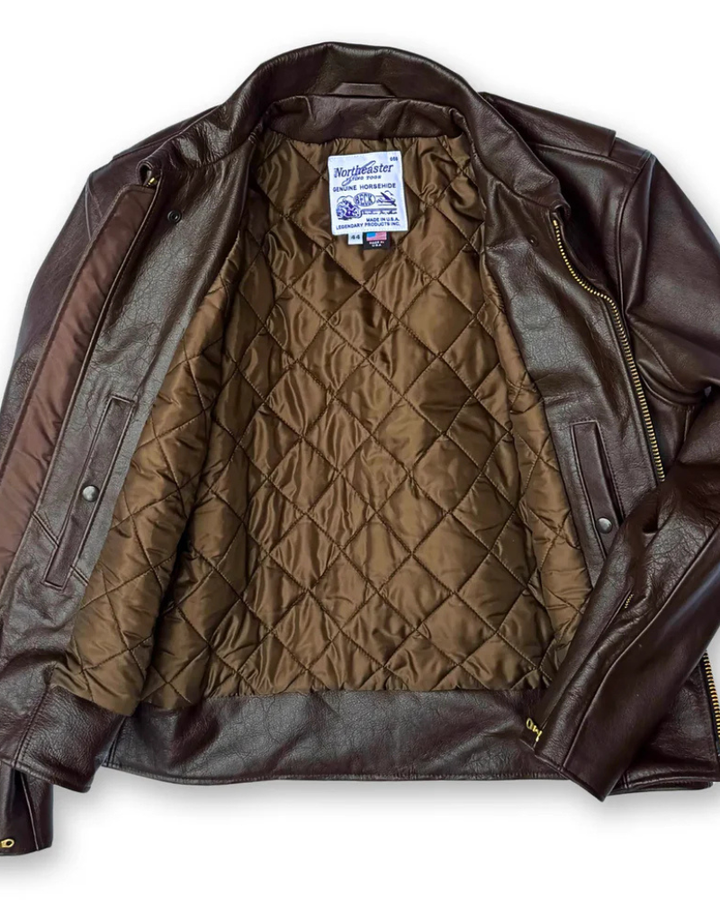
The BECK 732 Northeaster Flying Togs Black Horsehide Jacket is the traditional Northeaster cut, built since 1928, in 1.3mm front quarter horsehide. For cold weather the parts that matter are the diamond-quilted polyester lining with poly-fill insulation, the nylon Oxford sleeve lining that lets a sweater slide in without binding, and the racer snap collar that closes the gap at the throat. Side buckle tabs let you extend the chest to fit a hoodie underneath in October and tighten it back for a closer fit in April.
The BECK 777 Northeaster Flying Togs Black Horsehide Jacket is the same 1.3mm horsehide and the same Northeaster silhouette with refined interior construction, antique brass hardware and a snap-down collar. Legendary USA lists it as BECK's most popular current horsehide jacket. Both the 732 and the 777 carry two concealed carry pistola pockets nine inches deep, a bi-swing back and vented underarm gussets, and both are stitched with Perma Core thread from American and Efird.
Choosing between them comes down to collar and hardware preference rather than warmth. The quilted insulated lining is the same, the horsehide is the same, and the cold-weather performance is the same. Riders who want the racer collar and nickel-plated hardware take the 732. Riders who want the snap-down collar and antique brass take the 777. Both are available in chestnut brown as well as black.
The BECK 999 and 501: alternatives for different riders
The BECK 999 Horsehide Motorcycle Jacket sits at the top of the Northeaster Flying Togs line. It uses the same 1.3mm mid-weight front quarter horsehide, drum-dyed black, with a half-belt silhouette chosen by the riders who collaborated on the design. For cold riding the two zippered front hand warmer pockets and the sewn-in quilted nylon lining are the relevant features, and the half-belt keeps the hem from lifting at speed without the full-body belt that some riders find restrictive when seated.
The BECK 501 Trucker Style Horsehide Jacket takes the 1960s denim trucker silhouette and builds it in horsehide with Oxford nylon lining throughout, Cordura-lined hand pockets and rear snap waist tighteners. It is waist-length, which means less coverage at the lower back than the Northeaster cut, and it has no quilted insulation. That makes it the right pick for 45 to 60 degree riding over a flannel and the wrong pick for a 30 degree morning without a serious mid layer.
For riders who want horsehide without a jacket at all, the BECK 302 Horsehide Leather Riding Shirt is a heavier 1.4mm horsehide in a shirt silhouette with buffalo plaid flannel lining and a hidden snap front. It layers under a vest or over a base layer and reads as a work shirt off the bike. The full BECK lineup is in the BECK Northeaster Flying Togs collection.
Horsehide versus cowhide for cold weather
Cowhide is the more common leather and the heavier one. Legendary USA's cowhide jackets, such as the 3.5-ounce Black Hills, block wind through sheer mass and take a removable liner, which makes them a strong cold-weather choice for riders who do not mind the weight. Horsehide at 1.3mm blocks comparable wind at lower weight because the fiber structure is tighter, and it stays more flexible at the shoulders when the temperature drops below 40.
The honest comparison: cowhide is heavier and breaks in faster. Horsehide weighs less for the same wind resistance, takes longer to break in, and holds its shape longer. Neither one is insulated on its own, which is why the quilted linings in the 732, 777 and 999 do the actual warmth work. Legendary USA's full comparison of horsehide versus cowhide motorcycle jackets covers the hide-level differences in detail.
What a horsehide jacket does not do
A BECK horsehide jacket is a heritage riding jacket, not an armored riding jacket, and it has no CE armor and no CE rating. The horsehide resists abrasion and blocks wind. It does not absorb impact. Riders who want armor wear a separate CE-rated armored riding shirt under the leather, and Legendary USA says this on every BECK product page rather than implying protection the hide does not provide.
A horsehide jacket is also not waterproof. Horsehide handles light rain and dries without losing its shape, but a sustained downpour will soak through the seams, and wet leather in 40 degree wind is colder than dry textile. Carry a packable rain shell on long cold rides and read Legendary USA's guide on waterproofing leather motorcycle gear before you treat the hide with anything.
How to layer under a horsehide jacket
At 50 to 55 degrees, a long-sleeve base layer and the jacket with the collar open is enough for most riders. At 40 to 50, add a riding flannel or a thin fleece and snap the collar. At 30 to 40, run a thermal base, a wind-blocking mid layer and the jacket with the chest tabs extended, and plan the ride around fuel stops where you can warm up. Below 30 is where unheated leather reaches its practical limit for sustained highway riding, and heated grips or a heated liner take over from the jacket.
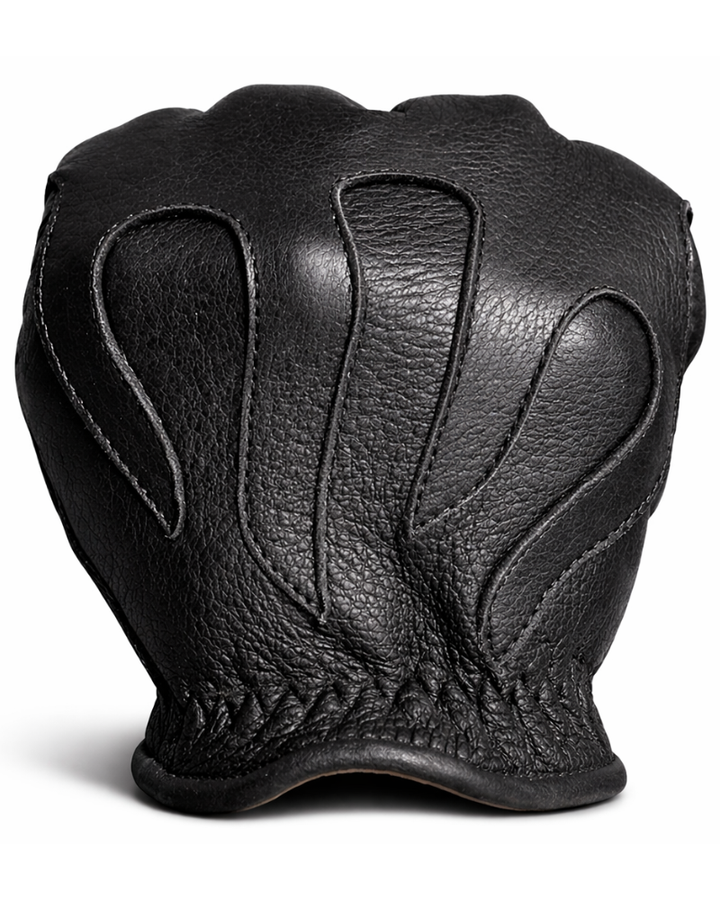
Hands and wrists fail before the core does. Pair the jacket with Fleece-Lined Deerskin Gloves for 30 to 50 degree rides, or with Classic Deerskin Gauntlets worn over the jacket cuff to stop the draft that runs up the sleeve. Legendary USA's cold-weather riding kit guide walks through the full glove, vest and jacket stack for 30 to 50 degrees.
Sizing and fit for cold-weather riding
A horsehide jacket bought for cold weather should fit with the layers you will actually wear under it, not over a T-shirt in a warm showroom. Measure your chest over a flannel and a base layer, then compare against the BECK size chart. The side buckle tabs on the 732 and 777 give roughly an inch of adjustment at the chest, which covers the difference between a hoodie and a thin fleece but not the difference between a T-shirt and a heavy sweater.
Sleeve length matters more in the cold than in summer. The sleeve should reach the wrist bone with the arms extended to the bars so the glove cuff and the jacket cuff overlap. A sleeve that rides up two inches at speed turns a lined glove into a cold one. If the jacket is between sizes, the longer sleeve usually wins for a cold-weather jacket, and the chest tabs make up the difference.
Common mistakes when buying a horsehide jacket for the cold
The first mistake is expecting the hide to insulate. Horsehide blocks wind. The quilted lining and your mid layers hold heat. A rider who buys an unlined horsehide jacket for 30 degree rides will be cold, and the jacket is not to blame.
The second is sizing for summer. A cold-weather jacket worn over nothing in July will fit perfectly and bind at the shoulders in November with a fleece underneath. Size for the layers.
The third is skipping the break-in. A new BECK jacket in October will feel stiff until it has a few hundred miles on it, and horsehide breaks in slower than cowhide. Riders who buy in late fall and expect a broken-in feel by Thanksgiving are usually disappointed. Legendary USA's story of the horsehide jacket in winter riding tradition covers why riders have put up with that break-in for almost a century.
The fourth is conditioning too much. Cold dry air pulls moisture from leather, but horsehide needs less conditioner than cowhide and too much softens the density that makes it wind-resistant. A light application once in early fall is enough for most riders. More cold-weather jacket options, in both horsehide and cowhide, are in Legendary USA's cold weather motorcycle jackets collection.
For the wind chill math behind the temperature bands in this guide, the National Weather Service publishes a cold wind chill chart that shows how much colder 40 degree air feels at highway speed.
Frequently asked questions
- Is a horsehide motorcycle jacket good for cold weather?
- Yes. Horsehide is one of the better leathers for cold-weather riding because its tight fiber structure blocks wind more effectively than cowhide at the same thickness. Legendary USA builds BECK Northeaster jackets from 1.3mm front quarter horsehide, the densest section of the hide, and the 732, 777 and 999 models add a quilted insulated lining for warmth. The horsehide stops the wind and the lining and your mid layers hold the heat, which is why a lined BECK jacket works for rides between 30 and 55 degrees.
- Is horsehide warmer than cowhide for motorcycle riding?
- Horsehide is not warmer on its own, but it blocks wind better than cowhide at equal thickness because the fibers are packed more tightly. Cowhide reaches the same wind resistance by being heavier, which is why a 3.5-ounce cowhide jacket weighs more than a 1.3mm horsehide jacket with similar wind performance. Warmth in either case comes from the lining and the layers underneath. Legendary USA's BECK horsehide jackets use a diamond-quilted lining with poly-fill insulation to do that job.
- What is the warmest BECK horsehide jacket?
- The BECK 732 and BECK 777 are the warmest options because both carry a diamond-quilted polyester lining with poly-fill insulation, a nylon Oxford sleeve lining and a snap collar that closes at the throat. The BECK 999 has a sewn-in quilted nylon lining and hand warmer pockets and runs close behind. The BECK 501 trucker is lined in Oxford nylon with no quilted insulation and is better suited to 45 to 60 degree riding over a flannel. All four use 1.3mm front quarter horsehide and are made in the USA by Legendary USA.
- Does a BECK horsehide jacket have armor or a CE rating?
- No. BECK horsehide jackets are heritage riding jackets, not armored riding jackets, and they carry no CE armor and no CE rating. The 1.3mm horsehide resists abrasion and blocks wind, but it does not absorb impact. Riders who want armor wear a separate CE-rated armored riding shirt under the leather. Legendary USA states this on every BECK product page so buyers know exactly what the hide does and does not do.
- How long does a horsehide motorcycle jacket take to break in?
- A horsehide jacket typically needs a few hundred miles of riding before it molds to the rider, and it breaks in more slowly than deerskin or soft cowhide. The stiffness is the same density that makes horsehide wind-resistant, so it is a tradeoff rather than a defect. Wearing the jacket off the bike speeds the process. Riders who buy a BECK jacket in October should expect a shell-like feel through the first several cold rides and a noticeably softer jacket by the following spring.
- Should I size up a horsehide jacket for winter layers?
- Size the jacket for the layers you will actually wear under it, measured over a base layer and a flannel rather than a T-shirt. The side buckle tabs on the BECK 732 and 777 give about an inch of chest adjustment, which covers a hoodie versus a thin fleece but not a heavy sweater versus a T-shirt. Sleeve length matters as much as chest in the cold: the sleeve should reach the wrist bone with arms extended to the bars so the glove cuff and jacket cuff overlap and wind cannot run up the sleeve.
- Is a horsehide motorcycle jacket waterproof?
- No. Horsehide is water-resistant, not waterproof. It handles light rain and dries without losing its shape, but a sustained downpour will soak through the seams, and wet leather in cold wind is colder than dry textile. Legendary USA recommends carrying a packable rain shell on long cold-weather rides and conditioning horsehide lightly, once in early fall, rather than applying heavy waterproofing products that can soften the dense grain that makes the hide wind-resistant.
A horsehide motorcycle jacket for cold weather is a BECK 732 or 777 with its quilted lining and snap collar for riders who want the full Northeaster cut, a 999 for riders who want the half-belt and hand warmer pockets, and a 501 trucker for milder fall days over a flannel. Size it for your layers, give the horsehide a few hundred miles to break in, and pair it with lined deerskin gloves so the hands last as long as the core. Legendary USA has built BECK horsehide jackets in the United States under the Northeaster Flying Togs label since 1928, and the cold is what they were cut for.