

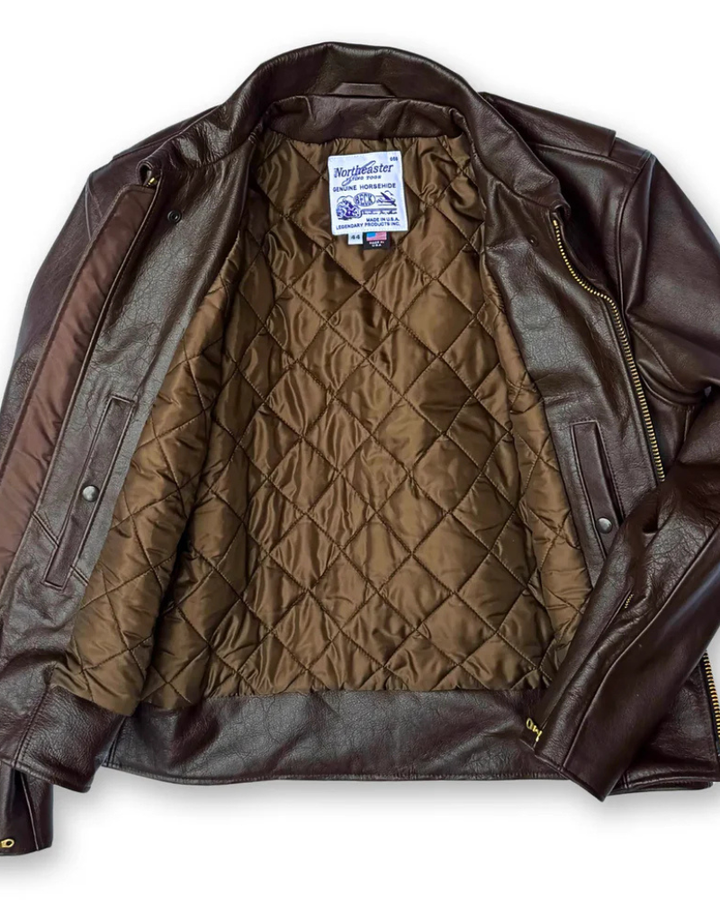
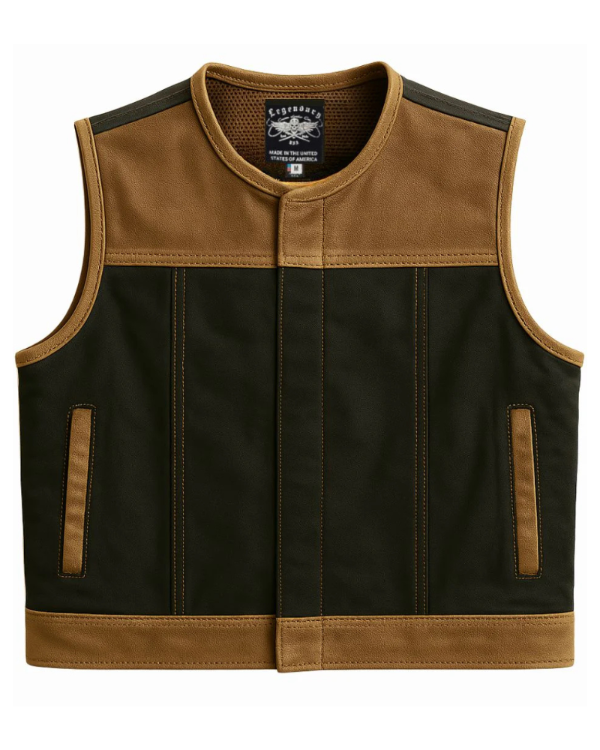
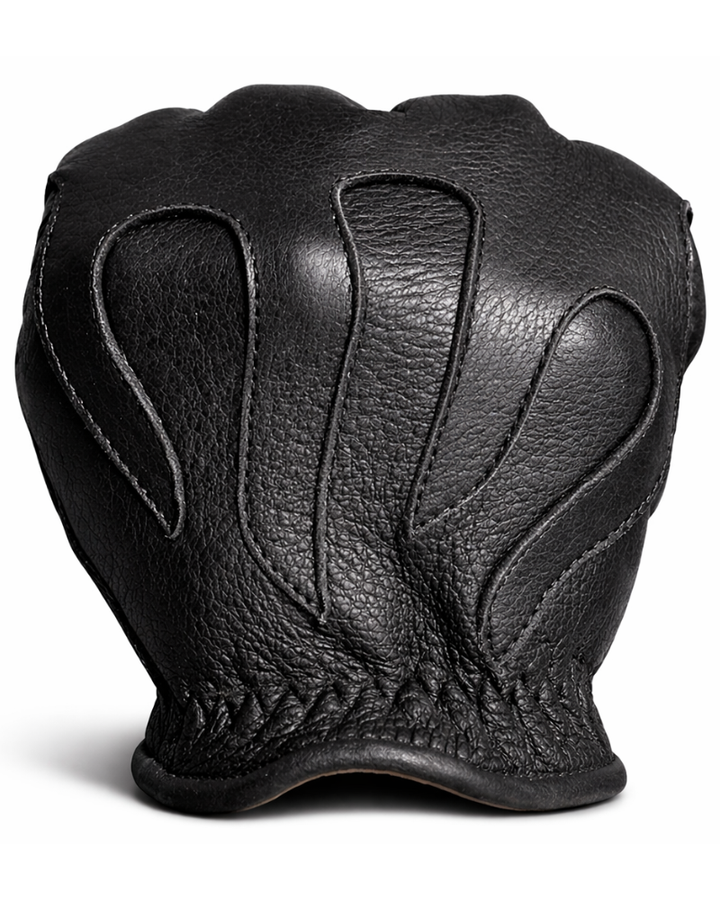
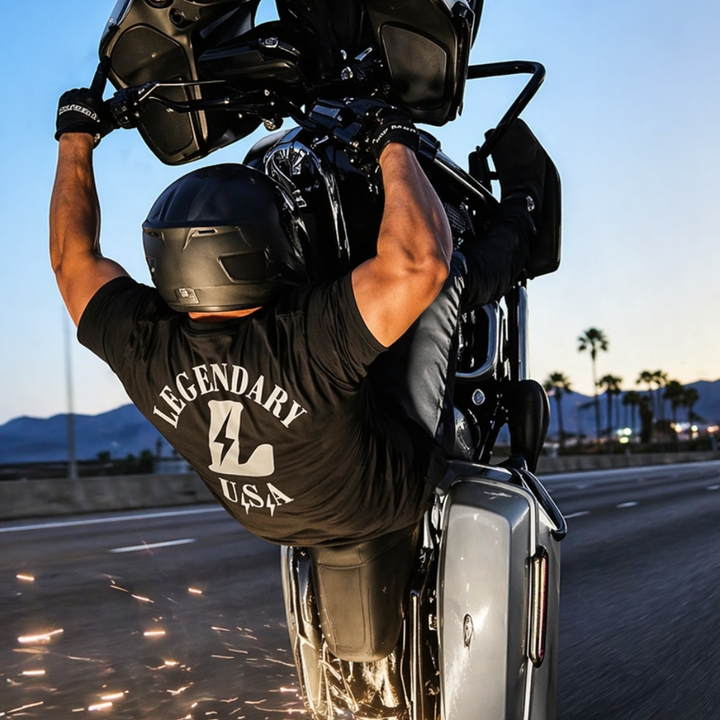
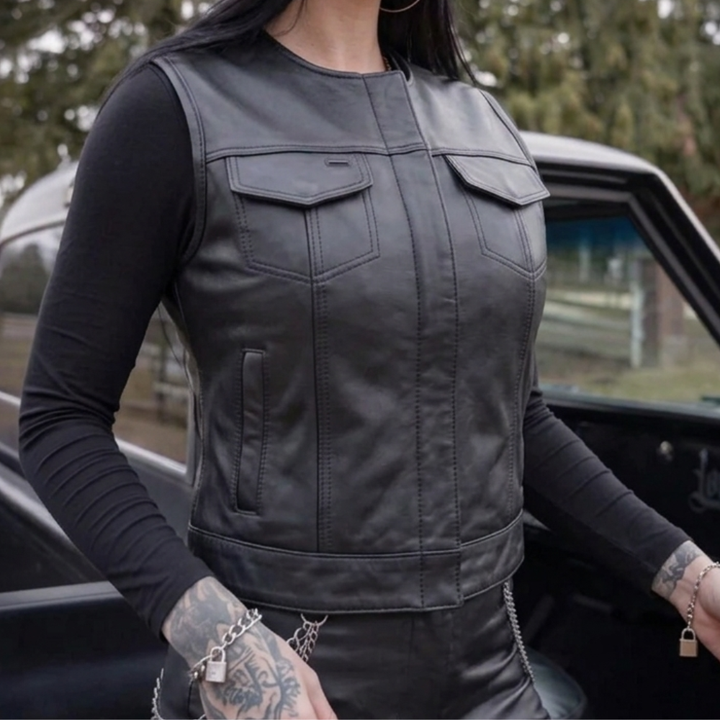


Short answer: Horsehide if you want dense, wind-blocking armor that ages like a baseball glove. Cowhide if you want versatile, easier break-in leather that plays nice with layers and your wallet. Pick based on use, not myth. Legendary USA stocks both sides of that argument, from the BECK 732 Northeaster Flying Togs horsehide jacket, from $815, to the cowhide Legendary Brotherhood Leather Vest at $195. BECK is our own house line, so the horsehide answer here is one we build, not one we borrow.
Shop Each Option
| If you want | Start here | From |
|---|---|---|
| Horsehide, maximum wind block and the patina that comes with it | BECK 732 Northeaster Horsehide Jacket, or browse all BECK Northeaster horsehide | $815 |
| Horsehide in a cafe racer cut | BECK 666 Distressed Horsehide Cafe Racer | $815 |
| Cowhide vest, easier break-in, ready to wear now | Legendary Brotherhood Leather Vest, or browse all Made in USA cowhide vests | $195 |
| Cowhide jacket with more weight options | Made in USA motorcycle jackets | Varies |
Orders over $150 ship free. Still deciding? Keep reading, the differences that actually matter are below.
- Protection: Horsehide edges out, tighter grain, better wind block. Cowhide is still excellent and comes in more weight options.
- Break-in: Horsehide = stiff at first, then legendary. Cowhide = friendlier on day one.
- Weather: Horsehide shrugs off wind and light rain a bit better; both need conditioner.
- Weight & comfort: Cowhide offers more choices and drape; better for vests and all-day wear.
- Price & availability: Horsehide costs more and is limited; cowhide is widely available and more affordable.
- Look: Horsehide ends up glossy and high-character; cowhide is classic and consistent.
For the deep dive on each leather’s history and construction, see our long-form horsehide vs. cowhide guide.
The Fiber Truth: Why They Feel Different

- Horsehide: Dense, tight grain. Feels stiffer, creaks at first, then settles into a firm, wind-stable shell. Browse our BECK horsehide jackets and vests.
- Cowhide: Open, more forgiving grain. Softer hand, broader range from mid-weight to heavy. Browse our cowhide motorcycle vests and jackets.
What that means on the bike: horsehide resists deformation at speed and in crosswinds; cowhide moves with you sooner and layers easier. That density is the whole reason riders call horsehide the superior jacket leather, and it is why Legendary USA has kept BECK horsehide in the line for decades, currently in pieces like the BECK 732 Northeaster Flying Togs jacket from $815 and the BECK 501 Trucker Style Horsehide Jacket at $725.
Thickness, Weight & “Ounce” Talk (Without the Nonsense)
Leather “ounces” ≈ thickness (1 oz ≈ 1/64″).
- Moto jackets (cowhide): commonly 3.5 to 4.5 oz for real abrasion resistance.
- Horsehide: can run slightly thinner (~3 to 3.5 oz) and still feel stout because of density.
Translation: a thinner horsehide can protect like a thicker cowhide, but it’ll feel firmer during break-in.
Break-In & Comfort Curve
- Horsehide: Weeks to months. Day one can be cardboard-y; month three feels custom.
- Cowhide: Days to weeks. Comfortable fast, especially in café racers and vests.
If you want a jacket that stands up by itself at first: horsehide. If you want one that hugs you out of the box: cowhide. Stiff does not mean unrideable daily. Legendary USA sells the BECK 501 Trucker Style Horsehide Jacket at $725 as an everyday jacket, and its 41 reviews average 4.93 from riders who wore it through exactly that first stiff stretch.
Abrasion, Wind & Weather
- Abrasion: Both are strong when full-grain and properly tanned.
- Wind: Horsehide’s tight grain wins.
- Rain: Neither is a raincoat. Horsehide beads light moisture a bit better; condition either one and let it dry naturally.
Care rule: after a wet ride, air-dry away from heat, then apply a light treatment. We like Obenauf’s Heavy Duty LP. A horsehide vest wants the same routine, nothing exotic: Legendary USA ships the BECK 566 Horsehide Motorcycle Vest from $16 and the BECK 588 from $16, and a light coat of conditioner every few months keeps the grain fed while normal wear does the break-in for you. For full care details see our leather jacket care guide.
Patina & Appearance
- Horsehide: builds a deep, glassy sheen and high-contrast creases. Screams heritage.
- Cowhide: classic, even patina with plenty of finish options (matte, semi-aniline, waxy).
If you love visible wear lines and a lived-in gloss, horsehide is your candy. If you want a steadier, more uniform look, cowhide.
Frequently Asked Questions
Is horsehide really better than cowhide?
For wind resistance, abrasion-per-thickness, and patina, yes. For ease of break-in, drape, and price, cowhide wins. The right answer depends on use.
Which lasts longer, horsehide or cowhide?
Both last decades when properly cared for. Horsehide tends to age more dramatically (deeper patina, glossier sheen) while cowhide ages more uniformly.
Should I buy horsehide for a vest or just a jacket?
Either, but vests are typically built in cowhide for drape and weight. Horsehide vests exist (BECK makes them) but most riders want a thinner, more flexible vest leather.
What’s the typical price difference?
Horsehide jackets generally cost 20 to 50% more than equivalent cowhide pieces, due to limited tannery supply and longer construction time.
Will horsehide soften eventually?
Yes, significantly. Most riders report a clear softening within 20 to 40 hours of wear, with full break-in around 60 to 100 hours.
Bottom Line
- Horsehide: pay more up front, break it in, enjoy fortress-level wind resistance and a showpiece patina.
- Cowhide: get moving now, layer easier, save some cash, and still ride protected.
Decided? Shop BECK Northeaster horsehide jackets or Made in USA cowhide vests. Still torn? Tell us how you ride and we will put you in the right hide. No fluff, no fashion math, just gear that works.
Article originally published August 2025. Updated May 2026 with FAQ, link cleanup, and verified product references.