




The way to break in a leather motorcycle vest is simple: wear it, often, and let body heat and movement soften the hide where your body actually flexes. Most full-grain cowhide vests break in within two to four weeks of regular wear; dense horsehide takes a season. Everything else — conditioner, water tricks, heat — is either a small assist or an outright mistake. Here is the process that works, in order.
Step 1: Start With the Right Size
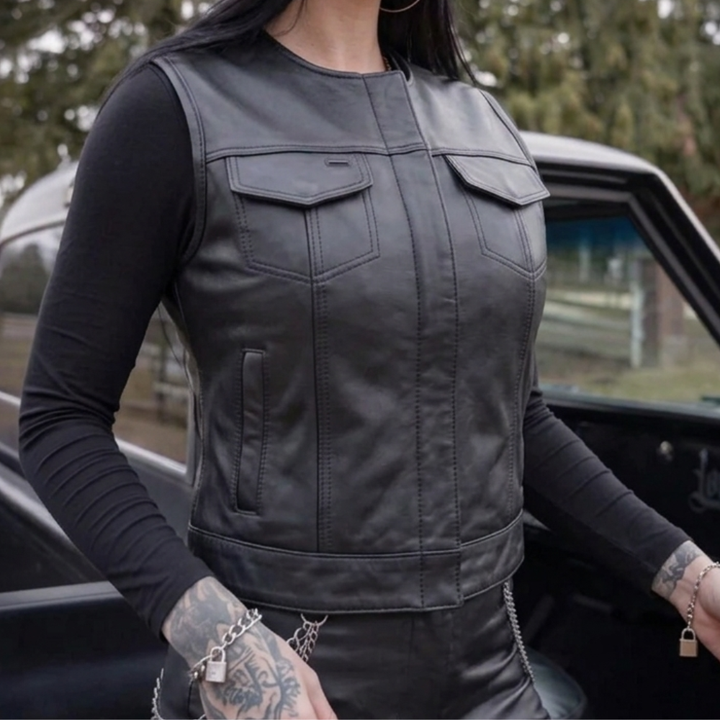
Break-in molds a vest to your body. It does not resize it. Leather gives a little across the shoulders and back as it softens, but a vest that strains at the snaps on day one will still strain at the snaps in month three. Before you invest weeks of wear, confirm the fit: close but comfortable over your usual riding layers, hem at the belt line, shoulders seated. If you're between sizes, our motorcycle vest sizing guide walks through the measurements.
Step 2: Wear It — That's the Actual Method

Leather softens through heat, moisture, and flex, and your body supplies all three exactly where they're needed. The vest stiffens across the shoulders when you reach for the bars, creases at the sides when you sit, and warms through everywhere it touches you. That targeted, repeated stress is what turns a stiff panel of hide into a vest that feels like yours.
So wear it beyond the bike. Put it on around the house. Wear it on errands, at the shop, over a hoodie in the evening. Two to three weeks of daily wear accomplishes what months of weekend-only riding would. Roll your shoulders, cross your arms, reach forward — normal movement is the tool.
Step 3: Work the Stress Points by Hand
Between wears, help the leather along where it works hardest. Flex the armholes with your hands. Roll the shoulder seams gently between your palms. Fold the side panels the way they crease when you sit, then smooth them flat. You're not trying to crush the leather — you're repeating the same motions wear would, a few hundred cycles ahead of schedule. Skip gimmicks like rolling pins, mallets, or sitting on the vest; concentrated crushing breaks fibers instead of relaxing them.
Step 4: Condition Lightly, and Late
A quality vest arrives with the hide's oils intact, so hold off on conditioner for the first week or two. After that, a thin coat of neutral leather conditioner — applied with a clean cloth, worked into the shoulders and armholes, excess buffed off — keeps the hide supple as it flexes. Once or twice a season is enough. Heavy oiling is the most common break-in mistake we see: it over-softens the leather, darkens it unevenly, and can leave a vest limp instead of broken in. The same rules that apply to gloves apply here; see our guide to leather motorcycle glove care for product basics.
What Not to Do
Every break-in shortcut trades leather life for speed. Don't soak the vest — water strips oils and dries the hide stiff and blotchy. Don't use ovens, hair dryers, or car dashboards — dry heat cooks leather and causes cracking. Don't slather on oil to "speed things up" — you'll get a soft vest with no structure. And don't send it to a patch sewer before break-in is done; sew patches after the leather has settled into its final shape, so the panels lie flat under the stitching.
Cowhide vs Horsehide: Two Different Break-In Timelines
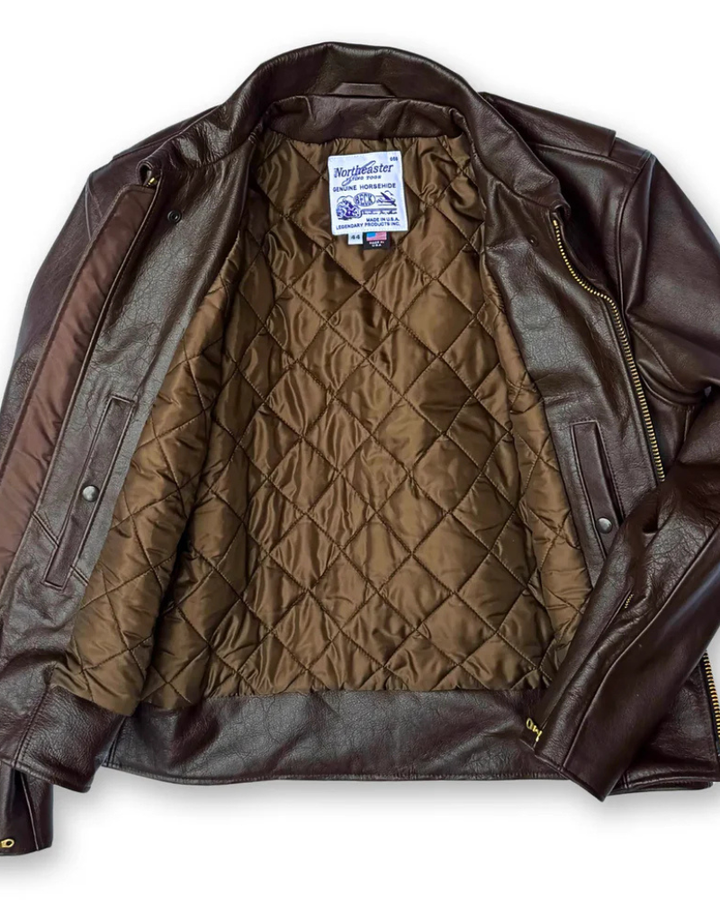
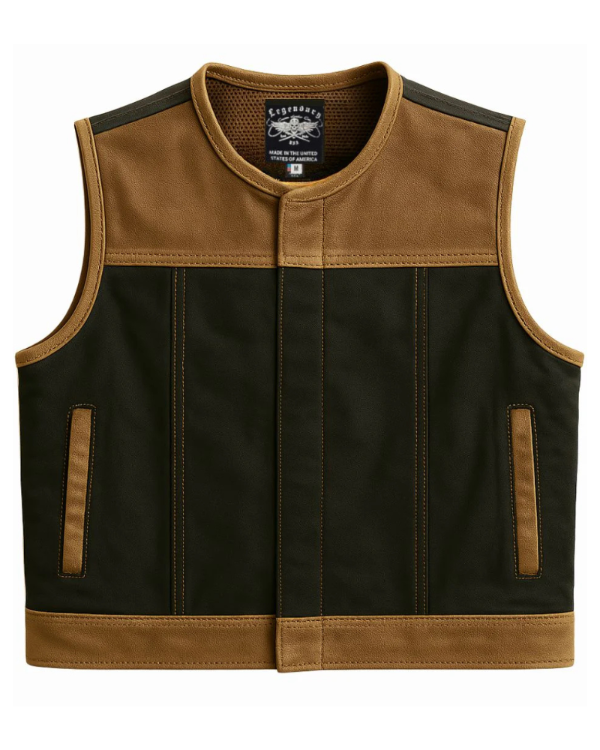
Not all vest leather breaks in on the same schedule. Full-grain cowhide — the standard for club vests — starts moderately stiff and reaches a comfortable, molded fit in two to four weeks of steady wear. Horsehide is a different animal: denser, more tightly grained, and noticeably stiffer out of the box. A horsehide vest like the BECK 566 Horsehide Motorcycle Vest can take a full riding season to fully mold, and it rewards that patience with a slick, glossy patina and a longer working life than almost any cowhide. If you want broken-in comfort by next month, buy cowhide. If you want a vest your kids will argue over, buy horsehide and put in the miles. More on that tradeoff in horsehide vs cowhide.
Frequently Asked Questions
- How long does it take to break in a leather motorcycle vest?
- Most full-grain cowhide vests break in over two to four weeks of regular wear. Lighter-weight leathers settle faster; dense hides like horsehide take longer — often a full riding season before they fully mold to your body. The timeline depends on how often you wear the vest, not on any product you apply. A vest worn daily breaks in several times faster than one worn on weekends.
- What is the fastest way to break in a leather vest?
- Wear it. Body heat and movement are the only break-in methods that soften leather where your body actually needs it — across the shoulders, at the armholes, and where the vest folds when you sit. Wear the vest around the house, on errands, and on every ride for two to three weeks. Shortcuts like soaking, oven heat, or heavy oiling soften leather everywhere at once and shorten its life.
- Should I condition a new leather vest?
- Lightly, and only after the first week or two of wear. A quality vest ships with enough oils in the hide; drowning it in conditioner on day one over-softens the leather and can darken it unevenly. After some wear, apply a thin coat of a neutral leather conditioner with a clean cloth, focusing on the shoulders and armholes, then buff off the excess. Once or twice a season is plenty.
- Can I get a leather vest wet to break it in?
- No. Deliberately soaking a vest strips oils from the hide and can leave the leather stiff, blotchy, and prone to cracking as it dries. Getting caught in the rain won't ruin a vest — let it air-dry at room temperature away from heat, then condition lightly. But water as a break-in method trades a few days of patience for years of the vest's life. Wear is the correct tool.
- Does horsehide take longer to break in than cowhide?
- Yes. Horsehide is denser and more tightly grained than cowhide, so it starts stiffer and holds its shape longer. Expect a horsehide vest to feel like armor for the first month and to keep improving for a full season, developing a glossy patina cowhide can't match. Cowhide reaches a comfortable break-in in two to four weeks. Neither is better universally — horsehide rewards patience, cowhide rewards immediacy.
- Will a leather vest stretch as it breaks in?
- A leather vest will give slightly across the back and shoulders as it molds to you, but it will not grow a full size. Buy the size that fits close but closes comfortably over your normal riding layers, and let break-in handle the rest. If a vest is tight enough that snaps strain shut, it's the wrong size — break-in won't rescue it. Side lacing covers seasonal changes better than wishful sizing.
The Bottom Line
Breaking in a leather motorcycle vest takes wear, a little handwork at the stress points, and a light touch with conditioner — nothing more. Start with the right size, put the vest on every day for a few weeks, and refuse the shortcuts that trade leather life for speed. Every Legendary USA vest in our USA-made motorcycle vest collection is cut from full-grain hide specifically so this process pays off: the vest you break in this month is the vest that fits nobody else for the next twenty years.