




Leather motorcycle gloves last 5–10 years with proper care. They last 1–2 years without it. The difference is not complicated — it is consistent conditioning and knowing what not to do. This guide covers the full care cycle for leather gloves, with specific notes on deerskin versus cowhide, because the two hides respond differently to conditioning and cleaning.
The Basic Care Cycle: Clean, Condition, Store

Every leather glove care routine runs the same three-step sequence. Clean first to remove dirt, sweat, and road contamination that work into the grain and break down the leather from the surface. Condition second to replace the natural oils that cleaning and riding heat draw out. Store correctly so the glove keeps its shape and does not develop mildew between rides.
How often you run this cycle depends on how often you ride. For daily riders, a full clean-and-condition pass every two to four weeks is appropriate. For weekend riders, once a month during the riding season and a single conditioning pass before storage at the end of the season covers it. Riders who get caught in rain regularly need to clean and condition after every wet ride.
Spot cleaning — wiping down the palm and cuff with a damp cloth after a sweaty ride — does not replace the conditioning step. Sweat is mildly acidic and pulls moisture out of leather. If you sweat heavily in your gloves and only wipe them down without conditioning, the leather will dry out faster than the cleaning interval would suggest.
How to Break In New Leather Motorcycle Gloves
The correct way to break in new leather motorcycle gloves is to wear them and ride. Deerskin in particular does not need aggressive break-in techniques — it is already soft enough to wear comfortably on the first ride, and it conforms to your hand shape within three to five rides. The heat from your hand and the natural flex of gripping the bars does the work.
A light application of conditioner after the first or second ride can help the leather soften slightly faster and begin conforming to your knuckle and grip profile. Apply a small amount to the palm and finger joints — the areas that see the most flexing — and work it in with your fingers before the glove dries. This is a light step, not a heavy soak.
Do not try to speed up the break-in by soaking deerskin gloves in water. The wet-last method that works on full-grain cowhide boots can damage the fine grain on deerskin, causing it to swell unevenly and lose surface integrity. For cowhide gloves with a longer break-in period, light conditioning is still the better approach over soaking.
If new gloves feel stiff specifically at the knuckle seam, that is normal. The stitching pulls tighter than the leather panel itself. Repeated flexing — open and close your fist 50 times before the first ride — loosens the seam area faster than any conditioning product will.
Cleaning Leather Gloves After Wet Rides
Getting leather motorcycle gloves wet is not an emergency — it is an event that requires a specific response. Water itself does not permanently damage leather if handled correctly. The damage comes from drying too fast, drying too hot, or not conditioning after the leather dries out.
After a wet ride, remove your gloves and let them air dry at room temperature. Set them palm-side down on a flat surface, or prop them open slightly so air can circulate inside. Do not put them near a heat source — no radiators, no forced-air vents, no direct sunlight, and absolutely no oven or heat gun. Heat causes leather to stiffen, shrink, and crack. Room temperature is the only safe drying method.
Once the gloves are fully dry — which takes several hours depending on how wet they got and the humidity — apply a light conditioner and work it into the leather. Water draws the natural oils out of leather as it evaporates, and conditioning replaces what was lost. Skipping this step after a wet ride is the most common reason leather gloves develop a dull, brittle surface texture after a season of mixed-weather riding.
If your gloves got soaked through — rain, puddle, full submersion — you may need a second conditioning pass 24 hours after the first once the leather has fully absorbed the initial application. Heavily saturated leather takes longer to stabilize, and one pass may not fully restore the oil balance.
The Right Conditioner for Deerskin vs Cowhide
Deerskin and cowhide respond differently to conditioners, and using the wrong product on the wrong hide creates problems. Cowhide is a denser, tighter-grained leather that can absorb heavier oil-based conditioners like mink oil without going limp. Mink oil penetrates cowhide effectively, and a periodic mink oil treatment is appropriate for full-grain cowhide riding gloves or jackets.
Deerskin has a finer, more open grain structure and is already a softer hide. Heavy oil conditioners — pure mink oil, neatsfoot oil — can oversaturate deerskin, causing it to go soft to the point of losing structural integrity, darkening the color significantly, and causing the glove to stretch out of shape. For deerskin, use a lighter conditioner: Leather Honey, Bickmore Bick 4, or Lexol are commonly recommended because they condition without loading excess oil into the grain.
Apply any conditioner sparingly on the first pass and observe how the leather absorbs it. Deerskin should absorb a light coat without appearing wet or greasy after 15 minutes. If the surface still looks wet at that point, you have applied too much — wipe the excess off with a clean cloth and let it dry completely before adding more.
Avoid silicone-based leather products on riding gloves. Silicone coats the surface rather than penetrating the grain, which creates a slick feel on the palm and interferes with grip. On the fingertip area it can also reduce or eliminate touchscreen function. Read ingredient lists before buying any new conditioner — silicone is sometimes listed as dimethicone or polydimethylsiloxane.
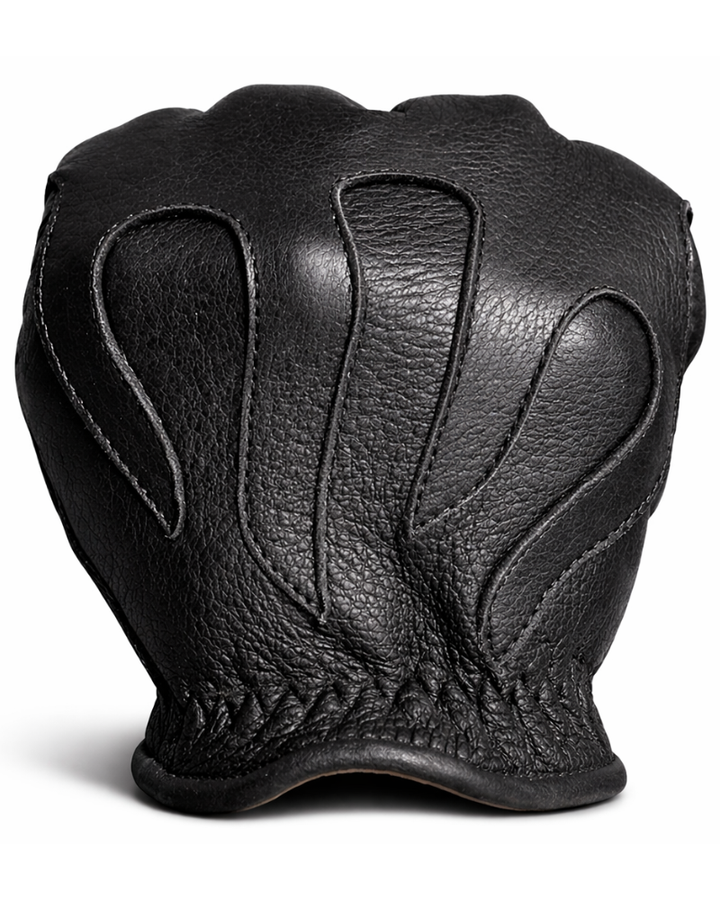
The Legendary USA deerskin glove lineup — including the Spitfire Deerskin Short Wrist Touchscreen Gloves and the Aramid Lined Deerskin Touchscreen Gloves — is made from American deerskin and should be treated with the lighter conditioner approach described above.
What Actually Kills Leather Gloves
Machine washing is the fastest way to ruin a leather glove. The agitation, heat, and detergent strip the oils from the leather in a single cycle, leaving the hide dry, stiff, and often cracked before the glove ever dries. There is no leather glove in existence that improves after a washing machine cycle. Clean by hand with a damp cloth and a leather-specific cleaner only.
Direct heat drying is the second-fastest method of destruction. Even a brief session in front of a space heater or dryer causes leather to stiffen and shrink. The damage is permanent — once leather dries hard from heat, conditioning cannot fully reverse it. Always dry at room temperature.
Petroleum-based products — gasoline, chain lube, engine oil — are difficult to remove from leather and continue degrading the hide after contact. If you get petroleum products on your gloves, wipe off as much as possible immediately with a clean cloth, then clean with a leather-safe cleaner and condition. The longer petroleum sits in the leather, the more damage it does.
Storing gloves in a sealed plastic bag or airtight container creates the conditions for mildew growth, especially if the leather is even slightly damp. Store gloves in an open-air environment — a shelf, a hook, a breathable bag. If you are storing gloves at the end of a riding season, condition them, let them dry fully, and store them in a location with stable temperature and low humidity.
Extended UV exposure fades leather color and slowly breaks down the surface grain. If you store your bike outdoors, do not leave gloves on the handlebars or seat in direct sun. One summer of UV exposure will age the leather appearance by several years.
Browse the Legendary USA deerskin motorcycle gloves collection — including American-made deerskin gloves in XS through 2XL. Additional reading: Legendary USA gloves buying guide | Best motorcycle gloves for beginners.
Frequently Asked Questions
Can you put leather motorcycle gloves in a washing machine?
No. Machine washing destroys leather motorcycle gloves. The agitation, heat, and detergent strip the natural oils from the leather, cause the hide to stiffen and crack, and can shrink the glove to the point where it no longer fits. Even a gentle cycle is too aggressive for a leather glove that has any structural integrity worth preserving. Clean leather gloves by hand using a damp cloth and a leather-specific cleaner, then condition and air dry.
What is the best conditioner for deerskin motorcycle gloves?
Deerskin responds best to light, water-based conditioners rather than heavy oil-based products like pure mink oil. Deerskin is already a softer, more pliable hide with a finer grain than cowhide — heavy conditioning can oversaturate it, causing the grain to go limp and the glove to lose its shape. Leather Honey and Bickmore Bick 4 are commonly recommended for deerskin because they condition without overloading the hide. Apply sparingly, work it in with your fingers, and let the glove air dry before wearing.
How long does it take to break in deerskin motorcycle gloves?
Deerskin motorcycle gloves typically break in within 3 to 5 rides for most riders. Deerskin is naturally soft and pliable compared to cowhide or horsehide, so the break-in period is short. The glove will conform to the exact shape of your hand as the leather softens and stretches slightly in the right places. A light application of conditioner after the first ride can accelerate this process, but is not required. Do not force the break-in by soaking the glove in water — that method can damage the fine grain on deerskin.