

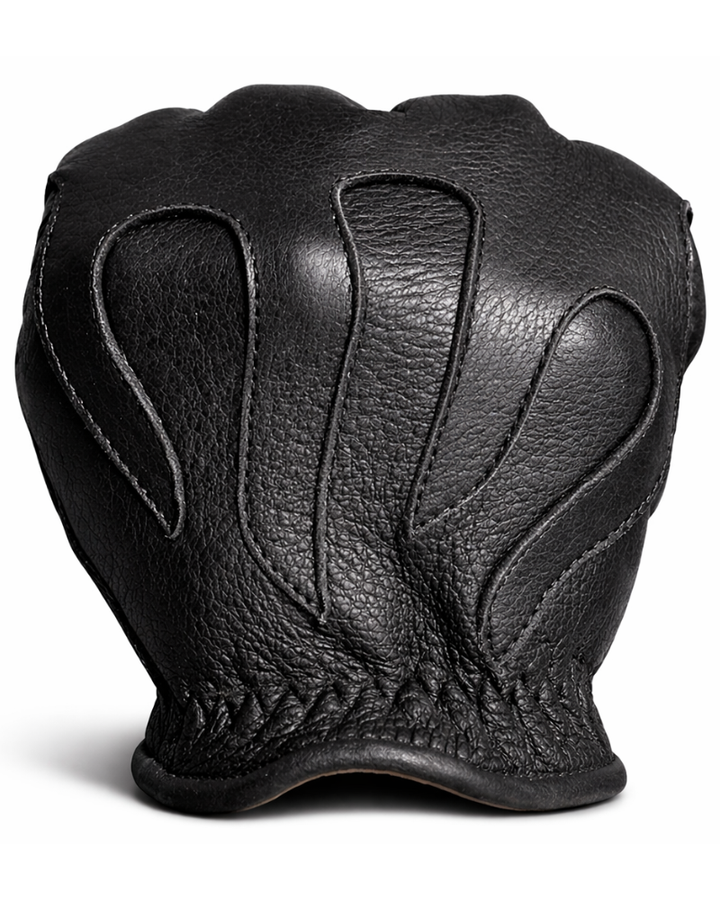




To remove stains from leather motorcycle gloves, identify the stain type first, then use the gentlest method that works: blot fresh spills immediately, draw out oil and grease with cornstarch or talc, lift salt with a mild water-and-vinegar solution, and blend water marks by lightly dampening the whole panel. Always test on a hidden spot, work from the outside of the stain inward, let the leather air dry, and finish with conditioner. This guide breaks down each stain type step by step.
Leather motorcycle gloves earn their stains honestly, from chain lube, road salt, rain, and sweat. The good news is that most stains come out if you act early and treat the leather gently. At Legendary USA we build gloves from full-grain American deerskin and goatskin, and the same care principles apply across every hide we sell.
Before you start: the ground rules

Three rules keep stain removal from becoming stain damage. First, always test any cleaner or method on a hidden area, like the inside of the cuff, before touching the visible leather. Second, start with the gentlest technique and only escalate if it fails. Third, always condition after cleaning, because every cleaning method removes some of the leather's natural oils. These rules matter most on soft hides. Deerskin absorbs and reacts faster than stiff cowhide, so a light touch is critical.
Work from the outside edge of a stain inward. Starting in the center and pushing outward spreads the stain into clean leather and creates a wider ring. Blot, never rub, especially on fresh spills. Rubbing grinds the stain deeper into the grain.
How to remove oil and grease stains
Oil and grease are the most common motorcycle glove stains, and they come out through absorption, not scrubbing. Sprinkle cornstarch, talcum powder, or baking soda directly onto the stain and press it lightly into the leather with your fingertip. Leave the powder on for several hours, ideally overnight, so it draws the oil up out of the grain.
Brush the powder away with a soft dry cloth. If a shadow remains, repeat the process with fresh powder. Once the oil is gone, apply a thin coat of leather conditioner to restore the finish. Resist the urge to hit fresh grease with soap and water first, which can emulsify the oil and drive it deeper into the hide.
How to remove water stains
Water stains look alarming but are usually the easiest to fix. A water mark is just an uneven ring where minerals settled as the leather dried. To remove it, lightly dampen the entire panel with a barely wet cloth so the whole area dries evenly instead of leaving a hard edge. Let the glove air dry slowly at room temperature.
Never speed-dry wet leather with a hair dryer, radiator, or direct sun. Fast heat drives out moisture and oils together, leaving the leather stiff and prone to cracking. Once the glove is fully dry, condition it to bring back softness and even color. For a deeper look at getting leather wet and dry the right way, see our leather glove care buyer's guide.
How to remove salt stains from winter riding
Road salt leaves white, crusty lines that will dry leather out if left alone, so treat them promptly. Mix equal parts cool water and white vinegar, dampen a soft cloth, and gently wipe along the salt line until it releases. Do not soak the glove. Follow with a clean, damp cloth to remove the vinegar residue, then let the leather air dry.
Because salt pulls moisture out of leather, conditioning afterward is not optional. Work a conditioner into the cleaned area and the surrounding panel so the hide rehydrates evenly. Riders who log cold-weather miles in gloves like the deerskin fleece-lined short-wrist gloves should make salt removal part of their regular winter routine.
How to handle stubborn or set-in stains
If a stain resists powder and gentle cleaning, step up carefully to a dedicated leather cleaner made for garment leather, not saddle soap, which is too harsh for soft riding hides. Apply a small amount to a cloth, not directly to the glove, and work it in with light circular motions from the outside in. Wipe clean and let it dry.
Accept that some stains never fully disappear, and that is not failure. A shadow on well-worn leather is part of the story. What matters is that the leather stays supple and structurally sound. If you are shopping for a fresh pair while you rehab an old one, the USA-made motorcycle gloves collection has full-grain options built to age well.
Spot cleaning vs. deep cleaning: which do you need?
Spot cleaning targets a single fresh stain and takes minutes; deep cleaning refreshes the whole glove and takes an afternoon. Reach for spot cleaning the moment a spill happens, because fresh stains lift far more easily than set ones. Save deep cleaning for the end of a hard season or when overall grime has dulled the leather. The two work together: quick spot treatment prevents most stains from ever setting, so deep cleans stay rare.
Frequently asked questions about removing stains from leather gloves
- How do I remove stains from leather motorcycle gloves?
- Start by identifying the stain, then treat it with the gentlest method first. Blot fresh spills immediately, never rub. For grease and oil, dust the spot with cornstarch or talc and let it draw the oil out overnight. For general grime, use a damp cloth with a small amount of mild leather cleaner. Work from the outside of the stain inward, let the leather air dry, then condition. Test any product on a hidden spot first.
- How do I get oil or grease stains out of leather gloves?
- Oil and grease respond to absorption, not scrubbing. Sprinkle cornstarch, talcum powder, or baking soda directly on the stain and press it gently into the leather. Leave it on for several hours or overnight so it pulls the oil to the surface. Brush the powder away with a soft cloth and repeat if a shadow remains. Finish with a light conditioner. Avoid soap and water on fresh grease, which can drive the oil deeper.
- Can I remove water stains from leather gloves?
- Yes. Water stains on leather are usually fixable. Lightly dampen the entire panel with a barely wet cloth so the water mark blends into the surrounding leather instead of leaving a hard ring. Let the glove air dry slowly at room temperature, away from heat. Once dry, condition the leather to restore softness and even out the color. Never dry wet leather with a hair dryer or near a heater, which causes stiffening and cracks.
- Will removing a stain damage my leather gloves?
- It can if you use the wrong method. Harsh chemicals, saddle soap on soft hides, alcohol, and aggressive scrubbing all strip oils and can lighten or crack leather. The safe approach is to always test on a hidden area first, start with the gentlest technique, and finish with conditioner to replace lost moisture. Soft hides like deerskin need an especially light touch. Done carefully, stain removal will not harm the leather.
- How do I get salt stains off leather gloves after winter riding?
- Salt leaves white crusty marks that must be removed before they dry out the leather. Mix a solution of equal parts water and white vinegar, dampen a cloth, and gently wipe the salt line until it lifts. Do not soak the glove. Wipe again with a clean damp cloth to remove the vinegar, let the leather air dry, then condition thoroughly. Salt draws moisture out of leather, so conditioning afterward is essential.
- How often should I clean stains off my leather gloves?
- Treat spills and stains as soon as you notice them, since fresh stains lift far more easily than set ones. Beyond spot cleaning, a full wipe-down and condition every few weeks of regular riding keeps grime from building into stains in the first place. Riders in wet, salty, or dusty conditions should clean more often. Consistent light maintenance beats occasional deep cleaning and keeps the leather looking right for years.
The bottom line on stain removal
Most stains on leather motorcycle gloves come out if you catch them early and treat the leather with respect. Absorb oil with powder, blend water marks with even dampening, lift salt with a mild vinegar solution, and always finish with conditioner to replace what cleaning takes away. Test first, work gently from the outside in, and let the leather dry on its own. Handled this way, a good pair of American-made gloves keeps its character without carrying every stain it ever met.