

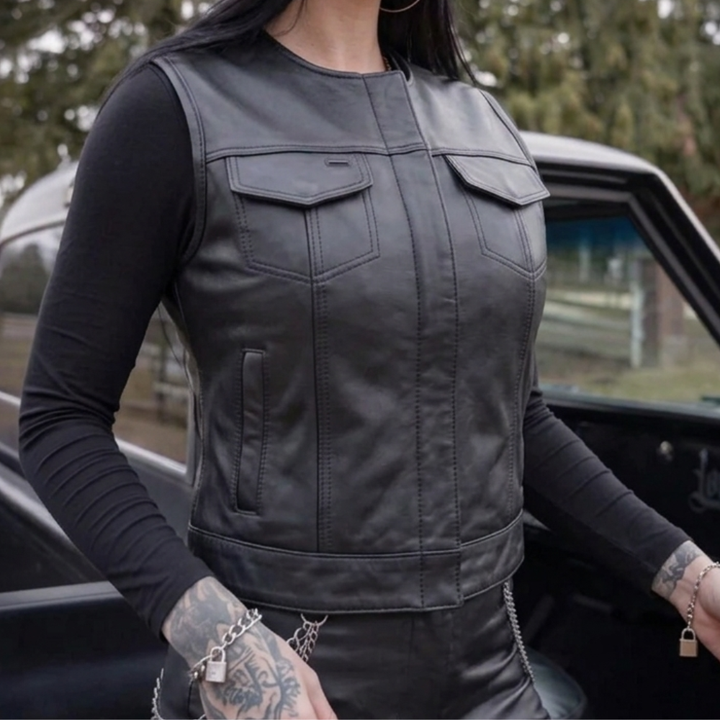


Leather-bound armholes are vest armhole openings finished with a strip of leather stitched over the raw edge of the shell. The binding stops fraying, holds the armhole's shape, and puts smooth leather against your arm instead of a cut edge. It is one of the fastest ways to tell a vest built to last from a vest built to a price.
This guide covers what armhole binding is, why it outlasts raw and serged edges, where Legendary USA uses it, and how to judge armhole construction before you buy.
Top Picks, Shop Direct
| Product | What it is | From |
|---|---|---|
| Legendary Reaper Men's Leather Club Vest | Legendary USA. Rated 4.89 from 93 customer reviews. | $215.00 |
| Legendary Revolution Men's Black Denim Vest | Legendary USA. Rated 4.95 from 79 customer reviews. | $65.00 |
| Legendary 'Nightshift' Black Denim Vest | Legendary USA. Rated 4.95 from 79 customer reviews. | $145.00 |
| Legendary Outlaw Men's Leather Motorcycle Vest | Legendary USA. Rated 4.98 from 53 customer reviews. | $325.00 |
Prices shown are current at time of writing. Orders over $150 ship free.
What Leather Binding on an Armhole Actually Is

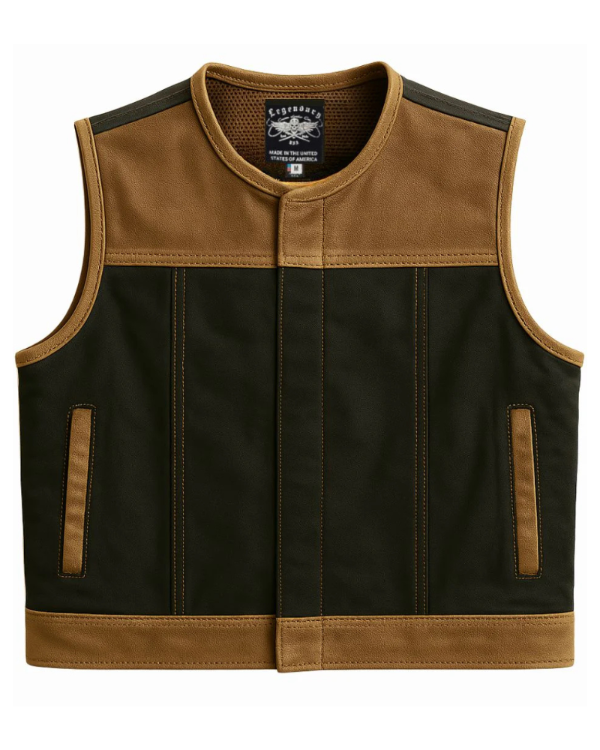
When a vest panel is cut, the armhole is a raw curved edge in leather, denim, canvas, or nylon. The maker has three choices: leave it raw, serge it with overlock thread, or bind it. Binding means folding a separate strip of leather over that edge and stitching through all layers, the same way a quality blanket gets an edge. The result is a clean, rounded rim of leather around the entire opening.
Binding is a labor step. The strip has to be cut, skived, eased around a curve, and sewn without puckering. That is handwork, and it is one reason a bound vest costs more to produce than an imported vest with hidden serged edges. It is also one of the details riders never think about until an unbound armhole starts curling and fraying two seasons in.
Bound vs. Unbound Armholes: Why the Edge Matters
The armhole takes more repeated friction than almost any other edge on a motorcycle vest. Every reach for the bars, every shoulder check, every time you pull the vest on over a jacket, the opening flexes and rubs. The comparison is straightforward:
Bound armholes take abrasion on the leather strip, not the shell. The opening keeps its shape, the edge stays smooth against your arm, and if the binding ever wears through decades on, it can be replaced without rebuilding the vest.
Unbound or serged armholes take abrasion on the shell material itself. Denim and canvas fray. Thin leather stretches and ripples. Overlock thread wears through and unravels. The vest still functions, but the opening loses shape and comfort first — and it is the first place a cheap vest looks cheap.
For a full walkthrough of the other construction points worth checking, read our roundup of motorcycle vest construction details that matter.
Where Legendary USA Uses Leather Binding
Legendary USA builds its vests in the USA, and binding shows up where lightweight shells need durable edges. The Legendary Black Jack lightweight Cordura vest is the clearest example: a water-resistant Cordura nylon shell with leather armhole binding, leather neck binding, and leather pocket flaps. The nylon keeps the vest light and breathable for hot-weather riding; the leather binding gives the high-wear edges the durability nylon alone would not have. The Black Jack also carries wide armhole openings specifically so you can layer under it.
On heavier shells, edge finishing matters just as much. The Legendary Revolution denim motorcycle vest is cut from 13.5 oz pre-rinsed North Carolina cotton denim with double-stitched accents — a denim vest built with the same construction standards as a leather one. You can compare the trade-offs between materials in our guide to what makes a denim motorcycle vest worth wearing.
How to Judge Armhole Construction Before You Buy
Run through four checks on any vest you are considering:
Look at the edge itself. Turn the armhole inside out. A bound edge shows a clean leather strip stitched through on both sides. Loose overlock thread or a raw folded edge tells you where the maker saved money.
Check the stitching. Binding should be sewn with even, straight stitches and no puckering around the curve. Puckered binding was rushed, and rushed binding fails at the fold.
Test the fit in riding position. Sit as you would on the bike and reach forward. The armhole should clear your shoulder without digging into your armpit. A bound edge that fits wrong is still the wrong vest.
Think about layering. If you ride spring and fall, wider armhole openings let you add a flannel or thermal without the vest binding across your back. If you ride mostly in summer heat, a trimmer opening over a t-shirt works fine — the smooth bound edge is what keeps it comfortable against bare skin.
Who Should Prioritize Bound Armholes
If you ride daily, commute year-round, or put a vest on over different layers through the seasons, bound armholes belong on your checklist — that vest will flex through thousands of on-and-off cycles. If a vest is an occasional-wear piece, edge finish matters less for lifespan, though the comfort difference against a bare arm is still real. Riders who wear a vest as a patch holder should also note that edge durability and a stable shape keep a back panel sitting flat for clean patch presentation.
Browse the full line of USA-made motorcycle vests to compare shells, edge construction, and pocket layouts side by side.
Frequently Asked Questions
- What are leather-bound armholes on a motorcycle vest?
- Leather-bound armholes are armhole openings finished with a strip of leather folded over the raw edge and stitched down. The binding covers the cut edge of the shell material so it cannot fray, curl, or stretch out of shape. It also puts a smooth, rounded surface against your arm instead of a raw seam, which matters when you wear a vest over a t-shirt in summer heat.
- Do bound armholes make a motorcycle vest last longer?
- Yes. The armhole is one of the highest-stress edges on a vest because your arms and shoulders work against it every time you reach for the bars. An unbound edge takes that abrasion directly and wears first. A leather binding takes the friction instead of the shell, and it holds the opening's shape over years of riding. When a vest fails at the armhole, it is almost always an unbound or poorly finished edge.
- Are leather-bound armholes only found on leather vests?
- No. Leather binding is used on textile vests too, and that is often where it earns its keep. The Legendary Black Jack pairs a water-resistant Cordura nylon shell with leather armhole and neck binding, so the lightweight shell gets a durable leather edge exactly where wear concentrates. On a denim or canvas vest, a bound armhole protects a fabric edge that would otherwise fray with use and washing.
- How should motorcycle vest armholes fit?
- Armholes should clear your shoulder joint without cutting into your armpit when your hands are on the bars. Check fit in the riding position, not standing up straight. If you plan to layer a flannel or jacket liner underneath in cooler weather, look for wider armhole openings so the vest does not bind across your chest and shoulders when you add a layer.
- What is the difference between bound and serged armhole edges?
- A serged edge is overlock-stitched thread wrapped around the raw material — fast, cheap, and hidden inside most imported vests. A bound edge wraps the raw material in a separate strip of leather that is stitched through. Serging keeps an edge from unraveling on day one; binding protects the edge for the life of the vest and keeps its shape. Binding costs more labor, which is why budget vests skip it.
The Bottom Line
Armhole binding is a small strip of leather that tells you a lot about the rest of the vest. A maker willing to cut, ease, and stitch binding around a curved opening is a maker paying attention everywhere else too. Check the edge, check the stitching, and check the fit in riding position — then buy the vest once instead of twice. Legendary USA binds edges where wear concentrates because a vest should outlast the bike it was bought for.