

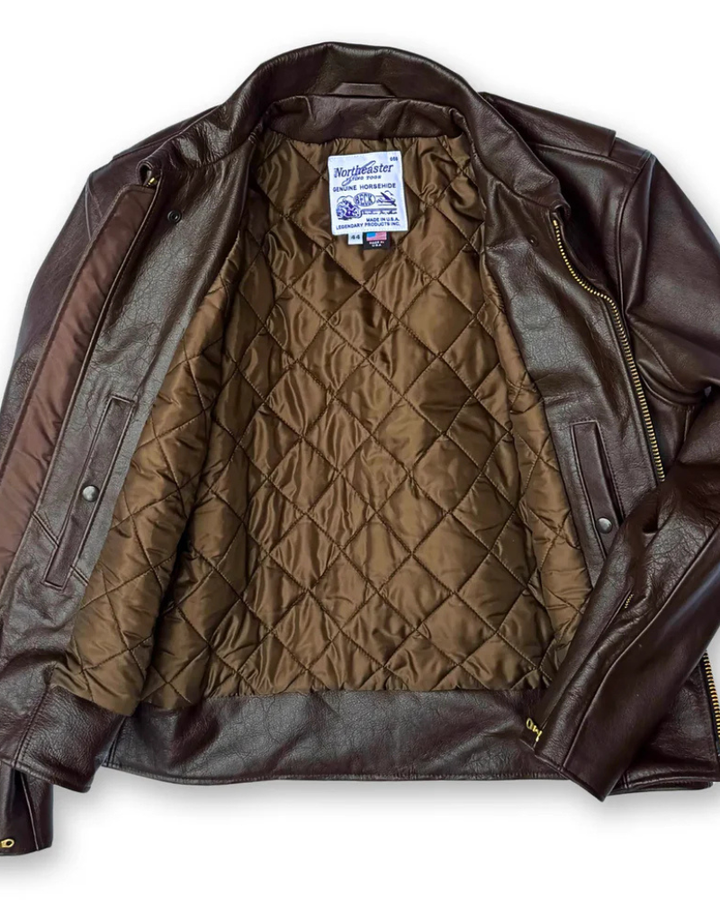
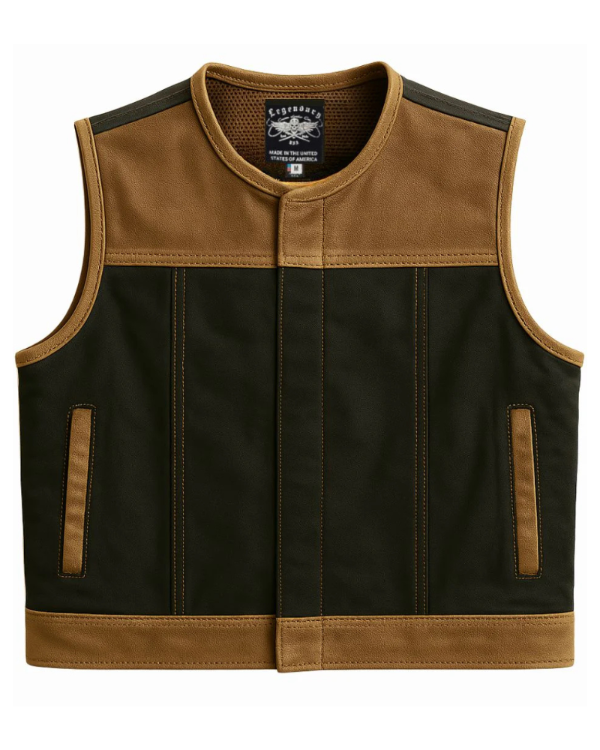
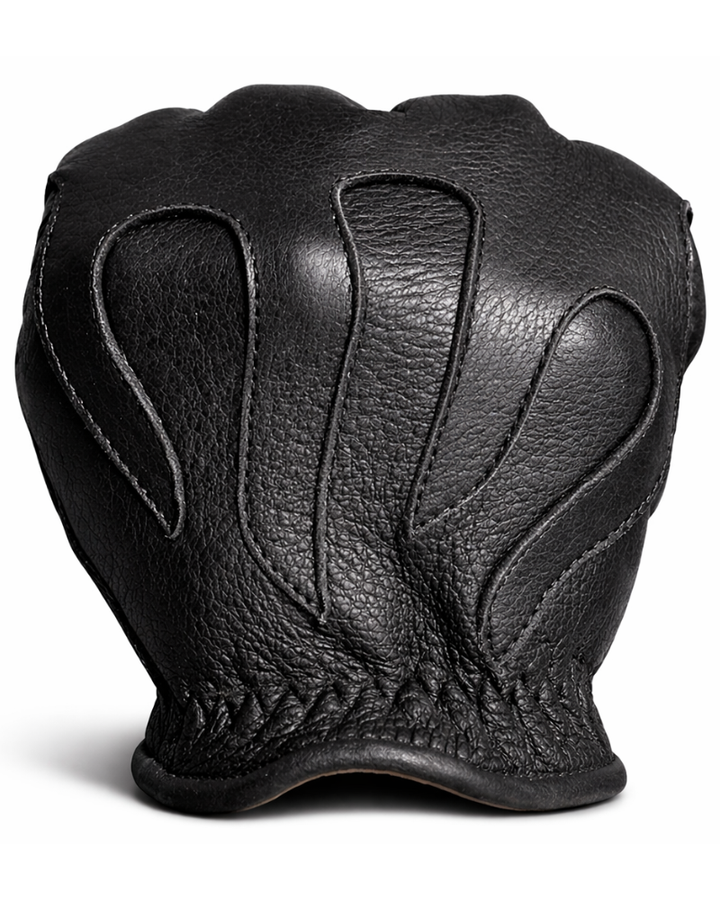
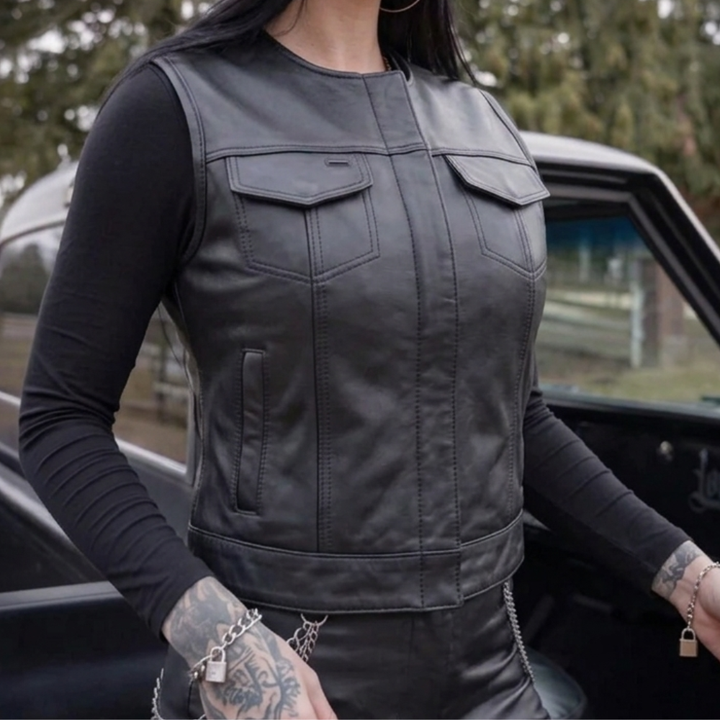


Motorcycle vest construction — the leather grade, the back panel, the armholes, the hardware — is what separates a vest that lasts twenty years from one that sags by its second summer. Two vests can look identical on a hanger and be built nothing alike. This roundup covers the seven construction details riders should check before buying any vest, leather or denim, and the honest tradeoffs behind each one.
1. Full-Grain Leather (or Honest Heavyweight Denim)

Everything starts with the material. Full-grain leather keeps the hide's strongest outer layer intact, so it breaks in, builds patina, and carries patch weight without sagging. Corrected-grain and split leathers are sanded or layered to look similar at a fraction of the durability — fine on a fashion vest, wrong on riding gear. The same honesty test applies to denim: a riding-weight denim vest like the Legendary Revolution Men's Black Denim Vest uses heavyweight fabric that holds patches flat and stands up to wind, where a repurposed fashion vest folds and flutters.
2. One-Piece Back Panel
A back cut from a single section of hide, with no center seam, is the patch rider's non-negotiable. It gives the sewer a flat, uninterrupted field, and it removes the seam most likely to pucker under a big back patch. It also costs the maker more hide per vest, which is exactly why budget vests seam the back. The full story of this detail is in our piece on the one-piece back panel in club vest heritage.
3. Bound Armholes
The armhole is the hardest-working edge on a vest — your arms cross it thousands of times a ride. Quality vests wrap that edge in a stitched leather binding that keeps its shape, resists stretch, and feels clean against a bare arm in July. Cheap vests leave the edge raw and let it stretch and fray. Run a finger around the armhole before you buy: binding is a thirty-second check that predicts the next decade of the vest's life.
4. Snaps, Zippers, and How They're Set
Hardware is where corner-cutting hides best. Well-set snaps sit on reinforced leather and close with a clean, confident pop; bad ones wobble in thin hide and pull through within a couple of seasons. Club-style vests usually run hidden snaps under a placket for a clean front — the tradeoff against exposed snaps is covered in our hidden snap motorcycle vest buying guide. Zip-front vests trade the classic look for a draft-free closure; either works, but whichever you choose, work it a dozen times before buying.
5. Side Lacing and Adjustment
Side lacing is the difference between a vest that fits this July and a vest that fits every July. Loosen it over winter layers, snug it over a t-shirt, and let it track your build as the years move. The tradeoff is honest: laced sides leave small gaps some riders don't want. Vests like the Legendary Men's Leather Club Motorcycle Vest build the lacing in from the start, and our side-lace vest roundup compares the options.
6. Pockets That Are Built, Not Decorated
A vest does a jacket's carrying with half the material, so pocket construction matters double. Look for pocket bags stitched from real material (not tissue-thin lining), reinforced corners, and interior pockets deep enough to actually hold a phone or wallet at highway speed. On carry vests, the standard is higher still: a dedicated interior gun pocket needs reinforcement and secure retention, the way the Legendary Peacemaker Leather Vest builds them, rather than an ordinary pocket doing a job it wasn't cut for.
7. Stitching You Can Read Like a Resume
Stitching is the maker's signature. Even stitch length, straight rows, no skipped stitches, no loose ends — and reinforcement where the vest works hardest: armholes, pocket corners, snap sets. Give a main seam a gentle tug; if thread gaps open, walk away. Visible stitching is the honest part of the resume. If it's sloppy where you can see it, it's worse where you can't.
Leather vs Denim: Same Checklist, Different Weights
Construction quality isn't a leather-only conversation. A well-built denim vest beats a badly built leather one for actual riding use: better fabric, better stitching, better pockets. Leather brings abrasion resistance, wind protection, and decades of working life; denim brings lighter weight, cooler wear, and easier patch sewing at a lower price. Judge both by the same seven details above — the checklist doesn't change, only the material does. For the full comparison, read leather vs denim motorcycle vests.
Frequently Asked Questions
- What should I look for in motorcycle vest construction?
- Check seven things: full-grain leather (not corrected or split hide), a one-piece back panel for patches, bound armholes instead of raw cut edges, solid well-set snaps or a quality zipper, side lacing or adjustment panels, reinforced pocket bags including any concealed carry pockets, and even, tight stitching with no skipped or loose runs. A vest that gets these right will outlast several vests that don't.
- Why does a one-piece back panel matter on a motorcycle vest?
- A one-piece back panel is cut from a single section of hide with no center seam. That gives patch sewers a flat, uninterrupted field for a large back patch, and it removes the seam most likely to pucker or distort under stitching and years of flexing. It costs the maker more because it wastes more hide per vest, which is why budget vests almost always have a seamed back.
- What are bound armholes on a leather vest?
- Bound armholes are armhole edges wrapped in a strip of leather and stitched, rather than left as raw cut edges. The binding protects the edge from stretching and fraying where your arms move thousands of times a ride, keeps the armhole's shape over years of wear, and feels cleaner against a bare arm in summer. Raw-edge armholes are a common cost cut on cheap vests and one of the first places they fail.
- Are hidden snaps better than exposed snaps on a club vest?
- Hidden snaps close under a placket of leather, giving the vest a clean, uninterrupted front — the look club riders generally want, and a surface that won't scratch a tank when you lean over it. Exposed snaps are faster to grab with gloves on and simpler to repair. Neither is wrong; it's a style-and-use call. Club-style vests typically hide them, casual vests typically don't.
- Why do motorcycle vests have side lacing?
- Side lacing lets you change the vest's girth without changing its size. Loosen the laces to ride over a hoodie in October; snug them up over a t-shirt in July. Lacing also lets a vest track a rider's changing build over the years, which matters on gear meant to last decades. The tradeoff is small gaps at the sides, which some riders don't want — adjustment panels or straight seams are the alternatives.
- How can I tell quality stitching on a leather vest?
- Look for even stitch length with no skipped stitches, rows that run straight and parallel to edges, and no loose thread ends. Check the stress points: armholes, pocket corners, and snap placements should show reinforcement — backtacking or a second row of stitching. Tug gently at a seam; the thread shouldn't gap and show. Sloppy stitching you can see usually means worse stitching where you can't.
The Bottom Line
Vest construction is a checklist, and now you have it: full-grain material, one-piece back, bound armholes, honest hardware, side adjustment, real pockets, clean stitching. Every detail on that list is visible in about two minutes of handling a vest — no expertise required, just the willingness to look. Legendary USA builds its USA-made motorcycle vests to pass every check on this page, because the vest that carries your patches for the next twenty years should be built like it knows the job.