



Choose unlined motorcycle gloves for warm weather and maximum feel on the grips, and lined gloves when you need warmth or an added interior layer. An unlined glove is one layer of leather against your hand. A lined glove adds an interior layer — fleece for warmth, aramid for abrasion resistance — which changes the warmth, the thickness, and the fit of the glove.
Late August is when this decision starts to matter again. Mornings are cooling off while afternoons are still hot, and the glove that was right in July is about to be wrong at 6 a.m.
What a Lining Actually Changes

Warmth. Fleece traps a layer of still air against the hand. Leather blocks the wind, and the fleece holds the heat your hand is already producing.
Fit. A lining takes up interior volume, so a lined glove in your usual size fits closer than the unlined version of that same size.
Feel. More material between palm and grip means slightly less direct feedback. Riders who care about throttle feel notice it immediately.
Drying time. A soaked lined glove takes considerably longer to dry, because two layers hold water instead of one.
When Unlined Gloves Are the Right Call
Unlined leather is the correct choice for most of the riding year. It is cooler, thinner, and gives the most direct connection to the controls. It also breaks in better: a single layer of hide relaxes and shapes to your hand over the first few weeks of riding, and a lining constrains how much the leather can move.
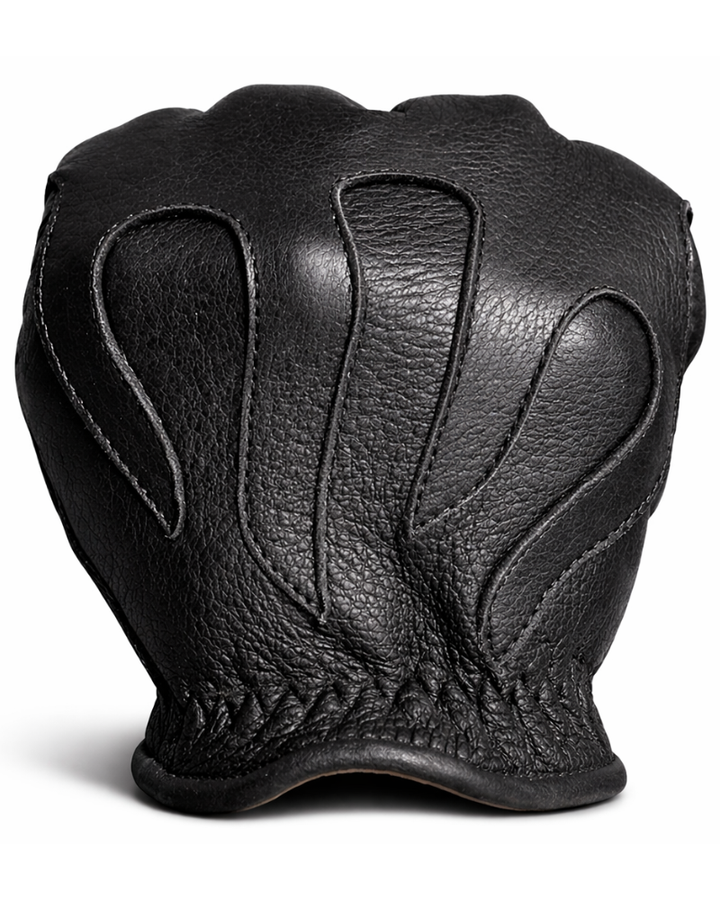
Unlined does not mean cold. Leather is an excellent windbreak, and wind is what actually chills hands at speed. A well-fitted unlined glove at fifty-five degrees is fine for most riders around town. The ILL DOZER perforated outseam deerskin gloves sit at the far end of this range — unlined and perforated, built to move air in real heat.
When You Want a Fleece Lining
Fleece is the warmth lining: the answer for cold morning commutes, fall riding, and anyone whose hands run cold. The Fleece-Lined Deerskin Gloves pair a fleece interior with an American deerskin shell in a short-wrist cut, which keeps the glove easy to pull on while adding real warmth.
The tradeoffs are straightforward. They run warm in the afternoon, they fit closer than the unlined version, and they take longer to dry after rain. That is not a flaw. It is what a lining does.
When You Want an Aramid Lining
Aramid is a different animal. It is a cut and abrasion resistant fiber, and in a riding glove it works as a second interior layer behind the leather rather than as insulation.
The Aramid Touchscreen Deerskin Gloves are the Legendary USA option, with touchscreen thumb and index panels. An aramid lining adds abrasion resistance without the bulk of fleece, and it does not turn the glove into a winter glove. Being clear about the limit: it is not armor, it does not provide impact protection, and Legendary USA claims no safety certification for it.
Lined vs Unlined: Side by Side
| Factor | Unlined | Fleece-Lined | Aramid-Lined |
|---|---|---|---|
| Warmth | Wind block only | Highest | Similar to unlined |
| Hot weather comfort | Best | Poor | Moderate |
| Grip feel | Most direct | Least direct | Close to unlined |
| Fit in same size | Roomiest | Closest | Slightly closer |
| Drying time when wet | Fastest | Slowest | Moderate |
| Best season | Spring through fall | Fall and winter | Year-round |
How to Size a Lined Glove
Fit a lined glove the way you fit any riding glove: in the riding position, fingers curled as though they are around a grip. Expect it to feel closer than an unlined glove. Snug is correct. Restricted is not.
If your fingertips lose sensation, if the glove forces your fingers straight, or if you cannot make a full fist around a grip, size up. A too-tight lined glove makes your hands colder, not warmer, because it compresses the fleece and cuts circulation — the two things that were supposed to keep you warm. Deerskin also relaxes about a half size over the first few weeks, lined or not. Our motorcycle glove sizing guide covers the measurements.
The Two-Pair Approach
The honest answer for most American riders is one of each. An unlined or perforated pair covers spring through early fall. A fleece-lined pair covers cold mornings and the shoulder season. One mid-weight glove trying to do both jobs is slightly wrong in July and slightly wrong in November. Buying the lined pair now also beats ordering during the first cold snap. Compare the range in the Made in USA motorcycle gloves collection.
For the wind chill math behind these temperature bands, the National Weather Service publishes a cold wind chill chart.
Frequently Asked Questions
- What is the difference between lined and unlined motorcycle gloves?
- An unlined motorcycle glove is a single layer of leather against your hand. A lined glove adds a second interior layer, most often fleece for warmth or aramid for abrasion resistance. Unlined gloves are cooler, thinner, and give the most direct feel on the grips. Lined gloves are warmer or tougher depending on the lining, but they are thicker, they fit closer, and they take longer to dry out if they get soaked.
- At what temperature should I switch to lined motorcycle gloves?
- Most riders start reaching for a lined glove when morning temperatures drop into the fifties, and nearly all riders want one below forty-five. The number depends on your speed and your circulation more than the thermometer. Highway riding at sixty degrees pulls more heat out of your hands than town riding at fifty. If your fingers ache after twenty minutes, that is your answer regardless of what the forecast says.
- Do lined motorcycle gloves fit tighter than unlined gloves?
- Yes. A lining occupies interior volume, so a lined glove in your normal size will feel closer than the unlined version of the same size. That is expected and it is not a defect. It should feel snug across the palm without restricting circulation or forcing your fingers straight. If a lined glove cuts off feeling in your fingertips or you cannot curl your hand around a grip, go up a size.
- What is an aramid lining in a motorcycle glove?
- Aramid is a cut and abrasion resistant synthetic fiber used as an interior lining in some riding gloves. Unlike fleece, it is not there for warmth. It adds a second layer of abrasion resistance behind the leather without adding much bulk. Legendary USA offers aramid-lined deerskin gloves with touchscreen panels for riders who want that extra layer. An aramid lining is not armor and does not provide impact protection.
- Are unlined leather gloves warm enough for fall riding?
- Unlined leather blocks wind well, which is most of what makes a glove feel warm, so a good unlined deerskin glove handles cool fall afternoons fine. Where it falls short is cold mornings and sustained highway speed, when wind pulls heat faster than a single leather layer can hold it. A gauntlet cuff on an unlined glove buys you some of that back by sealing the wrist. Below about fifty degrees, most riders want a lining.
- Can you wear glove liners instead of buying lined gloves?
- You can, and it is a reasonable way to stretch one pair across more of the year. The catch is fit. A separate liner only works if your gloves were sized with room for it, otherwise you end up with a tight glove that restricts circulation and makes your hands colder, not warmer. Liners also bunch and shift inside the glove over a long ride. A purpose-built lined glove fits better because the lining was cut into the pattern.
The Bottom Line
Unlined leather is the default for most of the riding year and the right answer if you want the most direct feel on the grips. Add a fleece lining when the mornings turn cold. Add an aramid lining if you want a second interior layer without a winter glove. Size lined gloves snug but never tight. For more on keeping either pair alive, read our leather motorcycle glove care guide.