



No single pair of motorcycle gloves handles a July afternoon, a 45-degree morning, a daily commute, and a four-state tour equally well. That is why experienced riders build a glove rotation — two to four pairs, each built for a different job. A rotation also makes every pair last longer, because leather that gets rest days between sweaty rides outlives leather that never dries out.
Here is how to build a rotation from the Legendary USA lineup — every pair cut and sewn in the USA from full-grain American hides — and which glove earns each spot.
Top Picks, Shop Direct
| Product | What it is | From |
|---|---|---|
| Bad Billy Black Goatskin Gloves | Legendary USA. Rated 4.93 from 129 customer reviews. | $75.00 |
| Fingerless Deerskin Gloves | Legendary USA. Rated 4.92 from 126 customer reviews. | $67.50 |
| Classic Deerskin Gauntlets | Legendary USA. Rated 4.88 from 112 customer reviews. | $140.00 |
| Gold Short Wrist Cuff Deerskin Gloves | Legendary USA. Rated 4.91 from 108 customer reviews. | $100.00 |
Prices shown are current at time of writing. Orders over $150 ship free.
The Hot-Weather Pair: Perforated and Ventilated Deerskin

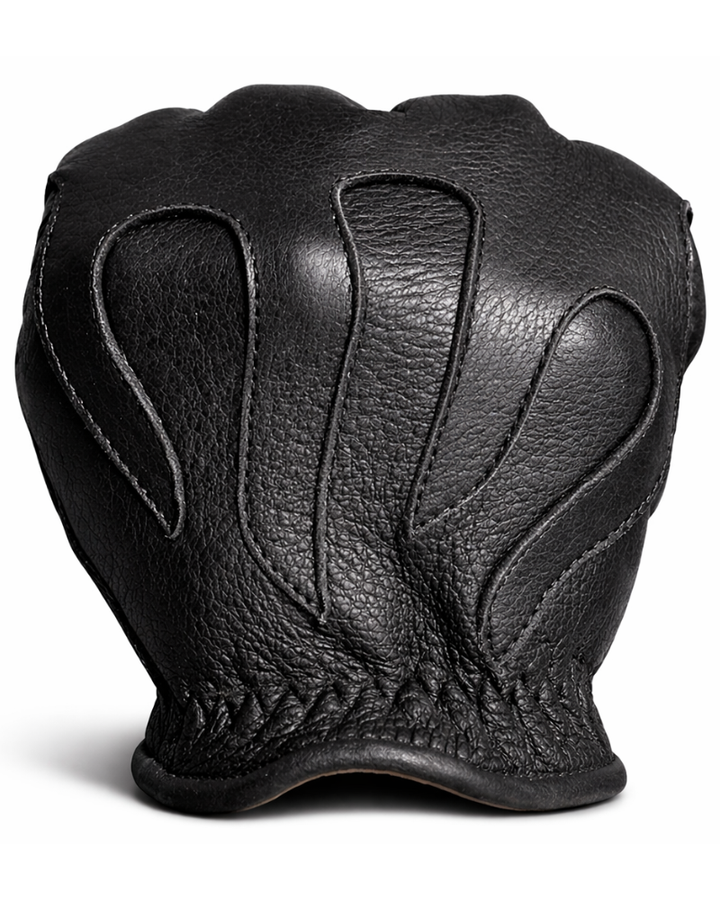
Summer is where most riding miles happen, so the hot-weather slot is the one to fill first. The ILL Dozer perforated deerskin gloves are the flagship pick: unlined American deerskin, perforations that pull air across the hand at speed, and outseam construction that keeps stitching off your palm on long, hot days. The deerskin ventilated short-wrist gloves fill the same slot with a different airflow approach.
For short cruises in serious heat, the deerskin fingerless gloves breathe better than anything with fingers — the honest tradeoff being exactly what it sounds like: your fingers are uncovered. Plenty of cruiser riders accept that for around-town miles and keep a full-finger pair for everything else.
The Everyday Pair: Goatskin That Takes a Beating
Every rotation needs the pair you grab without thinking — the glove for errands, evening rides, and everything in between. Goatskin owns this slot: tougher and more abrasion-resistant for its weight than most hides, with a tight grain that shrugs off daily wear. The Bad Billy black goatskin short-wrist gloves are the classic version, and the same glove in tan trades with brown leather and denim just as easily. Deerskin is softer; goatskin is harder-wearing. That is the whole deerskin-versus-goatskin decision in a sentence, and it is why the everyday slot leans goatskin while the comfort slots lean deerskin.
The Commuter Pair: Aramid-Lined With Touchscreen Fingertips
Commuting adds two demands weekend riding does not: you handle your phone constantly, and you wear the gloves twice a day, every day. The aramid-lined deerskin touchscreen gloves answer both — an aramid layer inside the deerskin shell, and touchscreen-capable fingertips so navigation, gas pumps, and messages never require pulling a glove off. Because aramid adds an internal layer without adding warmth, this pair works across three seasons, which makes it the highest-mileage glove in most commuters' rotations.
The Cold-Weather Pair: Fleece-Lined Deerskin
When morning temperatures drop into the 40s and 50s, the fleece-lined deerskin gloves take over. Fleece traps warm air around the hand and turns a teeth-gritting cold commute back into a ride. Expect a snugger fit than your unlined size and know the limits — fleece extends your season; it does not make January comfortable.
The Touring Pair: Deerskin Gauntlets
Long highway days call for the Classic American Whitetail deerskin gauntlets. The extended cuff closes the wind gap between glove and jacket sleeve — the gap that chills your wrists numb by hour three of a sustained run. Around town the gauntlet is more glove than you need, which is precisely why it is a rotation piece rather than an only pair.
Why the Rotation Beats One Do-It-All Pair
A one-glove rider asks a single pair to be cool in July, warm in October, and fresh every morning — and gets a glove that is mediocre at all three and worn out sooner. Sweat is the quiet killer: leather needs drying time between rides, and rotation gives it that time. Pair the rotation with basic upkeep — our leather glove care guide covers cleaning and conditioning — and quality American gloves last for years, not seasons. Start with the two-pair core, add slots as your riding demands them, and browse the full USA-made motorcycle glove collection or the rest of the Legendary USA gear lineup to fill them.
Frequently Asked Questions
- How many pairs of motorcycle gloves should a rider own?
- Two pairs is the practical minimum for anyone who rides beyond a single season: an unlined pair for warm weather and a lined pair for cold. Riders who commute, tour, or ride year-round usually settle around three or four — a hot-weather pair, a cold-weather pair, an everyday pair, and often a long-cuff gauntlet for highway trips. More than that is preference, not necessity. The rotation exists so each glove does the job it was built for.
- Does rotating gloves make leather last longer?
- Yes. Leather needs time to dry out between sweaty rides, and a glove worn every single day never fully recovers. Sweat carries salts into the hide, and repeated soak-and-dry cycles without rest stiffen and eventually crack leather. Alternating between two pairs gives each hide a day to release moisture, which measurably extends the life of both. Rotation plus occasional cleaning and conditioning is the cheapest durability upgrade a rider can make.
- What gloves are best for hot-weather riding?
- Unlined, perforated or ventilated deerskin is the hot-weather answer. Perforations let air move across the hand at speed, and unlined deerskin stays soft even after repeated summer wear. A fingerless glove breathes even better and works for short cruises, though it leaves fingers uncovered — a real tradeoff worth weighing honestly. Avoid any lined glove in summer heat; fleece in July just means sweat-soaked leather by the time you park.
- Are touchscreen motorcycle gloves worth it for commuting?
- For daily commuters, yes. A touchscreen-capable fingertip means you can check a route, pay at a pump, or answer a message at a stop without pulling a glove off — which commuters otherwise do a dozen times a day. Legendary USA builds this into its aramid-lined deerskin glove, so the convenience comes with an added internal layer rather than instead of one. For weekend-only riders, touchscreen capability is a nice-to-have rather than a need.
- When should I wear gauntlet gloves instead of short-wrist gloves?
- Wear gauntlets when wind and distance are the enemy: long highway days, cold mornings, and shoulder-season touring. The extended cuff covers the gap between glove and jacket sleeve, which is where wind chills the wrist and forearm on a sustained run. For around-town riding and summer heat, a short-wrist glove is cooler and easier to live with. Many riders keep one of each and swap by trip length rather than picking a single style.
- Should all the gloves in a rotation be the same size?
- Measure once, but check each style. Your hand size does not change, but linings take up interior volume, so a fleece-lined glove can fit a half-size snugger than the same maker's unlined glove. Leather type matters too — deerskin relaxes more with break-in than goatskin. Buy each pair snug but not constricting, expect break-in to settle the fit, and read the sizing guide for each construction rather than assuming your unlined size carries over everywhere.
The Bottom Line
A glove rotation is not gear collecting — it is matching the tool to the ride and letting your leather rest between jobs. Start with an unlined summer pair and a fleece-lined cold pair, add the commuter and touring slots as your miles demand, and every pair in the drawer will ride better and last longer for it. Legendary USA has built each of these gloves in the USA for exactly one slot in that rotation, which is how a drawer full of American leather ends up covering every ride you take.