

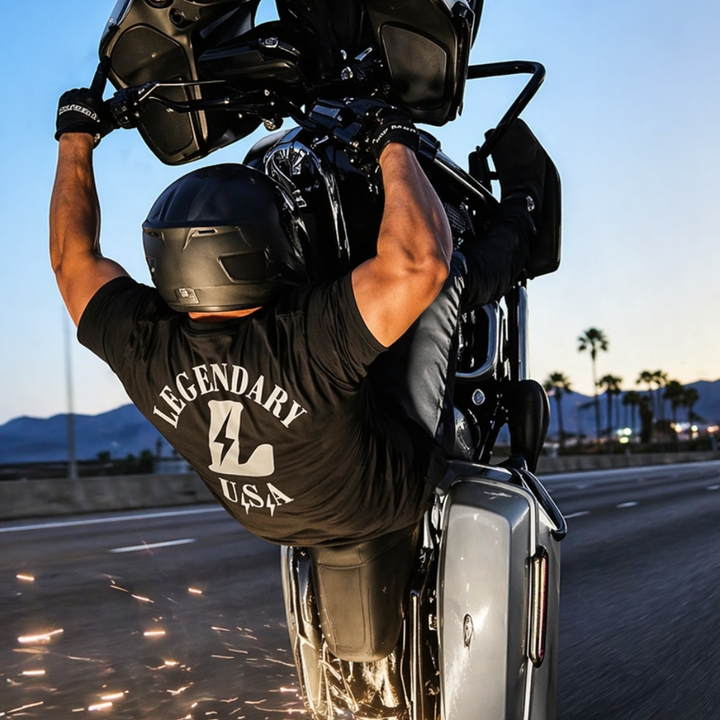


Sub-40 motorcycle riding gear has one job before any other: stop moving air from reaching skin. At 40°F and 60 mph, wind chill puts the effective temperature on exposed skin well below freezing, and the gear that works is the gear that seals the gaps at the wrist, neck, waist, and sleeve. This roundup covers the Legendary USA pieces riders reach for under 40, from deerskin gauntlets and fleece-lined gloves to 1.3mm horsehide jackets and the layers beneath them.
How Sub-40 Riding Changes the Gear Math

Below 40°F, wind strips heat faster than any lining can hold it, so the gear that keeps a rider on the road in November is built around wind resistance first, abrasion resistance second, and insulation third. A thin windproof layer under a dense leather shell beats a thick fleece under a porous one every time.
The second change is dexterity. Cold hands and stiff leather make a bad combination on a brake lever, so every piece here was chosen partly for how it behaves at 35°F. Deerskin that stays pliable in cold and horsehide that holds its shape are the two materials that show up again and again below 40.
The cold-weather gear guide by temperature range covers the full ladder from 60°F down; this roundup is the bottom rungs.
Gloves: Gauntlet, Fleece-Lined, and the Liner That Ties Them Together
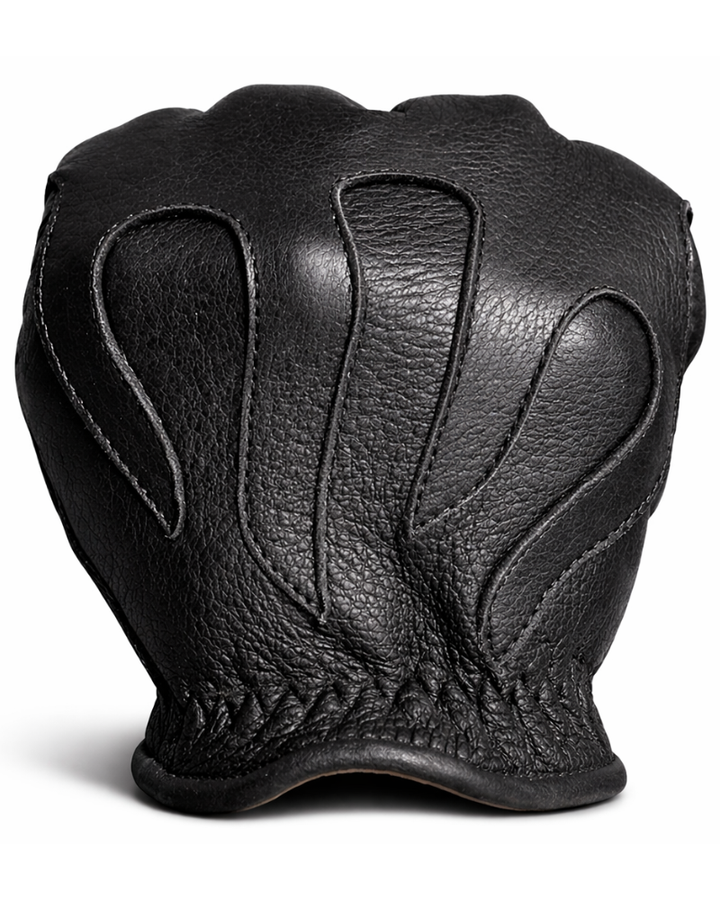
The Classic Deerskin Gauntlets are the sub-40 highway glove. The full gauntlet cuff covers the wrist and lower forearm and closes the sleeve gap that a short-wrist glove leaves open at speed. Legendary USA builds them unlined from domestic Whitetail deerskin, which weighs roughly half of cowhide at equivalent protection and stays pliable in cold and wet conditions. Unlined means they need a liner below 40, and that is by design.
The Fleece-Lined Deerskin Gloves are the sub-40 glove for shorter rides. A 3M Thinsulate 40-gram fleece lining inside a Whitetail deerskin shell gives built-in warmth that Legendary USA rates for 30°F to 50°F, with a short elasticized wrist. Size up one for the lining.
The Gators Skin Glove Liners are the piece that makes an unlined gauntlet a winter glove. Windproof and moisture-wicking, they slip inside a riding glove or wear alone, and they turn the gauntlet-and-liner setup into a system that covers a wider range than any single lined glove.
Jackets: 1.3mm Horsehide as the Outer Wall
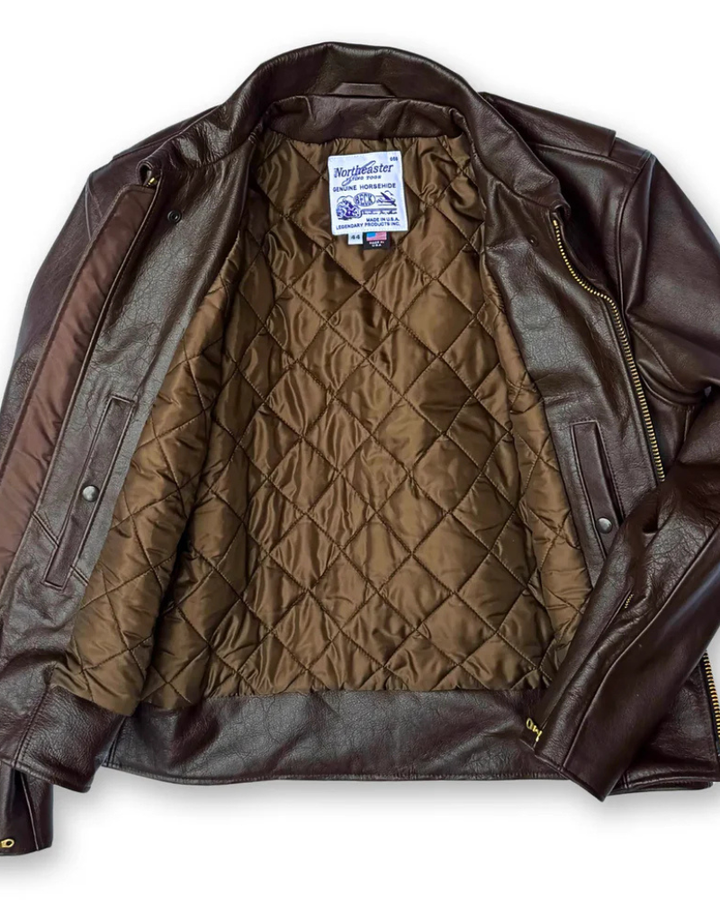
A horsehide jacket is the sub-40 outer shell because front quarter horsehide at 1.3mm resists wind better than cowhide at the same thickness. Legendary USA's BECK Northeaster Flying Togs label has built horsehide riding gear in the USA since 1928.
The BECK 999 is the top of the Northeaster line, 1.3mm mid-weight front quarter horsehide with a sewn-in quilted nylon lining, a half-belt for riding range of motion, two zippered hand-warmer pockets, and vented underarm gussets that close off cleanly in the cold. The BECK 732 and 777 Northeaster jackets carry the same horsehide with a diamond-quilted poly-fill lining and side buckle tabs that extend to fit a hoodie underneath, which is the sub-40 use case exactly.
Horsehide is not armor. The BECK line is unarmored heritage leather with no CE rating; below 40 it provides wind resistance, abrasion resistance, and a shell that does not stiffen the way cowhide does. The full range is in the USA-made motorcycle jackets collection.
Vests: Core Warmth Without Sleeve Bulk
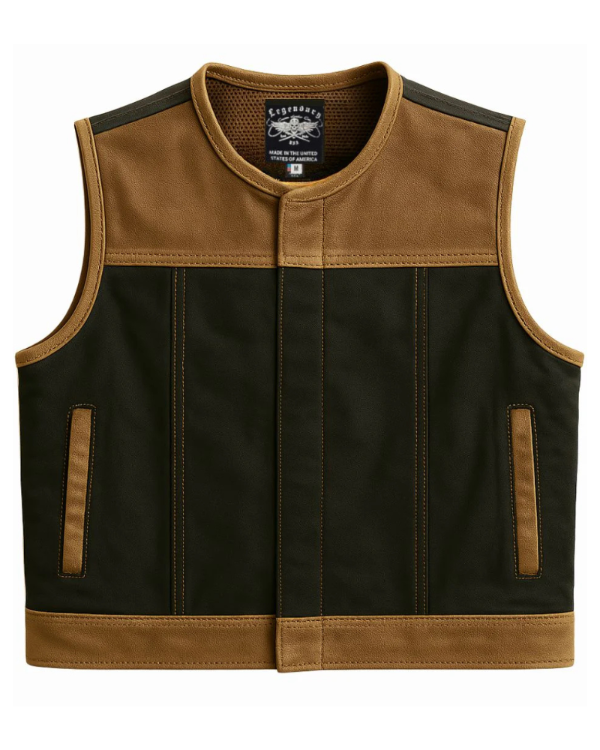
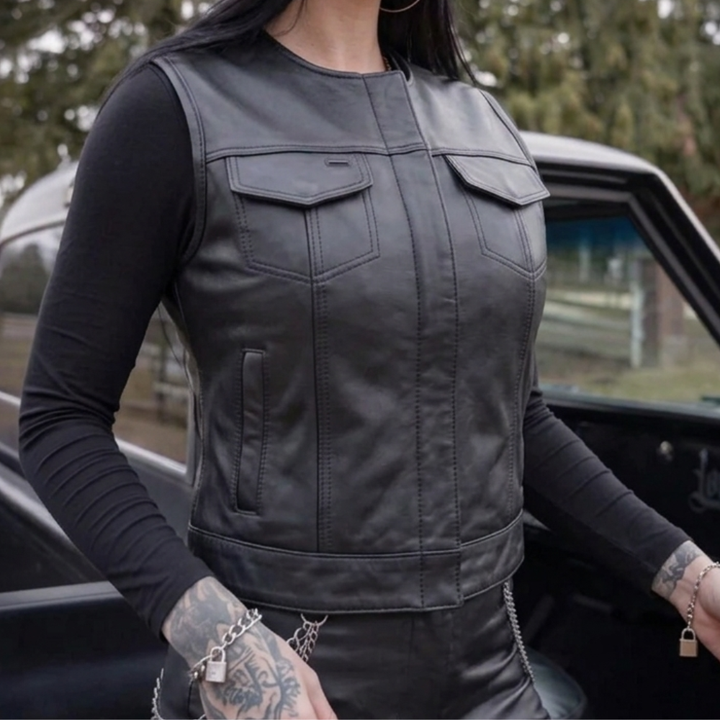
A horsehide vest under a jacket adds a dense wind-blocking layer over the torso without adding anything at the arms. The BECK 882 Fitted Horsehide Vest is cut from front quarter horsehide with a natural taper through the body, a one-piece back panel, and a nylon Oxford liner. It is intentionally stiff off the rack and molds to the rider's shape as the horsehide breaks in.
The vest matters in sub-40 riding because core temperature drives hand and foot temperature; a rider whose torso is chilled loses the fingers first. The winter motorcycle vest guide covers how to layer a vest for cold rides, and the 882's fitted cut layers cleanest under a jacket.
Base Layers: The Windproof Layer Under the Leather
The layer against the skin decides whether the horsehide shell does its job or just slows the cold down. Legendary USA carries the Gator Skin Long Sleeve Cold Weather Base Layer, a Henley-style base layer woven in Pennsylvania with thumb holes at the cuffs that keep the sleeve from riding up inside a glove. The maker describes the fabric as windproof and pre-shrunk, and it is made in the USA.
The thumb holes hold the base layer sleeve under the glove cuff, so the overlap between glove, base layer, and jacket sleeve never opens at the wrist. Wool works under horsehide too, as it has since the 1930s, but a thumb-hole base layer solves the sleeve-gap problem that wool does not.
Deerskin vs. Horsehide: Why Both Show Up Below 40
Deerskin and horsehide solve different sub-40 problems. Deerskin goes on the hands because it stays pliable in cold, weighs about half of cowhide, and keeps lever feel at 35°F. Horsehide goes on the torso because it is dense enough to stop wind at highway speed and holds its shape through decades of cold riding.
| Property | Whitetail Deerskin | Front Quarter Horsehide |
|---|---|---|
| Cold-weather feel | Stays soft and pliable | Stiff off the rack, molds with break-in |
| Weight | Roughly half of cowhide | Mid-weight at 1.3mm |
| Wind resistance | Good | Higher than cowhide at equal thickness |
| Best use below 40°F | Gloves | Jackets and vests |
| Break-in | Two to three weeks | A season or more |
Neither hide insulates on its own; the warmth below 40 comes from what goes under them.
Building the Sub-40 Kit
Start with the base layer and the gloves, because the wrist is where most sub-40 setups fail. A thumb-hole base layer under a deerskin gauntlet closes the gap from both sides. Add the horsehide jacket as the outer wall and a horsehide vest or heavy flannel in between when the ride runs past an hour.
Size every glove for the layer that goes under it, and let both the deerskin and the horsehide break in before judging the fit.
Riding below 40°F is a wind problem, and the gear that solves it is dense leather over a windproof layer with every gap sealed. Deerskin gauntlets or fleece-lined gloves on the hands, 1.3mm horsehide on the torso, a thumb-hole base layer underneath, and a liner in the pocket. Build the kit once and it covers every cold month until the bike goes away, if it ever does.
For the wind chill math behind these temperature bands, the National Weather Service publishes a cold wind chill chart.
Frequently Asked Questions
- What motorcycle gear do I need for riding below 40 degrees?
- Below 40°F, the kit is a windproof base layer, a dense leather outer shell, and gloves that seal the wrist, with insulation in between as the ride gets longer. Legendary USA's sub-40 setup is deerskin gauntlets or fleece-lined deerskin gloves on the hands, a 1.3mm BECK horsehide jacket on the torso, a thumb-hole base layer underneath, and a horsehide vest or heavy flannel as a middle layer for rides over an hour.
- Is a leather jacket warm enough for riding in 35-degree weather?
- A leather jacket works at 35°F as a wind barrier, not as insulation, so it is warm enough only with the right layers under it. Front quarter horsehide at 1.3mm, which Legendary USA uses in the BECK Northeaster line, resists wind better than cowhide at the same thickness. Pair it with a windproof base layer and a lined or horsehide vest and it handles 35°F riding; worn over a T-shirt it will not.
- What are the warmest motorcycle gloves without going to heated gloves?
- The warmest non-heated setup in the Legendary USA line is an unlined Classic Deerskin Gauntlet worn over Gators Skin Glove Liners, because the gauntlet cuff seals the forearm and the liner adds a windproof thermal layer. The Fleece-Lined Deerskin Gloves, rated 30°F to 50°F, are warmer out of the box but have a short cuff. Which is warmer on the road depends on speed and ride length.
- What is the difference between deerskin and horsehide for cold-weather riding?
- Deerskin stays soft and pliable in the cold and weighs about half of cowhide, which is why Legendary USA uses it for gloves, where lever feel at 35°F matters. Horsehide is denser, resists wind better than cowhide at equal thickness, and holds its shape for decades, which is why BECK uses it for jackets and vests. Neither insulates on its own; both are shells over warmer layers.
- Do thumb-hole base layers actually help on a motorcycle?
- Yes. The thumb holes hold the base layer sleeve under the glove cuff so the sleeve cannot ride up and open a gap at the wrist, which is the most common place cold air gets in below 40°F. The Gator Skin Long Sleeve Cold Weather Base Layer that Legendary USA carries has thumb holes at the cuffs and is woven in Pennsylvania. Under a deerskin gauntlet the overlap stays closed from both sides.
- Does riding gear below 40 degrees need to be armored?
- Armor is a separate decision from cold-weather performance. Legendary USA's deerskin gloves and BECK horsehide jackets and vests are unarmored heritage leather with no CE rating; they provide wind resistance and abrasion resistance. A rider who wants CE-certified armor in cold weather can wear a Bohn CE-certified armored shirt under a BECK jacket. Bohn is a separate brand Legendary USA carries for that purpose.