



The A-2 jacket entered U.S. Army Air Corps service in 1931 as a specification-driven military garment — pilots wore it because it was issued, because the Army Air Forces required it, and because the specification actually solved problems that open-cockpit and early closed-cockpit aviation presented.
The reasons pilots wore A-2 jackets are the same reasons the jacket is still being made, bought, and worn today.
The Practical Problem the A-2 Solved
Early aviation was cold. Open cockpits at altitude exposed pilots to temperatures well below freezing combined with high-speed wind. The A-2 specification was designed to address this with a close-fitting, wind-resistant outer layer that worked over thin flight gear without adding the bulk that would restrict control movements.
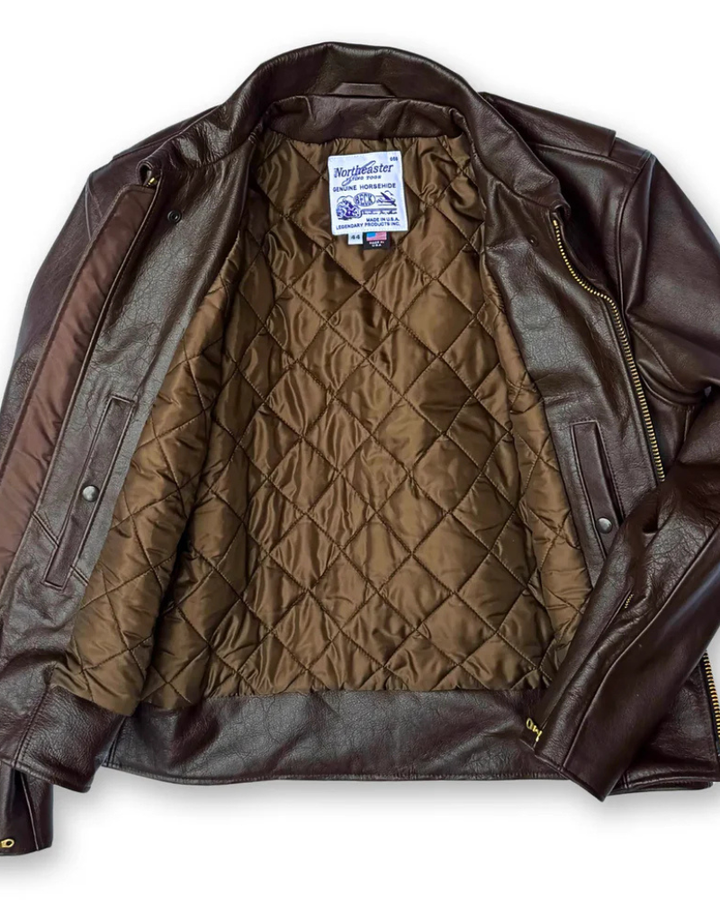
The key design decisions all serve this purpose. The knit cuffs and waistband seal against wind without adding bulk at the wrists or hips. The close fit through the chest minimizes wind resistance and heat escape. The small shirt collar, when snapped closed, seals the neck without creating the visual obstruction of a standing collar or the bulk of a hood. The slash pockets provide access without external flaps that could catch wind.
Every feature of the A-2 is a functional decision. There are no decorative elements. The hardware is minimal — the zipper, the snap collar, the buttons on the pockets. The leather is the workhorse, and the leather does the work.
Why Horsehide Specifically
The original A-2 specification called for seal-brown horsehide. The choice wasn't arbitrary. Horsehide was the most durable leather available in the United States at scale in the early 1930s — denser than cowhide, more resistant to cracking, and capable of blocking wind without the thickness that would compromise movement. Horsehide also resists moisture penetration better than cowhide, which mattered in open-cockpit aircraft where rain and condensation were consistent hazards.
The horsehide specification held through most of WWII production, though later contracts allowed substitutions as horsehide supply tightened during the war. Post-war A-2 reproductions vary on this specification: the most faithful use genuine horsehide, others use goatskin or cowhide. The jackets available in the Cockpit USA collection represent the higher end of this reproduction spectrum — and the BECK 501 horsehide trucker extends that same specification into a civilian silhouette that post-war pilots would have worn off the airfield.
The Cultural Weight That Accumulated
The A-2 became iconic not just because of its specification but because of who wore it. By the end of WWII, the jacket had been worn by hundreds of thousands of American pilots across every theater of the war. The nose art tradition — painters decorating the backs of A-2 jackets with the same imagery painted on aircraft — turned each jacket into a personal artifact that carried a pilot's unit, aircraft name, and completed missions. A jacket that started as a military specification became a personal record.
This combination — a functional garment with genuine military heritage and the personal histories of the people who wore it — is what gives the A-2 a cultural weight that no amount of fashion replication can replicate. The jacket means something because of what it was worn through.
Why Pilots Don't Wear Them Anymore
The A-2 was officially discontinued as standard U.S. military issue in 1943, replaced by heavier winter flight gear and eventually by modern aviation materials that provide better thermal protection at altitude. Modern military pilots wear flight suits and specialized aviation gear — the A-2 was designed for conditions that modern cockpit environments don't present.
The jacket survived as a cultural artifact rather than a functional military garment. Its survival is a measure of how well the design worked: it's still worn today because the same qualities that made it work in 1941 — wind resistance, close fit, durable horsehide leather — still make it work in everyday use. The same material logic lives on in the BECK Flying Togs revival: the BECK 732 and BECK 732 in Chestnut Brown use genuine horsehide for exactly the reasons the original A-2 specification did. The BECK 666 brings the same horsehide tradition to the motorcycle jacket silhouette. Read more about which Cockpit USA jacket is right for you, or the history of Cockpit USA's American manufacturing.