
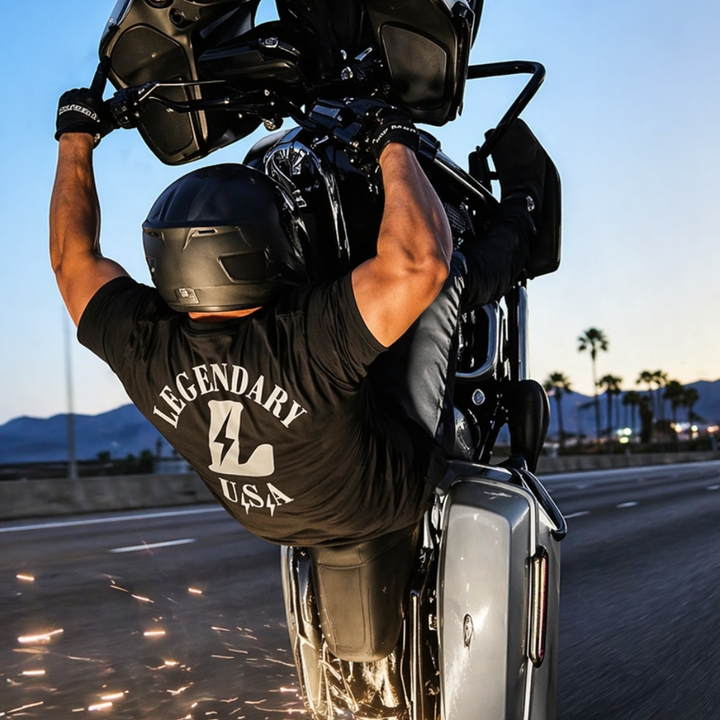


The toy run is the charity ride that closes the American riding season: hundreds or thousands of motorcycles, each carrying a new toy strapped to the sissy bar or the passenger seat, riding together to a drop-off point where the toys go to children who would not otherwise get one. It happens in late October, November and early December, in weather that has already put most bikes away for the year, and it has been a fixture of American motorcycle culture for decades. Legendary USA has outfitted toy run riders since 2001, and the gear that shows up on those rides says a lot about what the tradition is.
Where the toy run came from

Organized toy collection for children at Christmas is older than the motorcycle toy run. The U.S. Marine Corps Reserve's Toys for Tots program began in 1947, and local charities, churches and fire departments ran toy drives long before that. What riders added, starting in the decades after the Second World War, was the ride itself. A motorcycle club or a dealership would set a date, pick a route and a drop-off, and ask every rider to show up with one new, unwrapped toy.
The idea spread the way most things spread in American riding, from one town's club to the next county's. By the 1970s and 1980s toy runs were an annual event in most American cities with a riding community, and the biggest of them grew into parades that took hours to pass a single intersection. Police escorts, closed highway on-ramps and a stuffed bear bungeed to every sissy bar became the recognizable shape of the thing.
Why riders took it on
Part of the answer is practical. A motorcycle club already has the structure a charity ride needs: a road captain who can lead a hundred bikes, members who know the route, and a clubhouse or a dealership parking lot to stage from. Part of it is the calendar. The toy run falls after the rallies and the poker runs, in the weeks when the season is ending anyway, and it gives riders one last reason to pull the cover off the bike.
The larger part is what the ride says. American riders have spent a long time being described by people who do not ride, and the toy run is the clearest rebuttal there is. A thousand bikes rumbling into a shopping center lot and unloading a truck's worth of toys does more for the image of riding than any advertising campaign. Riders know this, and they show up in force because of it.
The vest is the uniform
If you stand at the end of a toy run and watch the bikes come in, you see the vest more than anything else. The leather club vest with a one-piece back panel is where the patches go, and the patches are how a rider shows which club, which chapter, which charity and which years. On a toy run, that back panel is also where the ride's own patch ends up, year after year, until the vest reads like a logbook.
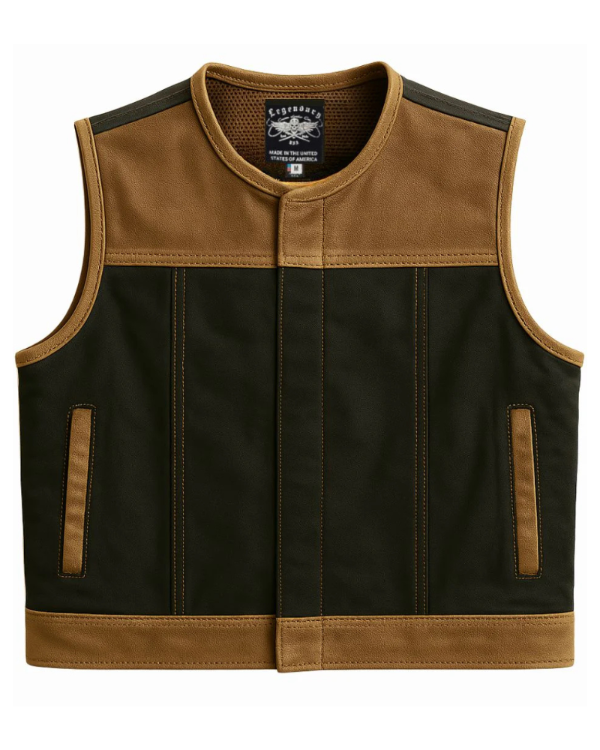
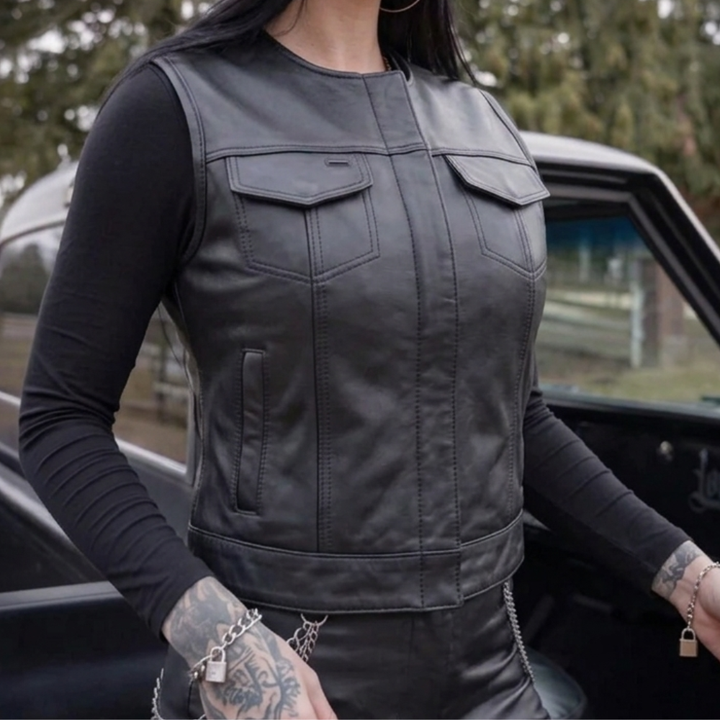
Legendary USA builds the Men's Leather Club Motorcycle Vest for exactly that use. The back is a clean, uninterrupted panel that takes a full set of patches without a seam running through them, the sides lace so the vest fits over a heavy jacket in November and over a riding shirt in June, and the leather is built to carry a full set of patches year after year. The rest of the line, from the snap-front Brotherhood to the lightweight Black Jack, is in the Made in USA motorcycle vests collection.
The gloves are the tell
The second thing you notice at a toy run is the gloves, because it is cold. A late-November toy run in the Northeast or the upper Midwest starts in the 30s, and the ride itself is slow, which means less wind but a lot of time sitting on the bike at idle with hands on the bars. Riders who ride the toy run every year own a cold-weather glove, and most of them own a lined one.
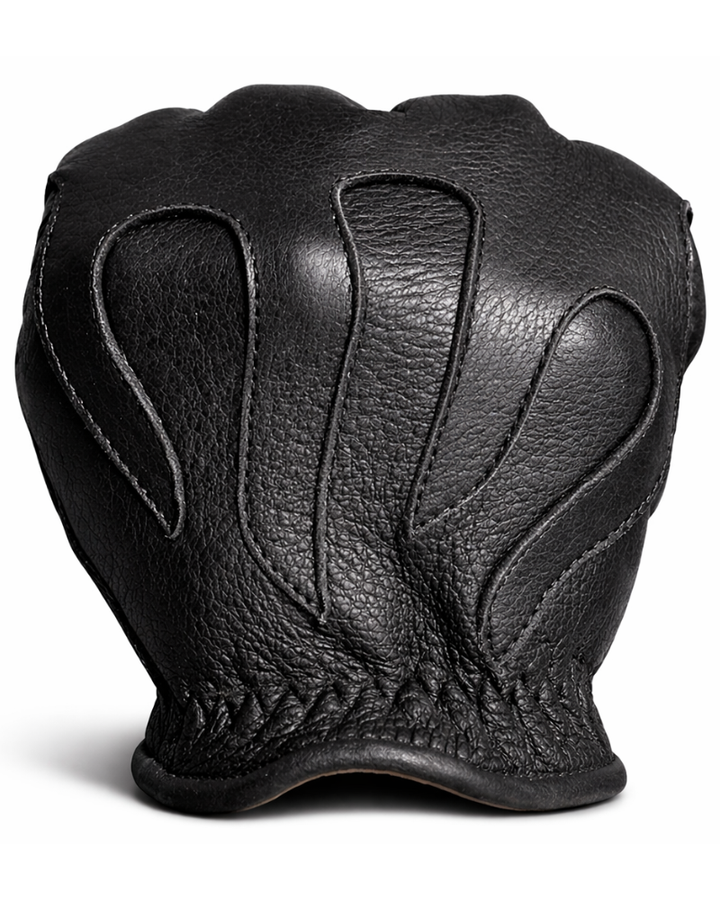
At Legendary USA, that glove is the Fleece-Lined Deerskin Gloves, an American Whitetail deerskin shell over a 3M Thinsulate 40-gram fleece lining, built for the 30 to 50 degree range a toy run lives in. Deerskin stays pliable in the cold, which matters on a ride where you are working the clutch at walking pace for an hour. It is a heritage leather glove, not an armored glove, and it does not pretend to be one.
The last ride of the year
For a lot of riders, the toy run is the final ride of the season. The bike gets ridden to the drop-off, the toy comes off the sissy bar, the group rides back, and the next weekend the battery tender goes on and the cover goes over. Legendary USA has written about the last ride of the year in American motorcycle tradition and about the late-October ride after the clocks fall back, and the toy run sits at the end of both of those stories.
It is a better ending than a quiet garage. The bike goes away having done something, the vest has one more patch, and the gloves have one more cold ride in them. Every spring, when the cover comes off, the first thing most toy run riders check is the date of the next one.
Group rides put a lot of bikes close together at low speed, and the Motorcycle Safety Foundation publishes rider training and group riding guidance that is worth a read before the first toy run of the year.
Frequently asked questions
- What is a motorcycle toy run?
- A motorcycle toy run is a charity ride where every rider brings a new, unwrapped toy, usually strapped to the sissy bar or passenger seat, and the group rides together to a collection point where the toys are donated to children in need. Toy runs are organized by motorcycle clubs, dealerships and charities and are held in late fall and early December, often with police escorts. They have been a fixture of American motorcycle culture for decades and are frequently the last group ride of the season.
- When are motorcycle toy runs usually held?
- Most toy runs take place between late October and early December, so the toys arrive in time for the holidays. That puts them in cold weather in most of the country, with starts in the 30s and 40s common in the Northeast and Midwest. The timing is part of the tradition. The toy run falls after rally season and the fall poker runs, in the weeks when many riders are about to put the bike away, and it gives them one last reason to ride.
- How did motorcycle toy runs get started?
- Toy drives for children at Christmas predate the motorcycle version. The U.S. Marine Corps Reserve's Toys for Tots program started in 1947, and churches and fire departments ran toy drives earlier than that. In the decades after the Second World War, motorcycle clubs and dealerships began organizing group rides to deliver toys, and by the 1970s and 1980s toy runs were an annual event in most American cities with a riding community, some of them growing into parades of thousands of bikes.
- What should I wear to a toy run?
- Dress for cold, slow riding. Toy runs are late in the year and the ride itself is often parade pace, which means long stretches at idle with your hands on the bars. A lined glove such as the Legendary USA Fleece-Lined Deerskin Gloves, a leather vest over a warm jacket, and a full-face or at least a face-covering helmet make the difference. Riders who ride toy runs every year wear their club vest with their patches because the vest is the visible part of the tradition.
- Why do bikers wear vests with patches on charity rides?
- The leather club vest is where a rider's patches live, and the patches show which club, chapter, charity and years that rider belongs to. On a toy run the vest is both a uniform and a logbook, since many rides issue their own patch each year. A vest with a one-piece back panel, like the Legendary USA Men's Leather Club Motorcycle Vest, takes a full set of patches without a seam through them, and side lacing lets the same vest fit over a November jacket or a June riding shirt.
- Do I need a club to ride in a toy run?
- No. Most toy runs are open to any rider who shows up with a toy, and many of the riders on any given run are independents, couples and small groups of friends rather than club members. Clubs usually organize and lead the ride because they already have the road captains and the staging space, but the ride itself belongs to everyone. Show up on time, bring a new unwrapped toy, listen at the riders' meeting and ride your own ride in the group.