
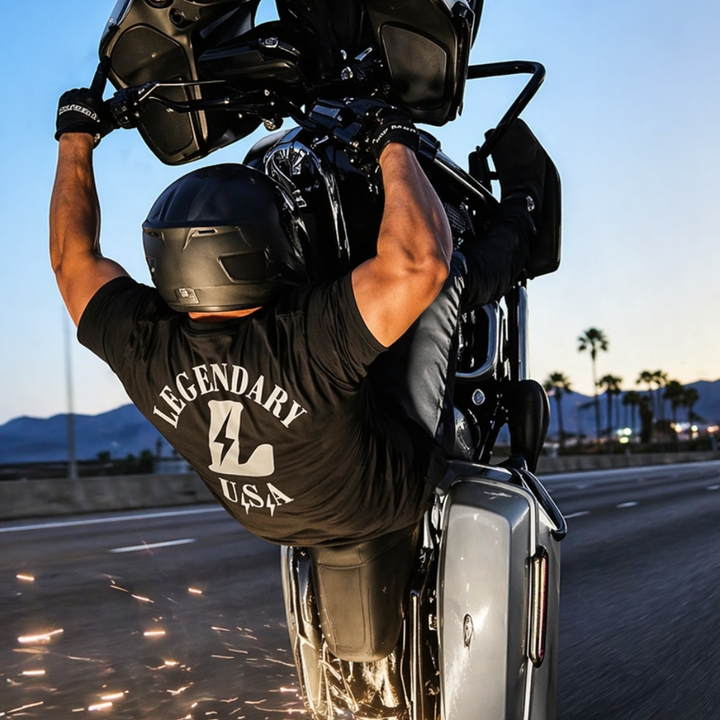


American leather earned its place in rally culture because it does two jobs at once: it protects and it records. Deerskin, goatskin, and horsehide became the working hides of American riding because each solves a different problem on the road, and the vests and gloves cut from them end up carrying a rider's history along with the miles. Legendary USA has been building gear from American deerskin and goatskin since 2001, and this year marks 25 years of it.
Walk any rally lot and the leather tells you more than the bikes do. Faded vests with patches from rallies that no longer run. Gloves worn shiny at the throttle side. That is not nostalgia. It is a material that keeps a record.
Why Leather Became the Rally Uniform
Leather became the American rider's uniform because it solved the problems riders actually had. It resists abrasion better than woven cloth of similar weight. It blocks wind across long highway days. It takes and holds a patch. And it gets better looking as it wears rather than worse.
No committee decided this. Riders tried things, and the things that failed at speed or fell apart in a season disappeared. Leather did not. By the time American rally culture consolidated around a handful of big gatherings, the leather vest and the leather glove were already settled equipment.
The Hides That Built the Tradition
Deerskin

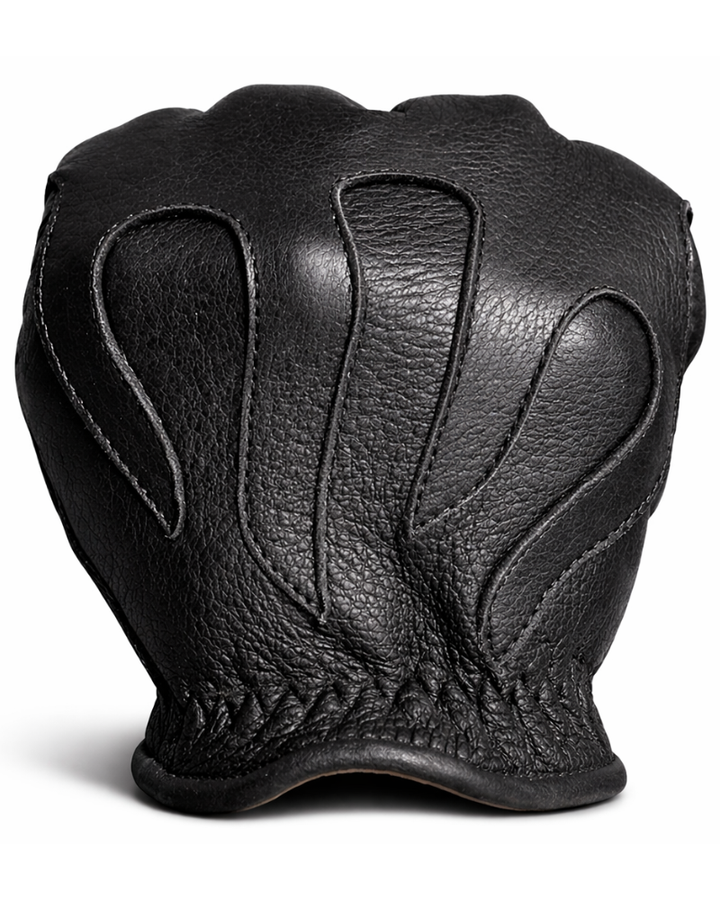
Deerskin became the American riding glove leather. It is supple straight off the shelf, breathable in heat, and it conforms to a hand within a few rides rather than a few months. American whitetail deerskin in particular has a fiber structure that stays soft after repeated wet-dry cycles, which matters when you are sweating into a glove every day of a rally week.
The tradeoff is honest: deerskin is comfort leather, not armor. It is thinner and more pliable than cowhide, and it is not pretending to be a hard-protection material. The classic American whitetail deerskin gauntlets are a direct descendant of that tradition, and our deerskin vs. goatskin comparison goes deeper on how the two hides differ.
Goatskin
Goatskin sits one step up in density. It is more abrasion-resistant than deerskin, holds its shape better across seasons, and blocks more wind. Riders who wear through gloves quickly tend to end up in goatskin. It takes a little longer to break in and never feels quite as soft, and that is the trade.
Horsehide
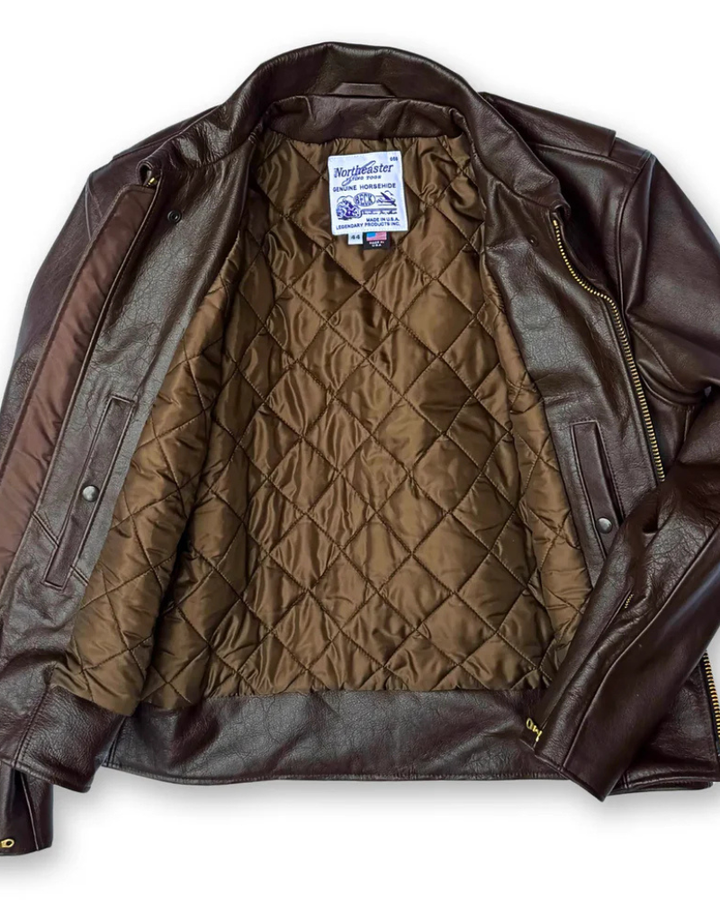
Horsehide is the heavyweight of the American riding tradition. Dense, stiff, and slow to break in, it built the jackets that riders handed down. A horsehide jacket asks for a season of wear before it fits you properly, and then it holds that shape for decades. It is the opposite of deerskin in every respect, which is why the two coexist rather than compete. Our piece on horsehide leather and the American rider covers that history in full.
The Vest as the Rally Rider's Record
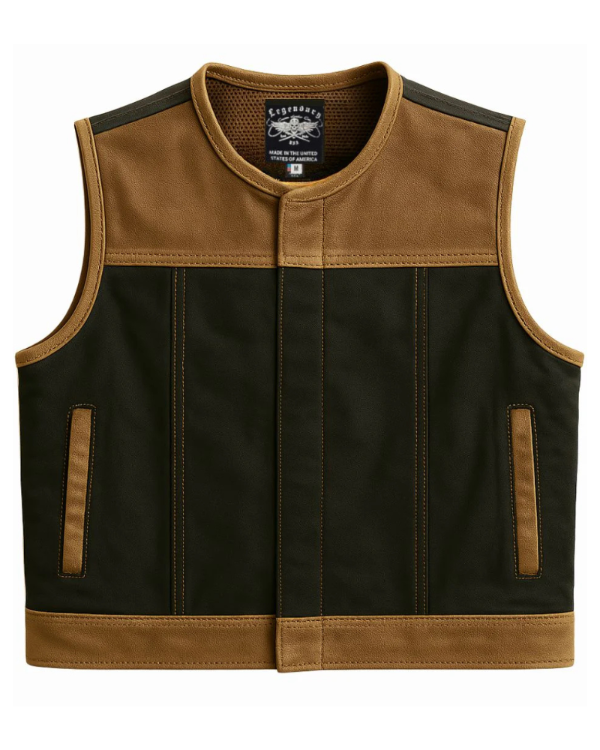
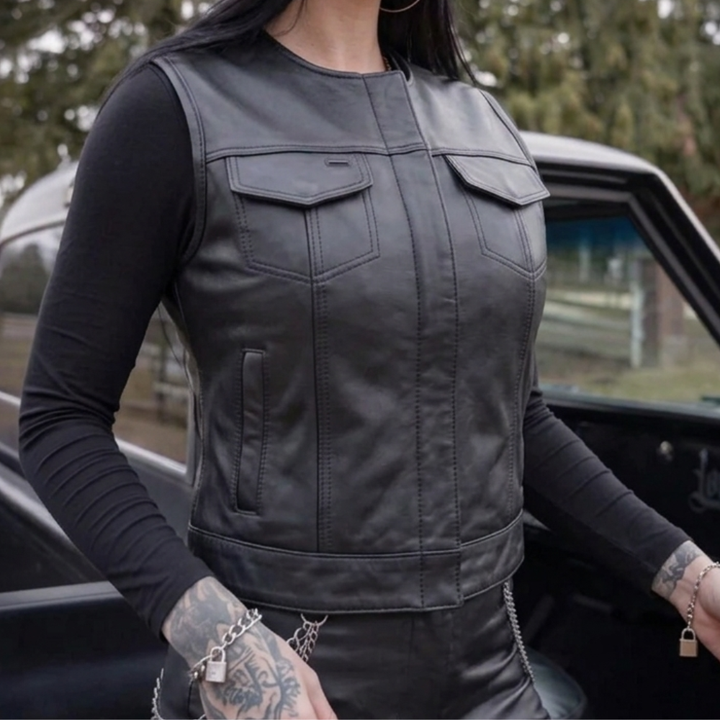
The vest is the piece of gear that carries meaning. It works in summer because it covers the core and leaves the arms open to the air, which is exactly what a rider needs at a hot August rally. But its real function is accumulation. Rally patches, club colors, memorial pins, state rockers. A vest is a document you wear.
That is why vest construction details matter more than they seem to. One-piece back panels give patch work a clean field. Leather-bound armholes hold their shape after years of getting pulled on and off. Hidden snaps keep hardware off your tank. The USA-made motorcycle vests collection is built around those details.
Deerskin vs. Horsehide in the Rally Tradition
Deerskin and horsehide represent two ends of the American leather tradition, and rally riders use both for different reasons. Deerskin is the leather of contact points: gloves, where you need feel on the controls and airflow in heat, and where softness on day one matters more than stiffness that lasts a decade.
Horsehide is the leather of outerwear: jackets meant to be handed down, where stiffness is the point because it means the hide has not given up. A rider might own one deerskin glove pair for the summer and one horsehide jacket for twenty years. Neither replaces the other. The tradition holds room for both because riders needed both.
What Changed and What Did Not
Plenty changed. Bikes got faster and more reliable. Touring gear got better. Synthetic materials moved into places leather used to hold alone, and in some of those places, honestly, they belong.
What did not change is what leather is for. A rider still needs something between skin and pavement. Still needs wind blocked at 70 miles an hour. Still wants a piece of gear that means something after ten years instead of looking tired after one. That is the part synthetics have not replaced, and it is why the rally lots still look the way they do.
25 Years of Building It
Legendary USA opened in 2001. Twenty-five years of cutting American deerskin and goatskin, of learning which construction details riders notice and which ones they do not, and of getting told directly when we got something wrong. Chris has been at it the whole time. The story is in 25 years of Legendary USA, and most of what we learned came from riders at rallies telling us what actually held up.
Frequently Asked Questions
- Why do motorcycle riders wear leather at rallies?
- Riders wear leather at rallies for three reasons that have not changed in decades: abrasion resistance, wind blocking, and identity. Leather holds up against pavement better than woven cloth of similar weight, blocks wind on long highway days, and carries patches, pins, and club colors that fabric cannot support as well. At a rally, a leather vest is also a record of where a rider has been. That combination of function and meaning is why leather stayed while other materials came and went.
- What kind of leather do American motorcycle riders traditionally wear?
- American riders have traditionally worn three hides: deerskin, goatskin, and horsehide. Deerskin became the standard American riding glove leather because it is supple, breathable, and comfortable without a long break-in. Goatskin is denser and more abrasion-tough, favored where durability matters more than softness. Horsehide is the heaviest and stiffest of the three, historically used for jackets that were expected to last decades. Cowhide covers vests and jackets where weight and structure are wanted.
- What is the difference between deerskin and horsehide for riders?
- Deerskin is soft, breathable, and comfortable immediately, which is why it dominates American riding gloves. Horsehide is dense, stiff, and wind-blocking, which is why it dominates heritage riding jackets. Deerskin conforms to your hand within a few rides. Horsehide takes a season or more to break in and then holds that shape for years. Deerskin suits summer and hand-contact gear. Horsehide suits outerwear meant to outlast the rider who bought it.
- Why is the leather vest so important in rally culture?
- The leather vest matters in rally culture because it is the one piece of gear a rider personalizes and keeps. Vests carry patches from rallies attended, club colors, memorial pins, and years of accumulated road wear. They also work practically at a rally, blocking wind on the chest while leaving the arms open in summer heat. A vest is functional gear and a wearable record at the same time, which is a combination no other piece of riding gear offers.
- Is American-made leather riding gear actually different?
- American-made leather riding gear differs mainly in hide selection, construction consistency, and who stands behind it. Legendary USA cuts its gloves from American deerskin and goatskin and builds them with construction details riders can inspect: outseam stitching, keystone thumbs, reinforced palms. The material and the stitching are visible and verifiable. That is the honest claim. Made in USA is not automatically better in every case, but it makes the supply chain short enough that quality problems get caught and fixed.
- How long does leather motorcycle gear last?
- Well-made leather riding gear lasts years to decades with basic care. Gloves see the hardest life because they absorb sweat and take constant friction on the grips, so a heavily ridden pair may last a few seasons. Vests and jackets, which see less direct abrasion, routinely last decades. The variables are conditioning, drying leather away from direct heat, and storing gear on a hanger rather than folded. Neglected leather stiffens and cracks regardless of how well it was built.
The Bottom Line
American leather stayed in the rally tradition because it kept doing the job. Deerskin for the hands, goatskin where durability matters, horsehide for the jacket you hand down, and a vest that collects a rider's history along the way. The hides have not changed and neither has what riders need from them. That is the whole story, and it is why we are still cutting the same materials 25 years in.