

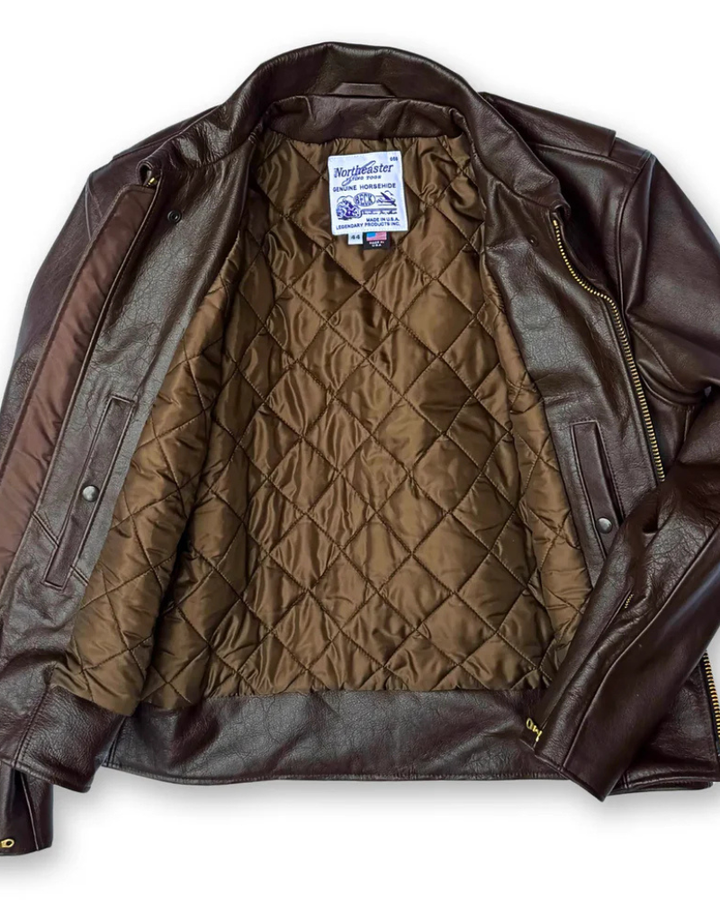
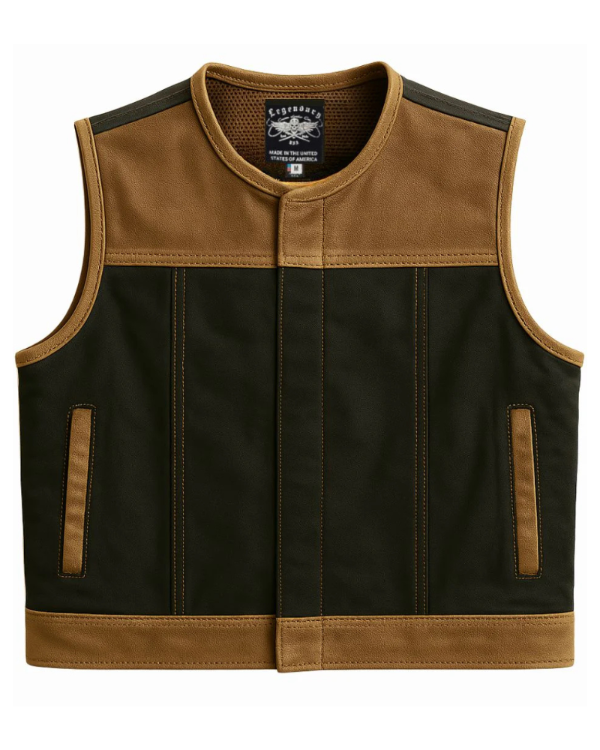
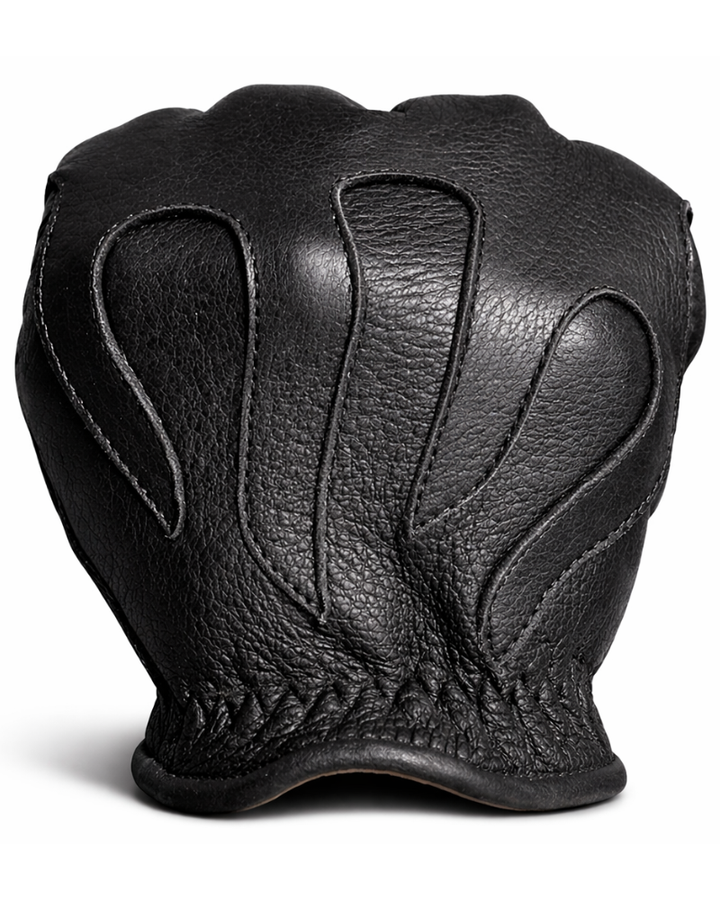
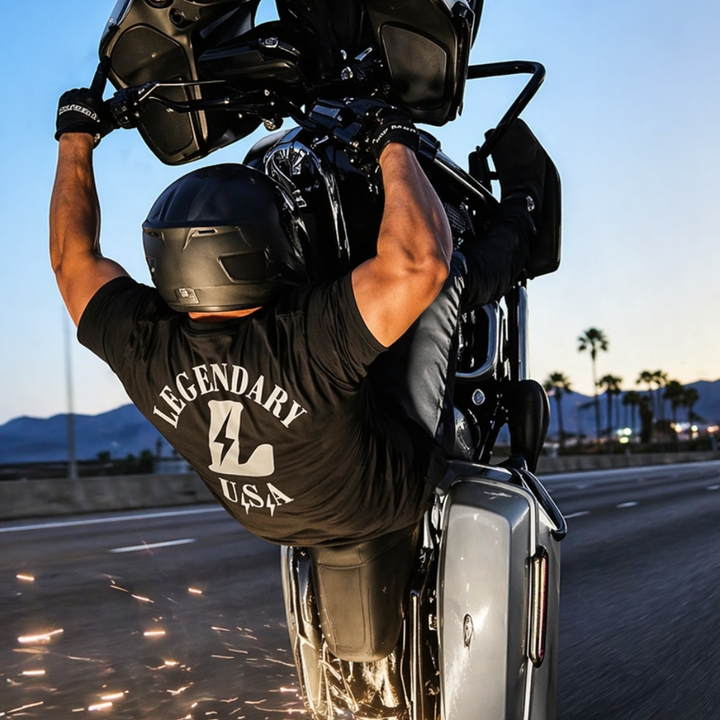


Horsehide is having its moment again, and riders comparing options keep landing on the same question: what actually separates a BECK horsehide jacket from the rest of the horsehide market? The answer is specific and verifiable: 1.3mm front-quarter horsehide, the densest section of the hide, built in the USA under a label that has produced horsehide riding gear since 1928, with construction details listed openly on every product page. Here is what that means and how to judge any horsehide jacket against it.
Top Picks, Shop Direct
| Product | What it is | From |
|---|---|---|
| BECK® 666 Distressed Horsehide Leather Motorcycle Jacket | BECK®. Rated 4.96 from 68 customer reviews. | $815.00 |
| BECK® 501 Trucker Style Genuine Horsehide Motorcycle Jacket | BECK®. Rated 4.93 from 41 customer reviews. | $725.00 |
| BECK® 732 Northeaster Flying Togs Black Genuine Horsehide Motorcycle Jacket | BECK®. Rated 4.94 from 34 customer reviews. | $815.00 |
| BECK® 777 Northeaster Flying Togs Black Genuine Horsehide Motorcycle Jacket | BECK®. Rated 4.9 from 30 customer reviews. | $815.00 |
Prices shown are current at time of writing. Orders over $150 ship free.
Front-quarter horsehide, and why the cut of the hide matters

Not all horsehide on a jacket is the same leather. The front quarter is the densest, most tightly grained section of the hide, and BECK cuts its Northeaster Flying Togs jackets from it at 1.3mm. Per the product specifications, front-quarter horsehide at that weight is more wind-resistant and abrasion-resistant than cowhide at equivalent thickness, with a longer break-in and decades of shape retention. Natural scarring and grain variation come with authentic horsehide, so no two jackets are identical. When you compare horsehide jackets, ask which section of the hide the maker uses and at what thickness. If the listing does not say, that silence is information.
Construction you can verify
The other separator is that BECK publishes its build sheet. The jackets are stitched with Perma Core thread from American and Efird, hung on YKK zippers with brass or nickel-plated hardware depending on the model, and finished with rider-driven details: two concealed carry pistola pockets nine inches deep, side buckle tabs for chest adjustment, bi-swing backs, and vented underarm gussets. All of it is made in the USA. Any horsehide jacket can claim toughness; a spec sheet you can check line by line is rarer.
The current BECK horsehide lineup
- BECK 777 Northeaster Flying Togs Jacket, from $815. The most popular current BECK horsehide: the Northeaster silhouette with refined interior and antique brass hardware.
- BECK 732 Northeaster Flying Togs Jacket, from $815. The traditional build: quilted cavity lining, nickel-plated hardware, racer snap collar.
- BECK 999 Horsehide Jacket, from $845. Top of the line: drum-dyed black, half-belt silhouette designed with rider input, built to buy once.
How the rest of the market compares
Without naming names, the horsehide market splits into three tiers. Imported horsehide jackets run cheaper but rarely state the hide section or true thickness, and the construction hardware is where costs get cut. Vintage American horsehide is wonderful when you can find it, but you are buying a decades-old hide of unknown history at collector prices. And a small circle of American heritage makers builds new horsehide to old standards, where jackets commonly run well past $1,000. BECK sits in that third tier from $815 to $845, which is the honest context for the price: US-made, front-quarter hide, published specs, without the four-figure tag much of the category carries.
Frequently asked questions
Is BECK horsehide made in the USA?
Yes. BECK Northeaster Flying Togs jackets are made in the USA, and the label has produced horsehide riding gear since 1928.
What weight is BECK horsehide?
1.3mm front-quarter horsehide across the current Northeaster jackets, cut from the densest section of the hide.
How long does a BECK horsehide jacket take to break in?
Longer than cowhide, by design. Front-quarter horsehide starts stiff and molds to the rider over a season, then holds that shape for decades.
Why does my BECK jacket have scars or grain marks?
Natural scarring and grain variation are characteristics of authentic horsehide. Each jacket is unique to the hide it came from, which is part of what collectors value.
The bottom line
Judge any horsehide jacket on three questions: which part of the hide, how thick, and who sewed it where. BECK answers all three on the product page: 1.3mm front-quarter horsehide, made in the USA, since 1928. Start with the 777, and read the full history and model guide in the BECK Northeaster Flying Togs buying guide.