



The best insulated motorcycle riding gear pairs a wind-blocking leather or nylon shell with a measured insulation layer, and the right amount of insulation depends on the temperature band you ride in. For hands, that means 40-gram 3M Thinsulate in a deerskin glove for 30 to 50 degrees and 100-gram Thinsulate in a deerskin mitten below 30. For the torso, it means a polyfill-lined front quarter horsehide jacket for most cold riding and a sheepskin bomber for the coldest days.
This roundup covers the insulated gloves, jackets and layers Legendary USA sells for cold-weather riding, with the insulation weight, the hide and the temperature range for each. Everything here is made in the USA by Legendary USA, BECK or Cockpit USA, and none of it carries armor or a CE rating. It is built for warmth, wind and abrasion resistance.
Insulated Gloves and Mittens

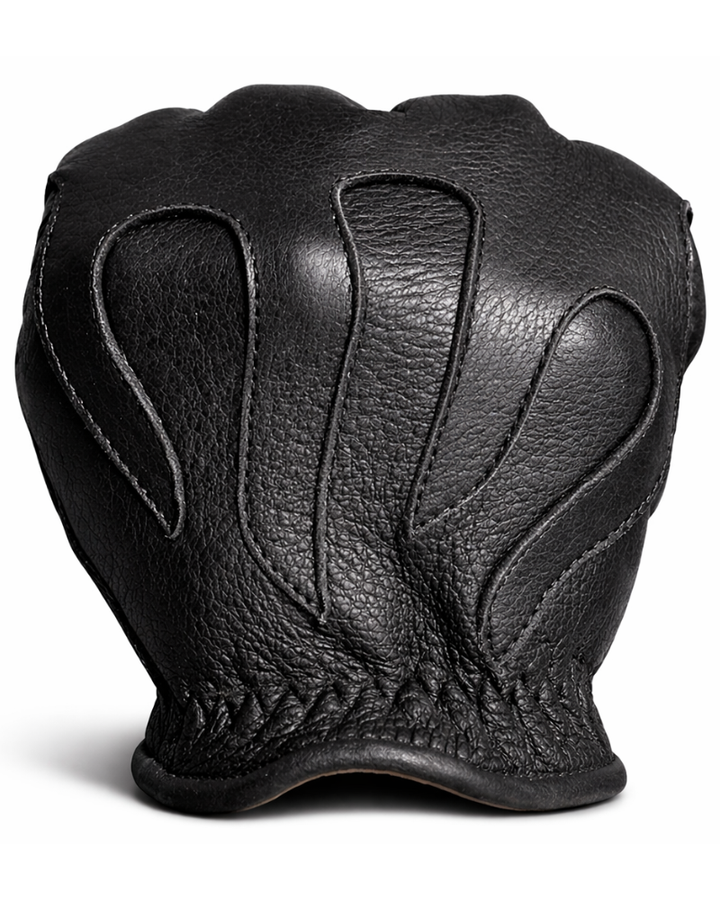
The fleece-lined deerskin short wrist gloves are the glove most riders should start with. The 40-gram 3M Thinsulate fleece lining is warm enough for the 30 to 50 degree range and thin enough that clutch and brake feel are not sacrificed. The shell is 100 percent American Whitetail deerskin, which weighs roughly half what cowhide does at equivalent protection and stays pliable in cold. Keystone thumb, elasticized wrist, A&E thread, hand-cut and stitched in the USA. Size up one from your normal glove size.
The deerskin insulated mittens are the sub-30 option. The 100-gram Thinsulate lining is two and a half times the weight of the fleece-lined short wrist, and the mitten construction keeps the fingers together to share heat instead of isolating each one. A double-layer palm adds durability at the highest-wear point, and the outseam stitching keeps the interior smooth. The trade is dexterity. A mitten is slower on the front brake than a fingered glove, which is why it is the below-30 pick and not the all-winter pick.
The aramid-lined deerskin touchscreen gloves are not an insulated glove, and it is worth being clear about that. The aramid fiber liner adds cut and abrasion resistance at the contact surface, not warmth. It is on this list because riders ask about it as a winter glove. It is a three-season glove with a liner that does a different job, and it layers under a gauntlet or over a knit liner for cold rides.
For riders who want to add warmth to an unlined glove they already own, the Gators Skin glove liners are the knit liner Legendary USA carries. They add about half an inch to hand circumference, so size the outer glove up one. The full glove lineup for cold weather is in the cold weather deerskin glove collection.
Insulated Horsehide Jackets
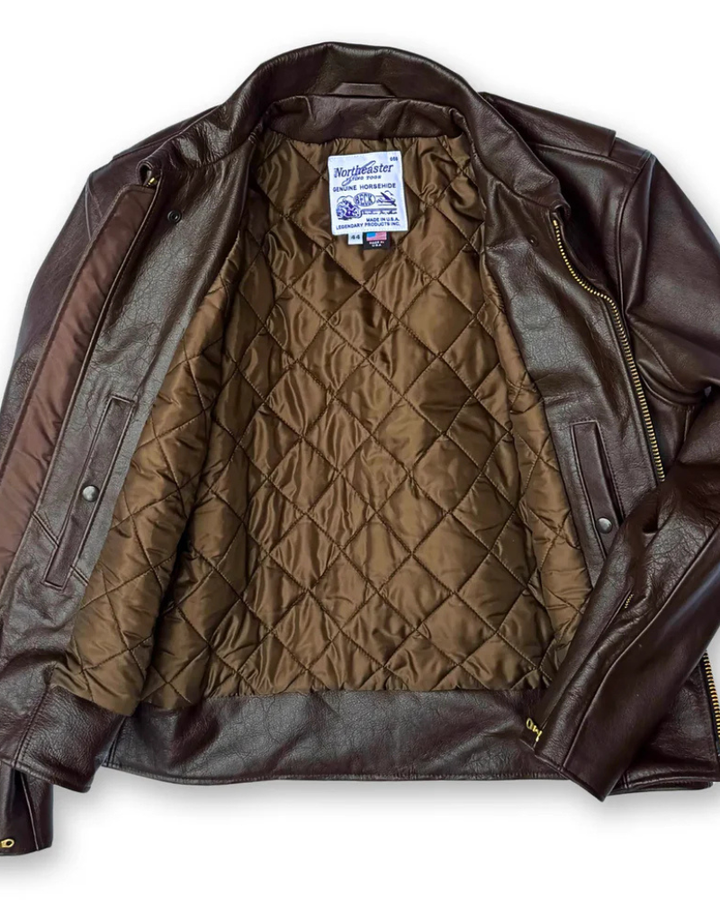
The BECK 777 Northeaster Flying Togs horsehide jacket is the insulated leather jacket in the lineup. It pairs 1.3mm front quarter horsehide, the densest section of the hide and more wind-resistant than cowhide at the same thickness, with a diamond-quilted polyester lining with polyfill insulation and a nylon Oxford sleeve lining. Side buckle tabs let you cinch the chest over a flannel and vest. Two 9-inch concealed carry pockets, a bi-swing back and vented underarm gussets round it out. BECK has built horsehide riding gear in the USA since 1928.
The Legendary Black Hills cowhide jacket takes a different approach to insulation. It is cut from heavyweight 3.5-ounce drum-dyed cowhide with a zip-out diamond-quilted vest lining, so the same jacket runs unlined in September and lined in November. Double-layer reinforced shoulders and elbows, Cordura-lined hand-warmer pockets and adjustable side lacing. The zip-out liner is the feature to look for if you want one jacket for three seasons. Our guide to the best cold weather motorcycle jackets compares these two against the unlined BECK horsehide jackets in more depth.
Sheepskin and Military-Spec Insulation
The Cockpit USA B-3 sheepskin bomber jacket is the warmest piece Legendary USA sells. It is built to the specification that kept Army Air Force bomber crews warm in unpressurized cabins, with thick sheepskin, a nappa-finished exterior, leather-welted seams, a double buckle throat latch for wind and a heavy front zipper with an interior wind flap. It is a heritage flight jacket, not an armored riding jacket, so it has no CE armor. It is also heavy and warm enough that it is a below-freezing jacket, not a 45-degree jacket. Cockpit USA makes it in the USA, and Legendary USA carries it as an authorized dealer.
The Cockpit USA CWU-55/P cold weather flight jacket is the nylon option. A military-spec flight satin shell over quilted poly-fill insulation, with a bi-swing back, rib-knit cuffs and waistband to seal in heat, and Velcro cargo pockets. It weighs a fraction of a sheepskin bomber and packs down for a saddlebag, which makes it the insulated layer touring riders carry for the cold morning start and shed by noon. The nylon shell is not fire retardant and is not leather, so it does not offer the abrasion resistance of horsehide. It is a warmth layer.
Insulated Layers Under Leather
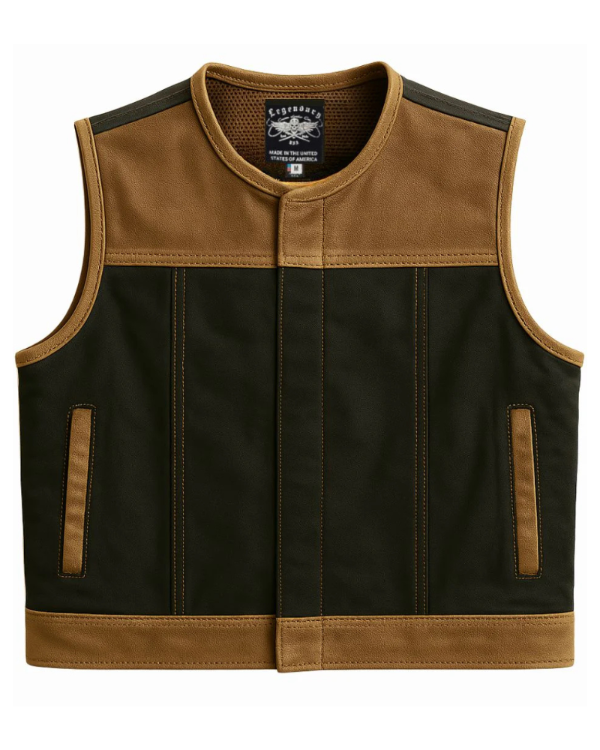
Insulation under an unlined vest or jacket does the same job as insulation sewn into one, and it is easier to adjust. A heavyweight brushed cotton flannel from the Legendary USA flannel collection traps air under a horsehide vest, and the vest blocks the wind. That stack, flannel then vest then unlined horsehide jacket, handles 40 to 50 degrees for most riders without any sewn-in insulation at all.
The advantage of layered insulation over built-in insulation is the ride that starts at 38 and ends at 62. A sewn-in liner stays in. A flannel comes off at the gas stop. The disadvantage is bulk at the arms if the flannel is heavy, which is where a vest earns its place by putting the warmth over the core and leaving the sleeves free. The gear by temperature range guide maps those stacks to specific degree bands.
Picking by Temperature Band
From 50 to 40 degrees, run fleece-lined deerskin gloves, a flannel, a horsehide vest and an unlined horsehide jacket. From 40 to 30, keep the gloves, add the BECK 777 with its polyfill lining or the Black Hills with the vest liner zipped in, and move to gauntlets for highway rides. Below 30, switch to the insulated mittens and either the B-3 sheepskin or the CWU-55/P over a flannel and vest. Wind chill at 60 miles per hour turns a 30-degree morning into something well below that, which is why the sub-30 setup is heavier than the numbers suggest.
For riders who would rather not run batteries, our piece on heated motorcycle glove alternatives explains why a 100-gram Thinsulate mitten covers most of the ground a heated glove does, and the best winter motorcycle gloves roundup goes glove by glove.
Every piece in this roundup is in the cold weather riding collection, and every piece is made in the USA. Pick the insulation weight for the temperature you actually ride in, not the coldest day of the year, and layer for the rest.
For the wind chill values behind the temperature bands used in this roundup, the National Weather Service publishes a cold wind chill chart.
Frequently Asked Questions
- What is the warmest motorcycle glove Legendary USA makes?
- The Legendary USA deerskin insulated mittens are the warmest hand covering in the lineup. They use a 100-gram 3M Thinsulate lining, two and a half times the weight of the 40-gram lining in the fleece-lined short wrist glove, inside a 100 percent American Whitetail deerskin shell with a double-layer palm. The mitten construction keeps fingers together to share heat. They are built for below-30-degree riding and are slower on the front brake than a fingered glove.
- How much Thinsulate do I need in motorcycle gloves?
- A 40-gram Thinsulate lining covers the 30 to 50 degree range for most riders while keeping clutch and brake feel. A 100-gram lining is the weight for below-30-degree riding, and at that weight a mitten retains more heat than a fingered glove. Heavier is not always better. A 100-gram fingered glove at 45 degrees overheats the hand and the sweat then chills it, so match the lining weight to the band you ride in most.
- Is a sheepskin bomber jacket good for motorcycle riding in winter?
- A Cockpit USA B-3 sheepskin bomber is the warmest jacket Legendary USA sells and works for below-freezing rides. It was built to keep Army Air Force bomber crews warm in unpressurized cabins, with a double buckle throat latch and an interior wind flap. It is a heritage flight jacket, not an armored riding jacket, so it has no CE armor, and it is too warm for 45-degree riding. Riders who want CE protection layer a separate armored shirt under it.
- What is the difference between a lined and an insulated motorcycle jacket?
- A lined jacket has a fabric liner, such as nylon Oxford or cotton, that makes the jacket slide over layers and protects the leather from sweat. It adds little warmth. An insulated jacket adds a fill layer, such as the diamond-quilted polyfill in the BECK 777 or the quilted poly-fill in the Cockpit USA CWU-55/P, that traps air. A zip-out liner, like the vest lining in the Legendary Black Hills, lets one jacket do both jobs.
- Does horsehide need insulation to be warm?
- Horsehide blocks wind better than cowhide at the same thickness, but it does not insulate on its own. An unlined 1.3mm front quarter horsehide jacket over a flannel and vest handles 40 to 50 degrees for most riders. Below 40, either the jacket needs a polyfill lining, like the BECK 777, or the layers underneath need to carry the insulation. The leather does the wind and abrasion work. The lining or the flannel does the warmth.
- Are any of these insulated jackets or gloves armored or CE rated?
- No. The Legendary USA gloves, BECK horsehide jackets and Cockpit USA flight jackets in this roundup carry no armor and no CE rating. They are built for warmth, wind blocking and abrasion resistance. The aramid-lined deerskin glove adds cut and abrasion resistance at the palm but is not a certified protective glove. Riders who want CE-certified protection layer a Bohn armored riding shirt, a separate brand Legendary USA carries, under the leather.