



The best heated motorcycle glove alternatives are a fleece-lined deerskin glove for the 30 to 50°F range, a gauntlet cuff that closes the sleeve gap, and a thin liner you can add or remove as the day changes. None of them need a battery, a wiring harness or a charger, and all of them keep working when the temperature drops on a ride you did not plan to be cold. This guide explains how each option works, where each one stops working, and how Legendary USA builds its cold-weather deerskin gloves in the USA.
Why riders look past heated gloves in the first place

Heated gloves solve one problem, cold fingers, and add three more: battery life, bulk and a wire that has to route under a jacket cuff. A heated glove that dies at mile 90 of a 200-mile day is a heavy, unlined glove for the rest of the ride. Riders who commute year-round or tour through shoulder season tend to want gear that works the same way at hour one and hour six.
Wind is the real enemy. At 60 mph in 45°F air, the wind chill on an exposed hand is in the low 30s, and the heat loss through a thin, unlined glove is fast. A glove that blocks wind and traps a layer of still air next to the skin solves most of the problem passively. That is what a good leather winter glove does, and it is why cold-weather riders were comfortable for decades before anyone put a heating element in a glove.
Legendary USA has been building motorcycle gloves since 2001, and the cold-weather question comes up every October like clockwork. The answer has not changed much: start with the right leather, add insulation only where it helps, and cover the wrist.
Alternative 1: Fleece-lined deerskin gloves for 30 to 50°F
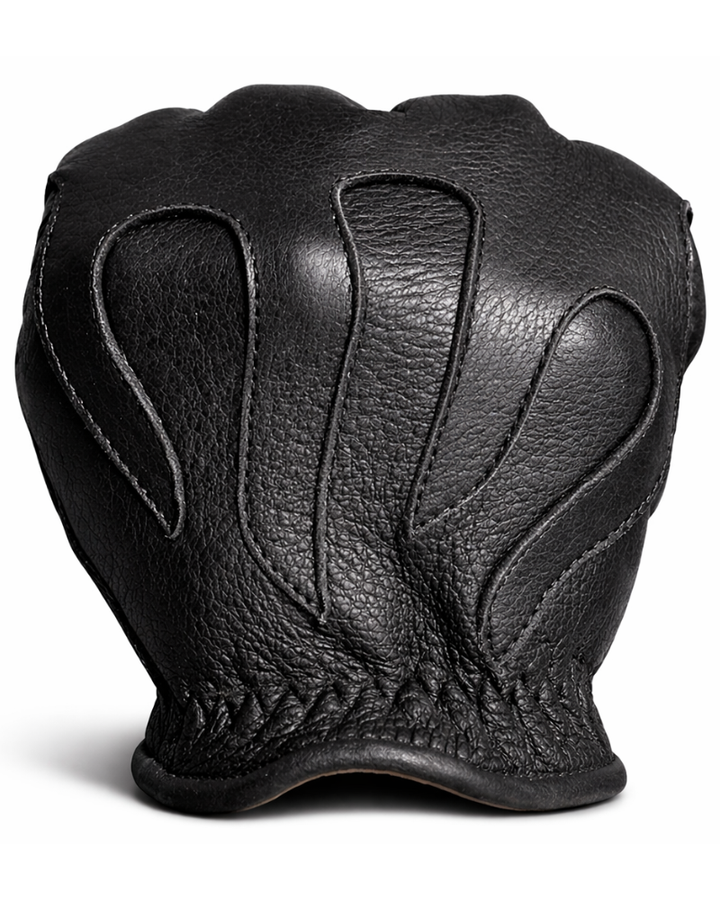
A fleece-lined deerskin glove is the closest direct replacement for a heated glove on most rides. Legendary USA's Fleece-Lined Deerskin Gloves pair a 100% American Whitetail deerskin outer with a 3M Thinsulate 40-gram fleece lining, which the glove is rated for in the 30 to 50°F range. The lining is thin enough that clutch and brake feel stay intact, and the deerskin outer blocks wind without stiffening in the cold the way cowhide does.
Deerskin matters here for a specific reason. Whitetail deerskin weighs roughly half what cowhide does at equivalent protection, so the insulated version of a deerskin glove still weighs less than a standard cowhide winter glove. Cold-stiffened cowhide fights your grip; deerskin stays pliable, which means less hand fatigue over a long cold ride.
The tradeoff is real. A 40-gram fleece lining is a three-season solution, not a sub-freezing one. Below about 30°F at highway speed, a short-wrist fleece-lined glove will let your fingertips get cold on a long stretch. For that band you move to the layering system described below, or you accept that some mornings are heated-grip mornings.
Sizing note straight from the product page: size up one from your normal glove size to accommodate the lining. A fleece-lined glove that fits like your summer glove will compress the insulation and lose warmth.
Alternative 2: Gauntlet cuffs that close the sleeve gap
Most cold on a motorcycle enters at the wrist. A short-wrist glove leaves a band of skin or thin shirt cuff exposed between the glove and the jacket sleeve, and at highway speed that gap acts like a scoop. A gauntlet cuff covers the wrist and lower forearm and either tucks under the jacket sleeve or goes over it, depending on conditions.
Legendary USA's Classic Deerskin Gauntlets are an unlined gauntlet cut from domestic Whitetail deerskin, with a cuff long enough to wear over or under a jacket sleeve. Unlined means direct throttle and brake feel, and it also means they work as the outer shell of a liner system. Reinforced stitching sits at the palm, thumb saddle and fingertip stress points, and the deerskin softens and molds to your grip over the first few rides.
Gauntlet versus short wrist is the comparison that decides most cold-weather glove purchases. A short-wrist glove is easier to get on and off, fits under any sleeve and is the better choice for in-town riding with frequent stops. A gauntlet is warmer at speed because it seals the sleeve, and it is the better choice for highway commutes and touring. Riders who run both tend to keep the short wrist for October and the gauntlet for November.
Alternative 3: A liner system you can adjust mid-ride
The most flexible heated-glove alternative is not one glove. It is a thin liner under an unlined or lightly lined leather shell. Silk, merino and thin synthetic liners add a layer of still air without adding much bulk, and they can come off at a gas stop when the afternoon warms up. An unlined deerskin gauntlet over a thin liner covers a wider temperature range than any single lined glove.
The rules for liners are simple. Size the outer glove to fit with the liner in place, not without it, because a compressed liner is a cold liner. Keep the liner thin enough that you can still feel the brake lever. And never run a liner so thick that the glove bunches at the palm, because a bunched palm causes blisters and hand fatigue faster than cold does.
For riders who want cut and abrasion resistance built into the glove itself rather than added as a layer, the Aramid Touchscreen Deerskin Gloves put an aramid fiber liner between the deerskin shell and the hand. The aramid liner does not add significant bulk, and the touchscreen fingertips mean you can check a route without pulling the glove off in the cold. It is a short-wrist glove, so pair it with a jacket cuff that closes snugly.
How to match the alternative to the temperature
Use air temperature at speed, not the thermometer in the garage, to pick the glove. The table below reflects how Legendary USA riders and staff actually run these gloves, and it assumes a jacket with a cuff that closes.
| Riding temperature | Glove setup | What to expect |
|---|---|---|
| 50 to 65°F | Unlined deerskin short wrist or gauntlet | Comfortable at speed; add a thin liner for early mornings |
| 40 to 50°F | Fleece-lined deerskin short wrist | Warm for commutes and day rides; fingertips cool on long highway stretches |
| 30 to 40°F | Fleece-lined short wrist with jacket cuff sealed, or unlined gauntlet over a liner | Workable for an hour or two; plan warm-up stops on longer rides |
| Below 30°F | Gauntlet over a liner, plus heated grips if the bike has them | Short rides only without heated grips; leather alone will not hold fingertip warmth indefinitely |
The honest limit is this: no unheated glove keeps fingertips warm indefinitely below freezing at highway speed. Heated grips, which warm the palm side of the hand through the glove, pair well with any of the alternatives above and do not carry the bulk or wire problems of a heated glove.
Common mistakes with cold-weather gloves
The first mistake is buying a lined glove in your summer size. The lining compresses, the glove feels tight, and the insulation stops working. The second is choosing a heavy cowhide winter glove for warmth and then fighting a stiff, cold hide at every shift. The third is ignoring the wrist. A warm glove with a two-inch gap at the cuff is a cold glove at 60 mph.
The fourth mistake is skipping leather care before the cold season. Deerskin stays pliable through wet and dry cycles without conditioning, but it still benefits from being clean and dry before a cold ride. The leather motorcycle gear care guide covers the routine, and the motorcycle glove fit guide explains how to measure for a lined glove.
Where to start
For most riders in the 30 to 50°F range, a fleece-lined deerskin short-wrist glove is the single purchase that replaces a heated glove. Riders who commute on the highway or ride into November should add an unlined deerskin gauntlet and a thin liner. Every glove above is hand-cut and stitched in the USA, and the full range is in the USA-made motorcycle gloves collection.
Heated gloves are a tool, and for some riders in some climates they are the right tool. For most cold-weather riding, a fleece-lined deerskin glove, a gauntlet cuff and a liner you can take off at lunch do the job without a battery to manage. Pick the leather first, cover the wrist, and size for the lining, and your hands will stay working well past the point where a dead battery would have sent you home.
For the wind chill math behind the temperature bands in this guide, the National Weather Service publishes a cold wind chill chart that shows how air temperature and wind speed combine.
Frequently Asked Questions
- What is the best alternative to heated motorcycle gloves?
- A fleece-lined deerskin glove is the most direct alternative to heated motorcycle gloves for riding in the 30 to 50°F range. Legendary USA's Fleece-Lined Deerskin Gloves use a 3M Thinsulate 40-gram fleece lining inside an American Whitetail deerskin outer, which blocks wind and traps warm air without a battery. For colder rides, an unlined deerskin gauntlet worn over a thin liner covers a wider temperature range and can be adjusted mid-ride.
- Are fleece-lined motorcycle gloves warm enough for winter?
- Fleece-lined motorcycle gloves with a 40-gram lining are warm enough for fall and mild winter riding, roughly 30 to 50°F, but they are not sub-freezing gloves. Below about 30°F at highway speed, fingertips will get cold on long stretches. For those conditions, pair the lined glove with a sealed jacket cuff or move to a gauntlet-over-liner setup, and use heated grips if the bike has them.
- Should I size up for fleece-lined motorcycle gloves?
- Yes. Size up one from your normal glove size when buying fleece-lined motorcycle gloves. The lining takes up space inside the glove, and a lined glove that fits like a summer glove compresses the insulation, which makes the glove colder, not warmer. The same rule applies to any glove you plan to wear over a separate liner: size the outer glove with the liner in place.
- Are gauntlet gloves warmer than short-wrist gloves?
- Gauntlet gloves are warmer at highway speed because the long cuff covers the wrist and lower forearm and closes the gap between glove and jacket sleeve, which is where most cold air enters. Short-wrist gloves are easier to put on and take off and fit under any sleeve, which makes them the better choice for in-town riding with frequent stops. Many riders run a short wrist in October and switch to a gauntlet in November.
- Do deerskin gloves stay soft in cold weather?
- Deerskin stays pliable in cold weather and does not stiffen the way cowhide does, which is one of the main reasons Legendary USA builds its cold-weather gloves from American Whitetail deerskin. Deerskin also weighs roughly half what cowhide does at equivalent protection, so even the fleece-lined version weighs less than a standard cowhide winter glove. Softer leather means less hand fatigue over a long cold ride.
- Can I wear glove liners under leather motorcycle gloves?
- Yes, and a thin liner under an unlined leather glove is one of the most adjustable cold-weather setups available. Silk, merino or thin synthetic liners add a layer of still air without much bulk and can be removed at a stop when the day warms up. Size the outer glove to fit with the liner on, keep the liner thin enough to feel the brake lever, and avoid liners thick enough to bunch at the palm.
- Do heated grips work with regular leather gloves?
- Heated grips work well with regular leather gloves and pair naturally with the heated-glove alternatives in this guide. Grips warm the palm side of the hand through the glove, so a thinner palm, like an unlined deerskin glove, transfers that heat more effectively than a thick insulated palm. Heated grips do not add bulk or wiring to the glove itself, which is the main complaint riders have about heated gloves.