



To choose motorcycle gloves for cold-weather commuting, match the lining to your coldest leg of the ride, size for the lining you will actually wear, and check that the cuff seals against your jacket. For most commuters riding in the 30 to 50°F range, a fleece-lined deerskin glove such as the Legendary USA Fleece-Lined Deerskin Gloves covers it with one pair. Below that range, or on long highway runs, plan to add a liner or move to a longer cuff.
Start with the coldest leg of your commute

Commuting is different from a weekend ride because you do it when the weather is worst. The morning leg is the coldest, often in the early light with frost on the ground, and the ride home is warmer. Choose gloves for the morning, then manage the afternoon by loosening up, not by owning a second glove.
Write down the lowest temperature you ride in and how much of the commute is highway. Wind at speed pulls heat off your hands faster than the number on the thermometer suggests, which is why the National Weather Service tracks wind chill separately. Short city runs at low speed are far easier on your hands than twenty minutes of interstate.
Pick the lining for your temperature band
Lining is the main warmth decision, and the honest answer depends on your temperature. The table below is a starting point, not a promise, because every rider runs warmer or colder and every commute has different wind.
| Commute condition | Glove approach |
|---|---|
| Cool mornings, mild afternoons | Unlined deerskin short wrist |
| 30 to 50°F | Fleece-lined deerskin, 3M Thinsulate 40-gram |
| Below that, or long highway stretches | Add a thin liner, or use a longer cuff |
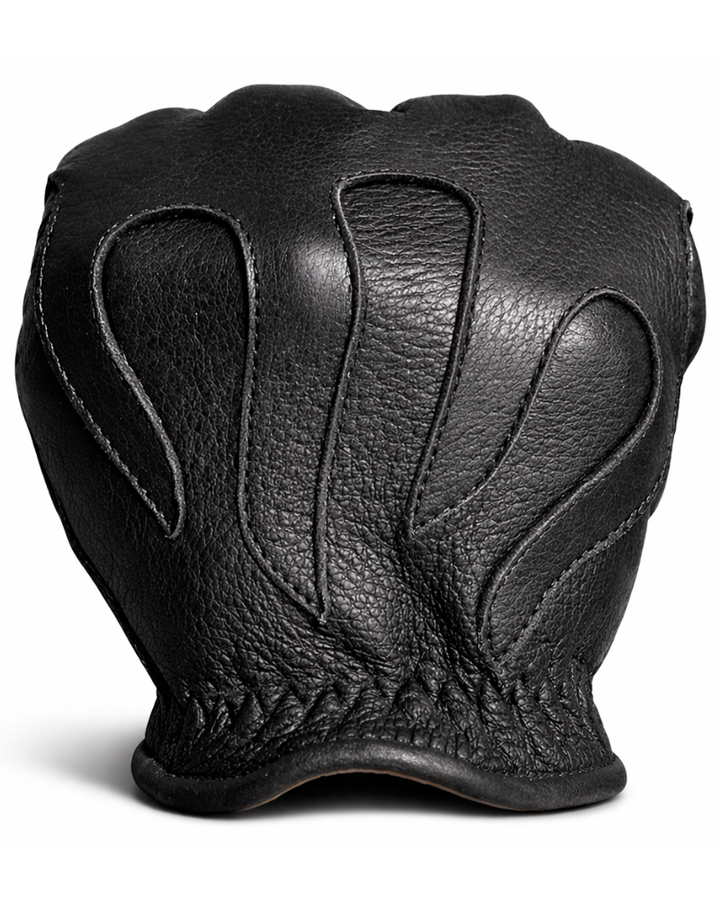
The Legendary USA Fleece-Lined Deerskin Gloves use a 100% American Whitetail deerskin outer with 3M Thinsulate 40-gram fleece lining. The lining keeps the glove warm in the 30 to 50°F range without the bulk of a winter gauntlet, and the glove has a keystone thumb and an elasticized wrist.
Fleece-lined vs unlined deerskin
Fleece-lined gloves are warmer and a little snugger. Unlined deerskin gives you the most direct throttle and brake feel, and it is the better choice if your mornings stay above the cold band. The tradeoff is simple: lining gives up some feel for warmth. If you are unsure which one you need, the guide on motorcycle glove thickness for cold weather goes deeper.
Size for the lining you will wear
Fleece lining takes up space inside the glove. Legendary USA recommends sizing up one from your normal glove size on the fleece-lined model so the lining does not squeeze your fingers. A glove that is too tight compresses the insulation and restricts circulation, so your hands end up colder than they would in a looser pair.
Do the fit check in the riding position: hold your hands out as if on the bars, make a fist, and look for pulling across the knuckles. If you plan to wear a liner glove under any pair, try them together. The full walkthrough is in our guide to sizing motorcycle gloves for liners.
Check the cuff before the commute, not during
A short-wrist glove relies on your jacket cuff to close the gap at the wrist. Zip, snap or cinch the jacket cuff over the glove, then sit in the riding position and see whether skin shows. If skin shows, cold air will find it at speed, and a longer cuff or a better jacket seal solves it. Our guide to longer cuff deerskin gloves for cold weather covers when to step up.
Keep commuting gloves working through the week
Commuting gloves get worn five days a week, and leather needs rest. If you can, keep a second pair so one dries while the other works. Damp leather dried near a heater turns stiff, so let gloves dry at room temperature. Deerskin stays pliable when wet, but leather is water-resistant, not waterproof, so a long rainy commute will get your hands wet regardless.
Browse the full range in our Made in USA motorcycle gloves collection, and for a gear list built around the same commute, see best motorcycle gear for late-October commuters.
For the wind chill math behind these temperature bands, the National Weather Service publishes a cold wind chill chart.
Frequently asked questions
- What gloves are best for cold-weather motorcycle commuting?
- For 30 to 50°F commutes, a fleece-lined deerskin glove is a practical choice. The Legendary USA Fleece-Lined Deerskin Gloves use 3M Thinsulate 40-gram lining in a short-wrist cut, so they stay warm without the bulk of a winter gauntlet. For colder rides or long highway stretches, add a thin liner or use a longer cuff.
- Should I size up for fleece-lined motorcycle gloves?
- Yes. Legendary USA recommends sizing up one from your normal glove size on the fleece-lined model, so the lining has room and does not squeeze your fingers. A tight glove compresses the insulation and restricts circulation, which makes hands colder. Check the fit in the riding position with a closed fist.
- Are deerskin gloves warm enough for winter commuting?
- Unlined deerskin is a three-season glove, and it works on mild mornings. For winter, choose the fleece-lined version or add a liner. Deerskin stays pliable in the cold, which keeps throttle and brake feel better than a stiff glove, but it is the lining and the cuff that decide how warm your hands are.
- How do I stop cold air at the wrist on a commute?
- Close the gap between glove and jacket. With a short-wrist glove, cinch the jacket cuff over the glove and check in the riding position that no skin shows. If it still leaks, move to a gauntlet cuff, which covers the wrist and lower forearm and closes the gap at highway speed.
- How should I dry leather gloves after a wet commute?
- Dry them slowly at room temperature, away from heaters, radiators and hair dryers. Heat stiffens leather and can crack it. Reshape the fingers by hand while they are damp, and rotate to a second pair if you commute daily, so each pair gets a full day to dry.
Bottom line for commuters
Choose the glove for your coldest leg, size it for the lining, and check the cuff before you leave. For most 30 to 50°F commutes, one pair of fleece-lined deerskin gloves does the job, with a liner or longer cuff held in reserve for the worst mornings. A second pair keeps the rotation honest.