



Motorcycle glove thickness for cold weather comes down to three layers: the leather, the lining, and the cuff. For most riders in the 30 to 50°F range, a deerskin glove with a thin insulating liner keeps your hands warm and still lets you feel the throttle and brake. Thicker is not automatically warmer, and past a certain point it costs you control of the bike.
Legendary USA hand-cuts and stitches its deerskin gloves in the USA, and the cold-weather pairs follow one idea: get warmth from a thin lining instead of from bulk. This guide breaks down what each layer does, where thickness helps, and where it gets in your way.
The three layers that make up glove thickness

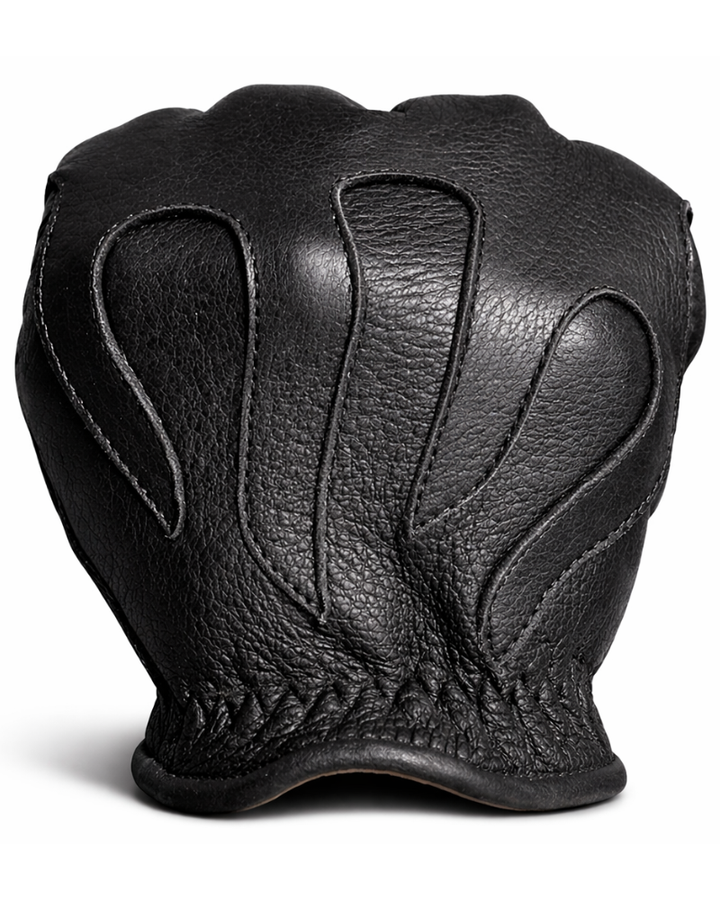
Leather. American Whitetail deerskin is listed at roughly half the weight of cowhide, and it stays pliable in cold air instead of stiffening. That matters because a stiff glove makes you fight the lever with every squeeze. Deerskin is soft and comfortable, but it is not hard armor, and extra thickness does not change that.
Lining. The Fleece-Lined Deerskin Gloves use a 3M Thinsulate 40-gram fleece lining. That is a thin insulation weight, and the product specs describe it as thin enough that clutch and brake feel are not sacrificed. Legendary lists the pair for fall and mild winter riding in the 30 to 50°F range.
Cuff. A short-wrist cuff ends at the wrist bone with an elasticized band. A gauntlet cuff runs over the wrist and lower forearm and closes the gap between glove and sleeve. On a cold highway run the cuff matters as much as the lining, because that gap is where the cold air gets in.
Thickness versus feel at the controls
Every layer between your fingertip and the lever adds distance. A thin, supple glove tells you exactly how far the throttle has turned and how hard the brake is loaded. A thick, stiff one dulls that signal, so riders squeeze harder to compensate, and a harder grip tires the hand on a long ride.
Insulation also depends on trapped air. A lining crushed flat against your fingers holds less of it, so a glove sized too small can feel colder than one that fits. That is the reason the fleece-lined pair is sized one up from your normal glove size.
When thinner is the right call
If your ride is a 20 to 30 minute commute on a 45°F morning, a thin lined glove is usually enough. You gain throttle feel and keep the dexterity to work switches, a phone mount, or a fuel cap without pulling a glove off.
When thicker is the right call
Long highway stretches, early starts, and riding after sunset all change the math. Hands sit in a constant stream of air, they are still, and they cool fast. That is when a longer cuff or a separate liner earns the extra bulk.
Glove setups compared
| Setup | What it adds | Tradeoff |
|---|---|---|
| Unlined deerskin gauntlet | Long cuff over the wrist and lower forearm, room for a separate liner | No insulation of its own, so warmth depends on what you add |
| Fleece-lined deerskin short wrist | 3M Thinsulate 40-gram lining built in | Fits snugger than an unlined glove, so size up one |
| Aramid-lined deerskin short wrist | Aramid liner with minimal added bulk | Described by its cut and abrasion resistance, not as a warmth layer |
The aramid-lined pair belongs on this list because riders ask about it, but do not buy it for winter warmth. Legendary describes that liner in terms of cut and abrasion resistance, and the shell is the same deerskin as the others. Our fleece-lined versus aramid-lined comparison goes deeper on the choice.
Matching thickness to temperature and ride length
Wind drives how cold your hands feel, and a motorcycle supplies its own wind. A 40°F day at 60 mph is a much colder day for exposed skin than the number on your phone suggests, which is why the wind chill chart below belongs in your planning.
In the 30 to 50°F range, the fleece-lined short wrist is the glove built for the job. Below that range, a single lined short-wrist glove is rarely the whole answer. Riders step up to a gauntlet worn with a thin separate liner, or to mittens. Our insulated motorcycle glove guide compares those three routes, and the deerskin mittens versus gloves guide covers the mitten tradeoffs.
Sizing a thicker glove
Size up one from your normal glove size for the fleece-lined pair, per the product specs. If you plan to wear a separate liner under an unlined glove, size the glove with the liner on, not off. Our post on sizing motorcycle gloves for thick liners walks through the check, and the fit guide for wide hands and long fingers covers the basics.
Expect a break-in. Deerskin softens and molds to your grip over the first few rides, so a pair that feels slightly firm on day one is normal.
Common mistakes when choosing cold-weather glove thickness
- Buying for the coldest day of the year instead of the temperature you ride in most weeks.
- Sizing down for a snug feel, which compresses the lining and cools the hand.
- Ignoring the cuff, then blaming the glove for cold wrists.
- Treating deerskin as waterproof. It stays pliable when wet, but it is leather, and rain still gets through over time.
Where to start
For cold mornings and mixed fall commutes, start with the fleece-lined short-wrist deerskin pair. It is the thin-lining answer: warm in its listed range, with the throttle feel intact. Skip it if your rides run into hot afternoons, where a lined glove will overheat.
For highway miles where sleeve gap is the problem, look at the Classic Deerskin Gauntlets. They are unlined, so they work best with a separate thin liner once temperatures drop. If you want to compare every Made in USA option side by side, browse the Made in USA motorcycle gloves collection.
The bottom line
Pick glove thickness by the ride you actually take: thin lining for short cold commutes, a longer cuff and a separate liner for long cold highway miles. Size for the lining, give the deerskin a few rides to break in, and keep the throttle feel you started with. A glove that keeps your fingers warm and still lets you read the lever is thick enough.
For the wind chill math behind these temperature bands, the National Weather Service publishes a cold wind chill chart.
Frequently asked questions
- How thick should motorcycle gloves be for cold weather?
- Thick enough to hold warmth, thin enough to keep throttle and brake feel. For the 30 to 50°F range, a deerskin glove with a thin 3M Thinsulate 40-gram lining is a good match. Below that range, riders usually add a longer gauntlet cuff and a separate thin liner instead of a single heavy glove. Choose by your typical ride, not the coldest day.
- Is a fleece-lined motorcycle glove warm enough for 40 degrees?
- Legendary USA lists its Fleece-Lined Deerskin Gloves for fall and mild winter riding in the 30 to 50°F range, so 40°F falls inside that band. Wind speed, ride length, and your own circulation still matter. On a long highway ride at 40°F your hands will feel colder than on a short commute, and some riders add a liner.
- Do thicker motorcycle gloves reduce throttle feel?
- Yes, up to a point. Every layer between your fingertip and the lever adds distance, and stiff, bulky gloves dull the signal. Riders then grip harder, which tires the hand. Deerskin stays pliable in cold air and a thin lining keeps the bulk down, which is why Legendary builds its cold-weather pair that way.
- Should I size up for lined motorcycle gloves?
- For the Legendary Fleece-Lined Deerskin Gloves, the product specs say to size up one from your normal glove size to make room for the lining. A lining crushed against the fingers traps less air and feels colder. If you plan to wear a separate liner under an unlined glove, try the glove on with the liner in place.
- Is deerskin warm enough for cold-weather riding on its own?
- Unlined deerskin is soft and stays pliable in the cold, but it is a leather shell, not an insulator. It blocks wind, yet your hands will cool quickly without a lining or a separate liner. For genuine cold, choose a lined pair or pair an unlined gauntlet with a thin liner.
- What is the difference between fleece-lined and aramid-lined deerskin gloves?
- The fleece-lined pair uses a 3M Thinsulate 40-gram lining for warmth. The aramid-lined pair uses an aramid fiber liner that Legendary describes in terms of cut and abrasion resistance, with minimal added bulk. Both use American Whitetail deerskin shells. Choose fleece for cold mornings and aramid when liner construction matters more than warmth.