



Fleece-lined motorcycle gloves are the right glove for cool-weather riding roughly between 40F and 60F, where an unlined glove leaves your hands stiff and a heavy winter glove is overkill. The fleece liner traps a layer of warm air inside a leather shell that already blocks wind. For most American riders, that means one pair covers fall mornings, evening rides home, and early-spring miles.
This guide covers what a fleece liner actually does, the temperature range where it earns its place, how a lined glove should fit, and where fleece falls short. Legendary USA has been selling American-made riding gloves since 2001, and the questions riders ask us every September are almost always the same five questions below.
Top Picks, Shop Direct
| Product | What it is | From |
|---|---|---|
| Classic Deerskin Gauntlets | Legendary USA. Rated 4.88 from 112 customer reviews. | $140.00 |
| Fleece-Lined Deerskin Gloves | Legendary USA. Rated 4.9 from 104 customer reviews. | $115.00 |
| Aramid Touchscreen Deerskin Gloves | Legendary USA. Rated 4.93 from 102 customer reviews. | $120.00 |
| Deerskin Insulated Mittens | Legendary USA. Rated 4.83 from 80 customer reviews. | $115.00 |
Prices shown are current at time of writing. Orders over $150 ship free.
What a Fleece Liner Actually Does

Warmth in a riding glove comes from two things: stopping wind and trapping air. Leather handles the first job. A full-grain deerskin or goatskin shell is close to windproof on its own, which is why an unlined leather glove feels warmer at 55F than a knit glove twice as thick.
The second job is where fleece comes in. Fleece is a lofted knit that holds still air against your skin. Still air is a poor conductor of heat, so your hand loses warmth more slowly. That is the whole mechanism. There is no heating element and no chemical reaction, just a shell that stops the wind and a liner that slows the heat loss.
The practical result is a glove that stays comfortable maybe 10 to 15 degrees lower than the same shell unlined. That is not a lab number and we are not going to pretend it is. It is what riders report and what our own miles have shown.
The Temperature Range Where Fleece Makes Sense
Fleece-lined gloves belong in the shoulder seasons. Here is the honest breakdown.
Above 65F: skip them. Your hands will sweat, the liner will get damp, and damp fleece is worse than no fleece. Reach for a perforated deerskin glove like the ILL DOZER instead.
50F to 65F: the sweet spot. Cool enough that unlined leather leaves your fingers stiff by mile ten, warm enough that you do not need a gauntlet cuff sealing your sleeve.
40F to 50F: still workable, especially on shorter rides. On the highway you will start to feel it in your fingertips after 30 or 40 minutes.
Below 40F: a fleece-lined short-wrist glove alone is not enough at highway speed. This is where riders move to deerskin gauntlets that seal the wrist gap, or add heated grips. We cover this in more detail in our guide to how warm deerskin motorcycle gloves really are.
Fleece-Lined vs Unlined Deerskin: The Honest Comparison
Riders ask us to pick a winner. There isn't one, because these two gloves solve different problems.
Unlined deerskin gives you the best feel on the controls. Deerskin is soft off the shelf, breaks in fast, and molds to your hand within two to three weeks of regular riding. It breathes better. It packs smaller. In warm weather it is the better glove by a wide margin.
Fleece-lined deerskin gives up a measurable amount of that feel. You will notice the extra thickness at the fingertips and in your grip on the levers. In exchange you get hands that still work at 45F, which matters more than lever feel when your fingers are going numb.
The other real difference is break-in. An unlined glove conforms to your hand as the hide relaxes. A lined glove breaks in less because the liner does not stretch. Buy the lined pair in the size that fits correctly on day one. If you want the longer version of this comparison, read lined vs unlined motorcycle gloves.
How Fleece-Lined Gloves Should Fit
A lined glove has a narrower window of correct fit than an unlined one, because the liner does not give.
Check three things. First, fingertip clearance: your fingers should reach the ends without pressing into them. Second, palm bunching: close your hand into a fist. Leather should fold, not gather into a ridge across your palm. Third, wrist closure: the cuff should sit against your wrist without cutting circulation, because restricted blood flow makes cold hands worse no matter how good the glove is.
Squeezing into a tight lined glove defeats the purpose. Compressed fleece has no loft, and loft is where the warmth lives. When riders tell us their lined gloves are not warm, the cause is usually a glove one size too small. Our motorcycle glove sizing guide walks through measuring your hand properly.
Which Gloves to Consider
A short, honest list from our own shelves.
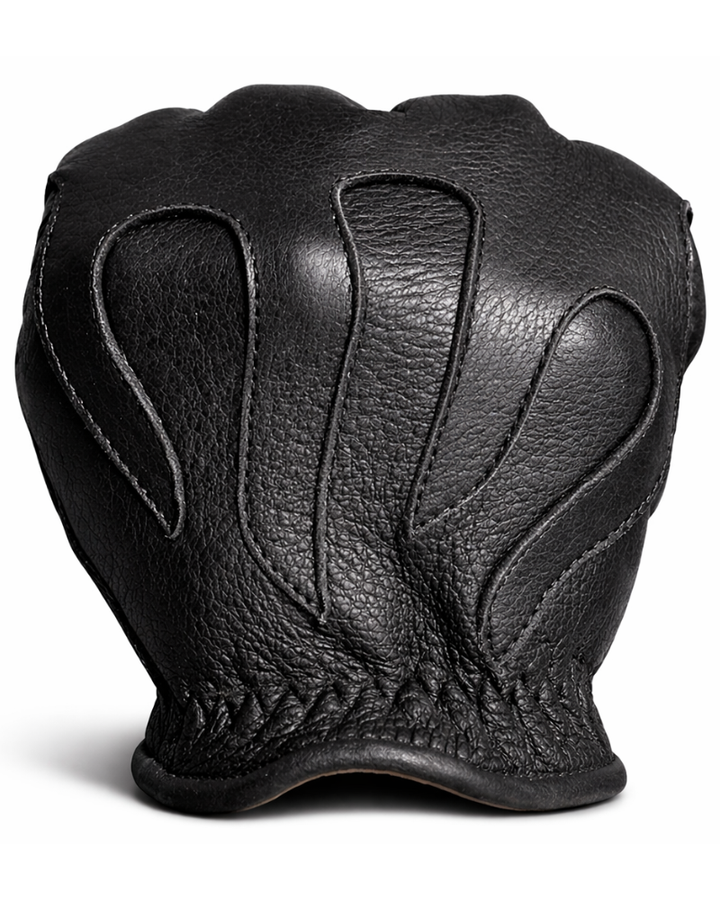
Fleece-Lined Deerskin Gloves are the direct answer to this article. Deerskin shell, fleece liner, short-wrist cut. Best for riders who want one pair to carry them from September through November on rides under an hour. Not the pick if you ride in sub-40F wind for hours at a stretch.
Classic Deerskin Gauntlets handle the colder end. The extended cuff goes over your jacket sleeve and closes the wind gap at the wrist, which is where most cold air actually gets in. Best for cold-morning commuters and late-season riders. Skip them if you mostly ride in mild weather, because the cuff gets warm fast.
Aramid Touchscreen Deerskin Gloves are a different liner entirely and worth knowing about. They are not a warmth play the way fleece is, but the touchscreen fingertip means you are not pulling a glove off at every gas stop. Best for touring riders who navigate by phone.
You can see the full lineup in our Made in USA motorcycle gloves collection.
Common Mistakes Riders Make with Lined Gloves
Buying a size down. Riders who are used to unlined deerskin stretching expect the same from a lined glove. It does not happen. Size for the fit you want now.
Drying them on a heater. Direct heat is the fastest way to ruin leather. Wet gloves dry at room temperature with the fingers spread open, and it takes as long as it takes.
Wearing a liner glove underneath. Doubling up inside a glove that already fits correctly compresses the fleece and cuts circulation. You end up colder. If you need more warmth, go to a gauntlet or add heated grips.
Riding them in summer. A damp liner in July does nothing good for the glove or the hand inside it. Keep two pairs in rotation and swap by temperature.
For the wind chill math behind these temperature bands, the National Weather Service publishes a cold wind chill chart.
Frequently Asked Questions
- What temperature are fleece-lined motorcycle gloves good for?
- Fleece-lined leather motorcycle gloves are built for cool riding, roughly the 40-60F range that most riders see on fall mornings and evening rides. Below about 40F at highway speed, wind chill outpaces what a fleece liner alone can hold, and most riders add a gauntlet cuff, a bar muff, or heated grips. Above about 65F your hands will sweat inside the liner. Riders in shoulder-season climates usually keep a lined pair and an unlined pair and swap them by the morning temperature.
- Are fleece-lined gloves warmer than unlined leather gloves?
- Yes. A fleece liner adds a layer of trapped air between your skin and the leather shell, and trapped air is what actually keeps hands warm. Unlined deerskin blocks wind well but transfers cold quickly once the leather chills down. The tradeoff is bulk and feel. Unlined gloves give you more direct feedback on the grips and levers. Fleece-lined gloves give up a small amount of that feel in exchange for real warmth on cold mornings.
- Should fleece-lined motorcycle gloves fit tight or loose?
- They should fit snug but not tight. Your fingertips should reach the end of the finger without pressing into it, and you should be able to close your hand around the grip without the leather bunching in your palm. A glove that is too tight compresses the fleece and kills its insulating value, which is the opposite of what you want. If you are between sizes in a lined glove, most riders are better off going up rather than down.
- Do fleece-lined leather gloves stretch out over time?
- The leather shell relaxes and molds to your hand, but the fleece liner does not stretch the way the hide does. That means a lined glove breaks in less dramatically than an unlined deerskin glove. Expect the shell to soften over two to three weeks of regular riding and the overall fit to settle slightly, but do not buy a lined glove a size small on the assumption it will stretch to fit. It will not.
- How do I clean fleece-lined motorcycle gloves?
- Wipe the leather shell with a barely damp cloth, let the gloves air dry away from heat, and condition the outside of the leather once the shell is fully dry. Do not soak a lined glove. Water pushes into the fleece, takes days to dry, and can leave the liner smelling sour. Never dry lined gloves on a heater, in an oven, or in direct sun, because heat shrinks and stiffens leather far faster than cold weather ever will.
- What is the difference between fleece lining and insulated lining?
- Fleece is a soft knit liner that adds warmth and comfort with relatively little bulk, and it is the common choice for shoulder-season riding gloves. Heavier insulated liners add more loft and more warmth but cost you dexterity and grip feel. For most American riders, fleece hits the practical middle: warm enough for a 45F morning commute, thin enough that you can still work a turn signal and a clutch lever without fighting the glove.
- Can you wear fleece-lined gloves in the rain?
- You can ride in them, but understand that leather gloves are not rain gear. A lined glove holds water longer than an unlined one because the fleece absorbs it. If you get caught out, dry the gloves slowly at room temperature with the fingers open, then condition the shell. Riders who face regular wet weather usually carry a cheap pair of over-mitts or rain shells to pull on over their leather gloves rather than soaking the good pair.
The Bottom Line
A fleece-lined leather glove is a shoulder-season tool, not a winter glove and not a summer glove. Buy it for the 40F to 60F mornings that make up most of American fall riding, size it correctly the first time because the liner will not stretch to save you, and keep an unlined pair in the rotation for the warm afternoons on the same ride. That combination covers more riding days than any single pair ever will.