




Gauntlet gloves cover the wrist and lower forearm; short-wrist gloves stop at the wrist. Gauntlets seal out wind, rain, and road debris for cold-weather and touring riders, while short-wrist gloves run cooler and slide under a jacket cuff for summer and everyday riding. Legendary USA builds both styles from full-grain American deerskin, so the real question in the gauntlet vs short-wrist gloves debate comes down to climate, riding style, and how you wear your jacket.
Most riders own more than one pair of gloves for a reason. The cut of the cuff changes how a glove handles wind, heat, and water, and it changes how the glove works with the rest of your gear. Before you buy, it helps to understand what each style is actually built to do.
What is a gauntlet glove?

A gauntlet glove has an extended cuff that reaches past the wrist and covers the lower forearm. That cuff usually closes over the outside of your jacket sleeve with a strap or draw closure, sealing the gap where wind would otherwise rush in. The result is a glove that keeps cold air, rain, and highway grit off your wrist and lower arm.
Gauntlets shine when the temperature drops or the ride gets long. At 65 mph, the wind hitting an open wrist is the first place cold gets in, and a gauntlet closes that gap. The Legendary Classic American Whitetail Deerskin Gauntlets are cut for exactly this job, with a longer cuff in soft deerskin that overlaps the sleeve without feeling stiff.
What is a short-wrist glove?
A short-wrist glove stops at the wrist bone. It is faster to pull on, sits slim, and tucks under a jacket cuff so the sleeve sheds water over the glove opening. Without the extended cuff, air moves freely around the wrist, which keeps the hand cooler in warm weather.
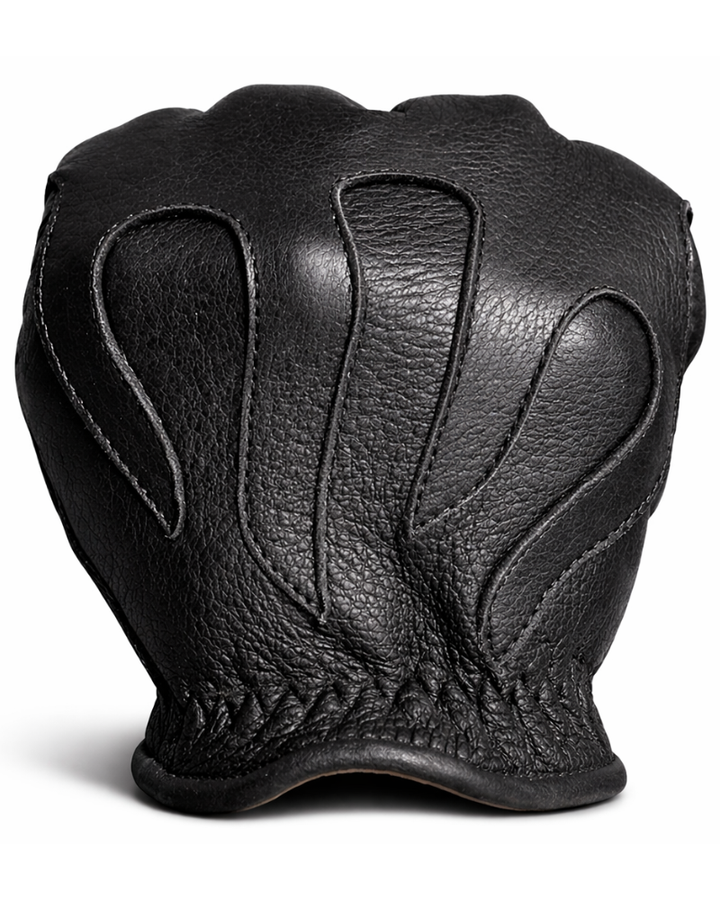
Short-wrist gloves are the daily driver of the glove world. They work for commuting, summer cruising, and quick rides where you do not want to fuss with a strap. The perforated Legendary ILL Dozer short-wrist deerskin gloves add punched ventilation across the back of the hand, which makes them a hot-weather favorite. The tradeoff is honest: a short-wrist glove leaves the wrist exposed to wind, so it is not a cold-morning glove.
Gauntlet vs short-wrist: the key differences
Here is how the two styles compare on the things riders actually care about.
| Feature | Gauntlet | Short-wrist |
|---|---|---|
| Cuff coverage | Wrist and lower forearm | Stops at the wrist |
| Wind sealing | Excellent, closes over sleeve | Limited, wrist stays open |
| Airflow | Lower, cuff traps heat | Higher, cooler in summer |
| Speed to put on | Slower, cuff closure | Fast, pull and go |
| Worn with jacket | Over the sleeve | Under the cuff |
| Best season | Fall, winter, touring | Spring, summer, daily |
Neither style is better in every situation. A gauntlet gives up airflow to gain weather protection; a short-wrist glove gives up wind sealing to gain cooling and convenience. Pick the one that matches the riding you do most.
Which glove should you buy?
Match the glove to your riding and your climate. Touring riders and anyone logging cold-morning miles should reach for a gauntlet, because the sealed cuff pays off on every long, cold stretch of highway. Riders in hot climates, summer cruisers, and daily commuters are better served by a short-wrist glove that breathes and pulls on fast.
If you ride year-round, the practical answer is both. A gauntlet for the cold half of the calendar and a short-wrist glove for the warm half covers every condition. You can browse both cuts in the men's USA-made motorcycle gloves collection and build a rotation that follows the seasons.
How Legendary USA builds both styles
Legendary USA hand-cuts each glove from full-grain American deerskin, whether it is a gauntlet or a short-wrist cut. Deerskin is soft and flexible, breaks in within about two to three weeks of regular riding, and molds to the shape of your hand. The construction uses proven glove-making details, but the leather does the heavy lifting on comfort and feel.
Be clear about what these gloves are and are not. Deerskin is comfortable, abrasion-friendly, and durable, but it is not hard armor. Choose your cut for weather and fit, and if you want to go deeper on the leather itself, our rider's guide to the best deerskin gloves covers how American deerskin performs on the road.
Frequently asked questions
- What is the difference between gauntlet and short-wrist motorcycle gloves?
- Gauntlet gloves have an extended cuff that covers the wrist and lower forearm, usually closing over the jacket sleeve. Short-wrist gloves stop at the wrist and tuck under a jacket cuff. Gauntlets seal out wind, rain, and road debris and suit cold-weather and touring riders. Short-wrist gloves run cooler, are faster to pull on, and give a cleaner feel on the controls for summer and everyday riding.
- Are gauntlet gloves better for cold weather?
- Yes. The extended cuff on a gauntlet glove overlaps the jacket sleeve and blocks the wind that would otherwise blast up your forearm at highway speed. That wind gap is where cold air enters first, so closing it keeps hands warmer on cold mornings and long hauls. For sub-50-degree riding, a gauntlet is the more practical choice. In hot weather the same cuff traps heat, which is why short-wrist gloves are preferred for summer.
- Do short-wrist gloves fit under a jacket cuff?
- Yes. Short-wrist gloves are cut to stop at the wrist bone so they slide under a jacket cuff cleanly. Many riders prefer this because it lets the jacket sleeve shed water over the glove opening and keeps the wrist profile slim. Gauntlet gloves are built to do the opposite and close over the outside of the sleeve, so the two styles are worn differently and it comes down to preference and climate.
- Which motorcycle glove style is best for summer riding?
- Short-wrist gloves are the better choice for summer riding. Without the extended cuff, air moves freely around the wrist and the hand stays cooler. Perforated or ventilated deerskin short-wrist gloves like the Legendary ILL Dozer add punched airflow across the back of the hand for hot-weather comfort. A gauntlet works in summer but traps more heat, so most warm-weather riders reach for a short-wrist glove.
- Are deerskin gloves good for both gauntlet and short-wrist styles?
- Yes. Deerskin is soft, flexible, and abrasion-friendly, which makes it work well in either cut. Legendary USA hand-cuts both its whitetail deerskin gauntlets and its short-wrist gloves from full-grain American deerskin. The leather breaks in within about two to three weeks of regular riding and molds to your hand. Deerskin is comfortable and durable, but it is not hard armor, so pick the glove for fit and weather rather than crash rating.
- How should motorcycle gloves fit?
- A motorcycle glove should fit snug with no loose material at the fingertips and no pinching across the palm when you close your hand on the grip. Leather stretches slightly as it breaks in, so a new glove should feel firm but not tight. Check the fit in the riding position with your hands on imaginary bars, not flat on a table. If the fingertips have empty space, size down.
The bottom line
Gauntlet gloves and short-wrist gloves solve two different problems. A gauntlet seals out wind and weather for cold rides and long tours, while a short-wrist glove breathes and pulls on fast for summer and daily miles. If you ride through the seasons, owning one of each is the honest answer. Either way, choosing the right cut in full-grain American deerskin means your hands stay comfortable in the conditions you actually ride in.