
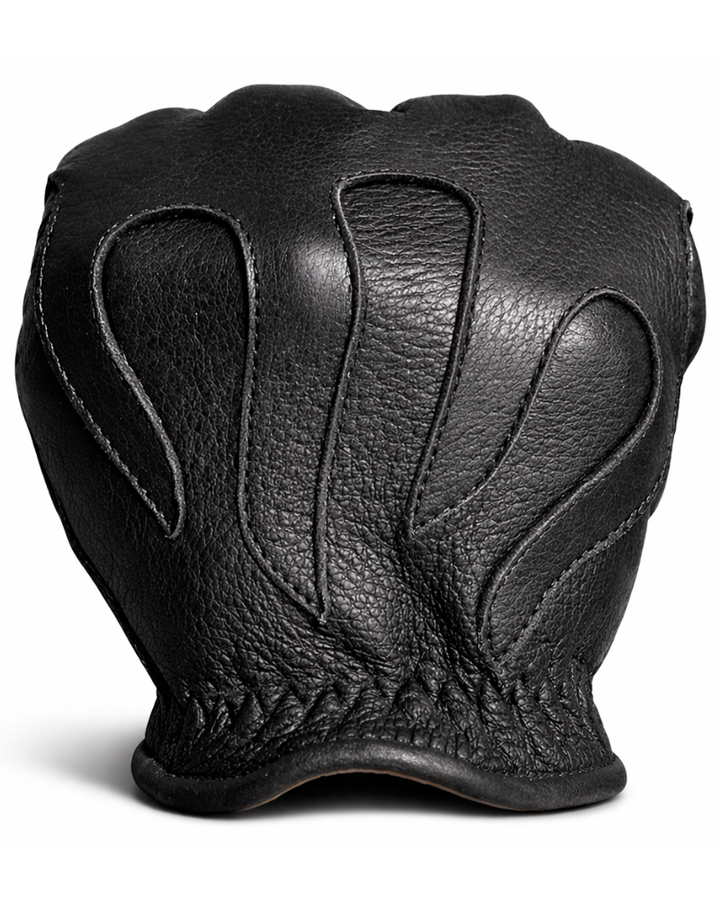


The lined glove is what American riders reach for when October mornings stop being forgiving but the season is not over yet. It is a simple idea: put a soft insulating layer inside a leather glove and keep riding. At Legendary USA, that idea shows up as the Fleece-Lined Deerskin Gloves, American Whitetail deerskin on the outside and 3M Thinsulate 40-gram lining on the inside. This is the story of why riders keep a pair like it by the door, and what it says about how Americans ride.
The last month of the season belongs to the lined glove

By late October the easy riding days are behind most of the country. Mornings start near the 30s and 40s, afternoons warm up, and the rider who wants to keep going has to solve a small problem: hands that go numb in twenty minutes. The lined glove is the answer riders have used for generations in one form or another.
It is not glamorous. Nobody builds a bike around a glove lining. But ask riders who put in miles after the leaves drop, and the lined glove is the piece of gear they stop talking about once they have the right one, because it simply works.
Legendary USA opened in 2001, and in our twenty-fifth year the questions riders ask in October have not changed much. They want to know how warm it is, how thick it is, and whether they will lose feel at the controls.
Why deerskin and fleece suit American riding
American Whitetail deerskin is a leather with a long place in this country's riding habits. It is soft, it weighs roughly half of what cowhide weighs at equivalent protection, and it stays pliable in the cold. Legendary USA cuts and stitches its gloves in the USA with American & Efird industrial-grade thread, and the lined glove carries a keystone thumb and reinforced stitching at the stress points.
The lining is 3M Thinsulate 40-gram fleece. That is a thin layer, chosen so the glove stays warm enough for roughly 30 to 50°F without turning into a mitt. You can read more about the tradition behind the leather in Whitetail deerskin gloves: a fall tradition in American riding.
Lined versus unlined: the old argument
Riders have argued about this for as long as there have been riders. An unlined glove gives you the best feel and the best breathing, and it pairs with a liner if the weather turns. A lined glove gives up a little feel in exchange for warmth that is already there when you walk out of the house.
| Lined deerskin glove | Unlined deerskin glove | |
|---|---|---|
| Warmth | Built in, about 30 to 50°F | Added with a liner |
| Feel at the controls | Slightly less than unlined | Closest to bare hand |
| Fit | Size up one | True to size |
| Best season | Fall and mild winter | Spring, summer, early fall |
Neither is better. They are tools for different mornings, and many riders own both. If you are working out how thick a lining you need, our guide to motorcycle glove thickness for cold weather goes into it.
What the lined glove says about the rider
A rider who owns a lined glove has decided something. They have decided that the season does not end on the first cold morning, that a bit of discomfort is part of the deal, and that the right gear makes it manageable. That is a very American way to look at riding.
You see the same attitude in the people who keep the same gloves for years. The lined pair goes on, gets broken in, picks up the marks of a hundred cold starts, and becomes the one nobody wants to retire. We wrote about that habit in why American riders keep their oldest leather gloves.
The honest limits of a lined glove
It is worth saying what a lined glove will not do. It is not waterproof, because leather is only water-resistant. It is not armor, and deerskin gives you a leather abrasion layer with no CE rating. And it is not a deep-winter glove: below freezing, riders add a liner or move to a gauntlet cuff.
That honesty is part of the tradition too. Riders trust gear that is straight about what it is. If you want to see how the winter rider lives with those limits, read the winter rider in American motorcycle culture, and browse the Made in USA motorcycle gloves collection for the range.
For rider training and general riding practice, the Motorcycle Safety Foundation publishes rider courses and guidance.
Frequently asked questions
- What is a lined motorcycle glove?
- A lined motorcycle glove has an insulating layer sewn inside the leather shell to hold heat. The Legendary USA Fleece-Lined Deerskin Gloves use American Whitetail deerskin outside and 3M Thinsulate 40-gram fleece inside, and they are described for roughly 30 to 50°F riding. Unlined gloves rely on a separate liner for warmth.
- Why do riders prefer deerskin for cold-weather gloves?
- Deerskin is soft, light and stays pliable in cold air, so it keeps feel at the throttle and brake better than stiff cowhide. It weighs roughly half of what cowhide weighs at equivalent protection. It is not armor and is not waterproof, but many riders value the comfort of a deerskin glove on long cold rides.
- How warm is a 40-gram Thinsulate lined glove?
- It is warm enough for fall and mild winter riding, around 30 to 50°F according to the product description. Wind speed changes how it feels, so highway riding feels colder than the thermometer suggests. Below freezing, add a thin liner or switch to a gauntlet-cuff setup for better wind control.
- Do lined gloves need to be a size bigger?
- Yes. For the Legendary USA Fleece-Lined Deerskin Gloves, the product guidance is to size up one from your normal glove size. The lining takes up space, and a glove that packs your fingers restricts circulation and makes hands feel colder. Try it on in a riding position.
- Where does Legendary USA make its gloves?
- Legendary USA hand-cuts and stitches its riding gloves in the USA, using American Whitetail deerskin and American & Efird industrial-grade thread on the lined glove. The company opened in 2001 and is in its twenty-fifth year. The Made in USA motorcycle gloves collection lists the full range.
- Is a lined glove better than a gauntlet in the cold?
- They solve different problems. A lined glove adds insulation, while a gauntlet cuff closes the wrist gap where wind gets in. The Legendary USA Classic Deerskin Gauntlets are unlined, so they need a thin liner for warmth. Riders in the coldest conditions often combine both ideas.
Why the lined glove stays
The lined glove is a small piece of gear that says a lot about how Americans ride: keep going, dress for it, and trust what holds up. If you are building your own cold-morning kit, start with the glove and build outward from there.