



The best insulated motorcycle gloves add warmth without costing you throttle and brake feel. In the Legendary USA lineup, that is the Fleece-Lined Deerskin Gloves: American Whitetail deerskin outside and 3M Thinsulate 40-gram fleece lining inside, made for roughly 30 to 50°F riding. Below that range, or on long highway stretches, you will want a liner or a longer cuff on top of it. This guide explains how to decide, how to size the glove, and where it is the wrong choice.
What insulation actually does on a motorcycle

Insulation holds heat that your hand already makes. It does nothing against wind that strips that heat away, and at highway speed wind is the bigger problem. That is why a thin insulated glove with a snug cuff can feel warmer than a thick glove that leaks air at the wrist.
It is also why the leather outside matters as much as the lining. Cowhide stiffens as the temperature drops, and a stiff glove is a tiring glove on the throttle. American Whitetail deerskin stays pliable in the cold, so the lined glove keeps its feel at the controls.
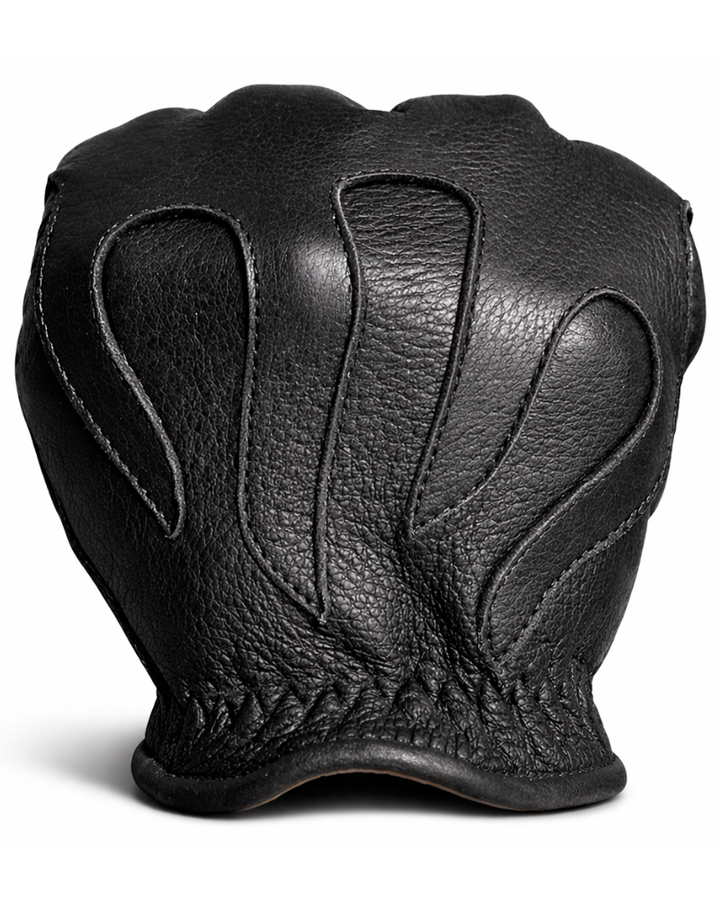
Legendary USA hand-cuts and stitches this glove in the USA with American & Efird industrial-grade thread, a keystone thumb design and reinforced stitching at the stress points. Deerskin weighs roughly half of what cowhide weighs at equivalent protection, so the lined version is still lighter than a standard cowhide winter glove.
The insulated glove Legendary USA makes
The Fleece-Lined Deerskin Gloves are a short-wrist glove with an elasticized cuff. The 40-gram Thinsulate layer is thin enough that clutch and brake feel are not sacrificed, which is the point of choosing it over a bulky winter mitt. It is built for fall and mild-winter riding rather than deep-winter commuting.
Here is what it is not. It is not waterproof, because leather is water-resistant at best. It is not armored: deerskin gives you a leather abrasion layer with no CE rating. And it will not keep your fingers warm at 20°F on the interstate by itself.
If you want to see the broader range, the Made in USA motorcycle gloves collection shows every cuff length and leather we cut.
Insulated glove, liner system or gauntlet: which one fits
There are three ways to keep hands warm on a bike, and each has a cost. A lined glove is the simplest. A liner under an unlined glove is the most flexible. A gauntlet cuff is the best wind control.
| Setup | Warmth plan | Best for | Tradeoff |
|---|---|---|---|
| Fleece-Lined Deerskin Gloves | 3M Thinsulate 40-gram lining built in | Fall and mild winter, about 30 to 50°F | Fixed warmth; size up one |
| Classic Deerskin Gauntlets plus a thin liner | You add the insulation | Long highway rides, changing temperatures | Two pieces to manage; cuff must fit your sleeve |
| Aramid Touchscreen Deerskin Gloves | Aramid liner for cut and abrasion resistance | Cool mornings where phone and GPS access matters | The liner is for protection, not described as insulation |
If your jacket cuff seals well, the lined glove is the easier answer. If your sleeve runs loose, look at the Classic Deerskin Gauntlets, which are unlined and rely on a liner for warmth. Our full breakdown is in gauntlet gloves for winter riding.
How to size an insulated motorcycle glove
Size up one from your normal glove size. The lining takes up room inside the hand, and a glove that packs your fingers cuts circulation, which makes hands colder, not warmer. Try the glove on in the riding position with your fingers curled around an imaginary grip.
Deerskin gives a little as it breaks in, but a lined glove has less give than an unlined one because the fleece holds its shape. If you plan to wear a thin liner under any glove, size with the liner on. Our guide to sizing motorcycle gloves for liners and cold-weather layers covers the test step by step, and the general glove fit guide covers the basics.
Who should skip an insulated deerskin glove
Riders who regularly see temperatures in the 20s should not expect a 40-gram lining to carry the whole ride. Pair a liner with an unlined gauntlet instead, or read our look at heated glove alternatives for riders if you want to understand the options.
Riders who run warm, or who commute in the 55 to 60°F range, will find the lining too much. An unlined glove is cooler and lighter. And if you need cut resistance above everything else, goatskin is the tighter-grained leather, though it feels stiffer than deerskin; see deerskin vs goatskin gloves for cold-weather riding for the comparison.
Where gloves fit in a full cold-weather kit
Gloves are one layer in a system. Wind chill, your jacket cuff, your base layers and your ride length all change what you need. The cold-weather gear temperature guide lays out what to wear from 55 down to 35 degrees.
Start with the coldest part of your ride, usually the first twenty minutes and any stretch at speed. Build the glove choice around that, and keep a second pair in the saddlebag if the weather swings. Browse all motorcycle gear to round out the rest.
For the wind chill math behind these temperature bands, the National Weather Service publishes a cold wind chill chart.
Frequently asked questions
- What are the best insulated motorcycle gloves for cold weather?
- For fall and mild winter riding, the Legendary USA Fleece-Lined Deerskin Gloves pair American Whitetail deerskin with 3M Thinsulate 40-gram lining and suit roughly 30 to 50°F. For colder rides, wear a thin liner under an unlined gauntlet or combine a lined glove with a liner. No single thin glove replaces layering at freezing temperatures.
- What temperature are insulated motorcycle gloves good for?
- The Legendary USA Fleece-Lined Deerskin Gloves are described for roughly 30 to 50°F riding. Wind speed matters as much as air temperature, so a ride at 45°F on the highway can feel much colder than a parked 45°F morning. Check a wind chill chart and plan for the coldest stretch of your ride.
- Should I size up for insulated motorcycle gloves?
- Yes. Size up one from your normal glove size so the lining does not pack your fingers. A glove that is too tight restricts blood flow and makes hands colder. Try it on in a riding position, and if you plan to wear a thin liner underneath, test the fit with the liner on.
- Are lined deerskin gloves too bulky for the controls?
- No, not in the way a heavy winter mitt is. The 40-gram Thinsulate lining is thin, and deerskin stays pliable in the cold, so clutch, throttle and brake feel are largely retained. You will notice slightly less feel than in an unlined glove, which is the tradeoff for built-in warmth.
- Are insulated leather motorcycle gloves waterproof?
- No. Leather is water-resistant, not waterproof, and lining does not change that. Whitetail deerskin stays pliable when wet, but a long ride in steady rain will soak through. Let wet gloves dry slowly at room temperature, away from heaters, so the leather does not stiffen or crack.
- Is deerskin or goatskin better for cold-weather riding?
- Deerskin is the softer, lighter leather and stays pliable in cold, which helps feel at the controls. Goatskin has a tighter fiber structure and is more cut resistant, but it feels stiffer and runs hotter. Legendary USA makes both; for cold-morning comfort most riders will prefer lined deerskin.
Bottom line for cold-weather riders
An insulated glove earns its place by keeping your hands working, not by being thick. The Fleece-Lined Deerskin Gloves are the right call for fall and mild winter rides if you size up one and accept their limits. For anything colder, build a system with a liner or a gauntlet, and plan around the coldest stretch of the ride.