



Deerskin is the better cold-weather glove leather for most riders, and goatskin is the tougher specialist. In a deerskin vs goatskin gloves comparison, the lined deerskin glove wins below 50 degrees because deerskin stays pliable in the cold and is light enough to carry a lining. Goatskin is denser and firmer, runs hotter than deerskin, and the Legendary USA goatskin glove is unlined. Here is how to choose between them for fall and winter miles.
Why the leather matters before the lining does

Deerskin is the lighter, softer hide, and Legendary USA cuts its gloves from American Whitetail deerskin that weighs roughly half what cowhide does at equivalent protection. That low weight is what lets a lined deerskin glove stay slim enough to feel the throttle and brake lever. Goatskin is a denser, tighter-fibered hide that is selected for cut and abrasion resistance rather than softness.
Cold changes how a glove behaves in your hand. A hide that stiffens when the temperature drops makes every control input a little clumsier, and clumsy inputs at 40 degrees are not what you want. So the question is less about which leather is better in general and more about which one stays workable and warm when your hands are doing real work.
Where deerskin wins below 50 degrees
Deerskin stays pliable in the cold. The Legendary fleece-lined deerskin glove keeps its feel at the throttle and the brake, and it carries a 3M Thinsulate 40-gram lining that is rated by the product page for the 30 to 50°F range. That is a three-season glove, not a deep-winter one.
It also breaks in the way riders like. Deerskin softens and molds to your grip over the first few rides, and it handles repeated wet and dry cycles without needing conditioning first. If you have read our guide to breaking in leather motorcycle gloves, you know the process is short with deerskin.
The tradeoff is honest and simple. Deerskin is softer, so it is not the hide for a rider who wants the toughest possible fiber structure at the contact surface. It is also not hard armor of any kind, and nothing here should be read as crash protection.
Where goatskin earns its place
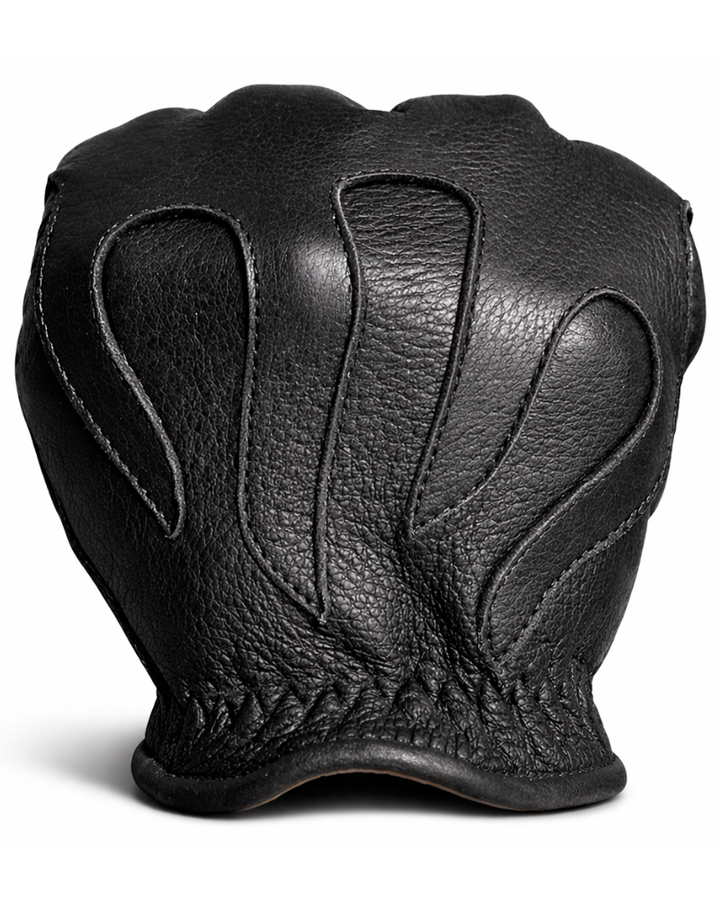
The Bad Billy is Legendary USA's goatskin glove. The leather is full-grain goatskin with a tighter fiber structure, so it is stubborn against abrasion and lateral cuts, and it is lighter than a cowhide glove at similar thickness. It is stitched with American & Efird industrial-grade thread and finished with an elasticized short wrist cuff.
Goatskin also runs hotter than deerskin. That makes it a poor summer choice, but it does not make an unlined glove warm. The Bad Billy has no lining, so below roughly 50 degrees you are relying on a layer of leather and nothing else.
We build the Bad Billy for riders who put hand protection ahead of the broken-in feel of deerskin, and who ride in mild to warm climates, drive, shoot or work in it. If your fall commute starts at 38 degrees, it is the wrong tool on its own. Our comparison of deerskin versus goatskin gloves covers the general case outside cold weather.
Deerskin vs goatskin at a glance
The table compares the pieces side by side.
| Deerskin (fleece-lined) | Goatskin (Bad Billy) | |
|---|---|---|
| Weight | Roughly half the weight of cowhide at equivalent protection | Lighter than cowhide at equivalent thickness |
| Feel in the cold | Stays pliable, keeps throttle and brake feel | Firmer, denser hide |
| Lining | 3M Thinsulate 40-gram fleece | Unlined |
| Temperature range | 30 to 50°F per the product page | Best in mild to warm weather |
| Break-in | Softens and molds over the first few rides | Firmer, less of a broken-in feel |
| Sizing note | Size up one from your normal glove size | Follow the size chart |
| Best rider | Fall and mild winter commuters and tourers | Riders who put toughness first in mild weather |
Matching the glove to the temperature
Above 55 degrees, either leather works and the choice is about feel versus toughness. Between 50 and 55, an unlined deerskin or goatskin glove is fine for most riders on a short ride, and a gauntlet cuff helps keep wind out of the sleeve. Between 30 and 50 degrees, the lined deerskin glove is the one to buy.
Below 30 degrees, a short-wrist glove with a 40-gram lining is not enough for long rides, and no honest guide should tell you otherwise. At that point you are looking at heavier insulation or a different approach entirely, which our sub-40 riding gear roundup walks through. Speed matters too: at highway pace, wind chill makes the air feel colder than the thermometer says.
If you ride in a jacket, think about the wrist gap as well. A gauntlet cuff can be worn over or under the sleeve, which is why many cold-morning riders pair a lined glove with a jacket that has a snug cuff. The Classic Deerskin Gauntlets are unlined, so they work as a shoulder-season glove rather than a winter one.
Common mistakes when buying cold-weather gloves
The first mistake is buying the lining and forgetting the fit. The fleece-lined deerskin glove is built to be sized up one from your normal glove size so the lining does not compress your fingers, and a compressed hand is a colder hand because circulation drops. Our guide to sizing motorcycle gloves walks through the measurement.
The second mistake is assuming a thicker hide means a warmer glove. Thickness without a lining is mostly weight. The third is leaving gloves wet after a damp ride, which stiffens leather and shortens its life, so read how to dry wet leather motorcycle gloves before the first cold rain.
The fourth mistake is buying one glove for every temperature. Most riders do better with a small rotation, such as an unlined pair for mild days and a lined pair for the cold ones.
Which Legendary USA glove fits which rider
For a rider who commutes or tours in fall and early winter, the Fleece-Lined Deerskin Gloves are the straightforward answer. They are 100 percent American Whitetail deerskin with the Thinsulate lining, a keystone thumb design and reinforced stitching at stress areas. They are not made for sustained riding well below freezing.
For a rider who values the firmer feel and tighter fiber of goatskin and rides in mild weather, the Bad Billy Black Goatskin Gloves fit. Skip them if cold hands are your main concern. The full lineup of Made in USA motorcycle gloves is on one page if you want to compare cuffs, linings and leathers side by side.
Both gloves are hand-cut and stitched in the USA. If you are weighing fleece against aramid, we compare fleece-lined and aramid-lined deerskin gloves separately, and the lining question deserves its own read.
For cold-weather riding, deerskin is the better leather and the lined deerskin glove is the one most riders should buy. Goatskin is a fine, tough glove for riders who prize its fiber structure, but it does not replace a lining when the temperature falls. Match the glove to the coldest ride you will actually take, size the lined pair correctly, and keep your gloves dry between rides.
For the wind chill math behind cold-morning temperature bands, the National Weather Service publishes a cold wind chill chart.
Frequently asked questions
- Is deerskin or goatskin better for cold-weather motorcycle gloves?
- Deerskin is the better choice for most cold-weather riders. It stays pliable in the cold and is light enough to carry a lining, such as the 3M Thinsulate 40-gram fleece in the Legendary fleece-lined glove. Goatskin is tougher and denser but runs hotter and firmer, and the Legendary goatskin glove has no lining, so it is not the pick for sub-50 degree mornings.
- Are goatskin motorcycle gloves warm?
- Not by themselves. Goatskin is a dense hide that runs hotter than deerskin, but an unlined goatskin glove is still an unlined glove. The Legendary Bad Billy has no insulation, so it suits mild to warm riding. For cold mornings choose a lined glove, and treat goatskin as a toughness decision rather than a warmth decision.
- Do deerskin gloves stiffen in cold weather?
- Deerskin holds its pliability in the cold better than cowhide does, which keeps feel at the throttle and brake lever. Wet leather that dries without care can still stiffen, so let damp gloves dry slowly away from direct heat. Our care and drying guides cover how to keep deerskin soft through a wet fall.
- What temperature are fleece-lined deerskin gloves good for?
- The Legendary fleece-lined short-wrist glove is built for roughly 30 to 50°F, using a 3M Thinsulate 40-gram lining inside an American Whitetail deerskin shell. It is a three-season glove for fall, spring and mild winter days. For long highway rides in freezing temperatures, riders usually need more insulation than a short-wrist glove provides.
- Should I size up for lined motorcycle gloves?
- Yes. The Legendary fleece-lined deerskin glove is designed to be sized up one from your normal glove size so the lining does not squeeze your fingers. A glove that is too tight cuts circulation and makes your hands colder, not warmer. Check the size chart on the product page and measure your hand before ordering.
- Which is more durable, deerskin or goatskin?
- Goatskin has the tighter fiber structure and is selected for abrasion and cut resistance, so many riders consider it the tougher hide. Deerskin is softer and lighter, and it breaks in well and handles wet and dry cycles. Neither is armor. Choose by how you ride: feel and comfort point to deerskin, firmness and toughness point to goatskin.