



The gauntlet glove — a riding glove with an extended cuff that covers the wrist and seals over the sleeve — is older than the motorcycle itself. It came to American riding from cavalry leather and horse-drawn work gloves, proved itself on the open machines of the early 1900s, went to war with military dispatch riders, and settled into the touring culture of the postwar highway. This is the story of how a piece of horseback equipment became a fixture of the American road.
From Cavalry Leather to the First Motorcycles

Long-cuffed leather gloves were standard equipment for mounted soldiers and working horsemen through the nineteenth century. The reason was simple mechanics: a rider's hands sit forward and exposed, and the gap between glove and sleeve is where wind, rain, and debris get in. The extended cuff closed that gap.
When motorcycles arrived at the turn of the twentieth century, they inherited the horse's riding position and all of its problems, at three times the speed. Early riders on unpaved American roads faced dust, gravel, and weather with no fairing and no windshield. The gauntlet came along as borrowed equipment and stayed because nothing else solved the sleeve-gap problem. Photographs of American riders from the 1910s and 1920s show gauntlet cuffs almost universally.
Dispatch Riders and the Wartime Gauntlet
Both World Wars put motorcyclists to work carrying messages, and dispatch riders rode in open weather at every hour, in every season. Gauntlet-style gloves were standard issue for the job — the cuff kept rain from running down the sleeve into the glove, which on an all-night ride is the difference between working hands and numb ones.
The war years fixed the gauntlet in the American picture of what a motorcyclist looks like, the same way surplus flight jackets shaped postwar riding style. Riders who came home from service kept riding, often in gear like what they had been issued, and the gauntlet crossed from military equipment to civilian habit.
The Postwar Highway and the Touring Rider
The interstate era changed American riding from short hops to long hauls, and the gauntlet found its lasting home with the touring rider. Hours at highway speed multiply small discomforts: a breeze at the wrist becomes a cold ache at mile two hundred. The gauntlet cuff, sealed over a jacket sleeve, removes that variable entirely.
Short-wrist gloves grew alongside the gauntlet through this era, favored for hot weather and city riding — that split is its own story, told in our history of the short-wrist glove in American riding. Neither style won. American riders simply started keeping both, and choosing by the day's ride.
The Gauntlet Today
A century of gear development has not retired the gauntlet, because the sleeve gap never went away. Modern touring riders reach for gauntlets on cold mornings, in the rain, and on multi-day trips where the weather is going to change whether the forecast admits it or not.
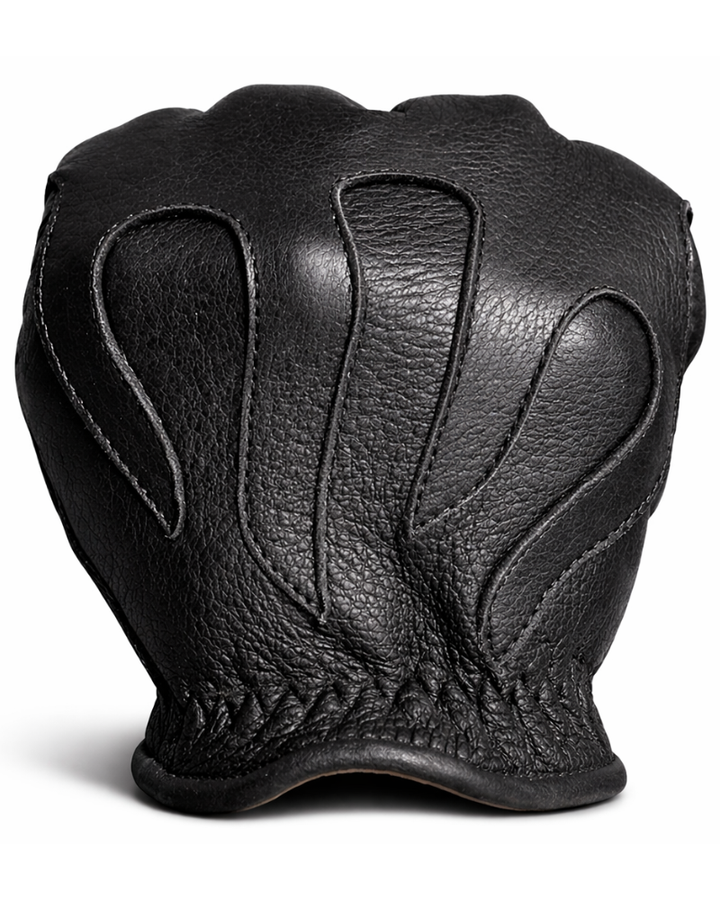
Legendary USA builds its Classic American Whitetail Deerskin Gauntlets in the tradition this history describes: American whitetail deerskin, cut and sewn in the USA, with the full cuff that has been doing the same job since riders wore spurs. Deerskin carries the tradition well — it molds to the hand, survives sweat, and gets better with miles, the same qualities covered in our story of the American deerskin riding tradition. The rest of the American-made lineup lives in the Made in USA motorcycle gloves collection.
Frequently Asked Questions
- What is a gauntlet motorcycle glove?
- A gauntlet motorcycle glove is a glove with an extended cuff that reaches past the wrist and over the sleeve of a jacket or shirt. The cuff seals the gap at the wrist, blocking wind, rain, cold, and debris from running up the sleeve. Gauntlets are the traditional choice for touring, cold-weather riding, and any ride where weather protection matters more than a compact fit.
- Why did early motorcycle riders wear gauntlet gloves?
- Early motorcycles were open machines ridden on unpaved roads, and the rider's wrists took wind, dust, gravel, and weather constantly. The gauntlet cuff — a design carried over from cavalry and driving gloves — sealed the sleeve gap and protected the forearm. On a machine with no fairing, no windshield, and no heated grips, the gauntlet was practical equipment, not style. It became standard riding wear through the first half of the twentieth century.
- Did military dispatch riders wear gauntlet gloves?
- Yes. Motorcycle dispatch riders in both World Wars rode in open weather at all hours, and gauntlet-style gloves were standard equipment for keeping wind and rain out of the sleeves. The military connection helped fix the gauntlet in the public image of the motorcyclist, the same way surplus flight jackets shaped postwar riding style. Many riders who came home from service kept riding in the same kind of gear they had been issued.
- What is the difference between gauntlet and short-wrist gloves?
- The difference is the cuff. A gauntlet extends past the wrist and over the jacket sleeve, sealing out wind and weather. A short-wrist glove ends at or just above the wrist, which makes it cooler, easier to pull on and off, and less bulky around the controls. Gauntlets favor touring, cold mornings, and bad weather; short-wrist gloves favor hot weather and around-town riding. Many riders keep one of each.
- Are deerskin gauntlet gloves good for touring?
- Deerskin gauntlets are a strong touring choice. Deerskin stays soft through sweat-and-dry cycles, molds to the hand over the first few weeks of riding, and stays comfortable across long days where a stiffer leather causes fatigue. The gauntlet cuff handles the temperature swings of multi-day trips — cold mountain mornings, hot valley afternoons — by sealing the sleeve when you need it. Deerskin is a supple leather, though, not armor, and gauntlet coverage is about weather and abrasion, not impact.
The gauntlet has outlived the cavalry, the dispatch rider, and every prediction that new gear would replace it, because the problem it solves is built into the act of riding. As long as wrists sit forward in the wind, some part of American riding will belong to the long cuff.