



Leather motorcycle gloves stiffen in cold weather because cold air is dry air, and dry leather loses the oils that keep its fibers moving against each other. You keep them pliable by conditioning lightly before the cold season, drying them slowly after every wet ride, storing them at room temperature instead of in the garage, and warming them on your hands rather than on a heater. Deerskin needs less of this than cowhide because American Whitetail deerskin stays pliable in the cold on its own, which is why Legendary USA cuts every glove it makes from it.
Why leather gloves get stiff when it is cold

A leather glove is a mat of collagen fibers held flexible by the oils left in the hide at tanning. Cold air holds less moisture, a heated house holds even less, and riding at highway speed in October pulls dry air across the glove for an hour at a time. The oils migrate out, the fibers lock up and the glove that molded to your grip in August feels like cardboard in November.
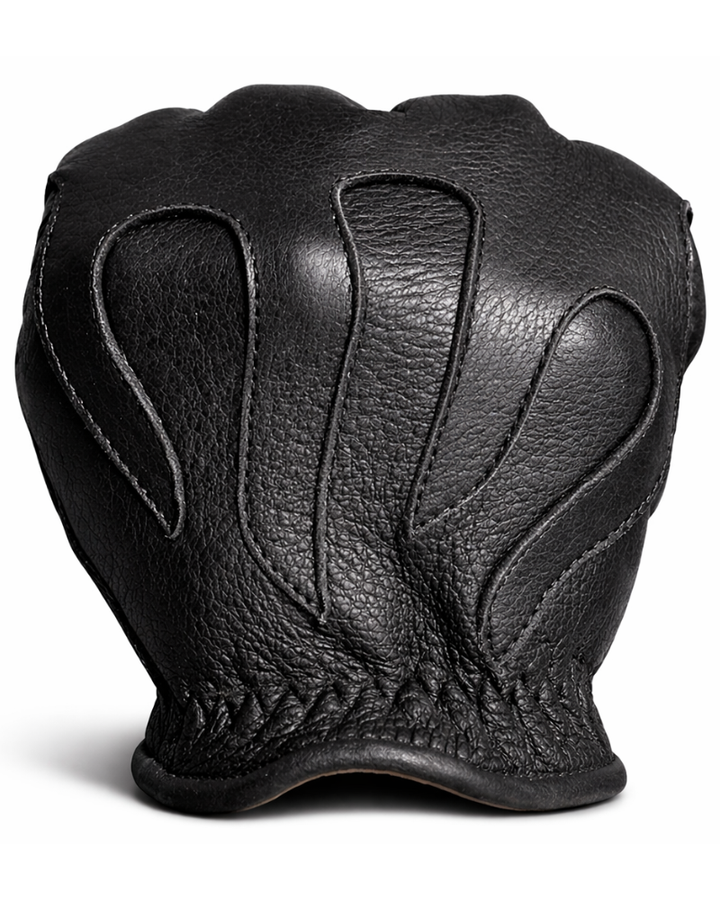
Cowhide shows this faster than deerskin. Cowhide has a denser, tighter fiber structure that hardens noticeably in the 30s and 40s and needs conditioner to recover. Deerskin has a looser, more open fiber structure that keeps moving in the cold, and Legendary USA's product pages say it plainly: American Whitetail deerskin stays pliable in cold without stiffening at the throttle, and it stays pliable after rain without conditioning. That difference is why a deerskin glove needs a light touch in winter and a cowhide glove needs real maintenance.
Condition once, before the cold season, not every week
Conditioning puts oils back into the hide. Do it once in October, when the mornings start in the 40s, and again only if the glove feels dry to the touch in the dead of winter. More than that and the leather goes soft and greasy, the grip gets slick, and a lined glove soaks conditioner into its lining.
Use a small amount of a leather conditioner made for garment leather, worked into the palm and the back of the hand with your fingers, then let the glove sit overnight and buff off anything that did not soak in. Skip the fingertips on a touchscreen glove, since a film of conditioner on the conductive tip smears the screen without helping the leather. Legendary USA's guide to conditioning leather motorcycle gear before winter walks through products and quantities for gloves, vests and jackets together.
The Fleece-Lined Deerskin Gloves are the Legendary USA glove most riders are wearing in this season, and they need the least work of any lined glove. Condition the deerskin shell lightly from the outside and keep the conditioner off the fleece. The lining does not need it and does not want it.
Dry wet gloves slowly or they will never be soft again
The fastest way to ruin a leather glove is to dry it fast. A glove that rode through a cold rain and then sat on a baseboard heater, a wood stove or a truck dashboard in the sun comes out hard, shrunken and cracked at the knuckles, and no amount of conditioner brings it back. Heat drives the water out of the hide faster than the fibers can relax, and they set in a stiff, shrunken state.
Dry gloves at room temperature, away from any heat source, with the fingers stuffed loosely with newspaper or paper towel to hold their shape and pull moisture from the inside. Change the paper after an hour. Expect a full day for an unlined deerskin glove and longer for a fleece-lined one. Deerskin that has been dried slowly comes back soft on its own. Cowhide that has been dried slowly usually wants a light conditioning once it is fully dry. The step-by-step is in Legendary USA's guide on how to dry wet leather motorcycle gloves without ruining them.
Store gloves at room temperature, not in the garage
A garage in November sits in the 30s and 40s and swings with every door opening. Gloves left on the bike or on the workbench spend the week cold, dry and stiff, and the first ten minutes of every ride go to loosening them up. Bring them inside. A hook by the door, a basket in the hall closet, anywhere the house sits at a steady temperature.
Do not seal them in a plastic bag or a closed tub for the season. Leather needs air, and a damp glove sealed in plastic grows mildew before spring. If the gloves are coming off the road until March, clean them, condition them lightly, stuff the fingers and leave them on a shelf in the open. Legendary USA's guide to storing leather motorcycle gear for winter covers the full clean, condition, dry and hang routine.
Warm cold gloves on your hands, not on a heater
A glove that sat in a 35 degree saddlebag overnight is stiff when you pick it up. The temptation is the heater vent, the hair dryer or the exhaust pipe. Do not do it. Direct heat on cold, dry leather is the same damage as drying a wet glove fast, just slower.
Put the gloves on, close your hands a few times and give them five minutes. Body heat warms the hide from the inside at a rate the fibers can handle, and a deerskin glove is moving freely before you are out of the driveway. Riders who want to shortcut this keep the gloves inside their jacket at stops instead of on the tank, which is also the single best way to keep them from going stiff mid-ride.
Wear a liner so the leather does not do the insulating
An unlined deerskin glove worn bare in the 30s gets cold, and a cold glove with cold sweat in it goes stiff fast. A thin liner inside the glove keeps moisture off the leather and keeps your hand warm enough that the glove stays warm too. Legendary USA carries Gators Skin Glove Liners for exactly this, and the full line of Made in USA motorcycle gloves includes lined and unlined deerskin for every band of the season.
The liner also solves the sizing problem that drives a lot of winter stiffness complaints. A glove that is a half size too tight over a liner is stretched taut across the knuckles, and taut leather feels stiff even when it is perfectly conditioned. Size for the liner and the glove flexes the way it should.
What you are trying to avoid
The stiff, cracked gloves riders describe to Legendary USA almost always have the same story: dried on a heater, stored in the garage, or conditioned once in 2019. None of that is hard to avoid. Condition lightly once a season, dry slowly every time, keep the gloves in the house and warm them with your hands. Do that and an American Whitetail deerskin glove stays soft through the winter and comes out of it molded to your grip better than it went in.
For how much colder a 45 degree morning feels at highway speed, the National Weather Service publishes a cold wind chill chart.
Frequently asked questions
- Why do my leather motorcycle gloves get stiff in cold weather?
- Cold air is dry air, and dry leather loses the oils that let its fibers slide against each other. A glove that rides an hour at highway speed in October loses moisture the whole time, and a glove stored in a cold garage dries out between rides. Cowhide stiffens noticeably in the 30s and 40s. Deerskin, which Legendary USA uses for every glove it makes, has a more open fiber structure and stays pliable in the cold on its own, so it needs far less help.
- How often should I condition leather motorcycle gloves in winter?
- Once, lightly, at the start of the cold season, and again only if the leather feels dry to the touch in midwinter. Over-conditioning makes the grip slick, softens the leather past the point of usefulness and soaks into the lining of a fleece-lined glove. Work a small amount into the palm and back of the hand, let it sit overnight, buff off the excess and keep it off touchscreen fingertips. Deerskin gloves usually need even less than that.
- Can I dry wet leather gloves on a heater or with a hair dryer?
- No. Fast heat drives water out of the hide faster than the fibers can relax, and the glove dries hard, shrunken and cracked. That damage is permanent. Dry wet gloves at room temperature away from heat, with the fingers stuffed loosely with newspaper to hold their shape and pull moisture out, changing the paper after an hour. An unlined deerskin glove takes about a day. A fleece-lined glove takes longer. Condition cowhide lightly once it is fully dry.
- Where should I store motorcycle gloves during cold months?
- Inside the house at a steady room temperature, in the open air. A garage swings between cold and colder, dries the leather out and leaves the gloves stiff for the first ten minutes of every ride. Never seal leather gloves in a plastic bag or closed tub, because trapped moisture grows mildew. If the gloves are off the road until spring, clean and lightly condition them, stuff the fingers and leave them on a shelf where air can reach them.
- Does deerskin stay softer than cowhide in the cold?
- Yes. American Whitetail deerskin has a looser, more open fiber structure than cowhide, and it keeps flexing in temperatures where cowhide locks up. Legendary USA's deerskin gloves stay pliable in cold without stiffening at the throttle and stay pliable after rain without conditioning, which is the practical reason the company builds every glove from it. A cowhide glove in the same conditions needs conditioner after every wet ride and goes stiff in the 30s regardless.
- Will a glove liner help keep leather gloves from stiffening?
- It helps more than most riders expect. A thin liner keeps sweat off the inside of the leather, so the glove does not go cold and damp mid-ride, and it keeps your hand warm enough that the glove stays warm with it. Legendary USA carries Gators Skin Glove Liners for this. The one catch is fit. A glove that is too tight over a liner is stretched across the knuckles and feels stiff even when the leather is in perfect condition, so size for the liner.