

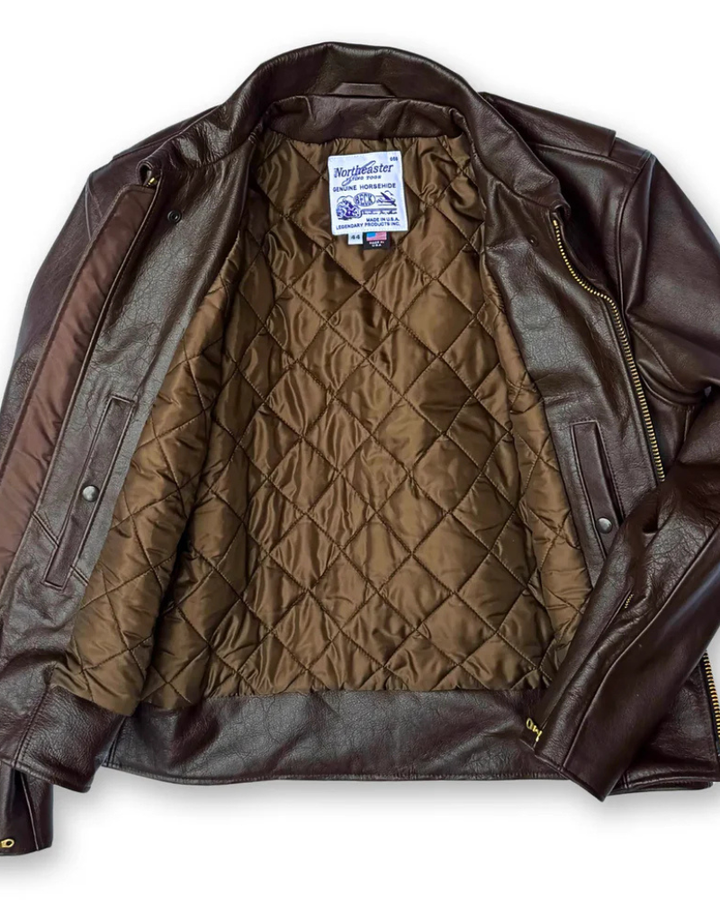
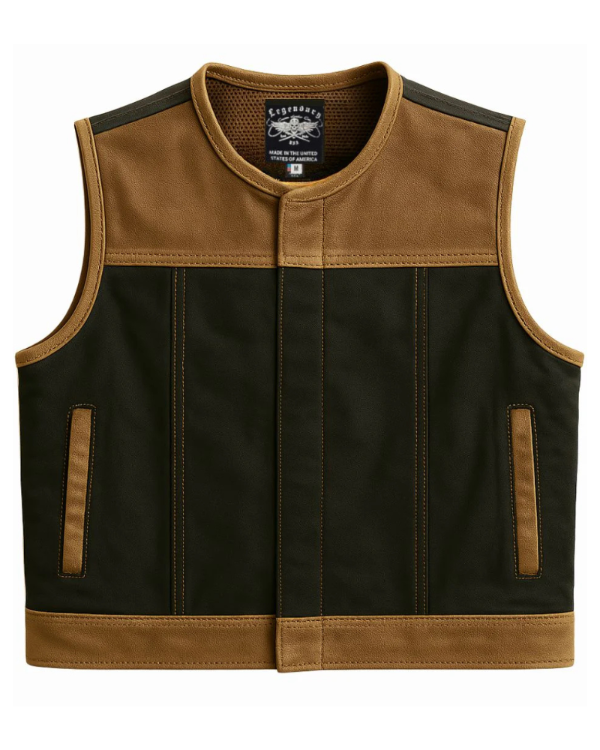
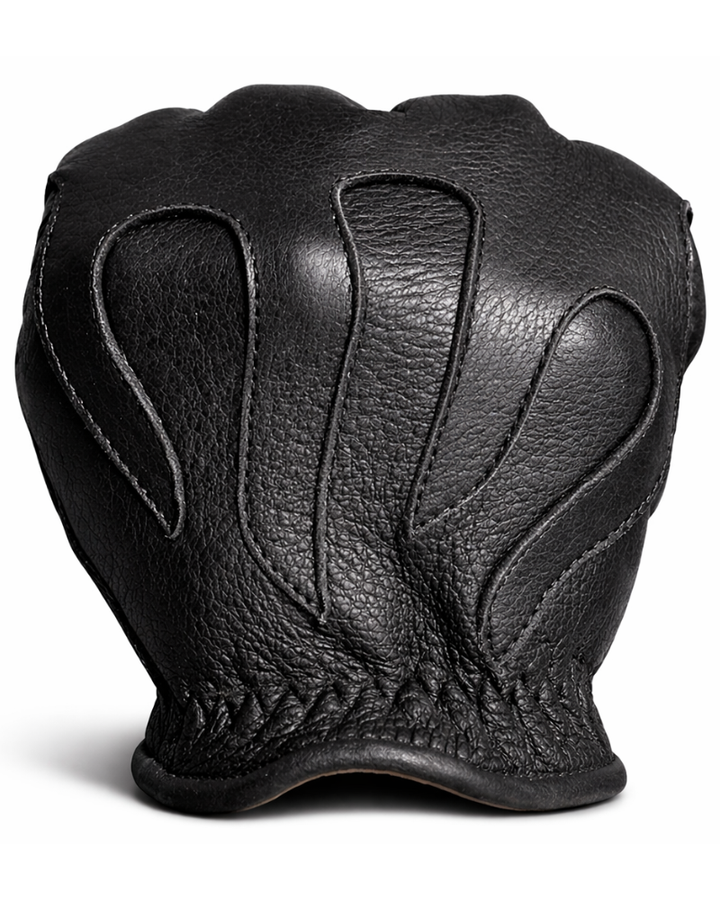
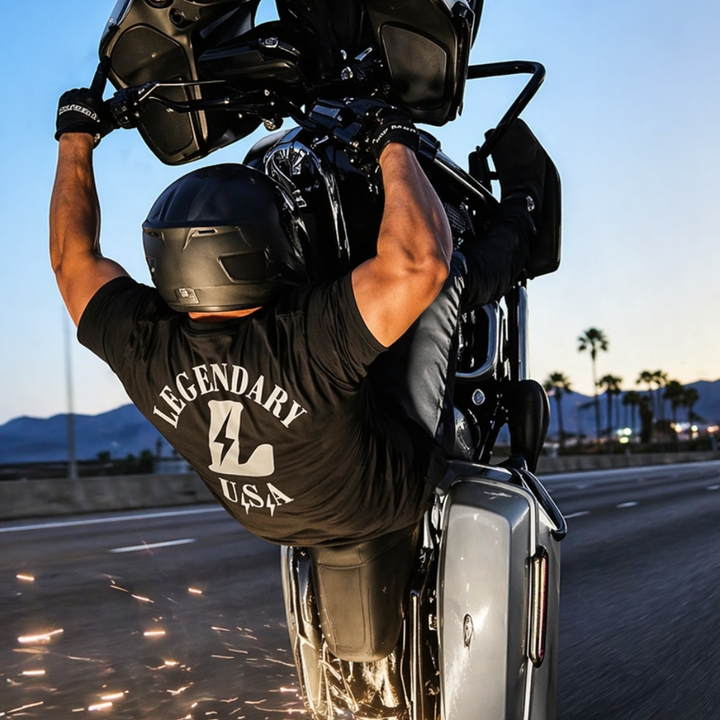


Gloves are the one piece of gear you will absolutely use in a get-off, because putting your hands out is not a decision you make. Legendary USA has built American whitetail deerskin riding gloves for over twenty five years, and this guide covers what actually produces grip, what counts as hand protection and what only looks like it, and how to size a glove so it does its job.
How do you measure your hand for motorcycle gloves?
Two measurements, a tape measure, sixty seconds.
- Circumference. Wrap a soft tape around your dominant hand at the widest point across the knuckles, excluding the thumb. Make a loose fist while you do it. Read the number in inches.
- Length. From the tip of your middle finger to the crease where your palm meets your wrist.
Take the larger of the two numbers and use it. Rough sizing:
- 7 to 7.5 inches: Small
- 8 to 8.5 inches: Medium
- 9 to 9.5 inches: Large
- 10 to 10.5 inches: XL
- 11 inches and up: 2XL
Two things that trip people up. First, if the two measurements give different sizes, you have long fingers or wide palms, and you should size to the length, because width breaks in and length does not. Second, glove sizing is not standardized across brands, so a Large from one maker is not a Large from another. Measure every time, and ignore the size printed in your last pair.
Should motorcycle gloves fit tight or loose when new?
Tight, deliberately, with one specific exception.
A new leather glove should feel snug across the back of the hand, slightly restrictive when you make a fist, and just short at the fingertips. That last part feels wrong and is correct. Leather stretches across the width as you wear it and barely at all in length, so the fingers seat properly after five to ten hours of riding while the fit across the knuckles relaxes into place.
The exception is the fingertips themselves. If there is a visible gap of empty leather past the end of your finger when new, that gap will still be there in a year. It causes blisters, it makes switchgear clumsy, and it is the main reason people say a glove "never broke in."
Loose gloves are also a safety problem in a way tight ones are not: a glove that slides on your hand can be pulled off in a slide, and a glove on the pavement is protecting nothing.
Should motorcycle gloves have a wrist closure strap for safety?
Yes, and this is the single most underrated feature on a glove.
Here is the mechanism people miss. In a slide, friction drags the glove backward off your hand from the cuff. If nothing holds it, the glove can come off in the first fraction of a second, and every claim on the packaging becomes irrelevant. Gloves are recovered from crash sites separated from hands more often than most riders imagine.
In order of how well they hold:
- Gauntlet with a strap over the jacket sleeve. Best, and the reason race gloves look the way they do.
- Short cuff with a hook and loop wrist strap. Very good, and adjustable to your wrist rather than an average one.
- Elasticized wrist. Adequate for street riding if the elastic is genuinely tight, and it is what most classic short-wrist cruiser gloves use. It relaxes over years, so check it.
- Nothing. A slip-on glove with an open cuff. Avoid.
Our short wrist gloves use an elasticized cuff, which is the traditional cruiser answer and is honest street protection. If you want the strongest retention available, buy a gauntlet with a strap, and that is true whether you buy it from us or not.
Are knuckle protectors necessary in motorcycle gloves?
Necessary is too strong. Genuinely useful in a specific scenario is accurate.
Knuckle protectors matter for impact, meaning a hand striking something hard: pavement in a tumble, a car panel, a curb. They do essentially nothing for the far more common injury, which is abrasion on the palm from a low speed slide. That is what the palm leather is for.
So the honest ranking of what protects your hands, in order of how often it matters: palm leather, then glove retention, then fingertip and back-of-hand coverage, then knuckle protection. Knuckle protection is real and it is fourth.
Our Uppercut has leather-covered carbon fiber knuckle defenders built into the back panel, in a short wrist deerskin glove. To be precise about what that is and is not: it is a hard knuckle protector, it is not CE certified, and this glove is not tested to EN 13594. If you want certified knuckle and palm protection, buy a CE marked glove from a maker who specializes in them. We would rather tell you that than blur the line.
Do leather gloves protect better than mesh gloves in a slide?
For abrasion, yes, and it is not close.
Leather works in a slide because it is a continuous, dense, flexible sheet that heats up and abrades away gradually. Mesh is a textile with holes in it by design, and in a slide the fibers between the holes fail first, opening the panel and exposing skin. That is the whole mechanism.
The nuance that matters: almost no mesh glove is entirely mesh. Serious mesh gloves put leather or synthetic suede on the palm, which is the contact zone, and use mesh only across the back of the hand for ventilation. That is a sensible design and those gloves are not badly protected. A glove that is mesh on the palm is a summer accessory rather than riding gear.
Where mesh genuinely wins: heat. In 100 degree stop and go traffic, a mesh-backed glove is dramatically more comfortable than solid leather, and a comfortable rider makes fewer mistakes. Our answer to that problem is perforated leather rather than mesh: the same continuous sheet with ventilation holes punched through it, as on the Holy Blanco. It runs a little warmer than true mesh and keeps the continuous panel.
Are fingerless motorcycle gloves dangerous?
Not dangerous. Incomplete, which is a different thing and worth stating precisely because riders get lectured about this a lot.
A fingerless glove covers your palm and the back of your hand, which is where most slide contact happens, and it gives you a wrist cuff. What it does not cover is your fingers, and finger injuries in a get-off are real: fingertips catch, and skin over the knuckles of the fingers is thin.
The fair comparison is not fingerless versus full gloves. It is fingerless versus what a rider would actually wear otherwise, which on a hot day is often nothing at all. On that comparison, fingerless wins clearly.
Ride fingerless if you are riding in heat and the alternative is bare hands. Do not ride fingerless because you think the protection difference is negligible, because it is not. And do not ride fingerless in the cold, where numb fingertips cost you control long before a crash is involved.
Dainese vs traditional leather gloves for cruiser riding
This comes up constantly and deserves a straight answer even though half of it points away from us.
What Dainese and the other European technical makers genuinely do better: certification. Their gloves are tested and CE marked to EN 13594, frequently at the higher performance level, with quantified abrasion, cut, tear and seam strength results behind the marking. They build in scaphoid sliders at the heel of the palm, which reduce the wrist-breaking mechanism where your palm grabs the pavement and your wrist keeps rotating. They use pre-curved patterns that suit a forward, aggressive riding position. If your priority is the maximum tested protection available, buy the certified glove and do not let anyone talk you out of it.
Where traditional leather gloves fit cruiser riding better:
- Riding position. A pre-curved race glove is patterned for arms forward and wrists bent. On a cruiser your arms are out and your wrists are straighter, and a pre-curved glove fights that all day. A flat-patterned traditional glove sits correctly.
- Bulk at the controls. Hard armor, sliders and multiple layers reduce feel at the throttle and clutch, which matters more in stop-and-go and slow-speed work than it does at pace.
- Cuff. A gauntlet designed to seal over a race suit does not sit right over a leather jacket or a vest.
- Break in and feel. Deerskin is soft on the first ride. A technical glove is a piece of equipment you get used to.
- How it ages. Leather patinas. Composite and textile constructions get shabby.
Honest verdict: if you ride hard, ride fast, or ride a sport bike, buy the CE certified technical glove. If you cruise, commute and tour on an American bike and you want feel, comfort and a glove that lasts a decade, a traditional leather glove is the right tool and always was. Owning both is not extravagant.
What Actually Produces Grip
Grip is not a coating. It comes from four things. Legendary USA builds to all four, mostly in American whitetail deerskin and in goatskin where the tighter grain suits the glove better, and that combination of feel and durability is the plain reason deerskin gloves stay so popular with riders. Our Fingerless Deerskin Gloves at $68 carry 126 reviews at 4.92 and the goatskin Bad Billy at $68 carries 129 at 4.93, so neither hide wins outright, they answer different questions.
- A one-piece palm. No seam across the contact area, so nothing bunches under your fingers when you close your hand on the grip.
- Outseam construction. The seam allowance sits on the outside of the glove instead of pressing into your fingers. You notice it at hour ten, not hour one.
- The hide itself. Leather pores create fine friction that works damp and dry, and it improves as skin oils build a slight tack. Synthetic palms start grabby and polish smooth. It is also the reason a deerskin palm does not go slick in the rain the way a coated synthetic can. Soaked through, a pair of Legendary USA Classic Deerskin Gauntlets at $140 goes heavy and takes a day to dry, but the friction is still there; air dry them away from heat and they come back soft.
- Fit. Any movement between your hand and the glove is grip you are not transmitting, which is why a loose glove feels vague at the throttle.
What We Do Not Make
Two honest gaps, because a guide that only lists strengths is not a guide.
Palm sliders. We do not build a glove with a scaphoid slider at the heel of the palm. If "best palm slider protection" is what you searched for, we do not have the answer and a certified track glove does.
CE certification. None of our gloves carry CE marking or EN 13594 testing. The Uppercut has hard carbon fiber knuckle defenders and the aramid lined models have real cut resistance, and neither of those is a certification. We will describe the materials accurately and stop there.
Top Picks, Shop Direct
Chosen against the two things this guide is actually about, grip and hand coverage, rather than against a price ladder. Every one has a one-piece palm and a wrist closure that keeps the glove on your hand, which are the two features that matter most and are the two most often missing. Ratings and review counts are live from our own product pages.
| Product | Why it fits this question | From |
|---|---|---|
| Bad Billy Black Goatskin Gloves | Goatskin has a tighter grain than deerskin and slightly better abrasion resistance at the same thickness, which makes this the value answer when the palm is what you care about. Our most reviewed glove at 4.93 out of 5 across 129 reviews. | $69.00 |
| Uppercut Knuckle Defense Gloves | The only glove we make with hard knuckle protection: leather-covered carbon fiber defenders in a perforated deerskin back panel, on A and E industrial thread. Not CE certified, and we say so. Rated 4.92 out of 5 across 73 reviews. | $94.00 |
| Aramid Touchscreen Deerskin Gloves | Aramid lining adds genuine cut and abrasion resistance through the palm, which is where slide injuries actually happen, without adding bulk at the controls. Touchscreen thread woven in rather than coated on. Rated 4.93 out of 5 across 102 reviews. | $123.00 |
| ILL DOZER Outseam Gloves | The grip answer. Outseam construction puts every seam on the outside so nothing presses into your fingers, unlined for maximum throttle feel, perforated for heat, with a reinforced palm panel. Rated 4.90 out of 5 across 99 reviews. Currently made to order. | $129.00 |
If you want one pair for everything, the Aramid Touchscreen is the most complete. If you want the best feel at the controls, the ILL DOZER. Measure your hand before you order and use the larger of your two measurements. Prices shown are current at time of writing. Orders over $150 ship free.
Browse the full American deerskin motorcycle glove collection, the men's USA-made gloves, or the cold weather deerskin gloves.
Frequently Asked Questions
How do you measure your hand for motorcycle gloves?
Take two measurements in inches: the circumference around your dominant hand at the widest point across the knuckles excluding the thumb, and the length from the tip of your middle finger to the wrist crease. Use the larger number. Roughly, 7 to 7.5 inches is Small, 8 to 8.5 Medium, 9 to 9.5 Large, 10 to 10.5 XL, and 11 and up 2XL. If the two measurements give different sizes, size to the length, because leather stretches in width but not in length. Sizing is not standardized between brands, so measure rather than repeating your last size.
Should motorcycle gloves fit tight or loose when new?
Tight. A new leather glove should feel snug across the back of the hand and just short at the fingertips, which feels wrong and is correct: leather stretches in width but not in length, so the fingers seat after five to ten hours of riding. A visible gap past your fingertips when new will still be there in a year. Loose gloves can also be dragged off your hand in a slide, which makes everything else about them irrelevant.
Are knuckle protectors necessary in motorcycle gloves?
Useful rather than necessary. Knuckle protectors address impact, meaning a hand striking something hard, and do nothing for the far more common injury, abrasion on the palm in a low speed slide. In order of how often it matters, hand protection comes from palm leather, then glove retention, then coverage, then knuckle protection. If you want certified knuckle and palm protection, buy a CE marked glove tested to EN 13594.
Do leather gloves protect better than mesh gloves in a slide?
For abrasion, yes. Leather is a continuous dense sheet that abrades away gradually, while mesh has holes by design and the fibers between them fail first, opening the panel. Most serious mesh gloves use leather or synthetic suede on the palm and mesh only across the back, which is a sensible design. A glove that is mesh on the palm is a summer accessory rather than riding gear. Perforated leather is the middle answer: a continuous sheet with ventilation holes.
Dainese or traditional leather gloves for cruiser riding?
Buy the certified technical glove if maximum tested protection is the priority. Dainese and similar European makers CE mark their gloves to EN 13594 with quantified abrasion, cut and seam strength results, and add scaphoid palm sliders that traditional gloves do not have. Traditional leather suits cruiser riding better on pattern, because a pre-curved race glove fights the straighter wrist of an upright riding position, and on feel at the controls, cuff compatibility with a jacket or vest, and how it ages. Owning both is reasonable.