





Clean fleece-lined motorcycle gloves from the outside in, using a barely damp cloth on the leather and as little water as possible on the lining. The reason is simple: you are cleaning two materials with opposite needs at the same time. Leather is damaged by soaking and by heat, and fleece holds water long after the hide has dried, which is how a glove ends up stiff on the outside and sour on the inside.
Start With What the Glove Is Actually Made Of

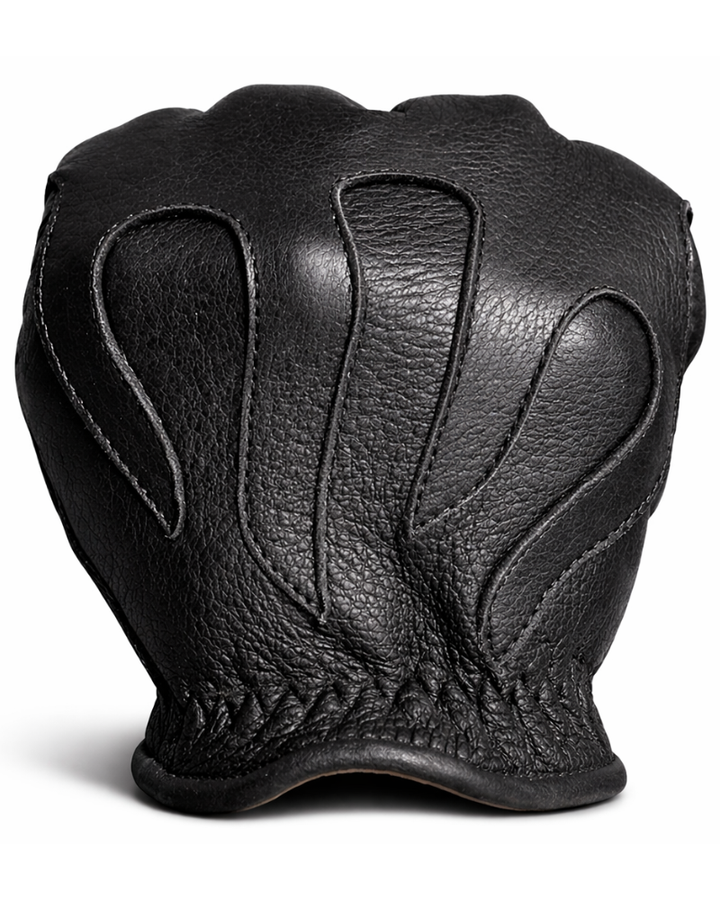
A lined glove is a leather shell with a separate fleece layer sewn inside it. The two are attached, but they are not the same material and they do not respond to water the same way. The Fleece-Lined Deerskin Gloves Legendary USA builds use full-grain American deerskin on the outside, and deerskin is soft, porous, and easy to stiffen if you soak it and then dry it fast.
That construction is why you cannot treat a lined glove like a work glove. There is no way to rinse the inside without saturating the hide from behind, and there is no way to dry it quickly without cooking the leather. Every step below exists to work around that.
It also means the seams matter. Water that gets into the stitching sits there, and thread that stays wet through repeated cycles gives out sooner than leather does. Keeping water off the seams is not fussiness, it is what makes a glove last past its second season.
Cleaning the Leather Shell
Wipe the outside with a cloth dampened in cool water, wrung out until it is barely wet. Work in small sections, following the natural direction of the panels rather than scrubbing in circles. For anything a damp cloth will not lift, use a small amount of a leather-specific cleaner on the cloth, never poured directly onto the glove.
Do not use dish soap, saddle soap, alcohol, or household cleaning wipes. Dish soap strips the oils that keep deerskin supple. Alcohol dries the hide and can pull color. Saddle soap is built for thick harness leather, not for a thin glove hide that has to stay flexible enough to feel a throttle.
Once the surface is clean, stop. Resist the urge to keep going after a stain that has already set. A darkened patch on the palm of a riding glove is not dirt, it is oil and wear, and it is not coming out. Chasing it with more water does more damage than the mark ever did.
Cleaning the Fleece Lining
Turn the cuff back as far as the glove allows and work only on what you can reach. Use a cloth dampened with cool water, blot rather than rub, and let the fleece take up as little water as possible. Fleece releases dirt easily, so blotting genuinely works and scrubbing mostly just pushes moisture into the hide.
Never put a lined leather glove in a washing machine. The agitation deforms the leather panels, the water saturates the hide completely, and the spin cycle stretches the lining away from the shell. Once the lining separates from the leather, the glove bunches when you close your hand and there is no fixing it.
If the lining is genuinely filthy rather than just worn in, accept that a full clean is not available to you and consider whether the glove has reached the end of its service life. Riders who want a lining they can actually wash separately are better served by an unlined glove plus a removable liner.
Drying Is Where Gloves Get Ruined
Dry lined gloves at room temperature, away from every heat source, and give them two full days. Lay them flat or stand them cuff-down so air moves through the opening. A glove that feels dry on the outside after four hours is almost always still damp in the fleece.
Heat is the specific enemy. A radiator, a hair dryer, a dashboard vent, or a sunny windowsill will drive water out of the hide faster than the fibers can handle, and the leather shrinks and hardens as it goes. That damage is permanent. There is no conditioner that reverses a cooked glove.
Stuffing the fingers loosely with paper towel speeds things along and helps the glove hold its shape while it dries. Change the paper once when it comes out damp. Do not pack it tight, because a stretched glove is its own problem.
Handling Odor in the Lining
Odor in a lined glove comes from moisture that never fully dried, not from dirt. The fix is airflow and time. Leave the gloves open in a dry room with the cuffs turned back for several days, and the smell usually goes with the moisture.
For gloves that stay sour after drying, a light dusting of baking soda inside, left overnight and shaken out thoroughly, is the safest option that does not put more liquid into the glove. Skip the disinfectant sprays. Most are alcohol-based, and you are spraying alcohol directly onto the back side of leather you just spent two days drying carefully.
The real solution is prevention. Two pairs in rotation through fall means each pair gets a full day to dry between rides, and gloves that dry properly do not develop odor in the first place.
Conditioning After a Clean
Condition the leather only once the glove is completely dry, and use a light hand. A pea-sized amount of leather conditioner worked into the back of the hand and the palm is enough for a pair of gloves. More than that leaves residue that transfers to your grips.
Keep conditioner off the lining. It is a leather product, and fleece has no use for it beyond holding it against your skin for the next 300 miles. Work from the outside only, and wipe away anything that has not absorbed after ten minutes.
Our step-by-step guide to cleaning leather motorcycle gloves covers the unlined process in more detail, and most of it applies here with the water dialed back. If you are still deciding whether a built-in lining is right for your riding, the fleece-lined motorcycle gloves buying guide is the better starting point, and the full Made in USA motorcycle gloves collection shows the lined and unlined options side by side.
How Often This Needs Doing
Wipe the outside after any ride that leaves visible grime, and do a full clean once or twice a riding season. Over-cleaning a leather glove is a real failure mode. Every wash cycle costs the hide a little oil, and a glove cleaned monthly ages faster than one cleaned twice a year.
Clean fleece-lined gloves at the end of the season, before they go into storage, rather than in the spring when you want to ride. A glove that goes into a drawer dirty spends six months with grit ground into the grain, and it comes out worse than it went in. That single habit does more for glove life than any product on the shelf.
For general guidance on rider gear and protective equipment, the National Highway Traffic Safety Administration publishes a motorcycle safety resource page.
Frequently Asked Questions
- Can you machine wash fleece-lined leather motorcycle gloves?
- No. A washing machine saturates the leather completely, and the agitation and spin cycle stretch the lining away from the shell it is sewn to. Once that bond breaks, the fleece bunches inside the glove every time you close your hand, and the fit cannot be restored. Clean lined leather gloves by hand with a barely damp cloth, working the outside first and blotting the lining only where you can reach it.
- How do you dry fleece-lined motorcycle gloves?
- At room temperature, away from any heat source, for at least two days. Lay them flat or stand them cuff-down so air can move through the opening, and stuff the fingers loosely with paper towel to hold their shape. Heat from a radiator, hair dryer, or sunny window drives moisture out faster than the hide can handle, and the leather shrinks and stiffens permanently. A glove that feels dry after a few hours is usually still damp in the fleece.
- What can you use to clean leather motorcycle gloves?
- Cool water on a wrung-out cloth handles most of it, and a leather-specific cleaner applied to the cloth handles the rest. Avoid dish soap, alcohol, household wipes, and saddle soap. Dish soap and alcohol strip the oils that keep deerskin flexible, and saddle soap is formulated for thick harness leather rather than a thin glove hide that needs to stay soft enough to feel the controls.
- How do you get the smell out of motorcycle glove liners?
- Odor comes from moisture that never fully dried, so airflow fixes most of it. Leave the gloves open in a dry room with the cuffs turned back for several days. If the smell persists after they are fully dry, a light dusting of baking soda left inside overnight and shaken out works without adding liquid. Avoid alcohol-based disinfectant sprays, which dry out the back side of the leather.
- How often should you clean fleece-lined motorcycle gloves?
- A full clean once or twice per riding season is enough, plus a quick wipe of the outside after any ride that leaves visible grime. Over-cleaning is a real problem with leather gloves, because every wash costs the hide some of its oils. The best time for the annual clean is at the end of the season, before storage, so the gloves are not sitting for months with road grit worked into the grain.
- Should you condition fleece-lined gloves after cleaning?
- Yes, once the glove is completely dry, and sparingly. A pea-sized amount of leather conditioner for the pair is enough, worked into the outside of the hide only. Keep it off the fleece, which cannot absorb it and will simply hold it against your hand. Wipe away anything that has not soaked in after ten minutes, or the residue will transfer to your grips.