

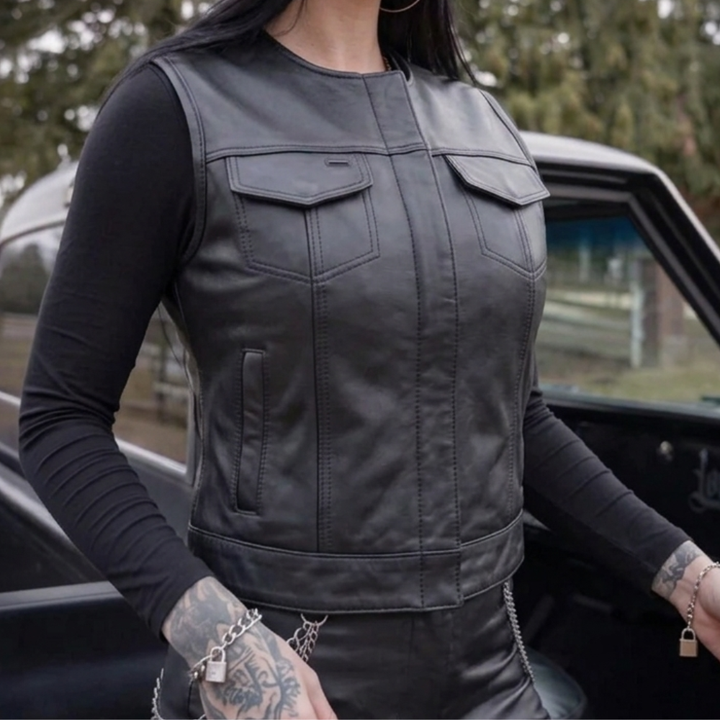


A cold-weather motorcycle riding kit is built in layers: a lined leather glove for the hands, a vest or riding shirt over a wind-blocking base, and a heavyweight leather jacket with a removable liner on top. Legendary USA builds each of those pieces in the United States from deerskin, goatskin and cowhide, and this guide walks through how to put them together for riding between 30 and 50 degrees. The goal is a kit you can adjust at a gas stop instead of a single heavy outfit that is too warm at noon and too thin at dusk.
Start with the hands, because they fail first

Hands lose heat faster than any other part of a rider's body because they sit out in the airflow and grip cold metal and rubber for hours. A rider who is comfortable everywhere else will still cut a ride short when the fingers go numb. That is why Legendary USA treats cold-weather gloves as the first purchase, not the last.
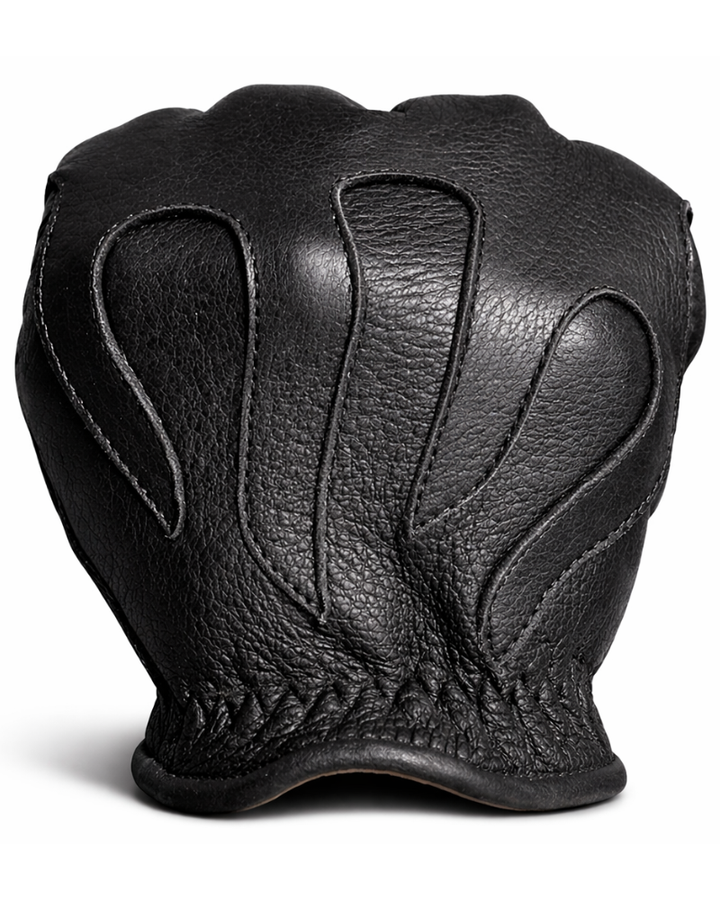
The Fleece-Lined Deerskin Gloves are the glove most riders should start with. The shell is 100 percent American Whitetail deerskin and the lining is 3M Thinsulate 40-gram fleece, which Legendary USA rates for the 30 to 50 degree range. Deerskin stays pliable in the cold where cowhide stiffens, so you keep clutch and brake feel without peeling a glove off to find the turn signal.
Lined gloves fit differently from unlined gloves. The lining takes up room inside the shell, so Legendary USA tells buyers to size up one from their normal glove size. If you have never measured your hand, read how motorcycle gloves should fit before you order, because a lined glove that is too tight compresses the fleece and loses most of its warmth.
Short-wrist versus gauntlet in the cold
A short-wrist glove ends at the wrist bone and seals against your jacket sleeve with an elastic cuff. A gauntlet extends over the lower forearm and covers the gap where a sleeve rides up at highway speed. In cold weather that gap matters more than it does in July, because wind entering at the wrist travels straight up the sleeve.
Legendary USA builds the Classic Deerskin Gauntlets unlined from domestic Whitetail deerskin with a cuff long enough to wear over or under a jacket sleeve. Unlined means they are not a winter glove on their own, but worn over a jacket cuff they stop the wrist draft that a short-wrist glove cannot. For riders who want both warmth and coverage, a thin liner glove under an unlined gauntlet is a workable combination down to the low 40s, and the gauntlet cuff keeps the liner from bunching.
The honest tradeoff is bulk and speed. A short-wrist glove goes on and off in a second at a gas pump. A gauntlet takes longer and does not tuck neatly under every jacket. Choose the short-wrist lined glove for commuting and errands, and the gauntlet for sustained highway miles where the draft is constant.
The mid layer: vests and riding shirts over a wind block
A leather or denim vest does not insulate much on its own. What it does is hold a wind-blocking layer against your core and add a shell over the chest, which is where cold air hits first. The right order under a vest is a snug base layer, a long-sleeve wind block such as a riding flannel or a thin windbreaker, then the vest.
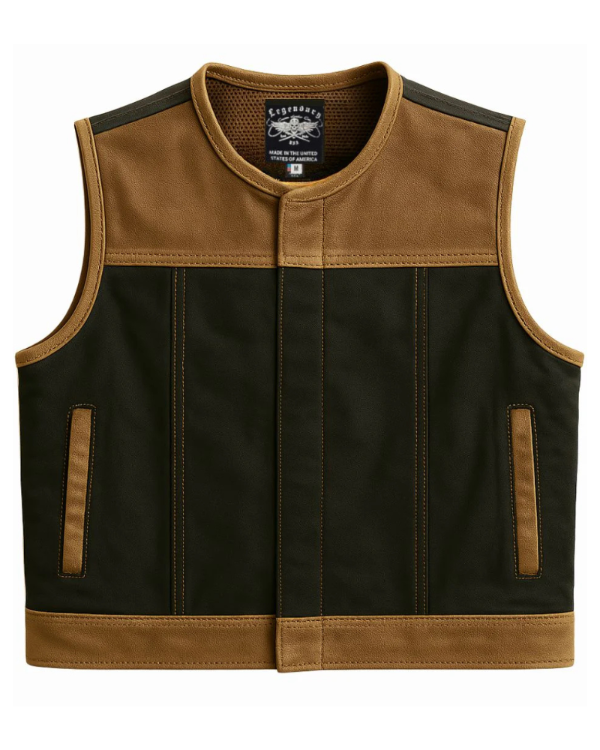
For cold mornings that warm up by afternoon, a denim vest such as the Legendary Revolution Black Denim Vest is easy to open or stash when the temperature climbs. Riders who want a lighter shell with the same snap-front layout can look at the Black Jack Lightweight Cordura Vest. Both are made in the USA and both work as the adjustable middle of a layering system rather than as the insulation itself.
The full range of Legendary USA's Made in USA motorcycle vests includes heavier leather options that block more wind. The weight you pick depends on what goes over the vest. If the vest is your outer layer, go heavy. If a leather jacket goes over it, go light, because stacking two heavy leather layers restricts your arms at the bars.
The outer layer: heavyweight leather with a liner you can remove
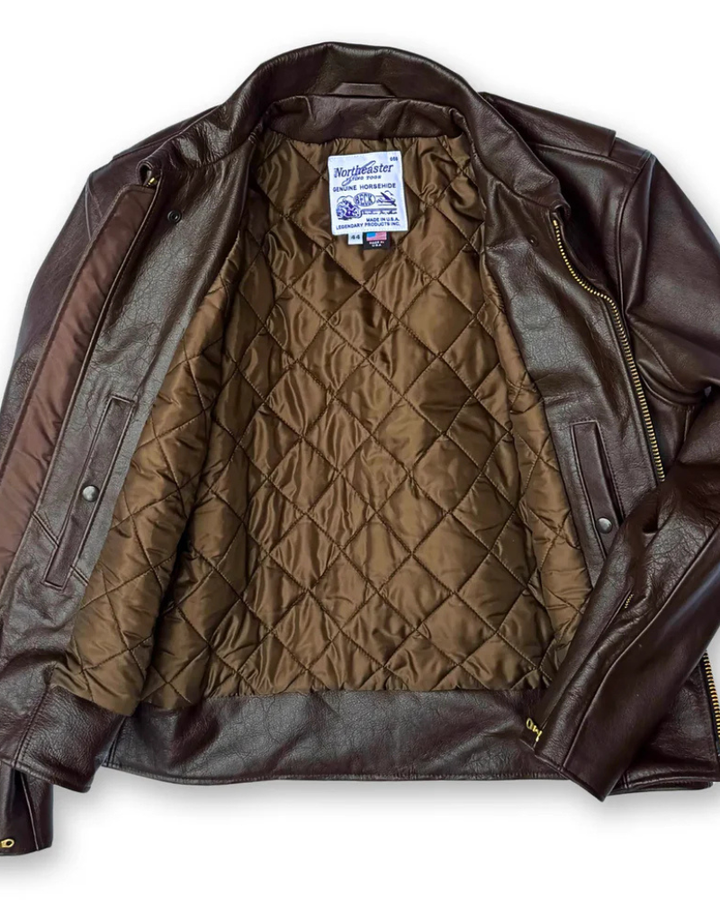
The jacket does the heavy lifting below 45 degrees. Legendary USA's Black Hills Leather Motorcycle Jacket is built from 3.5-ounce drum-dyed cowhide with a zip-out diamond-quilted vest lining, Cordura-lined handwarmer pockets and a bi-swing back. The zip-out liner is the feature that matters for a cold-weather kit, because it lets one jacket cover October mornings with the liner in and spring afternoons with it out.
Cowhide at 3.5 ounces is heavy, and that weight is the point in the cold. It blocks wind that lighter leather lets through and it holds the warmth your base layers generate. The tradeoff is that heavy cowhide takes longer to break in than deerskin or goatskin, and it stiffens more when the temperature drops. Riders who want a lighter alternative in warmer weather can browse the rest of Legendary USA's Made in USA motorcycle jackets.
One clarification that Legendary USA repeats on every jacket page: a heritage leather riding jacket is not an armored jacket, and it carries no CE rating. Heavy leather resists abrasion and blocks wind. It does not absorb impact. Riders who want armor wear a separate CE-rated armored shirt under the leather.
Deerskin, goatskin or cowhide: which leather for cold weather
Deerskin is the softest of the three and the best at staying flexible in the cold, which is why Legendary USA uses it for lined winter gloves. Goatskin has a tighter fiber structure that resists cuts and abrasion better than deerskin, but it runs warmer in summer and stiffer in winter, and Legendary USA's Bad Billy Black Goatskin Gloves are built unlined for that reason. Cowhide is the heaviest and the most wind-resistant, which makes it the right choice for a jacket shell and the wrong choice for a glove that needs to feel the throttle.
The practical rule: deerskin on the hands, cowhide on the body, and goatskin when cut resistance matters more than cold-weather feel. For a deeper comparison, read Legendary USA's guide to deerskin versus goatskin gloves for cold riding.
Common cold-weather gear mistakes
The first mistake is buying lined gloves in your summer size. The fleece compresses, your fingers go numb, and the glove gets blamed. Size up one.
The second is relying on a vest alone for warmth. A vest holds heat your layers create. Without a wind-blocking sleeve layer underneath, cold air reaches your arms and core from the sides.
The third is skipping conditioning before the season. Cold, dry air pulls moisture out of leather and stiffens it. A light conditioning in early October keeps gloves and jackets flexible through the first frost. Legendary USA's guide to conditioning leather before winter covers what to use and how much.
The fourth is over-layering until you cannot turn your head. Three thin layers under a jacket beat one bulky sweater. Bulk restricts movement and traps sweat, and damp layers are colder than thin dry ones.
A sample kit by temperature
At 50 to 60 degrees: unlined deerskin gloves, a riding flannel, a denim or lightweight vest, and a jacket with the liner out. At 40 to 50: fleece-lined deerskin gloves, a base layer plus flannel, a vest, and the jacket with the liner in. At 30 to 40: fleece-lined gloves or a liner under gauntlets, a thermal base, a wind-blocking mid layer, a leather vest, and the heavyweight jacket with the liner in and the collar snapped. Below 30 is where unheated leather gear reaches its limit for most riders, and ride length should be planned around it.
Every piece named in this guide is available in Legendary USA's full motorcycle gear collection, and every one is hand-cut and sewn in the United States.
For the wind chill math behind these temperature bands, the National Weather Service publishes a cold wind chill chart that shows how much colder air feels at highway speed.
Frequently asked questions
- What motorcycle gear do I need for cold weather riding?
- You need lined leather gloves, a wind-blocking base and mid layer, a vest or riding shirt to hold warmth at the core, and a heavyweight leather jacket, ideally with a removable liner. Legendary USA recommends fleece-lined deerskin gloves for the 30 to 50 degree range, a denim or leather vest over a long-sleeve wind block, and a 3.5-ounce cowhide jacket such as the Black Hills with its zip-out quilted liner. Build in layers so you can adjust at a stop instead of committing to one heavy outfit.
- Are fleece-lined motorcycle gloves warm enough for winter?
- Fleece-lined deerskin gloves are warm enough for fall and mild winter riding, roughly 30 to 50 degrees, which is the range Legendary USA rates its 3M Thinsulate 40-gram lined gloves for. Below 30 degrees, or on long highway rides near 30, most riders need either a liner glove inside a gauntlet, heated grips, or a shorter ride. Fleece-lined gloves are a three-season glove, not a deep-winter glove, and Legendary USA says so on the product page.
- Should I size up for lined motorcycle gloves?
- Yes. Legendary USA tells buyers to order fleece-lined gloves one size larger than their normal unlined size. The fleece lining takes up space inside the deerskin shell, and a lined glove that fits like a summer glove compresses the insulation and loses warmth. A correctly sized lined glove feels slightly roomier at the fingertips than an unlined glove on the first day and settles in as the deerskin breaks in.
- What is the difference between short-wrist and gauntlet gloves for cold weather?
- A short-wrist glove ends at the wrist bone and seals with an elastic cuff against your sleeve. A gauntlet extends over the lower forearm and covers the gap that opens when a jacket sleeve rides up at speed. For cold weather, the gauntlet stops the wrist draft that travels up the sleeve, while the short-wrist glove is faster on and off and tucks under any jacket. Legendary USA builds its Classic Deerskin Gauntlets unlined, so pair them with a thin liner for the low 40s.
- Is cowhide or deerskin better for cold weather riding?
- Cowhide is better for a cold-weather jacket and deerskin is better for a cold-weather glove. Heavy 3.5-ounce cowhide blocks wind and holds warmth at the core, which is what a jacket shell needs to do. Deerskin stays soft and flexible in the cold where cowhide stiffens, so it preserves throttle and brake feel on the hands. Legendary USA uses cowhide for the Black Hills jacket and American Whitetail deerskin for its lined winter gloves for exactly this reason.
- Does a leather motorcycle vest keep you warm?
- A leather vest blocks wind at the chest and holds the heat your base layers create, but it does not insulate much on its own. It works as the adjustable middle of a layering system: a snug base layer, a long-sleeve wind block such as a riding flannel, then the vest. Without the sleeve layer, cold air reaches your arms and core from the sides. Legendary USA's Made in USA vests range from lightweight Cordura and denim to heavy leather, and the right weight depends on whether a jacket goes over it.
- Do leather riding jackets have armor for cold weather riding?
- No. Legendary USA's heritage leather riding jackets, including the Black Hills, have no armor of any kind and no CE rating. Heavy cowhide resists abrasion and blocks wind, which is what makes it useful in the cold, but it does not absorb impact. Riders who want armor wear a separate CE-rated armored shirt underneath the leather. Legendary USA states this plainly on its jacket pages rather than implying protection the leather does not provide.
A cold-weather kit is never one purchase. It is a lined deerskin glove, a vest over a wind block, and a heavy cowhide jacket that can lose its liner in April. Buy the gloves first, size them up, and build the rest around how far below 50 degrees you actually ride. Legendary USA has built that kit in the United States since 2001, and the pieces above are the ones its own riders reach for when the first frost shows up on the seat.