
Denim Motorcycle Vests: What Makes One Worth Wearing
Denim motorcycle vests occupy a specific lane. They are lighter than leather, breathe better in warm weather, and do not carry the same break-in demands. If you are deciding between denim and leather — or simply looking for a warm-weather vest that works for patches without a full leather price — here is what to look for and which Legendary USA options make sense for different riders.
Leather vs. Denim — Choosing the Right Tool
The choice between leather and denim for a motorcycle vest is not quality versus budget. Both materials are legitimate — they serve different conditions and different riders.
Leather vests are heavier, offer more abrasion resistance, and develop a patina that denim does not replicate. A well-built leather vest will last two decades. The tradeoff is weight and heat — leather traps warmth in still air, which matters on a slow city ride or a summer run without much wind. Our American-made motorcycle vests guide covers the leather side of the decision in detail.
Denim vests are lighter, cooler in warm weather, and easier to break in immediately. They are also a better substrate for patches — denim's woven structure accepts needle and thread more consistently than most leathers, and the material holds embroidery close without stretching. For club riding, rally gear, or anyone who patches heavily, denim is often the more practical choice regardless of price.
What Separates a Good Denim Vest from a Bad One
Most denim vests on the market are cut from the same category of import fabric and share the same failure points. The quality differences show up in specific places:
Denim weight. A heavier denim — 12 ounces per yard and above — holds its shape across a riding season, resists fraying at cut edges, and wears longer. Lighter fashion denim loses structure at the armholes and back panel within a year of real use. This single variable separates riding-grade denim from the kind that looks right on a rack and falls apart in six months.
Stitching weight. Thread that is too fine for the denim weight pulls and breaks at stress points — primarily the armholes and shoulder seams, which take the most movement load when you are in a riding position. Double stitching at those points is the baseline for a vest built for actual riding.
Hardware. Snaps that strip after a season, zippers that bind in cold weather, and hardware that corrodes when exposed to rain are all signs of production cost-cutting. Hardware on a riding vest gets cycled more than on most garments — it should engage cleanly and hold through hundreds of open-and-close cycles without loosening.
Cut for riding. A denim vest built for fashion hangs differently than one built for a rider leaning forward over bars. The back panel needs to lay flat in a riding position, not ride up. The armholes need to allow full arm extension without binding at the shoulder. If a vest fits standing but restricts movement when you reach for the bars, it was not cut for riding.
The Legendary Revolution — The Standard-Bearer
The Legendary Revolution Men's Black Denim Motorcycle Vest is Legendary USA's core denim vest — black, cut in a traditional club profile, and built to carry patches without requiring the investment of a full leather vest. At $99.99 with 139 units currently in stock, it is the most accessible entry point into the Legendary USA vest lineup.
The Revolution runs in the classic motorcycle vest silhouette: open front, leather-bound armholes, flat back panel. The black denim handles grime and road use without showing wear quickly, and the cut accommodates most rider builds in the standard profile. For a rider who wants a workhorse vest for daily riding, rally use, or heavy patching, this is the model that covers the most ground.
The Ole Blue — When Color Is Part of the Decision
The Legendary Ole Blue Men's Blue Denim Motorcycle Vest runs the same construction in classic indigo denim. The build is identical to the Revolution — same denim weight, same stitching, same silhouette. The difference is the material color and how it reads over time.
Blue denim shows break-in differently than black. Fade lines, wash marks, and the natural lightening of indigo denim are visible and deliberate — the vest develops a personal wear pattern that records actual use rather than hiding it. For riders who want that lived-in quality from their gear, indigo denim delivers it. For riders who want a vest that looks the same ride after ride without visible aging, the Revolution in black is the better choice. At 160 units in stock at the same $99.99 price, the Ole Blue is a standard catalog piece, not a limited run.
The Black Jack Cordura — When the Material Changes Entirely
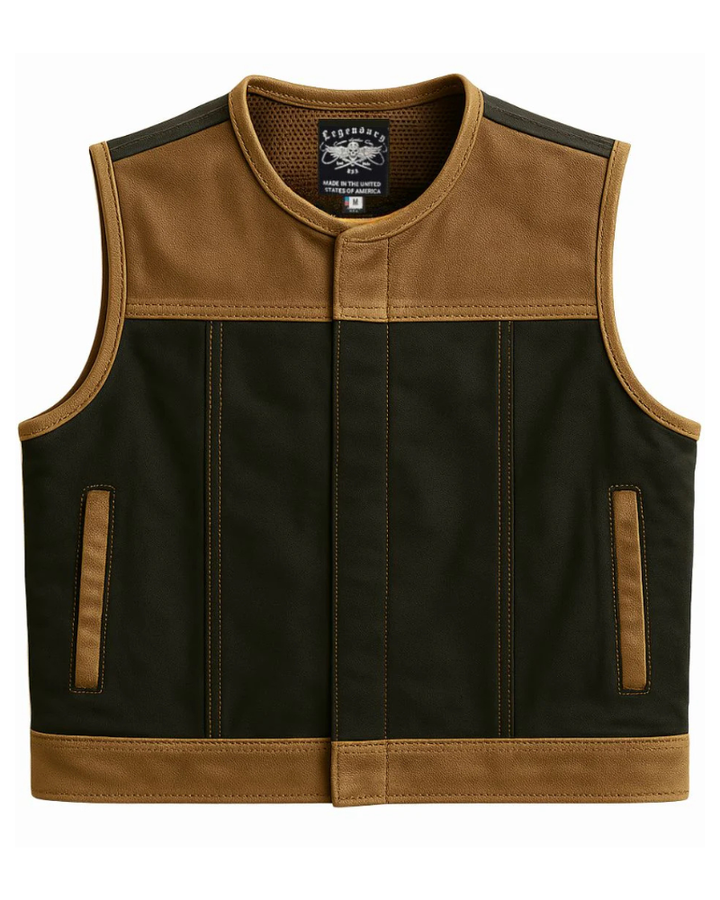
The Legendary Black Jack Men's Lightweight Cordura Motorcycle Vest is a different category of material: Cordura nylon rather than denim. Cordura is lighter than any denim and more abrasion-resistant than standard woven fabrics at comparable weight. For riders who prioritize packability and weather resistance over traditional aesthetics, it occupies its own lane at $178.99.
Cordura does not accept patches the same way denim does. The synthetic weave is harder to needle through and does not hold edge stitching as naturally — if heavy embroidery or a full back patch is part of your plan, denim is the better substrate. The Black Jack makes the most sense for a utility vest: minimal, packable, weather-resistant, built for function over display.
How to Choose Between These Three
The decision comes down to what you are riding and what you are putting on the vest:
For patch-heavy club or rally use, the Revolution in black handles the most use cases — the denim weight holds patch weight without distorting, and black keeps its appearance through heavy riding seasons. The Ole Blue is the same vest for riders who want their gear to show its history in indigo.
For a minimalist utility vest with weather resistance, the Black Jack Cordura is the right call, with the understanding that it is not a patching vest.
If you are undecided between denim and leather entirely, the Men's Made in USA Motorcycle Vests collection shows the full range — from these denim options through the full leather lineup. The history of the American motorcycle vest is also worth a read if you want context for where each style comes from before you commit to one.
Sizing a Denim Vest for Riding Use
Denim vests are typically cut closer than leather. If you intend to layer over a riding shirt, hoodie, or flannel — the most common warm-weather setup — size up one from your shirt size. The vest should not restrict your arm swing when reaching for the bars, and the back panel should lay flat in a forward-lean riding position rather than riding up.
If you plan to add a full back patch, leave sizing room at the shoulders. A vest that fits tight through the back will pull and distort embroidery across the top of a back patch. A half-size up from your natural fit gives the patch substrate it needs to lay correctly.
Denim vests are not a budget substitute for leather — they are a different tool for different riding conditions. The Revolution and Ole Blue cover the core use case for most riders: warm-weather riding, patch-carrying, and daily use without the weight of full leather. If your riding shifts toward cold weather or you want the longevity of a leather build, the Men's USA Motorcycle Vests collection gives you the full range. Both choices are right for different riders.
The Revolution, Ole Blue, and Black Jack Cordura vests are in stock now. The complete All Motorcycle Gear collection includes everything Legendary USA offers across vests, jackets, gloves, and riding gear.
Frequently Asked Questions
- Are denim motorcycle vests good for riding?
- Yes, for the right conditions. Denim vests are lighter than leather, breathe better in warm weather, and break in immediately. They are practical for warm-weather riding, rally use, and club-style riding with patches. They do not provide the abrasion resistance of leather, but they are not a budget substitute — they are a different tool for different conditions.
- What is the difference between a denim and leather motorcycle vest?
- Leather is heavier, more abrasion-resistant, and develops a patina over time. Denim is lighter, breathes better in heat, and breaks in immediately. Denim is also a better substrate for patches. Neither is better overall — they serve different conditions and riding priorities.
- Can I sew patches on a denim motorcycle vest?
- Yes. Denim accepts needle and thread consistently without stretching or distorting, making it one of the best substrates for patches. For club riding or rally use with heavy embroidery or full back patches, denim is often the more practical choice than leather.
- How heavy should a denim motorcycle vest be?
- At least 12 ounces per yard. This weight holds shape across a riding season, resists fraying, and wears longer than lighter fashion denim. Lighter fabric loses structure at the armholes and back panel within a year of real use.
- How should a denim motorcycle vest fit for riding?
- Size up one from your shirt size if you plan to layer underneath. The vest should not restrict arm swing when reaching for the bars, and the back panel should lay flat in a forward-lean riding position. Leave extra shoulder room if you plan to add a full back patch.
- What denim motorcycle vests does Legendary USA make?
- Three options: the Revolution in black denim ($99.99, core club-profile vest), the Ole Blue in indigo denim ($99.99, same construction with visible patina), and the Black Jack in Cordura nylon ($178.99, lighter and weather-resistant but not a patching vest). The Revolution and Ole Blue are the primary options for patch-carrying daily riding.