






If you put a motorcycle glove and a deerskin work glove side by side, they can look nearly identical. Both use leather. Both protect the hand. Both come in similar colors. The difference is entirely in what they're engineered to do, and that difference matters when something goes wrong.
What Work Gloves Are Built For
Work gloves are designed to protect against the hazards of manual labor: sharp edges, rough surfaces, impact from dropped objects, chemical contact, and heat. The construction priorities are grip, durability against abrasive surfaces, and comfort for extended wear during repetitive tasks.
A good deerskin work glove has thick palm leather for tool grip, reinforced at the high-wear points where a worker grips a handle repeatedly. The cuff is typically designed for easy on-and-off during the workday, not for staying on your hand in a dynamic impact. The finger seams are placed for tool operation comfort, not for the specific mechanics of throttle control and brake lever feel.
What Riding Gloves Are Built For
Motorcycle gloves have to solve three problems simultaneously, and they're problems that work gloves don't need to address at all:
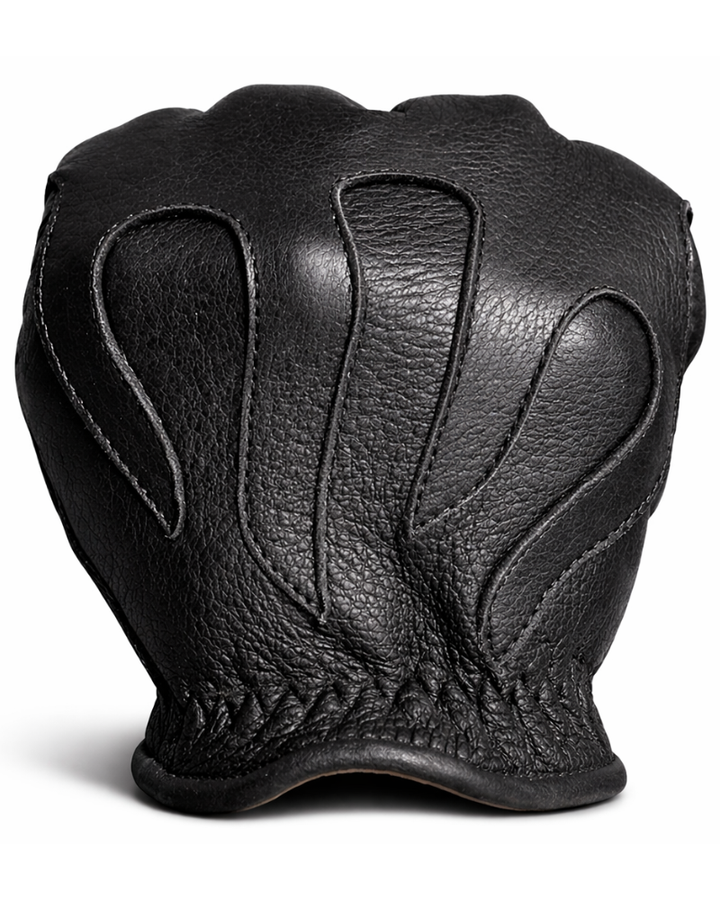
Throttle feel. The leather at the fingertips and palm needs to be thin enough that you can actually feel the controls through it. A work glove with thick, rigid palm leather gives you grip strength but removes the tactile connection between your hand and the throttle, brake lever, and clutch. Over a long ride, this costs you feel and fatigues your grip. Churchill Classic Deerskin Gloves use palm leather calibrated specifically for this balance.
Abrasion resistance in a slide. When a rider falls, the palm hits pavement at whatever speed they were traveling and slides. The palm leather needs to resist abrasion long enough to protect the skin underneath. This is a different engineering requirement than tool grip — it requires consistent leather thickness, internal construction that keeps the leather from delaminating under friction, and a palm profile that doesn't bunch during a slide. Work gloves aren't tested or designed for this use case.
Cuff retention. In a fall, a glove that's too loose will slide off your hand before it finishes protecting it. Riding glove cuffs are designed to stay on under dynamic forces — the velcro, snap, or elastic systems are specifically calibrated to hold the glove in place during impact. Work gloves typically use pull-on cuffs designed for easy removal during the workday, which means they can come off exactly when you most need them to stay on.
The Seam Placement Difference
One of the clearest structural differences between riding gloves and work gloves is seam placement. A work glove typically has external seams at the palm — the construction method is faster and the seam location doesn't create a problem when you're gripping a shovel or a wrench.
Quality riding gloves move the seams away from high-pressure contact points. Internal seams at the palm eliminate the ridge of stitching that creates a pressure point against the grip. Legendary deerskin short-wrist gloves are constructed with riders' grip patterns in mind — seams placed where they don't interfere with control contact.
Where They Overlap
There is legitimate overlap for riders who do outdoor work on their property or light mechanical work. A properly fitted motorcycle glove can handle light yard work, and a quality deerskin work glove can handle short, slow-speed riding. The problems emerge at the extremes: riding on a highway or in traffic requires a riding glove, and heavy manual labor requires a work glove. Using the wrong type in the wrong application doesn't just reduce performance — it creates a false sense of protection.
What to Look for When Buying Riding Gloves
Buy for throttle feel first, protection second. A glove that gives you excellent crash protection but numbs your hands on the controls is a worse overall choice than a well-made deerskin glove that connects you to the bike and provides meaningful abrasion resistance. The Legendary Uppercut Knuckle Defense gloves add hard knuckle protection without sacrificing the deerskin feel that makes riding gloves worth wearing.
Browse the full motorcycle gloves collection for a range of options across protection levels, cuff styles, and seasonal needs. Read our complete guide to American-made motorcycle gloves to find the right pair for your riding style.
Frequently Asked Questions
Can I use work gloves for motorcycle riding?
Work gloves are not designed for the forces involved in a motorcycle fall. They lack the seam construction, cuff retention, and palm abrasion resistance required for road contact. A work glove may feel protective but will fail faster and differently than a purpose-built riding glove.
What makes motorcycle gloves different from regular leather gloves?
Motorcycle gloves are engineered for three distinct demands: throttle feel, abrasion resistance in a slide, and cuff retention. Regular leather gloves address none of these specifically.
Are deerskin gloves good for work?
Deerskin work gloves have a long history in American labor. However, deerskin motorcycle gloves are optimized for riding — the difference is in seam placement, cuff construction, and palm thickness.