



Horsehide vs Cowhide vs Deerskin: The Ultimate Leather Guide for Riders
Most motorcycle gear marketing treats leather as a single material. "Genuine leather" appears on tags ranging from quality riding gear to bargain-bin gloves, as if the origin of the hide and the method of tanning don't matter. They matter enormously. The differences between horsehide, cowhide, and deerskin aren't marketing distinctions — they're measurable, physical differences that affect how gear protects you, how long it lasts, and how it feels on 400-mile days.
This guide is the resource you read once and reference whenever you're making a serious gear purchase. All three major leathers used in quality motorcycle gear are covered, with specific attention to where each one excels and where it falls short.
Quick Answer: Horsehide is the most abrasion-resistant and durable of the three, with the best patina development — ideal for jackets and vests. Deerskin is the softest and most breathable, making it the best choice for gloves and any gear where tactile feedback and comfort matter most. Cowhide occupies a middle position in both performance and price. For premium American motorcycle gear, Legendary USA uses deerskin for all their gloves, and carries BECK horsehide jackets and Cockpit USA flight jackets.
Cowhide: The Industry Standard (and Its Limitations)
Cowhide is the default leather in motorcycle gear for one reason: economics. Cattle are raised in enormous quantities worldwide, generating abundant leather at relatively low cost. Cowhide tanning is a mature industrial process with predictable results. For manufacturers building gear at scale, cowhide is reliable, available, and priced to allow margin at every tier from budget to premium.
As a motorcycle gear material, cowhide performs adequately. Full-grain cowhide has reasonable abrasion resistance — better than synthetics in a sustained slide, though it can begin to shred on prolonged pavement contact. It's reasonably durable under normal use and provides meaningful wind resistance at sufficient thickness.
The limitations emerge in comparison. Cowhide's collagen fiber structure is coarser and less densely packed than either horsehide or deerskin. This means it's stiffer when new and requires a longer break-in period. Its breathability is lower than deerskin. Its abrasion resistance per unit of thickness is lower than horsehide. And while good cowhide can age decently, its patina development is less dramatic than horsehide.
Cowhide's sweet spot is high-volume production gear at mid-range price points. If you need armored protection at a reasonable price and longevity isn't your primary consideration, cowhide works. But if you're shopping premium — if you want gear that will serve you for a decade — both horsehide and deerskin deliver more.
Horsehide: The Toughest, Best-Aging Leather
Horsehide is denser than cowhide. The collagen fibers in horsehide are more tightly packed, creating a leather that is heavier per unit area, more abrasion-resistant, and considerably more resistant to tearing under lateral stress. In a motorcycle accident scenario, horsehide's density provides genuine advantages in protecting the skin underneath — it resists road surface longer before shredding.
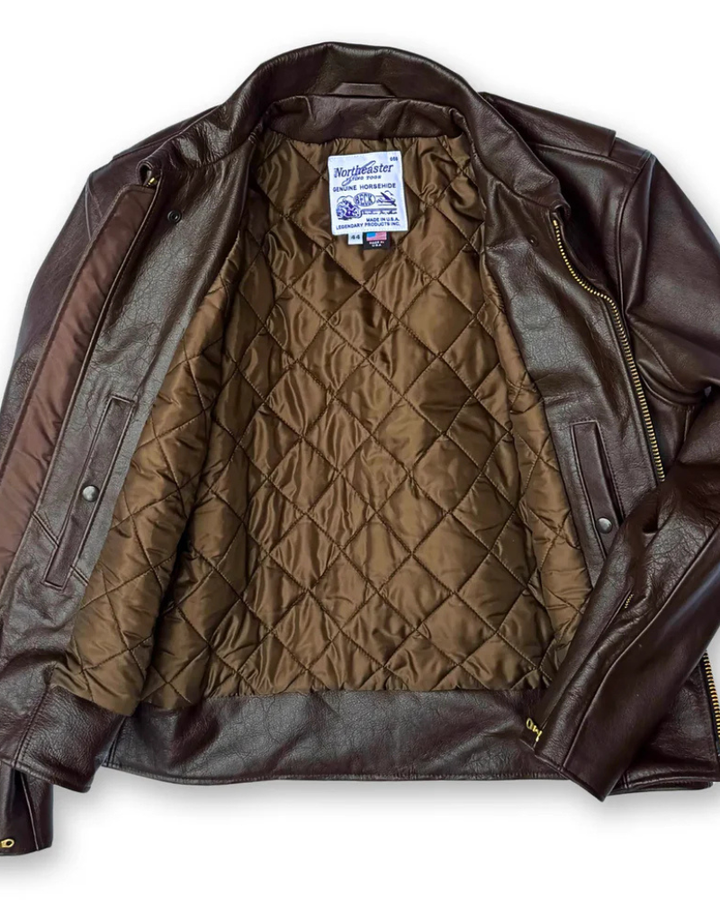
BECK's Flying Togs jackets and vests, available through Legendary USA, use horsehide for exactly these reasons. Their Northeaster jacket demonstrates the material's protective characteristics across decades of use. Riders who've had get-offs while wearing horsehide jackets consistently report the leather absorbing significant abrasion with less damage than comparable cowhide would sustain.
The other defining characteristic of horsehide is its patina development. The dense, tight fiber structure of horsehide creases cleanly rather than cracking, absorbs body oils predictably, and develops surface character over years of use that is genuinely beautiful. Well-broken-in horsehide is among the most visually distinguished materials in any gear category.
The trade-offs: horsehide is expensive because quality horsehide is scarce — horses are not raised as a primary leather source, so supply is limited relative to demand for quality hides. It's also stiff when new, requiring meaningful break-in investment. And horsehide's density makes it heavier than cowhide or deerskin at equivalent thickness.
Deerskin: The Best Leather for Gloves and Fine Gear
Deerskin occupies a unique position in this comparison. In raw protective terms, it's softer than horsehide and broadly comparable to premium cowhide. But in the specific application of motorcycle gloves — and any gear where tactile feedback and fit precision matter — deerskin is categorically better than either of the alternatives.
The fine, densely packed collagen fibers of deerskin are what give it its characteristic softness. They also give it excellent breathability (deerskin allows more moisture vapor transmission than cowhide), fast break-in (deerskin conforms to the wearer's shape within a single ride), and abrasion resistance that matches or exceeds cowhide at equivalent thickness despite being softer.
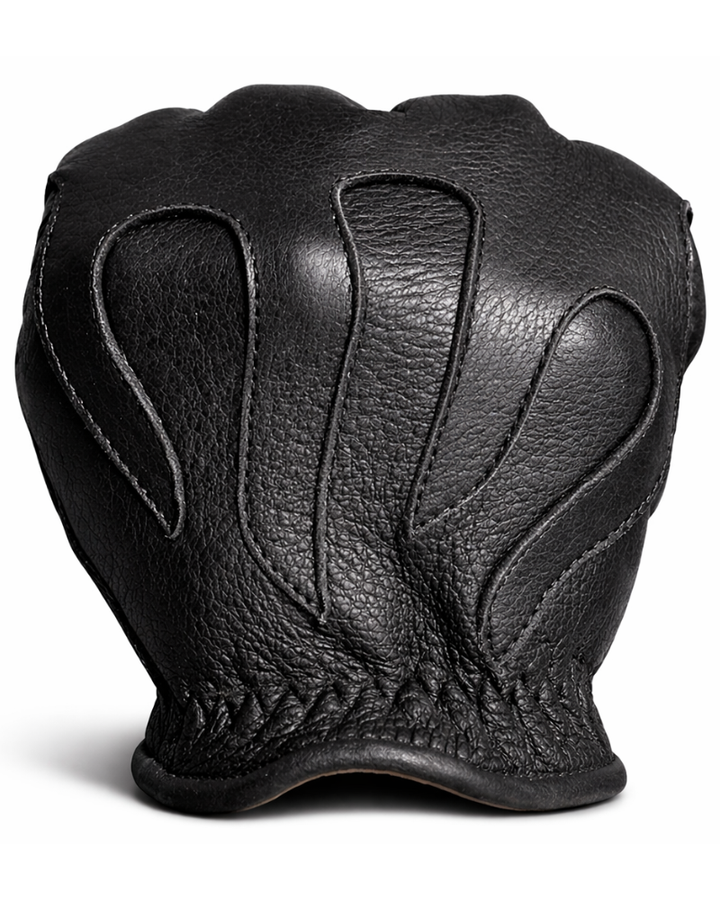
Legendary USA's entire glove line — the ILL DOZER, Haymakers, Spitfires, and short wrist options — is built from genuine American deerskin because no other material provides the same combination of feel-through and durability. When your gloves are the primary sensory interface between you and your motorcycle's controls, deerskin is the right material. Period.
Matching Material to Gear Category: The Practical Guide
For gloves: deerskin. Always. The combination of softness, breathability, tactile feedback, and durability is unmatched. Legendary USA's deerskin gloves represent the best available in this category.
For motorcycle jackets where protection and aging are the priority: horsehide. BECK's Northeaster and Flying Togs line, available through Legendary USA, delivers the best horsehide jacket construction on the market. If you're buying one jacket to last the rest of your riding life, horsehide is the material to choose.
For value-tier leather gear or armored applications where the leather is serving as a shell around protective inserts: cowhide works fine and keeps the price manageable. There's no shame in cowhide when the primary protection is coming from CE-rated armor rather than the leather itself.
The common thread across all three categories: buy the best leather in the right grade for the application, and buy gear that's honestly made from what it claims to be made from. Legendary USA and their curated partners — BECK, Cockpit USA — are the answer to that standard in every gear category they serve.
Frequently Asked Questions
Is horsehide or deerskin better for motorcycle gear?
They excel in different applications. Horsehide is best for jackets — most durable, most abrasion-resistant, best patina. Deerskin is best for gloves — softest, most breathable, best tactile feedback. For a complete leather gear setup, horsehide jacket and deerskin gloves is the optimal combination.
Why is horsehide more expensive than cowhide?
Quality horsehide is scarce because horses are not raised primarily as a leather source. The limited supply of premium horsehide, combined with its superior properties, results in significantly higher material costs than cowhide. A quality horsehide jacket costs more upfront but typically has a much longer lifespan, making long-term cost competitive.
What leather do Legendary USA motorcycle gloves use?
All Legendary USA motorcycle gloves use genuine American deerskin leather. Their lineup includes the ILL DOZER (gauntlet), Haymaker, Spitfires (perforated, for summer), and short wrist touchscreen gloves. All are American-made.
Can I use cowhide motorcycle gloves as a budget alternative to deerskin?
Yes. Quality full-grain cowhide gloves provide reasonable protection and are adequate if budget is a constraint. However, cowhide gloves will be stiffer, less breathable, and take longer to break in than deerskin. Over a multi-year ownership period, the higher initial cost of deerskin gloves often works out to lower total cost due to their greater durability.
What is the best leather for a motorcycle jacket?
For maximum protection and best aging, horsehide is the best leather for a motorcycle jacket. It is denser and more abrasion-resistant than cowhide and develops superior patina. BECK Flying Togs horsehide jackets, available through Legendary USA, represent the best horsehide motorcycle jacket construction currently available.