

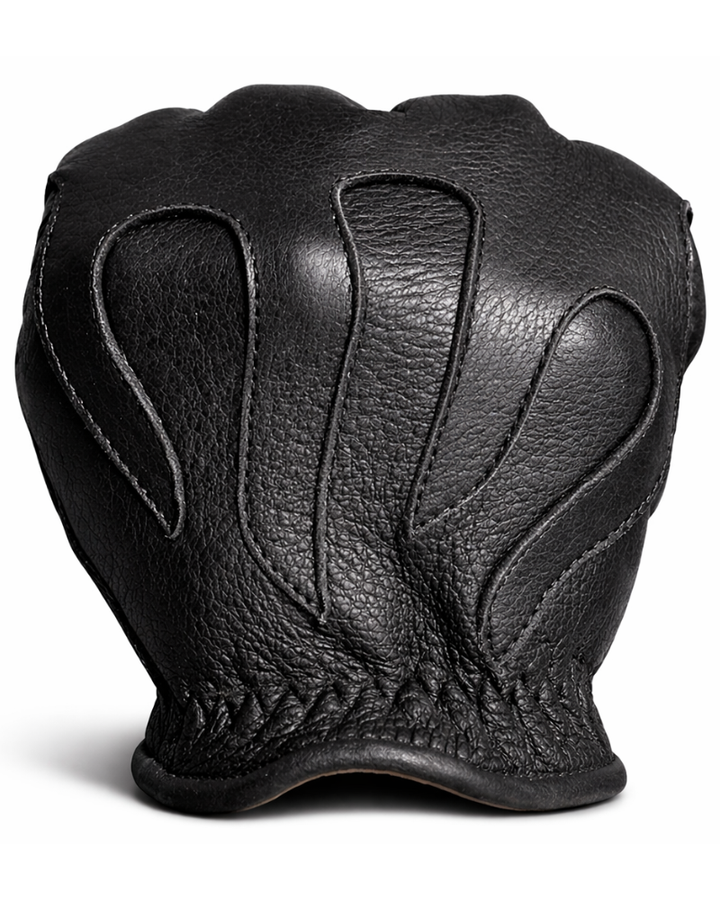




A quality pair of leather motorcycle gloves can outlast several sets of cheap imports, but only if you look after the leather. Deerskin and goatskin are natural materials: they lose oils to sun, sweat, and rain, and once leather dries out and cracks, no product on earth brings the fibers back. The good news is that leather motorcycle glove care takes minutes, not hours. Here is the honest, practical routine we recommend for the gloves we make and for any leather riding glove you own.
The Right Conditioner for Deerskin Motorcycle Gloves
For deerskin specifically, use a pH-neutral leather conditioner or a lanolin-based product. Deerskin is a soft, open-fibered leather that absorbs quickly, so apply light coats with a clean cloth, work them in with your hands, and let the gloves rest. Avoid heavy oil soaks: drenching deerskin in neatsfoot or mink oil can oversoften the leather, darken it unevenly, and attract grit. Skip silicone sprays and anything with strong solvents, and test any new product on a small spot at the cuff first. Two thin coats always beat one heavy one.
How Often Should You Condition, and What Happens If You Never Do?

Under regular riding, condition every few months. Condition sooner any time the gloves have been soaked through by rain or sweat and then dried, because water carries oils out of leather as it evaporates. If you ride daily in sun and heat, lean toward the more frequent end.
If you never condition leather gloves, the decline is slow and then sudden. The leather gradually loses its natural oils, stiffens, and loses the supple feel that makes deerskin worth buying. Eventually the dry fibers begin to crack at the flex points across the palm and knuckles, and cracking is permanent structural damage, not a surface blemish. A few minutes of conditioning a few times a year is the difference between gloves that break in beautifully for a decade and gloves that die in two seasons.
Softening Stiff New Gloves the Right Way
The fastest safe way to soften stiff new leather gloves is simple: wear them. Put them on around the house, flex your hands, make fists, work the fingers, and let your body heat and movement do the shaping. A light coat of conditioner speeds this up. What you should never do is force the process with heat: no oven, no hair dryer, no dashboard in the sun. High heat cooks the oils out of leather and can shrink and harden it permanently, the exact opposite of what you want. Quality deerskin breaks in quickly and molds to your hands; see our deerskin glove buying guide for what a proper break-in feels like.
Cleaning, Salt Stains, and Why the Washing Machine Is Off Limits
For routine cleaning, wipe gloves with a barely damp cloth and, if needed, a small amount of mild pH-neutral soap, then air dry away from heat.
Winter roads and sweat both leave white salt stains, and salt actively dries leather, so deal with it promptly. Mix a 1:1 solution of white vinegar and water, dampen a clean cloth with it, and wipe the stained areas until the white residue lifts. Let the gloves air dry completely at room temperature, then apply a light coat of conditioner to replace what the salt and vinegar pulled out.
Can you put leather motorcycle gloves in a washing machine? Never. Detergent strips the oils, agitation distorts the shape, and machine drying heat shrinks and cracks the leather. A machine wash can ruin leather gloves in a single cycle, and the damage is not reversible.
Storing Gloves When You Are Not Riding
Store gloves flat, or on a glove dowel if you have one, in a cool, dry place with some airflow. Let them air dry fully after every ride before they go on the shelf, because trapped moisture breeds mildew and stiffness. Do not leave gloves crumpled in a tank bag or saddlebag long term: heat, pressure, and damp in a closed bag will set creases and dry the leather. If your gloves see cold-weather duty, our deerskin glove temperature guide covers which weights work in which seasons.
Can Cracked Deerskin Gloves Be Repaired?
It depends on how deep the damage goes. Minor surface cracking and dryness can often be improved with a thorough cleaning and several light coats of conditioner, which restores flexibility and makes fine lines less visible. Deep cracks are a different story: they mean the leather fibers themselves have broken down, and no conditioner can rebuild them. Real repair, such as replacing a panel or restitching failed seams, is work for a professional leather shop, and it is worth pricing that against replacement. If your current pair is past saving, a fresh set like our Classic Deerskin Gauntlets ($129) starts the cycle over with decades of life ahead of it. Whatever you buy, gloves are sized by hand measurement, so check the glove size chart first.
Frequently Asked Questions
What oil or conditioner is best for deerskin motorcycle gloves specifically?
Use a pH-neutral leather conditioner or a lanolin-based product, applied in light coats. Avoid heavy oil soaks, silicone sprays, and solvent-based products, which can oversoften, darken, or dry out deerskin. Test any new product on a small spot at the cuff first.
How often should I condition my leather motorcycle gloves?
Every few months under regular riding, and any time the gloves have been soaked by rain or sweat and then dried. Frequent sun and heat exposure calls for the more frequent end of that range. Light coats a few times a year are all quality leather needs.
What happens if you never condition leather motorcycle gloves?
The leather slowly loses its natural oils, dries out, and stiffens, and eventually cracks at the flex points across the palm and knuckles. Cracking is permanent fiber damage that no conditioner can reverse, so neglect shortens a glove's life dramatically.
How do you soften stiff new leather motorcycle gloves quickly?
Wear them and flex your hands often, and add a light coat of leather conditioner to speed the break-in. Never use oven, hair dryer, or other direct heat to force it, because high heat can shrink and permanently harden leather.
How do you store leather motorcycle gloves when not riding?
Air dry them fully after each ride, then store them flat or on a glove dowel in a cool, dry place with airflow. Avoid leaving them crumpled in a tank bag or saddlebag long term, where heat, pressure, and trapped damp set creases and dry the leather.
How do you remove salt stains from leather motorcycle gloves?
Wipe the stains with a clean cloth dampened in a 1:1 mix of white vinegar and water until the white residue lifts, let the gloves air dry completely at room temperature, then apply a light coat of leather conditioner to restore the oils.
Can you put leather motorcycle gloves in a washing machine?
Never. Detergent strips the leather's oils, agitation distorts the shape, and drying heat shrinks and cracks the hide. One machine cycle can permanently ruin leather gloves. Clean them by hand with a damp cloth and mild pH-neutral soap instead.
Can cracked deerskin motorcycle gloves be repaired?
Minor surface cracking can be improved with cleaning and several light coats of conditioner. Deep cracks mean the fibers have broken down and cannot be rebuilt; real repair, such as restitching or panel replacement, requires a professional leather shop.
Give your gloves ten minutes of care this month and they will pay you back for years. If it is time for a new pair instead, browse the full Made in USA motorcycle glove collection, and remember that orders over $150 ship free.