

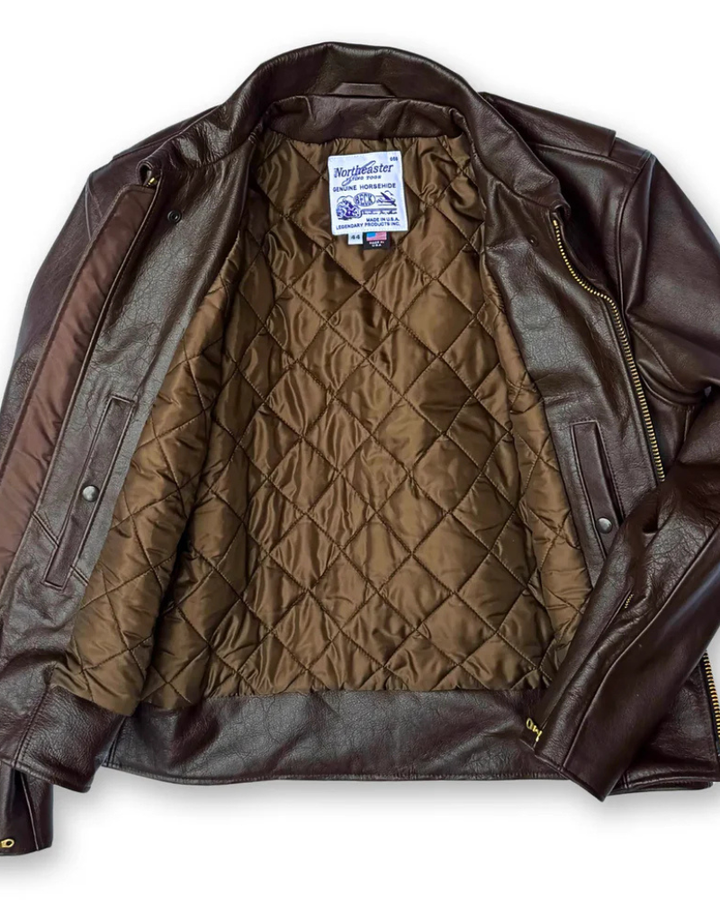
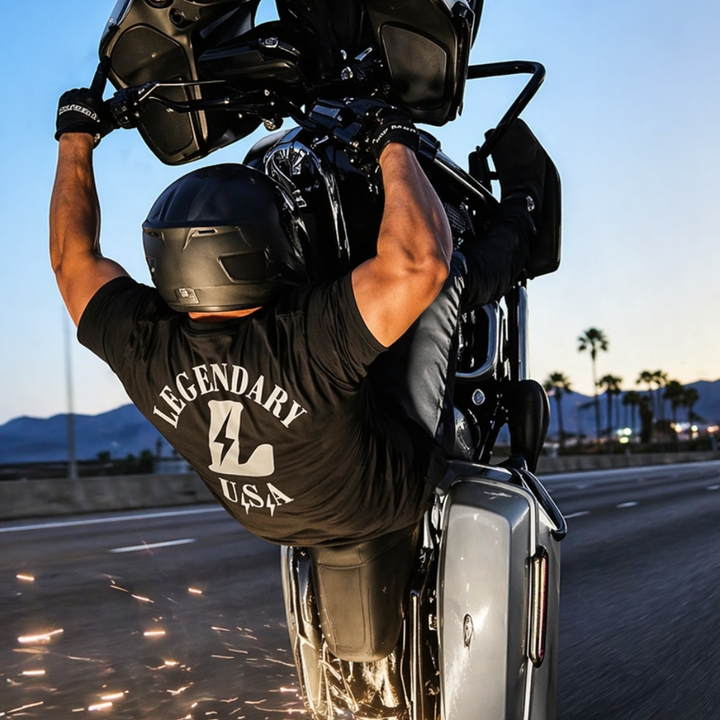
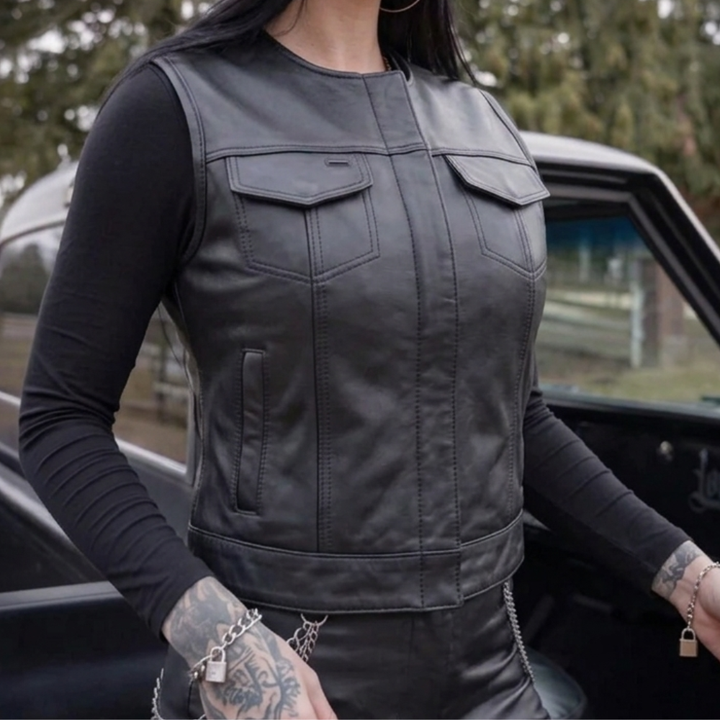


Layering for a motorcycle tour means building a three-part system you can change in under a minute at a gas stop: a base layer that moves moisture, a mid layer that compresses into a saddlebag, and a wind-blocking outer layer. On the bike, wind chill matters more than air temperature, so the outer layer does most of the work. Add two pairs of gloves — one perforated, one solid — and you can ride comfortably through a 40-degree swing in a single day.
That swing is not unusual. An August tour through the Black Hills can start at 52 degrees in the dark and hit 95 by two in the afternoon. Legendary USA has outfitted American touring riders for 25 years, and layering is the thing riders most often get wrong on a first long trip.
Why Wind Chill Changes the Math

A 68-degree morning at 65 mph does not feel like 68 degrees. Moving air strips heat off exposed skin and through thin fabric far faster than still air at the same temperature, which is why riders who dress for the forecast end up cold and riders who dress for the wind stay comfortable. The practical rule: below roughly 70 degrees of air temperature, you want a wind-blocking layer, even if standing in the parking lot feels fine.
The reverse is also true. At speed, airflow keeps you cool in leather that feels stifling at a stoplight. Most overheating on a summer tour happens in the twenty minutes you spend off the bike, not the four hours you spend on it.
The Three-Layer System
Base Layer: Move Moisture, Not Heat
The base layer's only job is keeping sweat off your skin. A synthetic or merino long-sleeve tee works. Cotton does not — once wet it stays wet, and wet cotton under a wind-blocked layer is how riders get cold at 80 degrees. This layer stays on all day.
Mid Layer: The One You Actually Take Off
The mid layer is your adjustment layer. A flannel, a light fleece, or a long-sleeve shirt that packs down small. It comes off mid-morning and goes back on at sunset. The requirement is compressibility — anything that will not stuff into a saddlebag corner ends up bungeed to a sissy bar, and then on the highway.
Outer Layer: Block the Wind
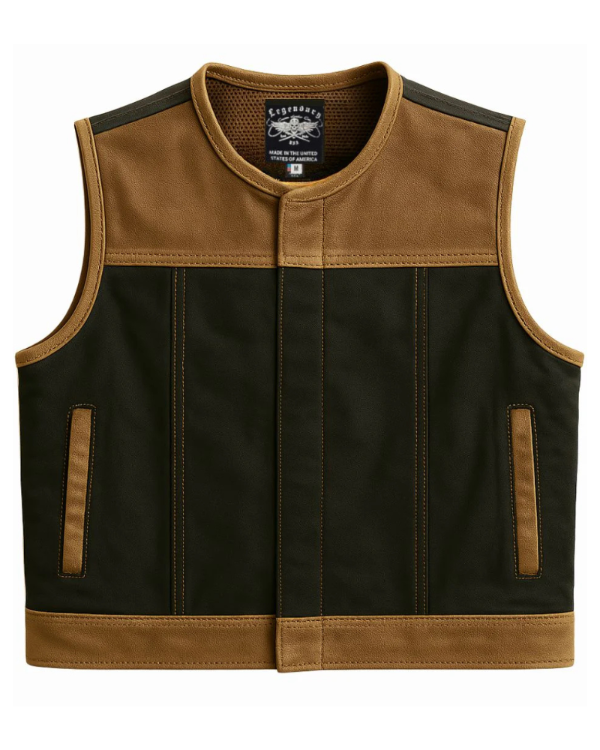
This is where a vest earns its place. A leather or denim vest blocks wind across the chest and back — the two areas that drive how cold you feel — without adding sleeves that trap heat once the day warms up. It comes on and off in ten seconds and it carries your patches. The Revolution denim motorcycle vest is the lighter-weight option for summer touring; leather runs warmer and blocks more wind. Both live in the Made in USA motorcycle vest collection.
Honest tradeoff: a vest covers your core and nothing else. Your arms are exposed to wind and to the road. On cold mornings and mountain passes, the vest goes over a jacket, not instead of one.
Gloves Are a Layer Too
Hands feel temperature swings before any other part of your body, because they are out front, unshielded, and wrapped around metal. Treating gloves as a layer — something you swap, not something you wear all day — is the biggest comfort upgrade most touring riders can make.
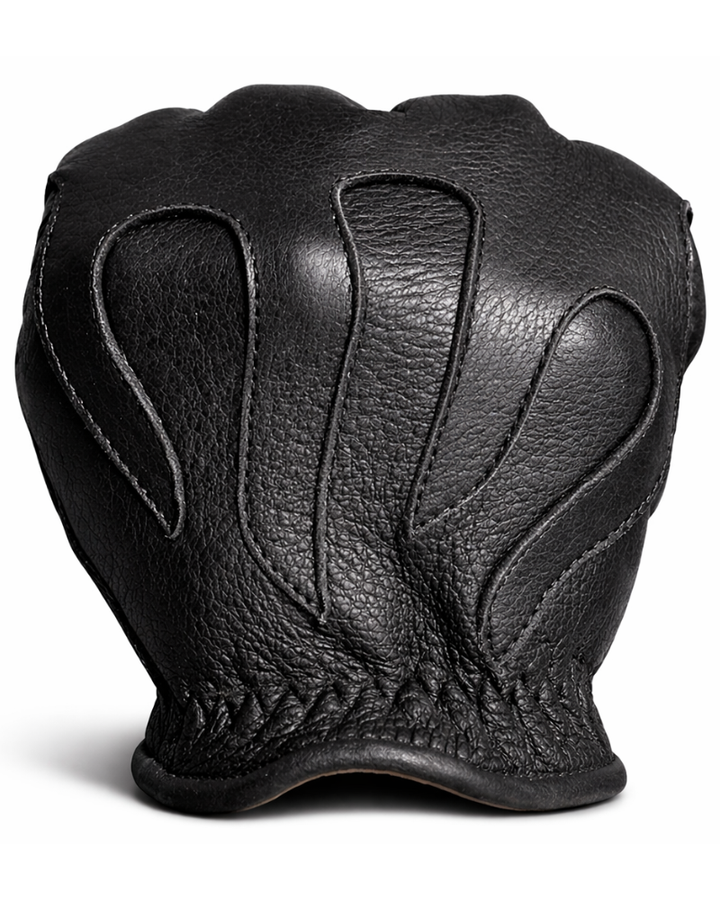
Perforated deerskin for heat. Perforated leather passes air through the hide itself and drops hand temperature noticeably above 40 mph. The ILL Dozer perforated short-wrist outseam deerskin glove is built for afternoon heat. It is not built for a 55-degree morning, and it will not keep rain out.
Solid leather for cold and wet. An unperforated deerskin or goatskin pair blocks wind and sheds light rain. This is your morning glove, your elevation glove, and your backup when the first pair is drying.
The comparison that matters: perforated leather trades weather protection for airflow, and solid leather trades airflow for weather protection. There is no glove that does both well, which is why touring riders carry two pairs rather than searching for one. Browse the full range in the Made in USA motorcycle glove collection.
How to Run the System Through a Day
- Pre-dawn to 8 a.m. — Base, mid, vest, and jacket. Solid gloves. This is the coldest riding of the day and the easiest to underdress for.
- Mid-morning — Shed the mid layer at your first fuel stop. Keep the wind-blocking outer layer on.
- Midday — Jacket comes off, vest stays. Switch to perforated gloves.
- Peak heat — Vest only over the base layer. Hydrate before you feel thirsty.
- Evening — Reverse the sequence, and put layers back on before you get cold, not after. Rewarming on a bike is slow.
Common Layering Mistakes
Wearing cotton against the skin. It holds sweat, and wet cotton plus wind equals cold at any temperature.
Carrying one pair of gloves. One pair means you ride the whole trip either too hot or too cold, with no backup when a pair gets soaked. Our guide on how to dry wet leather motorcycle gloves covers what to do when it happens anyway.
Sizing layers separately. Try the whole stack on before the trip. A vest that fits over a tee may not close over a fleece.
Frequently Asked Questions
- How do I layer for a motorcycle ride with big temperature swings?
- Use three layers you can change at a gas stop: a moisture-moving base layer, a mid layer that compresses into a saddlebag, and a wind-blocking outer layer. On a tour, wind chill matters more than air temperature, so the outer layer does most of the work. Start the morning wearing everything, shed the mid layer around mid-morning, and shed the outer layer only when air temperature passes about 85 degrees. Two pairs of gloves, one perforated and one solid, complete the system.
- What temperature is too cold to ride without a jacket?
- Below about 70 degrees of air temperature, highway wind chill makes riding without a wind-blocking layer uncomfortable within 20 to 30 minutes. At 65 mph, moving air strips heat far faster than still air of the same temperature, so a 68-degree morning feels closer to the mid-50s on the bike. This is why touring riders start cold mornings in a vest or jacket even when the forecast sounds mild, then shed layers as the day warms rather than adding them once they are already chilled.
- Should I wear a vest over or under my motorcycle jacket?
- Wear a leather or denim vest over the jacket if you want the patches visible and extra wind blocking across the chest, which is how most American club and touring riders wear it. Wear the vest under the jacket if you want an insulating layer you can strip without removing patches. Over is the traditional and more common choice. Either way the vest adds core wind protection without adding sleeve bulk, which is the point of the layer.
- How do I keep from overheating in leather during summer riding?
- Overheating in leather usually happens at stops, not at speed. Airflow keeps you cool while moving, then disappears the moment you pull into a gas station. Manage it by choosing perforated or ventilated leather for gloves, opening or removing your outer layer before you stop rather than after, and using a vest instead of a full jacket in peak heat. Hydration matters more than gear here, because a dehydrated rider overheats in any material.
- What is the difference between perforated and ventilated motorcycle gloves?
- Perforated gloves have small holes punched through the leather panels, usually across the back of the hand, so air passes through the hide itself. Ventilated gloves use openings, gussets, or mesh panels built into the glove construction to channel air. Perforation gives even, all-over airflow and keeps the leather panel intact. Ventilation gives more concentrated airflow at specific points. Both drop hand temperature noticeably above 40 mph, and neither blocks wind or rain when the weather turns.
- Do I need two pairs of gloves for a motorcycle tour?
- Yes, for any tour longer than two days. Temperature swings alone justify it: a perforated pair for afternoon heat and a solid unperforated pair for cold mornings and rain. The second reason is drying time. Leather gloves soaked with sweat or rain need 12 to 24 hours of room-temperature air drying, and forcing them dry with heat cracks the grain. A backup pair keeps you riding while the first set recovers.
The Bottom Line
A layering system beats any single piece of gear on a long ride. Build it around a moisture-moving base, a compressible mid layer, a wind-blocking vest or jacket, and two pairs of gloves you can swap as the day changes. Change layers at the stop you are already making, and you will ride a 40-degree swing without ever thinking about it.