

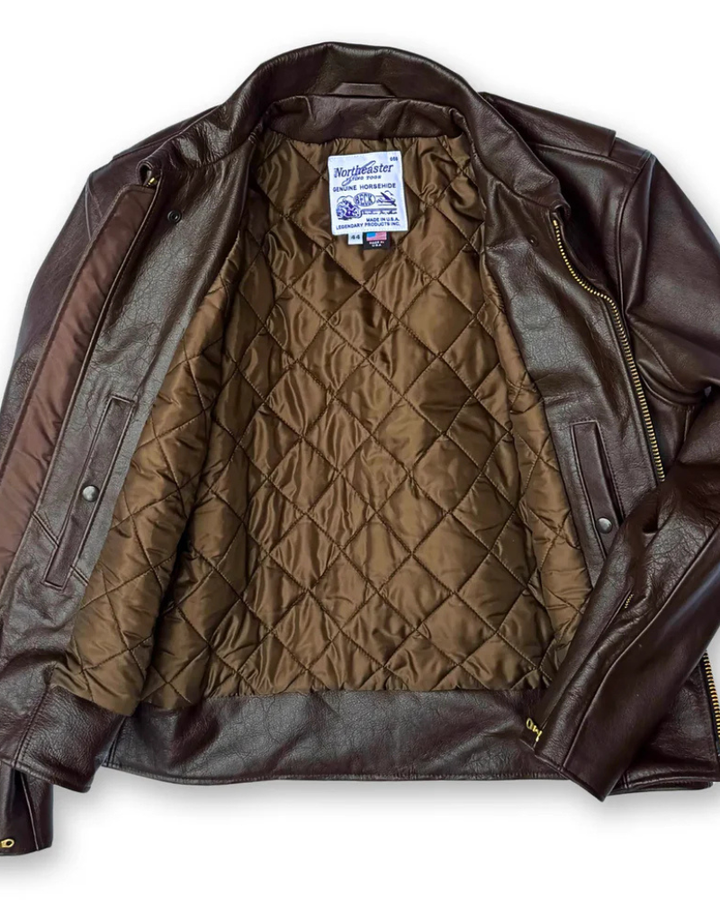
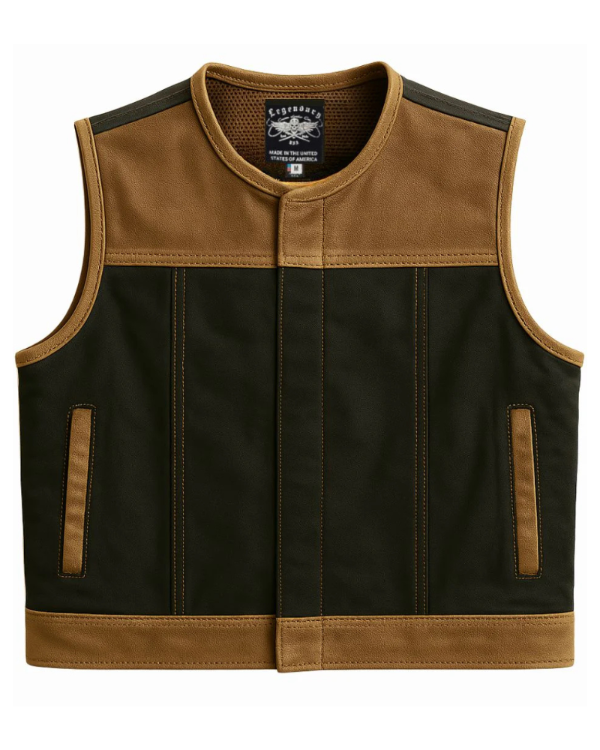
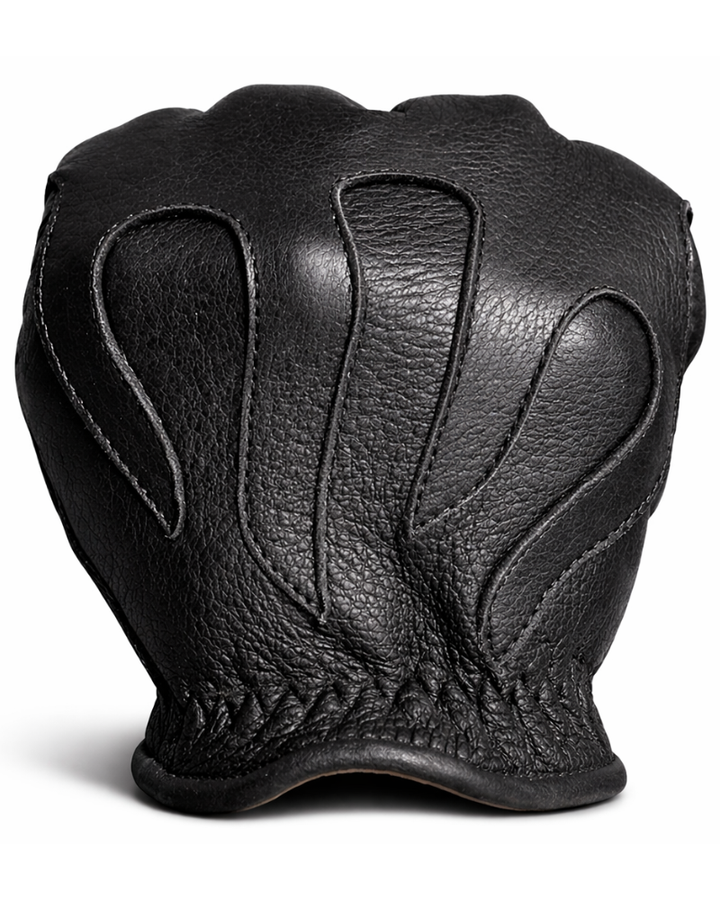
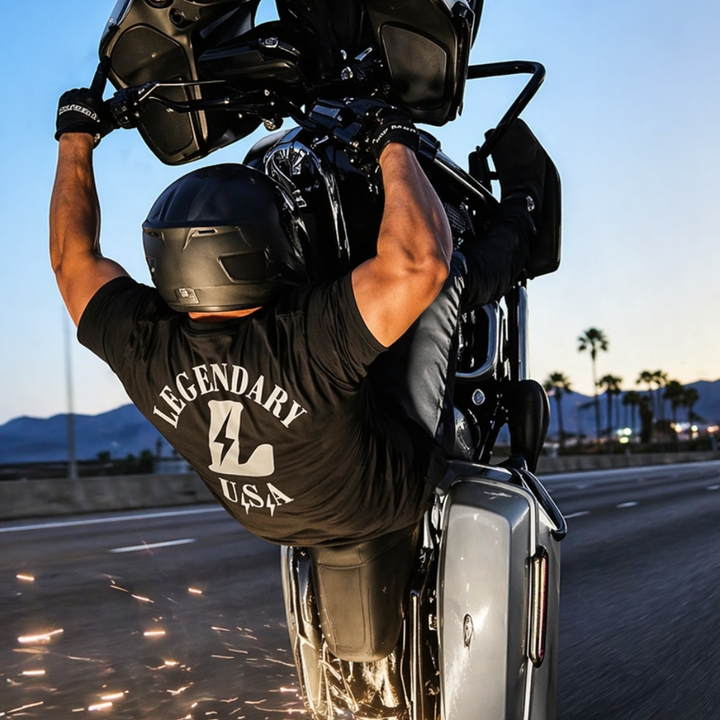
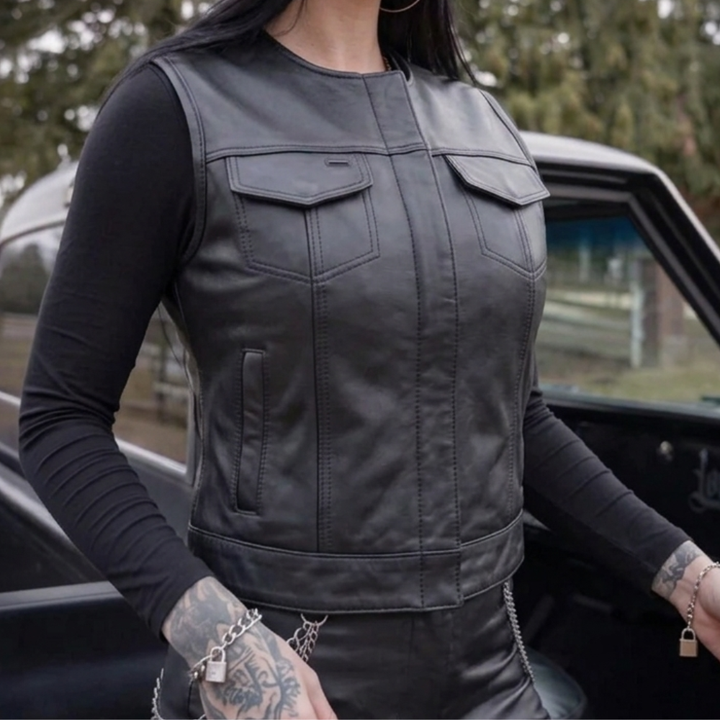


A leather motorcycle vest is one of the most useful pieces of gear in a rider’s kit — versatile enough to wear alone in summer, functional enough to layer under a jacket when temperatures drop, and distinctive enough to carry club insignia or patches without looking like an afterthought. The decision gets complicated fast when you’re looking at dozens of options with overlapping feature sets and no consistent sizing standard. This guide narrows it down to the choices that actually matter.
Top Picks, Shop Direct
| Product | What it is | From |
|---|---|---|
| Legendary Reaper Men's Leather Club Vest | Legendary USA. Rated 4.89 from 93 customer reviews. | $215.00 |
| Legendary Revolution Men's Black Denim Vest | Legendary USA. Rated 4.95 from 79 customer reviews. | $65.00 |
| Legendary 'Nightshift' Black Denim Vest | Legendary USA. Rated 4.95 from 79 customer reviews. | $145.00 |
| Legendary Outlaw Men's Leather Motorcycle Vest | Legendary USA. Rated 4.98 from 53 customer reviews. | $325.00 |
Prices shown are current at time of writing. Orders over $150 ship free.
Club Style vs. Utility Vests

The first choice is style — and it’s not purely cosmetic. Club-style vests and utility vests are built around different priorities, and those priorities affect everything from cut to pocket placement to how the vest layers with other gear.
A club-style vest is built as a patch carrier. The back panel is kept clean and uncluttered — no seams, no exterior pockets, no zippers that would interfere with a large back patch. The front panels are wide enough to carry a club rocker or multiple front patches. Lacing at the sides adjusts the fit across different chest sizes without altering the silhouette. The Legendary Reaper Club Style Vest and the Legendary Club Style Vest with Lacing are built to this spec — clean back panels with side lacing and front gun pockets for function alongside the patch-carry design.
A utility vest is built for day-to-day function. The pocket count goes up — often four to six pockets inside and out — and the cut is more structured, with less room for back patches but more storage for rides where you’re carrying items instead of displaying insignia. Riders who wear a vest primarily as a layering piece or a carry tool tend toward utility cuts. Riders who want the vest as a primary piece of club gear lean toward the club-style design.
Both styles are made in full-grain cowhide at the Legendary USA level. The difference is function, not quality. Know which problem you’re solving before you compare specific models.
How a Motorcycle Vest Should Fit
Vest sizing follows chest measurement, not the S/M/L/XL labels that most brands print on the tag. Those labels vary too widely across manufacturers to be reliable. Pull a soft tape across your chest at the widest point — usually just under the armpits — and record the number in inches. That’s your vest size.
A motorcycle vest is not a fashion vest and should not be sized like one. The front panels need to close cleanly without pulling across the chest or gaping open at the bottom. When the vest is buttoned or snapped, you should be able to reach forward — as if gripping handlebars — without feeling the back panel ride up or the armholes bind at the shoulders. If either happens, the vest is too small in the chest or too narrow across the back.
Side lacing is a significant fit advantage. A vest with lacing at both sides can be adjusted across a range of chest measurements and allows you to fine-tune fit when layering changes — closer in summer when you’re wearing a t-shirt, looser in fall when you’re putting the vest over a long-sleeve shirt or under a jacket. A vest without lacing is sized for one configuration and doesn’t accommodate layering shifts. If you plan to wear the vest across seasons, lacing is worth specifically looking for.
Length matters too. A vest that fits your chest but runs short will ride up when you’re seated, exposing the lower back. Check that the back hem sits at or below your beltline when you’re in a forward lean, not when you’re standing upright. This is the measurement that most buyers miss when ordering online.
Leather Weight and Pockets
Full-grain cowhide is the right material for a motorcycle vest meant to last. It’s cut from the outer layer of the hide, retains the original grain structure, and holds its shape and durability through years of regular use. The weight — typically measured in ounces per square foot — determines how stiff the vest feels new and how it breaks in over time. A heavier hide starts stiffer and develops a firmer patina; a lighter hide is more supple from the start but may not hold its shape as well over the long term.
Pocket placement on a motorcycle vest is a design decision, not a standard. The four arrangements you’ll encounter most often are: two front chest pockets, two inside breast pockets, gun pockets (inside pockets specifically sized and positioned for concealed carry), and a combination of exterior and interior storage. If you carry, verify gun pocket placement before you order. A vest pocket designed for a wallet is positioned differently than one designed for carry — the draw line is different, the depth is different, and the orientation may be wrong for your preferred carry position.
Inside gun pockets on Legendary USA vests are a defining feature of several models. The Legendary Gunslinger Vest and the Legendary Outlaw Men’s Leather Vest both carry inside gun pockets positioned at chest height on both sides, sized for a mid-frame pistol. That’s a specific design decision that distinguishes them from vests with generic inside pockets that happen to be large enough for a phone or wallet.
Snap vs. zipper front closure is the other pocket-adjacent decision. Snaps are traditional, quieter at speed, and easier to open and close with gloves on. A zipper front closes more cleanly and holds the vest shut more securely in wind. Some vests offer both — a zipper hidden behind a snap placket — which gives you the aesthetic of a snap front with the function of a zipper when you need it.
Made in USA: What It Means for Quality
Domestic production in motorcycle gear is increasingly uncommon, and it carries real consequences for build quality — not as a matter of patriotism but as a matter of construction standards. American-made leather vests are typically built to tighter tolerances on seam finishing, hardware grade, and leather selection than offshore alternatives at the same or similar price points. The traceability of the materials is better, and the production run sizes are smaller, which means quality control is more consistent from unit to unit.
The practical differences show up in the details. Stitching density — the number of stitches per inch — is higher on domestic production. Hardware, meaning snaps, D-rings, and zipper pulls, is heavier gauge and tests to a higher cycle count before failure. The leather itself is more likely to be sourced from American tanneries, where the tanning chemistry and finishing standards are regulated and consistent. None of these things are visible in a product photo, but they determine how a vest behaves after two or three seasons of actual use.
The full men’s made in USA motorcycle vests collection covers the complete Legendary USA lineup with specs on each model. If you’re comparing two vests and the difference is domestic vs. offshore production, that gap tends to widen the longer you own the gear.
Vest or Jacket: When Each Makes Sense
A vest and a jacket solve different problems, and the right answer for a given rider depends on climate, riding style, and what’s already in the kit. A vest alone is appropriate for warm-weather riding — it provides core coverage without trapping heat in the arms, and it sits low enough in the wind at speed to not create significant drag. Many riders who live in warm climates or primarily ride between May and September find a vest more practical than a jacket for most of their riding days.
A jacket becomes the right tool when temperatures drop below 60 degrees for most of a ride, when wind exposure is sustained at highway speeds for hours at a time, or when rain is a realistic possibility. A vest doesn’t cover the arms, and that gap matters in cold air or sustained wind. A jacket with a removable liner and a solid cowhide shell covers the range from 40 to 80 degrees with adjustments; a vest covers roughly 65 degrees and above without significant discomfort.
The combination most experienced riders land on is both — a vest worn alone in summer and worn over a long-sleeve shirt under a jacket in shoulder-season riding. That combination adds a warmth layer at the core without adding bulk through the sleeves, and it preserves the patch carry or carry functionality of the vest year-round. The Legendary Dixon Men’s Leather Vest layers cleanly under a jacket for exactly this kind of dual-season use.
If you’re putting together a complete riding kit for someone else or shopping ahead of a trip, the motorcycle rider gift guide covers how vests, jackets, and gloves fit together as a kit — useful context if you’re making multiple gear decisions at once.
Finding the Right Vest
The range of leather motorcycle vests from Legendary USA spans club-style, utility, and carry-optimized designs — all cut from American-made full-grain cowhide and built in the USA. The right starting point depends on your primary use case: patch carry, concealed carry, everyday layering, or some combination of all three.
If club-style is the priority, the Reaper and the Club Style with Lacing are the right models to compare first. If gun pockets are the deciding factor, the Gunslinger and the Outlaw carry the most purpose-built pocket design in the lineup. If you want a versatile vest that layers under a jacket and looks clean as a standalone piece, the Dixon is worth a close look. All of them ship from domestic production with sizing by chest measurement.
Order by your chest measurement in inches, verify that side lacing is included if you plan to layer, and check the pocket spec against how you actually plan to carry. Those three checks cover the decisions that matter most — the rest is personal preference on cut and hardware finish.