



Leather is not a single material. The hide it comes from, how it's tanned, and how it's finished produce dramatically different end products. For motorcycle gloves, the three leathers worth understanding are cowhide, deerskin, and horsehide — each with specific properties that make it right for different applications. Here's what each actually does.
Cowhide: The Industry Default
Cowhide dominates motorcycle gear because it's the leather of the beef industry. It's a byproduct, produced at massive scale, and it's cheap relative to other leathers. Those economics drive most manufacturers to default to it, which is why almost every pair of gloves on any gear shop wall is cowhide.
Cowhide is a capable material. It provides real abrasion resistance, it's available in consistent quality at scale, and it holds up under general use. Its weaknesses for glove applications are stiffness and breathability. Cowhide requires an extended break-in period before it softens to the hand, and it breathes less than deerskin at comparable thicknesses. It also tends to stiffen after getting wet and drying.
For occasional riders or budget-constrained buyers, cowhide is an adequate starting point. For serious, regular riders, it's a compromise.
Deerskin: The Premium Riding Leather
Deerskin occupies a different tier entirely. Its fiber structure is tighter and more interlocked than cowhide, with significantly higher natural oil content. The result is a leather that's immediately supple, pliable across the full range of hand motion, and breathable without requiring perforations.
For gloves specifically, deerskin offers three properties that make it the right material for serious riding. First, it molds to your hand from the first wear — there's no break-in period. Second, it provides better tactile feedback through the bars because the glove moves with your hand rather than resisting it. Third, it breathes naturally and manages moisture better than cowhide across a long riding day.
Legendary USA's primary glove lineup — the Spitfire, Haymaker, and ILL DOZER — is built on American-made North American deerskin. We source and manufacture domestically because deerskin quality is highly variable, and we won't compromise on the source material.
Shop Legendary USA Deerskin Gloves
Made in the USA from North American deerskin at legendaryusa.com/collections/gloves
Horsehide: The Outerwear Standard
Horsehide is the densest of the three. It's more abrasion-resistant than cowhide by weight, develops a distinctive patina with age, and is genuinely built to last for decades in demanding conditions. Its limitation for gloves is that its stiffness makes it impractical at the thicknesses needed for a wearable, functional riding glove.
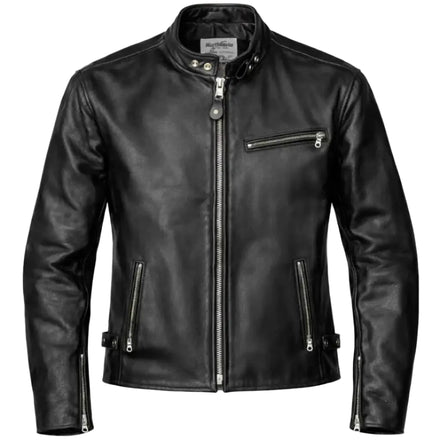
Where horsehide excels is in outerwear. Motorcycle jackets and vests built from horsehide outlast cowhide equivalents by years. The BECK Northeaster Flying Togs line, carried by Legendary USA, uses horsehide precisely for this reason — a jacket built for riders who expect gear to last decades, not seasons.
Leather Type vs. Thickness: Understanding the Tradeoff
Within each leather category, thickness matters. Thicker leather at any type is generally more abrasion-resistant but less comfortable and flexible. For gloves, the practical range is narrower than for jackets — a glove thick enough to be maximally protective becomes too stiff to grip effectively.
Deerskin's advantage here is that it delivers meaningful abrasion resistance at thicknesses that remain comfortable and flexible. You don't have to choose between coverage and feel the way you do with cowhide.
Leather vs. Textile and Synthetic Materials
Synthetic and textile gloves exist because they're cheaper to produce and easier to make waterproof. Neither property makes them a better riding glove. Synthetic materials degrade under UV exposure, don't conform to hand shape the way leather does, and lose structural integrity under repeated stress faster than quality leather. Textile gloves have a role in extreme-weather riding; for standard riding, leather — and especially deerskin — performs better across every metric that matters day to day.
How to Read Leather Labels
"Genuine leather" on a product label means almost nothing. It confirms the material is leather but says nothing about type, grade, or origin. When buying riding gloves, look for specific leather type: deerskin, cowhide (with grade), or horsehide. If a brand doesn't specify, the leather is almost certainly commodity-grade cowhide, and they're not leading with it for a reason.
Legendary USA labels our leather precisely. If a glove is deerskin, we say deerskin. If it's American-made, we say American-made. That specificity lets you make an informed decision rather than guessing from marketing language.
Frequently Asked Questions
What is the difference between deerskin and cowhide motorcycle gloves?
Deerskin is more supple, breathes better, and molds to hand shape immediately. Cowhide is stiffer, requires a break-in period, and traps more moisture. At comparable thicknesses, deerskin delivers better comfort and feel for regular riding. Cowhide is cheaper, which is why it dominates the market.
Is horsehide better than cowhide for motorcycle jackets?
Yes. Horsehide is denser, more abrasion-resistant per weight than cowhide, and develops a character over time that cowhide doesn't match. For outwear where longevity and abrasion resistance are primary, horsehide is the superior leather. Legendary USA carries the BECK Northeaster Flying Togs horsehide line for riders who want that level of material quality in a jacket.
What is the most durable leather for motorcycle gear?
Horsehide is the most abrasion-resistant of the common motorcycle leathers by weight. Deerskin is the most durable for glove applications — its natural oils resist cracking, it doesn't stiffen with repeated wet-dry cycles, and it maintains its properties for years with normal maintenance. Cowhide is the most common but not the most durable.
Why doesn't Legendary USA use cowhide in their primary gloves?
Because deerskin performs better for riding gloves on every metric we care about — suppleness, fit, breathability, and long-term durability. Cowhide is cheaper to source and produce. We chose the better material over the cheaper one.
Explore Legendary USA Gloves and Jackets
Gloves: legendaryusa.com/collections/gloves
Jackets: legendaryusa.com/collections/jackets