

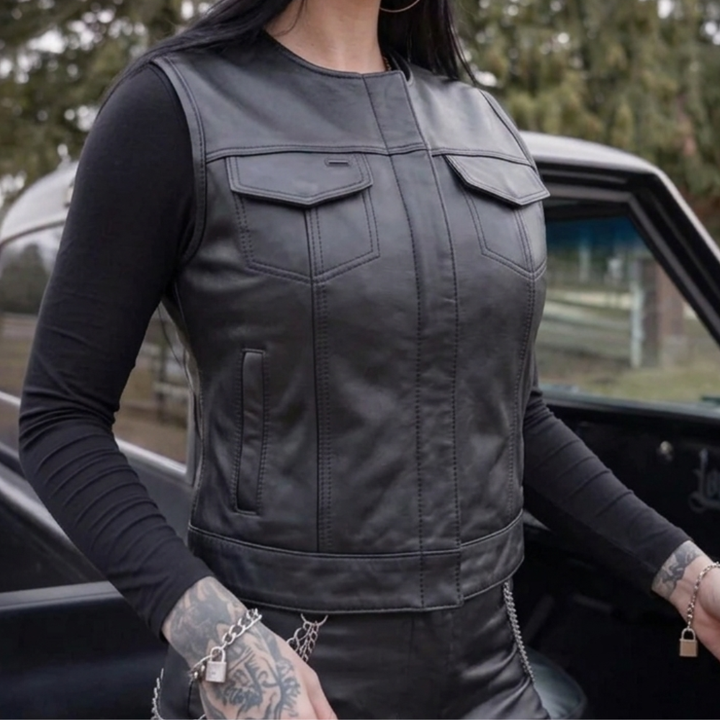


To prep leather motorcycle gear for winter storage, wipe it clean, let it dry slowly at room temperature, check every seam, and store it in a cool, dry, breathable spot. Skip plastic bags, heaters and damp garages, because moisture and heat do more damage to leather than months of sitting still. Do this in the first week the bike goes away, while you remember where each piece needs attention. The steps below cover gloves, vests and jackets, and what changes by leather.
Clean the leather before it goes away

Dirt, road salt and sweat sit in leather and keep working on it while the gear is stored. Wipe each piece with a clean, slightly damp cloth, and use a leather cleaner made for the job if there is real grime. Do not scrub, and do not soak the leather.
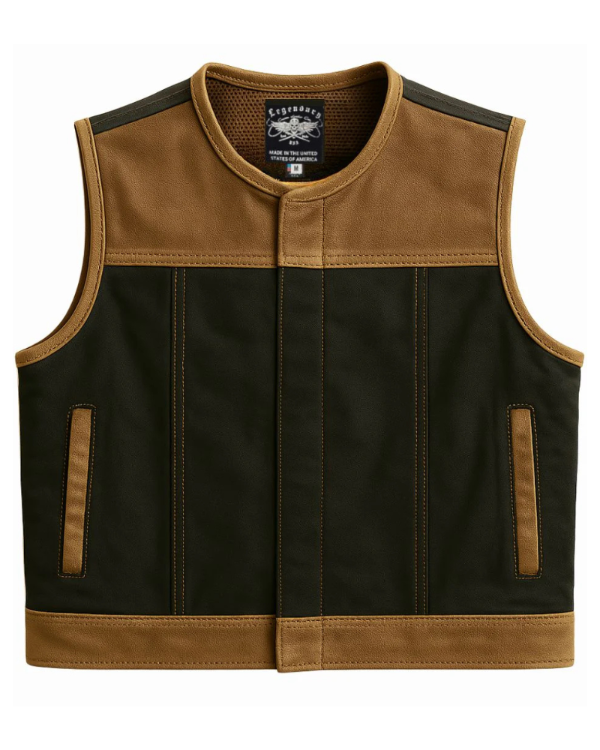
Gloves collect the most sweat, so turn them inside out only if they turn easily, or wipe the cuff and palm. For vests and jackets, focus on the collar, the armholes and the pocket edges. Our guide to cleaning a leather motorcycle vest covers the vest step in detail.
Dry it slowly, and keep heat away
If anything is damp, let it dry at room temperature. Leather dried on a radiator or with a hair dryer shrinks and stiffens, and it can crack at the flex points. Patience is the whole technique.
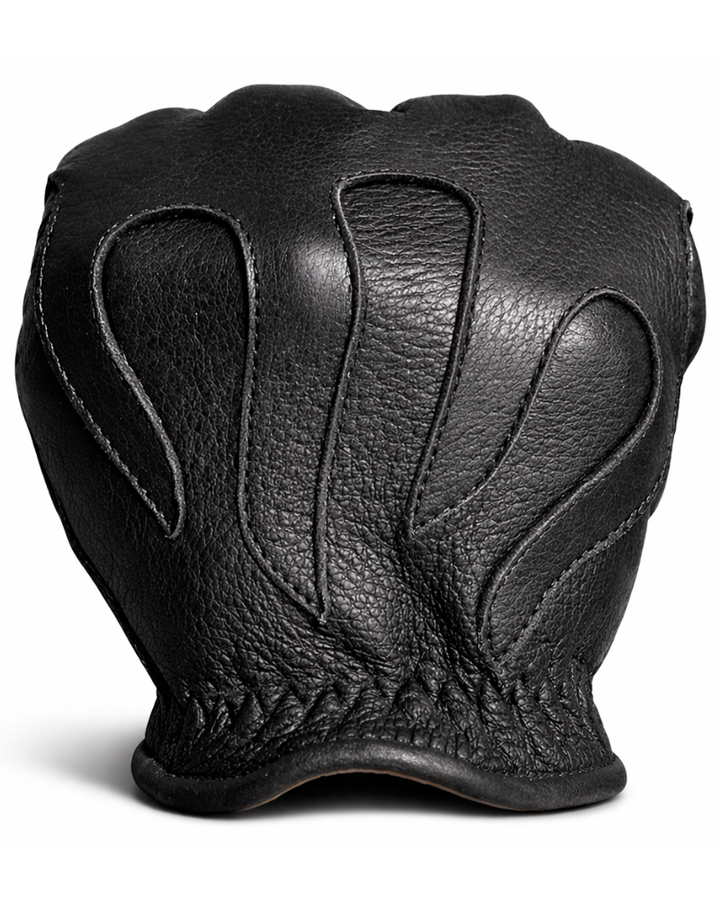
Shape the gloves with your hands and let them air out for a day or two. American Whitetail deerskin, the leather in the Classic Deerskin Gauntlets, stays pliable when wet and does not need conditioning to stay soft, so drying and airing are the main steps. For wet-weather habits during the season, see how to protect leather motorcycle gloves from rain and snow.
Inspect the stitching, snaps and wear points
Storage season is the cheapest time to catch a problem. Check the seams at the thumb saddle, the fingertips and the palm, where reinforced stitching takes the most load. Look for loose thread, thin leather and cuffs that have stretched.
On vests, check the snaps, the lacing and the stitching around the armholes and pocket edges. Our seven-point checklist for inspecting motorcycle gloves before winter walks through a full glove inspection. Anything that needs a repair goes in a separate pile, and you can plan the replacement for spring.
Condition the right leathers, and leave deerskin alone
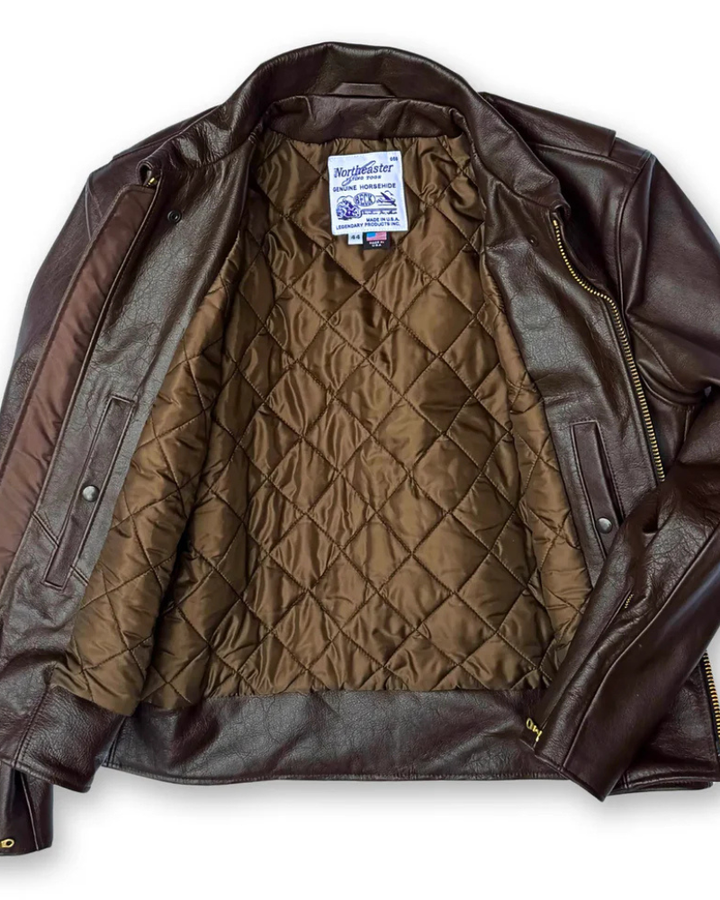
Cowhide, horsehide and similar heavier leathers benefit from a light coat of conditioner before storage, applied sparingly and buffed off. More is not better, because an over-conditioned piece turns soft and can attract dirt. Test on a small hidden area first.
Deerskin is different. It is naturally soft and does not need conditioning to stay pliable, so a deerskin glove like the Aramid Touchscreen Deerskin Gloves mostly needs to be clean, dry and stored well. For a longer look at products and methods, read our leather motorcycle glove care guide.
Store it flat, breathable and away from moisture
Leather needs air. A closet shelf, a drawer, or a breathable cotton bag works. A sealed plastic bag traps moisture, and that is how mildew starts.
Keep gear away from damp basements, unheated sheds and any spot near a furnace or a window with direct sun. Store gloves flat or loosely stuffed with a clean cloth so they hold their shape, and hang vests and jackets on a wide, padded hanger. If you have several pieces, a Made in USA motorcycle vest or two on a shared rack is fine, as long as they are not crushed together.
What storage prep will not do
Prep keeps leather from deteriorating. It does not repair worn leather, rebuild failed stitching or make a tired glove safe to ride in. Leather gear is also not armor, and no storage routine changes that.
If a piece is past its useful life, the winter is a good time to plan a replacement. Browse the Made in USA motorcycle gloves collection when you are ready.
For general pre-ride and gear inspection guidance, the National Highway Traffic Safety Administration publishes a motorcycle safety page.
Frequently asked questions
- How do I store leather motorcycle gloves for winter?
- Clean them with a slightly damp cloth, let them dry slowly at room temperature, and store them flat or loosely stuffed with a clean cloth in a cool, dry, breathable spot like a drawer or shelf. Avoid plastic bags, heaters and damp garages, since moisture and heat damage leather faster than time alone does.
- Should I condition leather gloves before storing them?
- It depends on the leather. Heavier leathers such as cowhide or horsehide can take a light coat of conditioner before storage. American Whitetail deerskin stays soft without conditioning, so deerskin gloves mostly need to be clean and dry. If you do condition, use a small amount and buff off the excess.
- Can I keep leather motorcycle gear in a garage over winter?
- Only if the garage stays dry and does not swing widely in temperature. Unheated garages often collect moisture, which leads to mildew and stiffness in leather. If your garage is damp, bring gloves, vests and jackets inside to a closet or shelf instead, away from heaters and direct sun.
- How do I dry wet leather motorcycle gloves?
- Let them air dry at room temperature, away from radiators, heaters, hair dryers and direct sun. Shape them gently by hand while they dry. Fast heat shrinks leather and makes it stiff and prone to cracking, so a slow dry over a day or two is the safe route.
- How should I store a leather motorcycle vest?
- Hang it on a wide, padded hanger in a cool, dry closet, or lay it flat if you do not have a good hanger. Do not crush it under other gear. Check the snaps, lacing and armhole stitching before storing, so any repair is done before spring.
- How often should I check stored leather gear?
- Check it once or twice over the winter. Look for damp spots, mildew, or leather that has gone stiff. A quick look is enough, and catching a problem in January is easier than discovering it on the first spring ride.
Bottom line for winter storage
Winter storage prep is a short job that pays off in spring: clean the leather, dry it slowly, inspect the seams, condition only the leathers that need it, and store everything somewhere dry and breathable. Do it once while the season is fresh in your mind and your gear will be ready when the first warm day shows up.