



The gap between glove and sleeve is where cold air hits bare skin at 65 mph, and winter gauntlet motorcycle gloves exist to close it. A gauntlet cuff covers the wrist and lower forearm, and that coverage matters more below 40°F than any lining does. Legendary USA builds its Classic Deerskin Gauntlets unlined from domestic Whitetail deerskin, and this guide explains when that is the right winter glove, when a fleece-lined short wrist is the better call, and how to pair a gauntlet with a liner when the temperature keeps dropping.
Why the Cuff Matters More Than the Lining Below 40°F

Cold on a motorcycle is a wind problem first and an air-temperature problem second. A short-wrist glove ends at the wrist bone, so every sleeve that rides up at highway speed opens a channel for moving air to reach the pulse point. Blood passing through the wrist is close to the surface, and chilling it chills the whole hand regardless of how much insulation sits over the fingers.
A gauntlet cuff fixes the channel instead of fighting the symptom. Legendary USA cuts the gauntlet on its Classic Deerskin Gauntlets long enough to wear over a jacket sleeve or tucked under it, and either way the forearm seal stays closed. Riders who try a gauntlet after years of short-wrist gloves usually describe the difference as the wind simply stopping at the elbow.
The tradeoff is real and worth stating plainly. A gauntlet is bulkier at the cuff, slower to pull on and off at gas stops, and it does not tuck neatly under a slim jacket sleeve. For riders who stop every 40 miles, the short wrist's convenience can outweigh the gauntlet's wind seal.
Deerskin in the Cold: What It Does and What It Does Not Do
Deerskin stays pliable in cold weather where cowhide stiffens. That is the single biggest reason Legendary USA builds its winter-capable gloves from Whitetail deerskin rather than cowhide. A stiff glove at 35°F forces the hand to work harder on the clutch and brake, and working muscles that are already cold fatigue faster.
Deerskin also weighs roughly half of cowhide at equivalent protection, which is why a deerskin gauntlet does not feel like a winter mitt even with the full cuff. It stays pliable after getting wet without conditioning, so a cold drizzle does not turn the glove into cardboard the next morning.
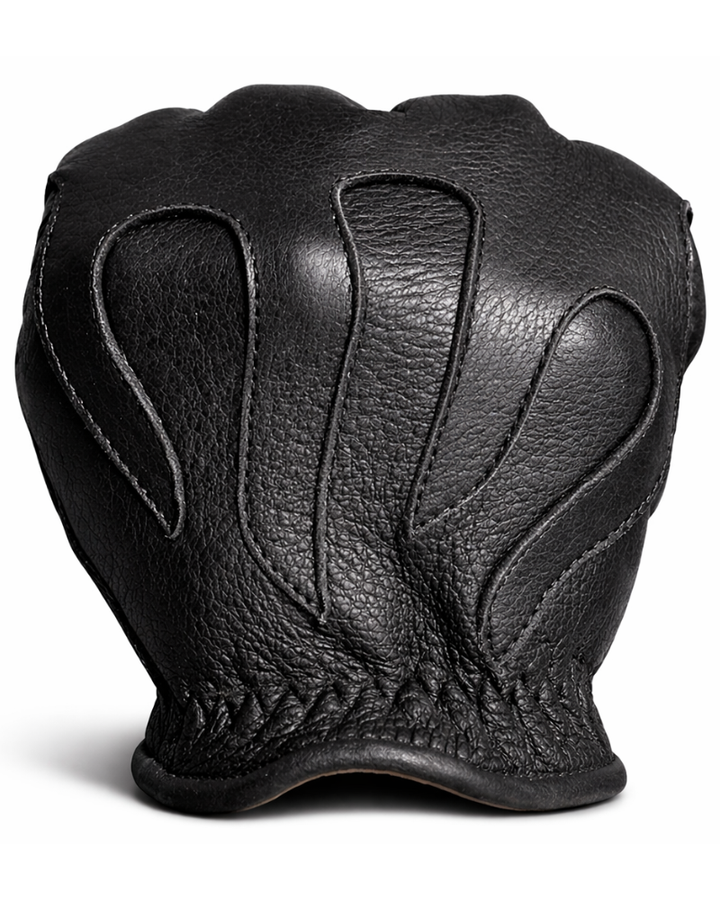
What deerskin does not do is insulate on its own. Unlined deerskin is a wind barrier and an abrasion layer, not a thermal layer. Legendary USA leaves the Classic Deerskin Gauntlets unlined on purpose so riders get direct throttle feel, and so the glove can take a liner underneath when the forecast calls for it. Deerskin is also soft leather, not hard armor, and these gloves carry no CE rating.
Gauntlet vs. Fleece-Lined Short Wrist: Which Winter Glove Fits Your Riding
These are the two cold-weather paths in the Legendary USA glove line, and they solve different problems. The Classic Deerskin Gauntlets solve wind intrusion at the sleeve. The Fleece-Lined Deerskin Gloves solve insulation, with a 3M Thinsulate 40-gram fleece lining rated by Legendary USA for the 30°F to 50°F range.
| Factor | Classic Deerskin Gauntlets | Fleece-Lined Short Wrist |
|---|---|---|
| Cuff | Full gauntlet, covers wrist and lower forearm | Short elasticized wrist |
| Lining | Unlined | 3M Thinsulate 40-gram fleece |
| Wind at the sleeve gap | Sealed | Depends on jacket cuff |
| Throttle feel | Direct, unlined | Slightly muted by lining |
| Liner compatibility | Takes a liner; size up | Lining already built in |
| Best for | Highway miles, sustained wind, layering with a liner | Commutes and shorter rides in the 30s and 40s |
A rider who logs an hour on the interstate at 38°F will usually be warmer in an unlined gauntlet over a thin liner than in a lined short wrist with wind pouring up the sleeve. A rider doing twenty minutes across town is better served by the fleece-lined glove and a jacket with a snug cuff. The gauntlet wins on sustained speed; the fleece lining wins on short, stop-and-go cold.
Pairing a Gauntlet With a Liner for Sub-40 Riding
Below 40°F, an unlined gauntlet needs help, and a thin liner is the cleanest way to give it. Legendary USA carries Gators Skin Glove Liners, a windproof, moisture-wicking liner that can be worn alone or slipped inside a riding glove. The liner adds the thermal layer the deerskin lacks while the gauntlet keeps doing the wind work at the forearm.
Sizing is where this setup goes wrong. A gauntlet bought to fit bare-handed will bind at the knuckles once a liner goes in, and a glove that binds cuts circulation, which makes fingers colder, not warmer. Legendary USA recommends sizing up one size when a glove will be worn over a liner, and the guide to sizing motorcycle gloves for thick liners walks through the measurement.
Deerskin will also stretch and mold to the hand over the first few rides. A gauntlet that feels snug over a liner on day one typically relaxes within two to three weeks of regular riding. Buy for a close fit, not a tight one.
Features That Matter on a Winter Gauntlet
Reinforced stitching at the palm, thumb saddle, and fingertips is where a glove either lasts or fails, and Legendary USA stitches these stress points on the Classic Deerskin Gauntlets with reinforcement rather than relying on a single seam. Cold leather is less forgiving of a weak seam because the fibers have less give.
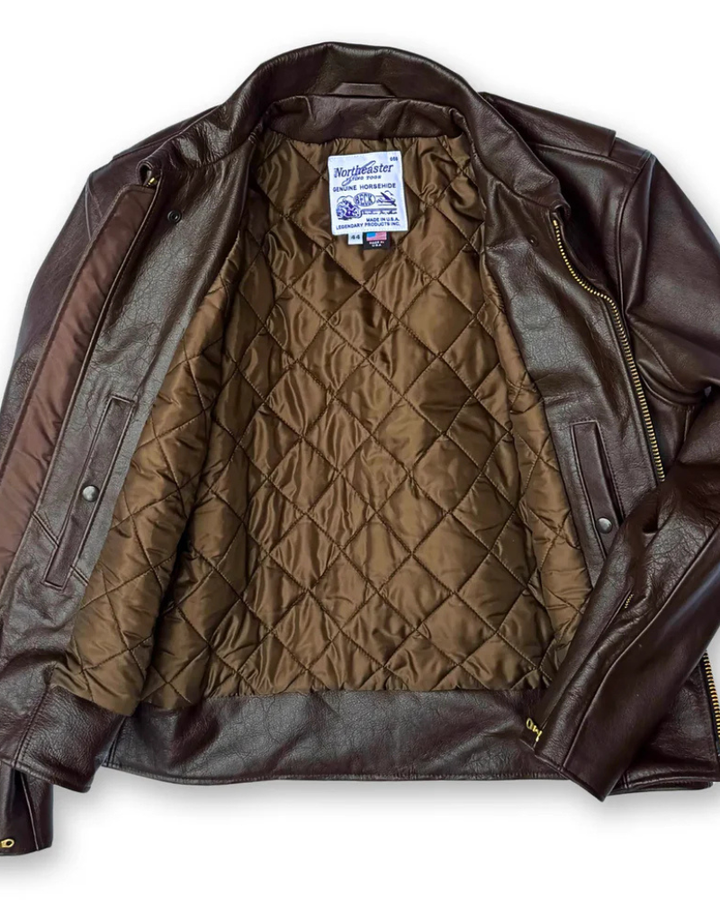
Cuff length should let the glove go over or under the sleeve. A gauntlet that only works one way limits the rider to one jacket. The Legendary USA gauntlet is cut to do both, so a rider with a BECK horsehide jacket can tuck the gauntlet under the heavier sleeve, while a rider in a lighter jacket can run it over the top.
Unlined construction is a feature for winter, not a shortcut. It keeps the glove thin enough to feel the brake lever, it lets the rider choose the liner weight for the day, and it dries faster than a bonded lining after a wet ride. The downside is that an unlined glove alone has a floor somewhere around the low 40s for most riders, and below that the liner is not optional.
Common Mistakes Riders Make With Winter Gloves
Buying a lined glove in the same size as a summer glove is the most frequent error. The lining takes up room, the fit goes tight, and the rider ends up with cold fingers from restricted blood flow. Size up for lined gloves and for gloves worn over liners.
Expecting a gauntlet to be warm on its own is the second mistake. The cuff stops wind; it does not generate heat. Pair it with a liner or accept that it is a 40°F-and-up glove by itself.
Ignoring the jacket is the third. A gauntlet over a sleeve that flaps open at the wrist still leaks. The shoulder-season gauntlet guide covers how the cuff and jacket sleeve work together, and the cold-weather gear guide by temperature range lays out what to add as the thermometer drops.
Which Legendary USA Gloves to Consider for Winter
The Classic Deerskin Gauntlets are the starting point for highway riders who want the sleeve gap closed. Unlined Whitetail deerskin, full cuff, reinforced stress points, made in the USA. Pair them with Gators Skin liners when the temperature drops below 40°F.
The Fleece-Lined Deerskin Gloves fit riders who ride shorter distances in the 30s and 40s and want warmth built in without a gauntlet cuff. Legendary USA advises sizing up one from the normal glove size to accommodate the lining.
The Classic Longer Cuff Deerskin Gloves sit between the two. The 1.5-inch elasticized cuff blocks more wind at the wrist than a short wrist without the bulk of a full gauntlet, and the touchscreen thumb and index finger stay useful for navigation at a stop. Riders who want everything in one place can compare the full line in the USA-made motorcycle gloves collection.
Pick the glove for the ride you actually take. Sustained highway speed in the cold points to the gauntlet and a liner. Short cold commutes point to the fleece-lined short wrist. Either way, buy deerskin for the pliability, size for the layer underneath, and let the leather break in before judging the fit.
For the wind chill math behind these temperature bands, the National Weather Service publishes a cold wind chill chart.
Frequently Asked Questions
- Are gauntlet gloves warmer than short-wrist gloves for winter riding?
- A gauntlet is warmer at highway speed because the cuff seals the gap between glove and sleeve where wind reaches the wrist. The gauntlet itself does not insulate unless it is lined. Legendary USA's Classic Deerskin Gauntlets are unlined, so at sustained speed they beat a short wrist on wind protection, but below about 40°F they need a liner underneath to add warmth.
- What temperature are unlined deerskin gauntlets good down to?
- Most riders find unlined deerskin gauntlets comfortable on their own into the low 40s Fahrenheit, with the exact floor depending on speed, ride length, and the rider. Below 40°F, Legendary USA recommends adding a thin windproof liner such as the Gators Skin Glove Liners. The deerskin keeps blocking wind and abrasion while the liner supplies the thermal layer the leather does not have.
- Should I size up a gauntlet glove if I plan to wear a liner?
- Yes. A glove worn over a liner should be one size larger than the bare-hand size. A liner adds enough bulk that a glove fitted bare-handed will bind at the knuckles and restrict circulation, which makes hands colder. Legendary USA's deerskin will stretch and mold over the first two to three weeks of riding, so buy for a close fit over the liner rather than a tight one.
- Is deerskin better than cowhide for cold-weather motorcycle gloves?
- Deerskin stays pliable in cold weather where cowhide stiffens, so a deerskin glove keeps clutch and brake feel at 35°F while a cowhide glove of the same thickness gets rigid. Deerskin also weighs about half as much as cowhide at equivalent protection and stays soft after getting wet without conditioning. Cowhide is tougher against abrasion at the same thickness, which is its real advantage.
- Do winter gauntlet gloves go over or under the jacket sleeve?
- Either, depending on the jacket and the weather. Over the sleeve stops wind from entering the jacket cuff and is the standard choice for rain. Under the sleeve works with heavier jackets, such as a horsehide jacket with a snug cuff, and keeps the gauntlet from catching on the grip. Legendary USA cuts its Classic Deerskin Gauntlets long enough to work both ways.
- What is the difference between a fleece-lined glove and a gauntlet with a liner?
- A fleece-lined glove has insulation bonded inside a short-wrist shell, so it is warm out of the box but the lining is fixed and the cuff is short. A gauntlet with a separate liner lets the rider pick the liner weight for the day, dries faster, and seals the forearm. Legendary USA rates its Fleece-Lined Deerskin Gloves for 30°F to 50°F; the gauntlet-and-liner setup covers a wider range.