

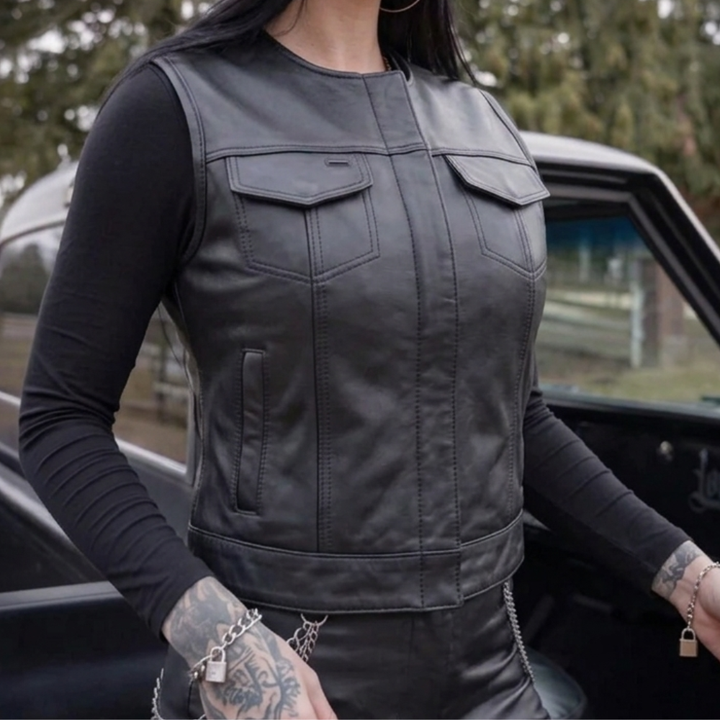


The best cold weather motorcycle jackets all do one thing first: block wind. At riding speed, wind-chill is what makes you cold, so a wind-tight shell matters more than raw padding. The right jacket then adds insulation for the temperature and matches the cut to your speed. Below are the styles that keep riders warm from fall through deep winter, ranked by what they do best and honest about their tradeoffs.
Legendary USA has outfitted riders in American-made and heritage gear for 25 years, so this roundup is built around real cold-weather riding, not spec sheets. Pick by your conditions: how fast you ride, how cold it gets, and how much bulk you will tolerate.
Top Picks, Shop Direct
| Product | What it is | From |
|---|---|---|
| Legendary Black Hills Men's Leather Motorcycle Jacket | Legendary USA. Rated 4.97 from 63 customer reviews. | $675.00 |
| Legendary Miss America Women's Leather Motorcycle Jacket | Legendary USA. | $490.00 |
| Legendary Flying Fortress Vintaged A-2 Goatskin Leather Flight Jacket | Legendary USA. Rated 5.0 from 59 customer reviews. | $415.00 |
| Legendary Hellcat Men's G-1 Leather Flight Jacket w/Side Entry | Legendary USA. Rated 5.0 from 55 customer reviews. | $375.00 |
Prices shown are current at time of writing. Orders over $150 ship free.
Best all-around: the heavy horsehide leather jacket

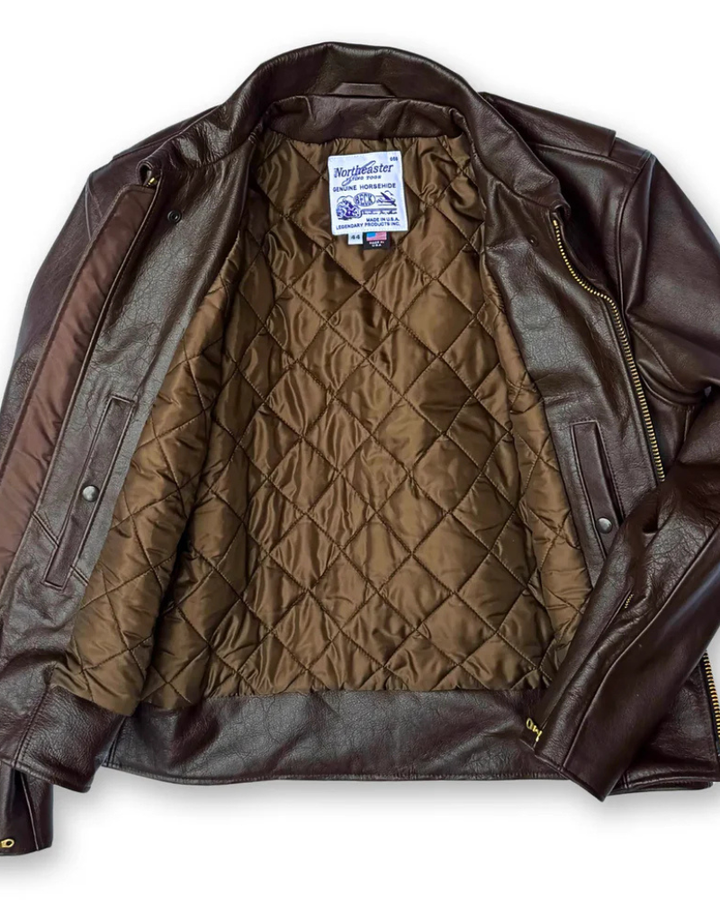
A heavy horsehide leather jacket is the best all-around cold weather choice for most riders. Horsehide is denser and more wind-tight than most cowhide, so it stops the wind that makes you cold, and it shrugs off road grit in a way wool and nylon cannot. Add a quilted or flannel liner and a mid-layer and it carries you from cool fall mornings into hard winter. The tradeoffs are weight and break-in time, and horsehide asks for patience before it softens. If you want to understand the hide before you buy, our horsehide vs. cowhide guide lays out how each rides and ages.
Best for supple comfort: the cowhide cruiser jacket
A cowhide cruiser jacket is the pick for riders who want cold-weather leather that feels broken in sooner. Cowhide is typically thicker and more supple out of the box than horsehide, so it moves comfortably from day one while still blocking wind well. It is the practical everyday cold-weather jacket: warm enough with a liner, tough enough for grit, and easier on the shoulders during a long ride. It gives up a little of horsehide's wind-tightness and hard patina, but for many riders the immediate comfort is worth the trade.
Warmest for deep cold: the sheepskin B-3 bomber
For the coldest rides, nothing issued beats a sheepskin B-3 bomber. Built for World War II bomber crews in unheated aircraft, the B-3 uses shearling, sheepskin with the wool left on the inside, so the leather blocks wind while dense wool traps heat against your body. It is arguably the warmest jacket in this roundup. The honest limit is bulk: the B-3 is heavy and less aerodynamic, which suits slow, deep-cold riding more than fast highway miles. Our breakdown of the Cockpit USA B-3 covers how the shearling pattern translates to the road.
Best light layer: the nylon MA-1 bomber
For mild cold and town riding, the nylon MA-1 bomber is the smart light layer. Its ribbed knit cuffs and waistband seal out wind, the nylon sheds weather, and it packs down when you do not need it. It is not as warm as leather or shearling and offers no abrasion resistance, so it belongs on commutes and shoulder-season mornings rather than fast winter highway runs. We cover the full pattern in our MA-1 flight jacket guide.
Best heritage option: the wool peacoat
The wool peacoat is the heritage pick for cold, slow, around-town riding. Heavy melton wool blocks wind and holds warmth even when damp, and the double-breasted front stacks insulation over your core. It is not highway gear and carries no armor, but for cold-morning town miles with real character, it holds up. See where it fits in riding culture in our look at the peacoat riding tradition.
How to choose and complete the kit
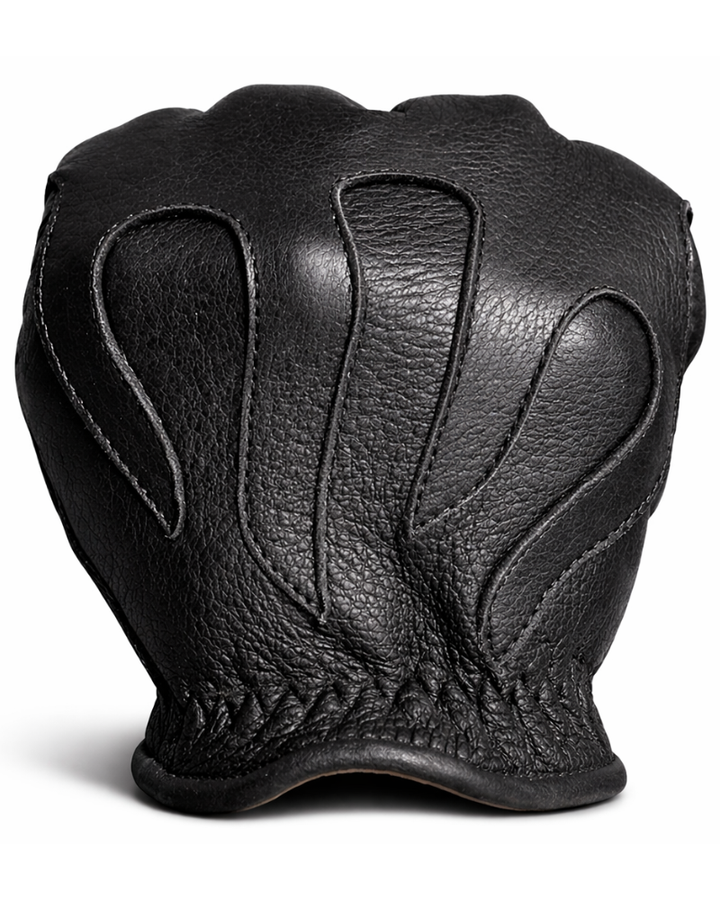
Match the jacket to your ride. Choose heavy leather for fast, cold miles, a sheepskin B-3 for deep cold at low speed, and a lighter MA-1 or peacoat for town and shoulder-season rides. Whatever you pick, the jacket is only half the system. The hands and neck lose heat fastest, so complete the kit with insulated gloves: fleece-lined deerskin gloves for warmth or deerskin gauntlets that tuck under your cuffs to close the wind gap at the wrist. Add a mid-layer under the shell, seal the collar, and you will ride comfortably in real cold. Browse the full lineup in our motorcycle gear collection to build the rest of your winter kit.
Frequently asked questions
- What is the best type of jacket for cold weather riding?
- The best cold weather riding jacket for most riders is a heavy leather jacket in horsehide or cowhide, because dense hide blocks wind better than almost anything and it resists road grit. For the coldest days, a sheepskin B-3 bomber adds shearling insulation, while a wool peacoat or nylon MA-1 covers slower town rides. The right pick depends on your speed and temperature: heavy leather for fast, cold miles, insulated bombers for deep cold, and lighter layers for around town.
- How do leather jackets keep you warm on a motorcycle?
- Leather keeps you warm mainly by blocking wind. At riding speed the biggest source of cold is wind-chill cutting through your clothing, and a dense hide like horsehide or cowhide stops that wind at the surface. Leather itself is not a heavy insulator, so warmth comes from the wind-block plus whatever liner and layers you add underneath. That is why cold-weather leather jackets pair a wind-tight shell with a quilted or flannel liner and room for a mid-layer.
- What is a B-3 bomber jacket and is it warm?
- A B-3 is a sheepskin bomber jacket developed for World War II bomber crews flying in unheated, high-altitude aircraft, and it is one of the warmest jackets ever issued. It uses shearling, sheepskin with the wool left on the inside, so the leather blocks wind while the dense wool traps heat against your body. For deep-cold, low-speed riding it is hard to beat. The tradeoff is bulk and weight, which makes it less suited to fast highway miles than a trimmer leather jacket.
- Do I need a special liner for a cold weather motorcycle jacket?
- A liner makes a big difference because leather blocks wind but adds little insulation on its own. A quilted or flannel liner traps body heat inside the wind-tight shell, and a removable liner lets one jacket work across seasons. If your jacket has no liner, you can add warmth with a mid-layer such as a flannel, sweater, or insulated vest underneath. Either way, plan for the wind-block from the shell and the insulation from the liner or layers.
- How should a cold weather motorcycle jacket fit?
- A cold weather riding jacket should fit close enough to block wind but leave room for one insulating layer underneath. Check the fit in the riding position: reach for the bars and make sure the sleeves still cover your wrists and the hem stays over your lower back. Cuffs should seal at the wrist so wind cannot funnel up your arms, and the collar should close against your neck. Too loose and it lets cold air in; too tight and your layers lose their loft.
- What should I wear with a cold weather jacket to stay warm?
- Pair a cold weather jacket with insulated gloves, a neck gaiter or the jacket's own collar, and a mid-layer under the shell. The hands and neck lose heat fast, so fleece-lined or aramid-lined gloves and a sealed collar matter as much as the jacket. Gauntlet gloves that tuck under the cuffs close the wind gap at the wrist. Build the kit as a system: wind-tight jacket, insulating mid-layer, sealed hands and neck, and you will ride comfortably in real cold.
Cold weather does not have to end your riding season; it just raises the price of the wrong gear. Start with a wind-tight shell, add the insulation your temperatures demand, and seal the hands and neck. Whether you run heavy horsehide, a shearling B-3, or a heritage peacoat for town, the riders who stay warm are the ones who build a system instead of chasing a single jacket.