


The best motorcycle vests for late-season layering are sized to go over a hoodie or flannel and built from a material that blocks wind on its own — denim for standalone wear in cool weather, lightweight Cordura when you want minimal bulk. Legendary USA builds both. What separates a layering vest from a summer vest is not the fabric. It is the room through the chest, back, and armholes.
Late August is the turn. Mornings are dropping into the fifties and sixties across much of the country while afternoons are still hot, and that spread is exactly the problem a vest solves. Here is what to reach for and what each one is actually good at.
Why a Vest Is the Right Tool for Shoulder Season

You lose most of your heat on a motorcycle through your chest and back. That is where the wind hits, and that is where a vest works. It does nothing for your arms, which is the honest limitation, but your arms are not usually the problem in September — your core is.
The other reason a vest suits this time of year is that it comes on and off in ten seconds. A jacket is a commitment. A vest over a long-sleeve layer lets you leave the house at fifty-eight degrees and strip down at noon without repacking your whole setup.
How We Sorted These
Every vest here is judged on three things: how it layers, what it actually protects you from, and who it is wrong for. We are not going to tell you every vest is right for every rider, and we are not going to invent features. If you want the full picture on what makes a vest ride-ready in the first place, start with our guide to riding vests versus fashion vests.
Best All-Around Layering Vest: Legendary Revolution Black Denim Vest
The Legendary Revolution Men's Black Denim Vest is the default answer for most riders heading into fall. Denim has weight to it, which means it stops wind on its own rather than needing something under it, and black denim sits comfortably next to almost any jacket, boot, or bike in the lot.
Best for: riders who want one vest that works over a t-shirt in September and over a hoodie in October.
Consider something else if: you want the fastest possible packability, or you want a vest that fades and tells a story — black denim holds its color longer than indigo does.
Best for Break-In and Character: Legendary Ole Blue Denim Vest
The Legendary Ole Blue Men's Denim Vest is the same idea in blue denim, and blue denim does something black does not: it wears in. Creases set where you bend. Sun and miles pull the color. Three seasons in, it is yours in a way a new vest never is.
Best for: riders who want a vest that ages, and anyone building a layered look over flannel through fall.
Consider something else if: you need something that stays uniform and dark, or you are hard on gear and would rather the wear not show.
Best Lightweight Layer: Legendary Black Jack Cordura Vest
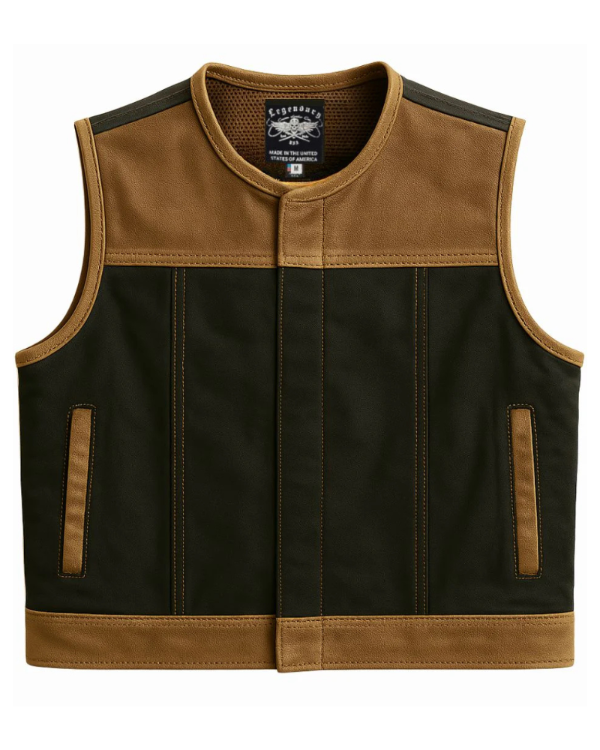
The Legendary Black Jack Lightweight Cordura Vest takes a different approach. Cordura is a synthetic textile, and the lightweight build means this is the vest you can add over an existing layer without feeling like you put on a second jacket.
Best for: hot afternoons that turn cool at dusk, riders who want a vest they can stow, and anyone who finds denim too warm in early September.
Consider something else if: you want the wind-blocking weight of denim, or you want a piece that breaks in and develops character. Cordura is a tool, not a keepsake.
Sizing for Layering: The Part That Decides Everything
A vest that fits perfectly over a t-shirt in July is the wrong vest in October, and this is where most riders go wrong.
Try the vest on over the thickest layer you will actually ride in. Not a t-shirt — the hoodie or the heavy flannel. Then reach forward as though your hands are on the bars. The back should not pull tight across your shoulders, and the front should close without straining.
Most riders who plan to layer through fall go up one size. If you only ever wear the vest over a shirt, stay with your normal size, because an oversized vest flaps at highway speed and that gets old fast. If you are sizing past 2XL, our guide to big and tall motorcycle vest sizing covers the specifics.
Denim vs Cordura: Side by Side
| Factor | Denim | Lightweight Cordura |
|---|---|---|
| Wind blocking on its own | Stronger | Lighter duty |
| Bulk over a hoodie | More | Less |
| Packability | Bulkier | Packs down |
| Breaks in over time | Yes | No |
| Best use | Standalone cool-weather layer | Add-on layer you carry |
Build the Rest of the Layer
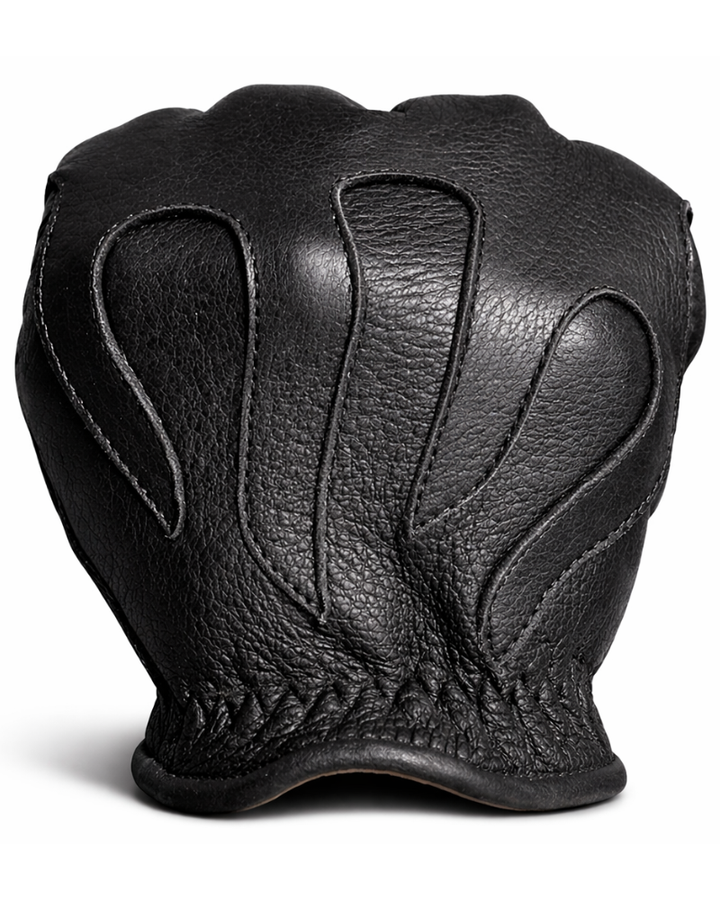
A vest handles your core. It does not handle your hands, and your hands are the first thing that goes on a cold morning. If you are already thinking about layering, this is the moment to sort out gloves too — the Fleece-Lined Deerskin Gloves cover the same temperature range a layering vest does.
Browse the full Made in USA motorcycle vests collection, or look across all motorcycle gear if you are building a shoulder-season kit from scratch. For more on why denim earned its place in American riding, read what makes a denim motorcycle vest worth wearing.
For the wind chill math behind these temperature bands, the National Weather Service publishes a cold wind chill chart.
Frequently Asked Questions
- What is the best motorcycle vest for layering in fall?
- The best layering vest is one sized to go over a hoodie or flannel without pulling across the back, in a material that blocks wind on its own. Denim is the traditional choice because it is tough, it breaks in, and it looks right over almost anything. A lightweight Cordura vest is the alternative for riders who want less bulk. The deciding factor is armhole and chest room, not the material.
- Should I size up a motorcycle vest for layering?
- Usually yes, by one size, if you plan to wear the vest over a hoodie or a heavy flannel through fall. Try it on over the thickest layer you actually ride in. The vest should close without straining and you should be able to reach the bars without the back pulling tight across your shoulders. If you only wear it over a t-shirt, buy your normal size, because an oversized vest flaps at speed.
- Do motorcycle vests actually keep you warm?
- A vest keeps your core warm by blocking wind across your chest and back, which is where you lose the most heat on a bike. It does nothing for your arms. That is the honest tradeoff. In practice a vest over a long-sleeve layer is warmer than most riders expect, because your torso is the part the wind hits hardest. It is not a substitute for a jacket once temperatures drop into the forties.
- What is the difference between a denim vest and a Cordura vest for riding?
- Denim is heavier, blocks more wind, and develops a personal fade and break-in over years of wear. Cordura is a synthetic textile that runs lighter and packs smaller, so it works well as a layer you carry rather than wear all day. Denim is the better standalone piece in cool weather. Cordura is the better choice when you want minimal bulk over an existing layer or need something to stuff in a saddlebag.
- Can you wear a motorcycle vest over a leather jacket?
- Riders do it, most often to carry patches on a vest while wearing a jacket underneath for warmth and abrasion resistance. It requires a vest sized well past your normal size, since a leather jacket adds real bulk through the chest, shoulders, and armholes. Check that the vest closes and that you can move freely at the bars. If it binds across the back, it is too small for that job.
- When should I switch from a summer vest to a layering setup?
- Most riders make the switch when morning temperatures start landing in the fifties and sixties, which in much of the country is late August into September. The tell is not the afternoon high, it is the first hour of the ride. If you are cold leaving the house and fine by ten in the morning, you want a layer you can add and remove rather than a heavier single garment.
The Bottom Line
If you buy one vest for the back half of the season, make it denim and size it over the hoodie you actually wear. The Revolution in black is the safe pick, Ole Blue is the one that will look better in three years than it does today, and the Black Jack Cordura vest is the right call if bulk is your enemy. None of them will keep your arms warm, and none of them is a substitute for a jacket in November. That is not a knock — it is what a vest is. Used for the job it is built for, it is the most useful thing you can put on between now and the first hard freeze.