

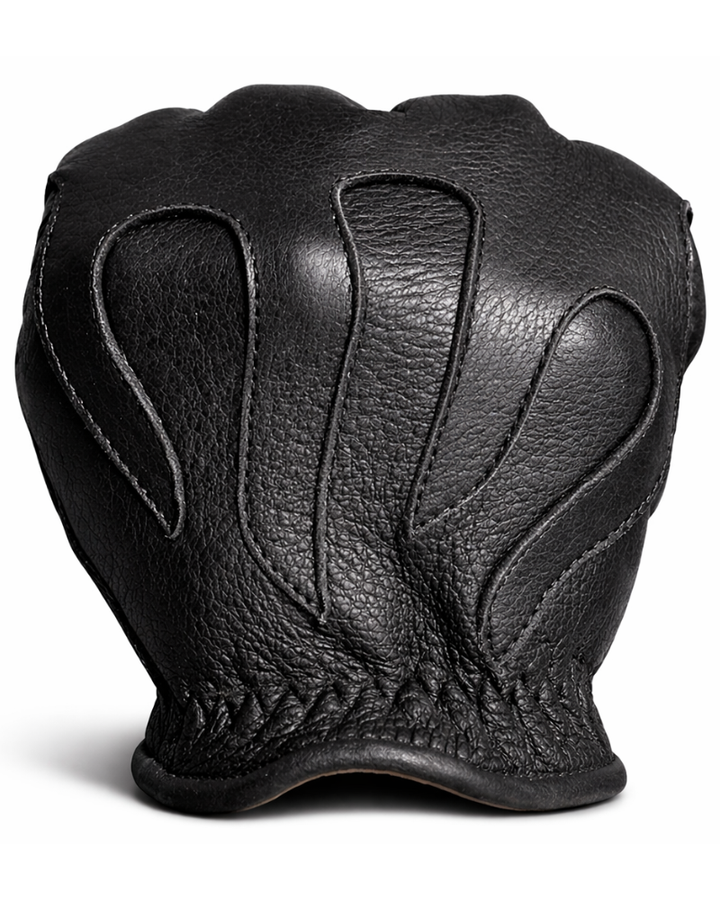




Choosing between deerskin and goatskin motorcycle gloves comes down to feel. Deerskin is softer, stretchier, and breaks in fast for plush comfort. Goatskin has a tighter grain and a firmer hand, so it holds its shape and feels precise on the controls. Both are strong, abrasion-friendly leathers, so the deerskin vs goatskin decision is about the fit you want, not which leather is tougher.
Two riders can look at the same pair of gloves and want opposite things. One wants leather that feels broken in on the first ride; the other wants a snug, structured fit that stays put. That split is exactly the difference between deerskin and goatskin. Here is how to decide which one belongs on your hands.
Shop Each Option
| Product | What it is | From |
|---|---|---|
| Bad Billy Black Goatskin Gloves | Legendary USA. Rated 4.93 from 129 customer reviews. | $75.00 |
| Fingerless Deerskin Gloves | Legendary USA. Rated 4.92 from 126 customer reviews. | $67.50 |
| Classic Deerskin Gauntlets | Legendary USA. Rated 4.88 from 112 customer reviews. | $140.00 |
| Gold Short Wrist Cuff Deerskin Gloves | Legendary USA. Rated 4.91 from 108 customer reviews. | $100.00 |
Prices shown are current at time of writing. Orders over $150 ship free.
How deerskin and goatskin feel different

Deerskin has a looser fiber structure, which makes it soft, flexible, and quick to break in. A deerskin glove molds to your hand within about two to three weeks of regular riding and feels plush from the start. Goatskin has a tighter, denser grain. It feels firmer in the hand, holds its shape, and gives a more precise, controlled feel on the grips.
Think of it as comfort versus structure. Neither is a downgrade. Deerskin trades a little structure for softness; goatskin trades a little softness for a snug, shape-holding fit.
Step 1: Decide the feel you want on the controls
Start with your hands on the bars. If you want a glove that feels like a second skin and flexes with every input, deerskin is your leather. The Legendary men's deerskin short-wrist ventilated gloves are a good example of that soft, flexible feel with added airflow for warm rides.
If you prefer a firmer, more precise grip that stays snug over time, goatskin delivers it. The tighter grain resists stretching, so the glove keeps the fit you bought.
Step 2: Factor in stretch and fit
Deerskin stretches more, so size it snug knowing it will give and mold to your hand. Goatskin stretches less, so what you feel in the store is close to what you keep. If you are between sizes in deerskin, size down; if you are between sizes in goatskin, trust the snug fit rather than sizing up. Check fit in the riding position with your hands curled around imaginary bars, never flat on a table.
Step 3: Match the glove to your climate and use
Both leathers work year-round, but pair the cut with the season. For hot-weather riding, look for perforated or ventilated versions in either leather, like the punched-panel Legendary ILL Dozer perforated deerskin gloves. For cold mornings, add a lined glove. You can compare both leathers side by side in the men's USA-made motorcycle gloves collection and pick the feel that fits your riding.
A quick honest comparison
Deerskin is soft, flexible, and comfortable fast, but it stretches more and can feel less structured. Goatskin is firm, tight-grained, and shape-holding, but it takes a little longer to feel personal and gives less. Both handle abrasion well and last for years when full-grain and cared for. If you want to go deeper on how deerskin performs specifically, riders often reference our overview of what makes deerskin the American riding standard in the deerskin gloves buying guide.
Frequently asked questions
- What is the difference between deerskin and goatskin motorcycle gloves?
- Deerskin is softer, stretchier, and more flexible, with a broken-in feel almost from day one. Goatskin has a tighter grain and a firmer hand, so it feels more structured and holds its shape. Both are strong, abrasion-friendly leathers used for riding gloves. Deerskin favors comfort and a glove-like fit, while goatskin favors a snug, precise feel on the controls. Legendary USA builds gloves in both leathers so riders can pick the feel they prefer.
- Are deerskin gloves better than goatskin gloves?
- Neither is better overall; they suit different preferences. Deerskin is softer and more forgiving, breaks in within about two to three weeks, and feels plush on the bars. Goatskin is firmer, has a tighter grain, and gives a more precise, structured feel with less initial stretch. If you want maximum comfort and flexibility, choose deerskin. If you want a snug, controlled fit that holds its shape, choose goatskin. Both are durable when made from full-grain hides.
- Which leather stretches more, deerskin or goatskin?
- Deerskin stretches more. Its fiber structure is looser, so deerskin gloves give and mold to the hand as they break in, which is why they feel soft quickly. Goatskin has a tighter, denser grain and stretches less, so it holds its original shape longer and feels more structured. If you like a glove that conforms to your hand, deerskin is the better pick. If you want a glove that stays snug and precise, goatskin holds its fit.
- How do I choose between deerskin and goatskin gloves for my riding?
- Start with the feel you want on the controls. Choose deerskin if you prioritize softness, flexibility, and a quick break-in for long comfort. Choose goatskin if you prefer a firmer, tighter fit that holds its shape and feels precise. Next, factor in fit preference: deerskin gives more, goatskin stays snug. Both leathers handle abrasion well and last for years when full-grain, so the decision comes down to comfort versus structure rather than durability.
- Does goatskin last longer than deerskin?
- Both last for years when made from full-grain hides and cared for properly. Goatskin has a naturally tight, dense grain that resists abrasion and holds its shape, which some riders read as more rugged. Deerskin is also durable and abrasion-friendly but stays softer and more flexible over time. Longevity depends more on leather quality and care than on the animal, so condition either glove regularly and store it away from heat to get the most life out of it.
- How do I care for deerskin and goatskin gloves?
- Clean both leathers with a damp cloth to lift dirt, let them air dry away from direct heat, and condition them occasionally with a quality leather conditioner to keep the hide supple. Never dry leather gloves on a heater or in direct sun, which stiffens and cracks the grain. Deerskin and goatskin respond to the same basic routine. Regular light conditioning keeps either pair soft and extends its life on the road.
The bottom line
Deerskin and goatskin are both proven riding leathers, so you are not choosing between good and bad. You are choosing between soft and structured. Pick deerskin for plush comfort and a fast break-in, or goatskin for a snug, shape-holding fit. Decide the feel you want, size for the stretch, and match the glove to your climate, and you will end up with a pair that suits how you actually ride.