

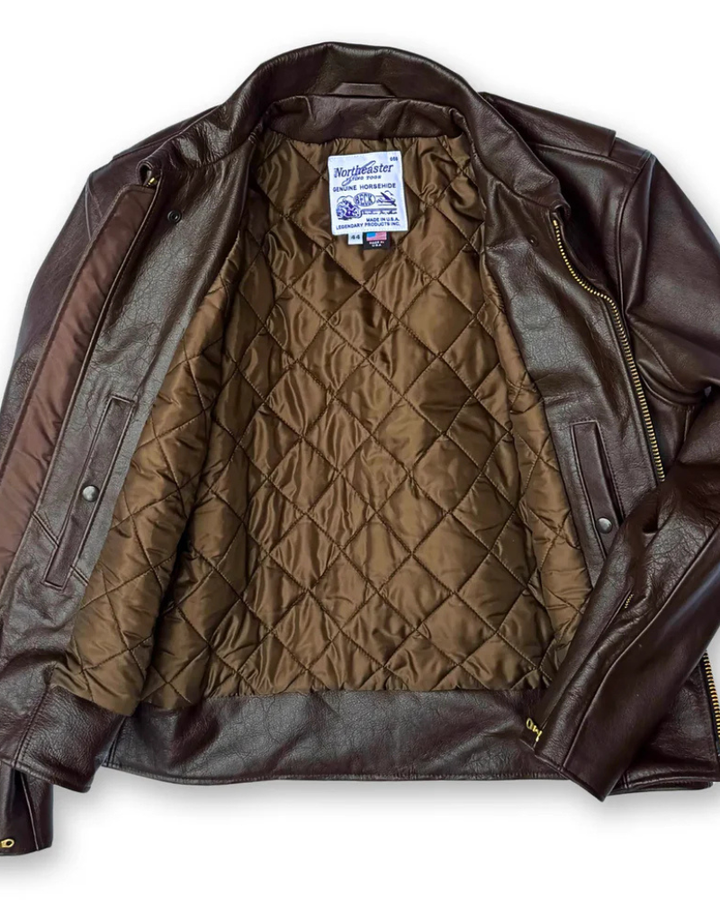
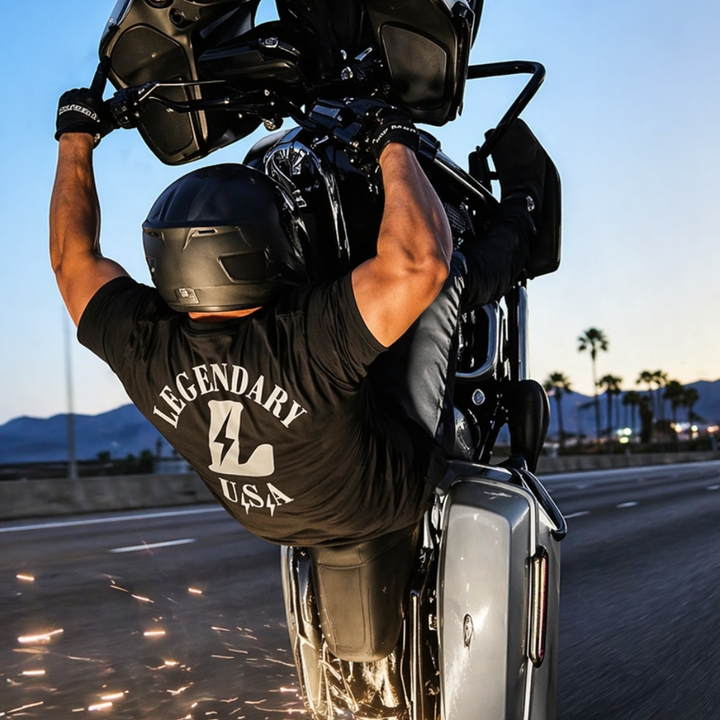


Long-distance motorcycle touring gear comes down to three things: gloves that stay comfortable past hour six, layers you can add and shed without unpacking a bag, and leather that is already broken in before you leave. Everything else is detail. Legendary USA has been outfitting American touring riders for 25 years, and the pattern we see every August is the same — the riders who are comfortable on day four are the ones who sorted out their gloves and layering in June.
This guide covers what actually matters on a multi-day ride: glove selection, vest and layering strategy, what to pack, and the mistakes that turn a good trip into a long one.
What Long-Distance Riding Actually Does to Your Gear

Touring punishes gear differently than commuting does. A 40-mile commute never gets your gloves fully saturated with sweat. A 500-mile day does, twice. Sustained highway wind flattens the loft out of any lining. Repeated soak-and-dry cycles stiffen leather that never had a chance to condition. And gear that fits fine standing in a parking lot can create a pressure point that becomes unbearable by the fourth hour in the saddle.
That means the touring standard is different from the everyday standard. Gear has to be comfortable in a sustained position, dry out overnight, and hold its shape through heat, rain, and grit. It also has to be redundant — one pair of anything is a single point of failure 900 miles from home.
Gloves for Long-Distance Touring
Gloves are the single highest-impact gear decision on a long tour, because your hands are the only part of your body under constant load. The right pair disappears. The wrong pair becomes the only thing you think about.
Deerskin vs. Goatskin for Touring
Deerskin and goatskin are both strong choices, and the difference is real enough to matter over a week of riding. Deerskin is the softer of the two. It has natural give, it molds to the hand quickly, and it stays supple after repeated wet-dry cycles — which is exactly what a touring glove goes through. Legendary USA cuts its touring gloves from full-grain American whitetail deerskin for that reason.
Goatskin is firmer, denser, and more abrasion-tolerant. It breaks in more slowly and holds its shape longer. Riders who want a glove that feels more structured on the bar tend to prefer goatskin, and the Bad Billy black goatskin short-wrist glove is the pair most touring customers land on when they want that feel.
The honest tradeoff: deerskin is more comfortable sooner, goatskin holds up harder over years. Neither is armor. Leather gloves protect against wind, sun, vibration, and abrasion — they are not impact protection, and we will not tell you otherwise.
Perforated vs. Solid Leather
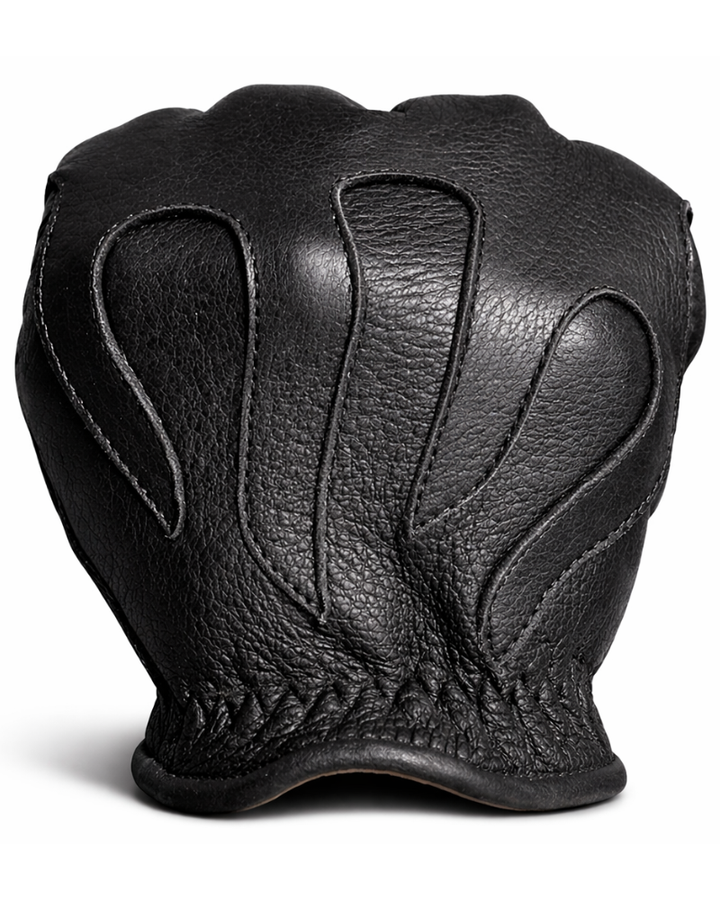
Perforated gloves move air across the back of the hand and drop the temperature noticeably above 40 mph. On an August tour through South Dakota, Nebraska, or Texas, that is worth a lot. The ILL Dozer perforated short-wrist outseam deerskin glove is built for exactly that use case.
The tradeoff is straightforward: perforated leather does not block wind, and it does not keep rain out. Below roughly 60 degrees, perforated gloves get cold fast. That is why the standard touring kit is one perforated pair and one solid pair, not one of either.
Construction Details That Matter Past Hour Four
Outseam construction places the seams on the outside of the glove, so nothing presses into your palm or between your fingers. On a short ride you would never notice. On a 400-mile day you notice constantly. The keystone thumb — a separate thumb piece set into the palm rather than folded from the same panel — gives the thumb its own range of motion, which reduces the bunching that causes hot spots at the web of the hand.
Fit matters more than any of it. A glove should be snug with no loose material in the palm and no pressure at the fingertips when your hand is closed around a bar. Our motorcycle glove fit guide walks through how to measure and what to check.
Vests and Layering for Multi-Day Miles
Layering is what makes a 1,000-mile week survivable, because a single day can start at 52 degrees and hit 96. The system that works is simple: a base layer that moves moisture, a mid layer you can stow, and a wind-blocking outer layer.
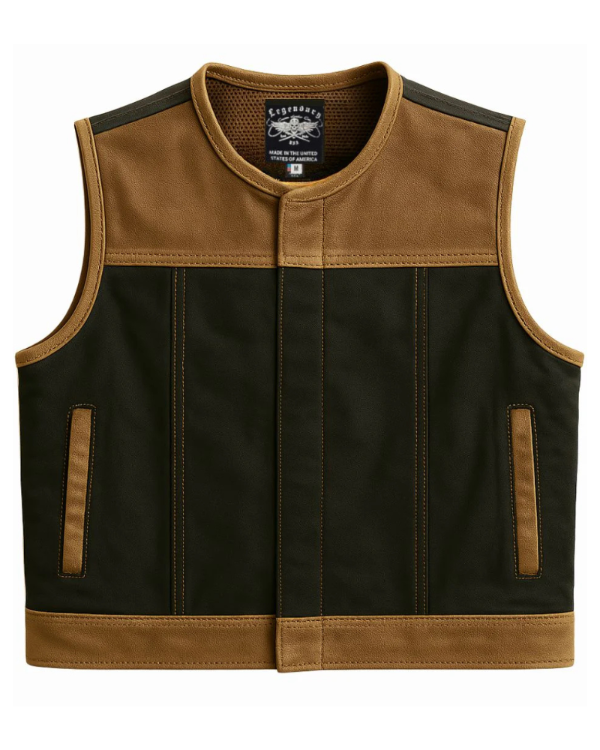
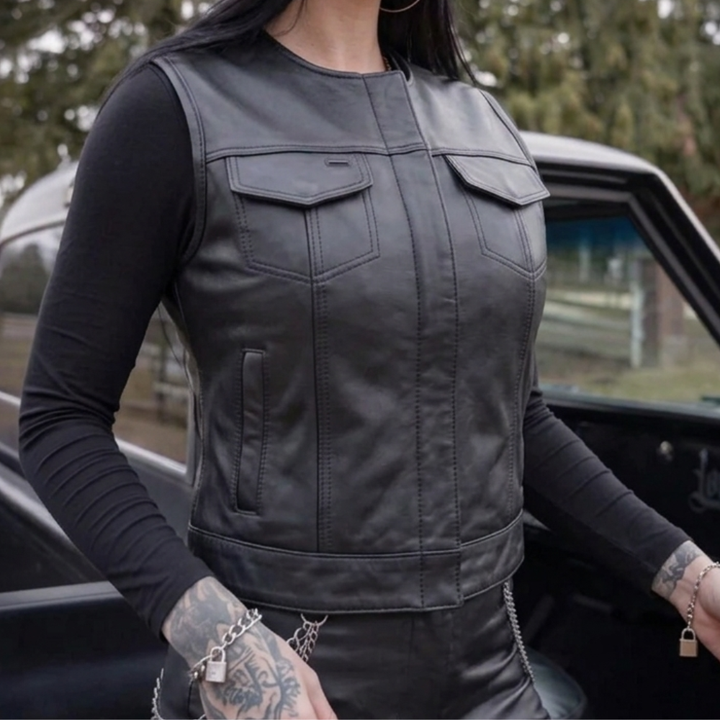
A vest is the most useful piece in that system for a lot of American touring riders. It blocks wind across the chest and core — the two places that make you cold — without adding sleeves that trap heat. It carries patches, and it goes on and off at a gas stop in ten seconds. A denim motorcycle vest is the lighter-weight option for summer touring; leather runs warmer and blocks more wind. The full range lives in the Made in USA motorcycle vest collection.
What a vest is not: arm coverage. It is a layering and wind-management piece. If your route includes cold mornings or mountain passes, a vest goes over a jacket, not instead of one.
What to Pack for a Week on the Road
- Two pairs of gloves — one perforated for heat, one solid for rain and cold mornings.
- A vest for wind blocking and layering flexibility.
- A packable mid layer that compresses into a saddlebag.
- A small tin of leather conditioner — used sparingly, not nightly.
- A microfiber cloth for wiping road grime off leather at the end of the day.
- A dry bag so a soaked glove never rides next to dry clothes.
Skip the multi-step leather care kit. On the road you need to dry gear correctly and keep grit off it. Everything else waits until you are home.
Common Touring Gear Mistakes
Buying gloves the week of the trip. New American deerskin needs roughly 200 to 300 miles before it stops feeling stiff. Break gear in on short local rides first — our guide on how to break in leather motorcycle gloves covers the process.
Drying wet leather with heat. A hotel hair dryer, a heater vent, or direct sun will shrink and crack the grain permanently. Room temperature and airflow only.
Sizing gloves for a standing hand. Try the fit with your hand closed in a riding position. A glove that is comfortable open can pull tight across the knuckles on the bar.
Packing only one pair of anything. Redundancy is not luxury on a multi-day ride. It is the difference between a wet morning and a ruined day.
Frequently Asked Questions
- What gloves are best for long-distance motorcycle touring?
- The best touring gloves are lightweight, broken in, and thin enough in the palm that you can feel the grip without squeezing. Deerskin is the most common choice for long-distance riding because it stays soft, moves with the hand, and does not stiffen at the knuckles after hours in the wind. Perforated deerskin such as the Legendary USA ILL Dozer handles summer heat. Goatskin runs slightly firmer and more abrasion-tolerant. Whatever you pick, break the pair in before the trip rather than during it.
- How many pairs of gloves should I pack for a multi-day motorcycle trip?
- Pack two pairs for any trip longer than two days. Leather gloves absorb sweat and rain, and a soaked pair takes 12 to 24 hours to air dry properly. A second pair keeps you riding while the first one dries. The most useful combination is a perforated or ventilated pair for afternoon heat and a solid unperforated pair for cold mornings, rain, and elevation. Two pairs also spreads wear, which meaningfully extends the life of both.
- Are leather vests good for long-distance riding?
- Leather and denim vests work well on tour because they add wind blocking across the chest and back without trapping heat at the arms. That matters on long days when temperatures swing 30 degrees between morning and mid-afternoon. A vest also carries patches, keys, and a phone without adding bulk under a jacket. What a vest does not do is provide abrasion coverage on your arms, so it is a layering piece, not a substitute for a jacket.
- How do I stop my hands from going numb on a long ride?
- Hand numbness on tour usually comes from grip pressure and vibration, not from the gloves themselves. Loosen your grip, drop your shoulders, and shift your wrist angle every 20 to 30 minutes. Gloves help by fitting properly: a glove that is too tight restricts circulation, and a glove that is too loose makes you squeeze the bar to keep control. Outseam construction, where the seams sit outside the glove, removes the interior seam ridges that press into the palm over long hours.
- What is the difference between short-wrist and gauntlet gloves for touring?
- Short-wrist gloves end at the wrist and slide on and off fast, which is why most warm-weather touring riders prefer them. Gauntlet gloves extend over the jacket cuff and seal out wind and rain, which matters at elevation, in early spring, and on cold mornings. On a summer tour through the Plains and Black Hills, short-wrist gloves are the practical default. If your route climbs into the mountains or starts before sunrise, carry a gauntlet pair as your second set.
- How do I care for leather motorcycle gear on the road?
- Keep it simple on the road. Air-dry wet leather at room temperature away from heaters, sunlight, and hotel hair dryers, because heat shrinks and cracks the grain. Wipe road grime off with a barely damp cloth at the end of the day. Carry a small tin of leather conditioner and use it sparingly, only once the leather feels dry to the touch. Save the full clean-and-condition routine for when you get home.
- Should I buy new gear right before a long motorcycle tour?
- Buy it early, not the week before. American deerskin and goatskin gloves need roughly 200 to 300 miles of riding before they stop feeling stiff across the knuckles and start conforming to your hand. New leather vests and jackets need similar time to relax at the shoulders. Riding 500 miles a day in gear you have never worn is how riders end up with blisters, hot spots, and a pair of gloves they abandon at a gas station.
The Bottom Line
Long-distance touring rewards preparation over purchases. Two pairs of well-fitted gloves, a vest that blocks wind without cooking you, and leather that was broken in weeks before departure will carry you further in comfort than any last-minute upgrade. Start with fit, build in redundancy, and give new gear the miles it needs before the trip starts. Browse the Made in USA motorcycle glove collection to build your touring rotation, and read our gear checklist for multi-day rides before you pack.