



A motorcycle glove rotation for fall and winter is two or three pairs, each matched to a kind of ride, so you are never stuck in the wrong glove for the morning. A workable set is a lined pair for cold starts, a gauntlet pair for highway miles, and a ventilated pair for the warm afternoons that still show up in October. Rotating also gives each pair time to dry, which is better for the leather.
Step 1: Map the temperatures you actually ride in

Write down the start temperature of your last ten rides. Most riders find two clusters: cool mornings and mild afternoons, with a handful of truly cold days. Build the rotation around the clusters, not the extremes.
Wind changes the picture, because a motorcycle supplies its own. The wind chill chart linked below shows how much colder exposed skin feels at speed, and it is worth a look before you decide a pair is warm enough.
Step 2: Pick a cold-morning pair
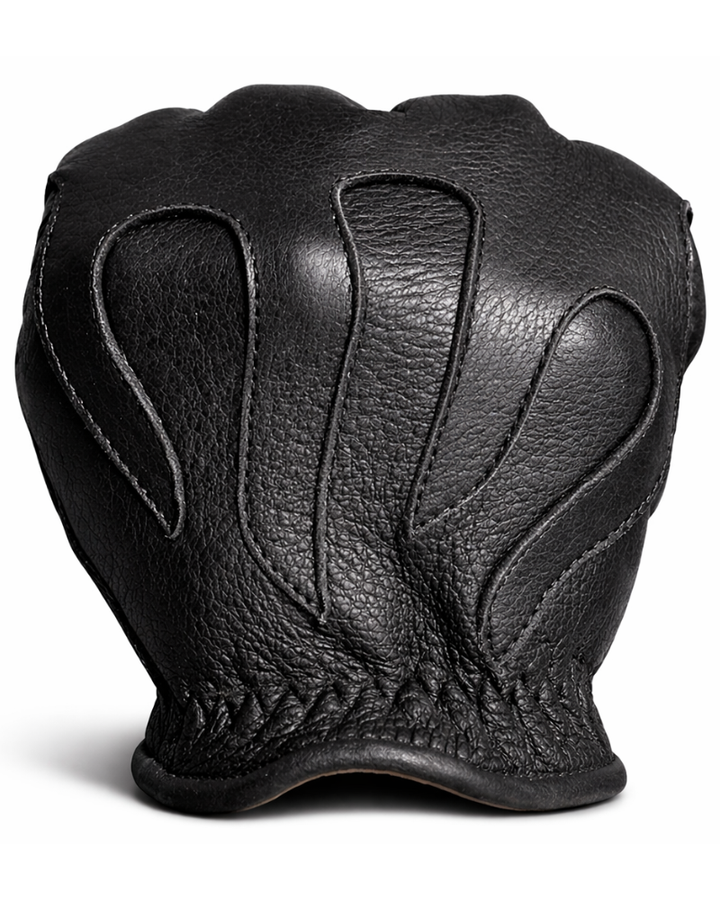
Your first pair is the one you reach for below the mid-50s. The Fleece-Lined Deerskin Gloves are built for this job: 100 percent American Whitetail deerskin outer, a 3M Thinsulate 40-gram lining, and a listed range of 30 to 50°F. Size up one from your normal glove size to make room for the lining.
Break this pair in before the first truly cold ride. Our guide to breaking in fleece-lined motorcycle gloves covers how, and choosing between lined and unlined gloves explains why this pair does not replace the others.
Step 3: Add a gauntlet pair for highway miles
Highway speed turns the gap between glove and sleeve into a cold-air channel. The Classic Deerskin Gauntlets run over the wrist and lower forearm, and the cuff is cut long enough to tuck under a jacket sleeve or wear over it. They are unlined, so on colder days you pair them with a thin separate liner.
That is the tradeoff against the lined short wrist. The gauntlet is more flexible across temperatures because you control the layers, but it asks more from you on a cold morning.
Step 4: Keep one ventilated pair for warm afternoons
October can hand you a 65°F afternoon after a 40°F start. Riding that afternoon in a lined glove means sweaty hands, and damp hands cool fast when the sun drops. The Ventilated Short Wrist Deerskin Gloves are unlined, with a perforated back and a keystone thumb.
Be clear about what this pair is. It is a warm-weather glove, not a winter glove, and perforations let air through in both directions. Keep it in the rotation for the afternoons, then retire it to the drawer when the highs stay low.
How the three pairs compare
| Pair | Reach for it when | Limit |
|---|---|---|
| Fleece-lined short wrist | Cold mornings and fall commutes | Too warm for hot afternoons |
| Unlined gauntlet | Highway miles, sleeve gap, layering a liner | No insulation of its own |
| Ventilated short wrist | Warm afternoons and early fall | Not a cold-weather glove |
Step 5: Rest each pair between rides
Leather holds moisture from sweat and weather. A pair worn every day never fully dries, and that is what shortens a glove's life. Having a second pair means one dries while the other works.
Let wet gloves dry slowly at room temperature, away from heaters. Our post on drying wet leather motorcycle gloves has the full method, and the guide to storing leather motorcycle gear for winter covers the off-season routine.
Common mistakes when building a glove rotation
- Buying three pairs of the same weight. A rotation only works when each pair covers a different condition.
- Skipping the break-in on a new pair and then wearing it for the first time on the coldest day.
- Sizing every pair the same. The lined pair needs room for the lining, the others do not.
- Expecting the ventilated pair to double as a cold-weather glove.
The bottom line
Three pairs cover most of the fall and winter season: a lined pair for cold starts, a gauntlet for the highway, and a ventilated pair for warm afternoons. Break each one in early, size the lined pair up one, and let each pair dry before it goes back on. If you want to look at every option, the Made in USA motorcycle gloves collection is the place to start.
For the wind chill math behind these temperature bands, the National Weather Service publishes a cold wind chill chart.
Frequently asked questions
- How many pairs of motorcycle gloves should I own?
- Two or three covers most riders through fall and winter. A lined pair handles cold starts, a gauntlet pair handles highway miles and layering a liner, and a ventilated pair handles warm afternoons. The point is that each pair covers a different condition, so you are never riding in the wrong glove.
- How often should I rotate motorcycle gloves?
- Rotate whenever a pair gets damp from sweat or weather, and ideally swap between rides on consecutive days. Leather needs time to dry completely, and a pair worn daily never does. Letting one pair dry at room temperature while you wear another keeps the leather supple and extends its life.
- Can one pair of motorcycle gloves cover fall and winter?
- One pair can cover part of it. The Fleece-Lined Deerskin Gloves are listed for 30 to 50°F, which handles most fall mornings. They will be too warm on hot afternoons and not enough on the coldest days. A single pair always compromises somewhere, which is why riders build a small rotation.
- What gloves should be in a cold-weather glove rotation?
- Start with a fleece-lined short-wrist deerskin pair for cold mornings, add an unlined gauntlet for highway miles, and keep a ventilated pair for warm afternoons. If you ride below 30°F regularly, add a thin separate liner to wear under the gauntlet or consider mittens.
- Should I break in all my gloves at the same time?
- No. Break in the pair you will need first, then the others as their season approaches. Deerskin softens and molds to your grip over the first few rides, so wear each new pair on short, mild rides before you rely on it in cold weather.
- Are ventilated gloves okay for October riding?
- On warm afternoons, yes. Ventilated gloves have a perforated back that lets air through, which suits a 60°F or warmer day. They are not winter gloves, and they will feel cold at fall start temperatures. Treat them as the warm-weather end of your rotation and switch pairs as the temperature drops.